China regulators tighten IPO standards for humanoid robot firms after Unitree volatility
Chinese regulators have issued informal window guidance to investment banks, signaling stricter IPO review standards for humanoid robot companies. The tightening focuses on revenue authenticity, profitability stability (narrowing losses), and commercialization capability (mass production and real-world deployment). The move follows the volatile post-IPO performance of Unitree Technology, which surged 460% on debut then fell 39%. Multiple humanoid robot firms are still queuing for listings on A-share and Hong Kong markets.
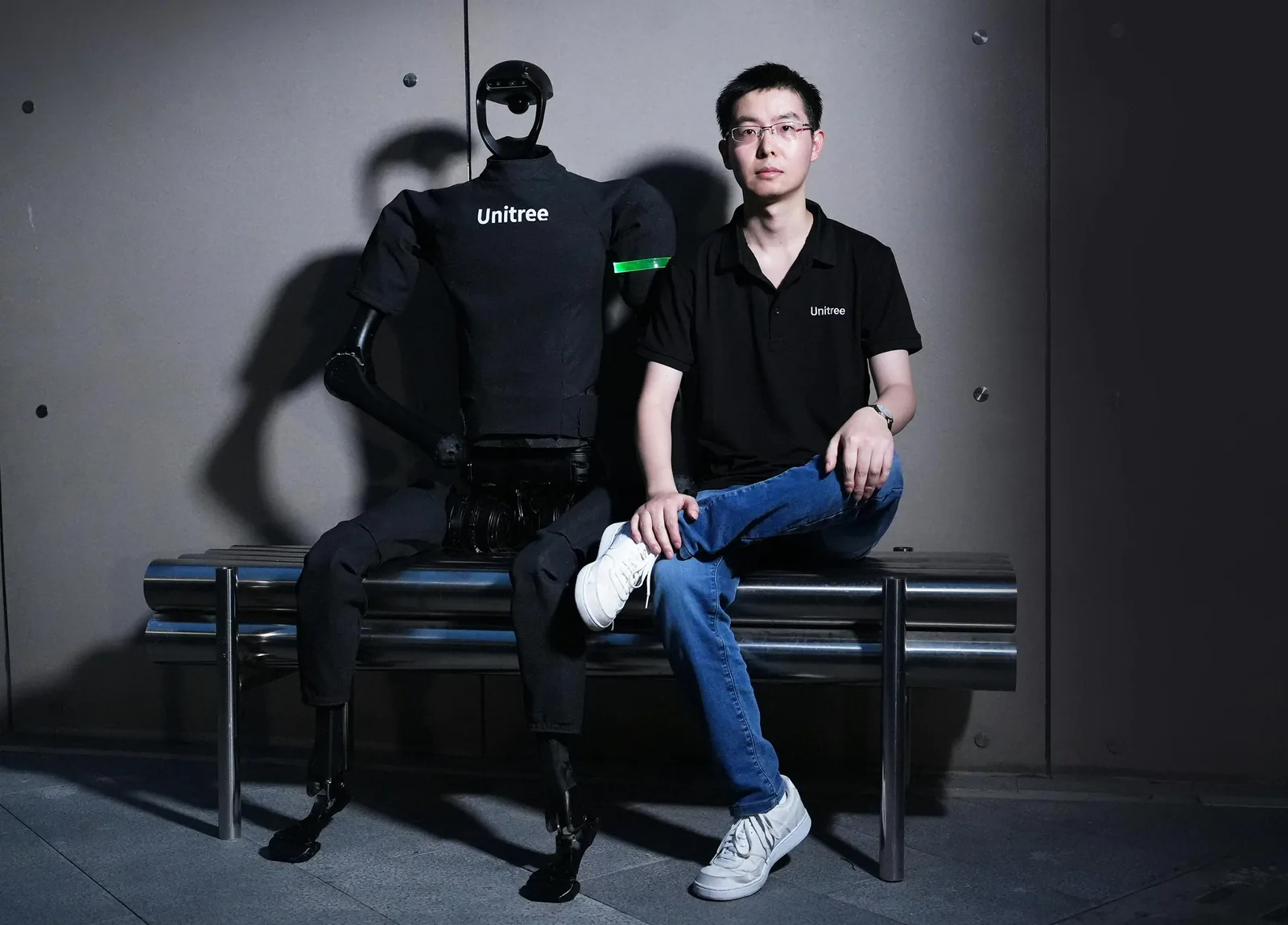 Reference image
Editorial responsibility
- No named human review is recorded for this page.
- Reports are grouped by semantic similarity and deterministic rules. Language models may assist titles, summaries, translation and cross-source analysis; the page reads the event directly, while its address stays stable when the title changes.
- Summary awaiting refresh
Summary awaiting refresh
Cross-source coverage
Reporting timeline
Unitree Stock Falls Below 500 Yuan Again, Halving Market Cap Amid Robot IPO Scrutiny
On September 21, Unitree Technology's stock price fell below 500 yuan per share, closing at 499.73 yuan, down 2.96%, with a market cap of 201.71 billion yuan, down from a peak of about 444.9 billion yuan on its listing day. This decline has fueled market speculation that regulators are tightening IPO standards for humanoid robotics companies. According to reports from Cailianshe, some investment banks have received internal reminders that hard-tech IPOs, including robotics, may face delays if the company's industry position is not sufficiently prominent. In June, the Shanghai Stock Exchange revised its STAR Market listing rules to prioritize embodied intelligence while emphasizing stricter admission standards. In September, unconfirmed foreign media reports suggested the China Securities Regulatory Commission issued informal guidance to raise IPO thresholds for humanoid robotics startups, requiring sustainable revenue or a clear path to profitability and genuine technological innovation. Unitree, which listed on August 19 after a fast-track review process, saw its stock surge 460% on debut before declining sharply. The article notes that at least 28 domestic embodied intelligence companies are pursuing IPOs, and 288 financing events occurred in the first half of 2026, raising over 46 billion yuan. The author argues that the narrative-driven hype of the past two years is collapsing as the secondary market and regulators impose stricter standards, shifting focus from storytelling to sustainable revenue generation.
Read sourceChina Tightens IPO Review Standards for Humanoid Robotics Firms After Market Rout
An article from NetEase Finance reports that Chinese regulators have issued informal window guidance to investment banks and institutions to tighten IPO review standards for humanoid robotics companies. The guidance, confirmed after earlier rumors, focuses on requiring genuine and sustainable revenue (not reliant on subsidies or related-party transactions), a clear path to profitability (e.g., narrowing losses), and proven mass-production capabilities with real-world deployment rather than mere demonstrations. The move is attributed to the sharp post-IPO decline of leading firm Unitree Technology, whose stock fell from a peak of 1,100 yuan to around 458 yuan. The author argues the industry, while strategically important for physical AI, faces a 5-10 year validation period and that the tightening will deflate valuation bubbles, force a differentiation between concept and substantive projects, concentrate funding on leaders, and push companies toward commercialization. The piece notes that the policy does not signal a ban on robotics IPOs but aims to protect retail investors.
Read sourceChina May Tighten IPO Rules for Humanoid Robot Firms After Unitree's Volatile Debut
A report from Cailianshe, published on Tencent Stock, indicates that Chinese regulators may be tightening IPO review standards for humanoid robotics companies, following the volatile market debut of Unitree Technology, the sector's first listed firm. Multiple investment bankers told the outlet they received internal reminders that hard-tech IPOs, including robotics, could face delays if the applicant's industry standing is not sufficiently prominent. The report synthesizes views from bankers and market analysts, identifying three likely focal points for stricter review: revenue authenticity (excluding reliance on subsidies or one-time gains), profitability stability (requiring a narrowing loss trend), and commercial deployment capability (demanding scalable production and real-world applications). The core criterion is whether a company has formed a sustainable commercial loop. While Unitree's post-IPO stock price decline—down 39% from its first-day close by September 20—is seen as a trigger, bankers caution that broader market factors, including a July tech-sector downturn and several mega-IPOs absorbing market liquidity, are also driving the push for higher quality thresholds. The report notes that several robotics firms are still queuing for IPOs on both the A-share and Hong Kong markets.
Read sourceShow 3 older updatesHide older updates
China may tighten IPO vetting for humanoid robot firms after Unitree volatility
A market rumor that Chinese regulators have issued informal guidance to tighten IPO vetting for humanoid robot companies has drawn attention. Reporting by Caixin and Sina Finance indicates that some investment banks have received internal reminders that hard-tech IPOs, including robotics, may face delays if the applicant's industry standing is not prominent. A head券商 clarified that the message is not a formal window guidance but aims to reinforce underwriters' gatekeeping responsibilities. The perceived tightening focuses on three dimensions: revenue authenticity (sustainable recurring income not reliant on subsidies or one-off gains), profitability stability (a clear trend of narrowing losses), and commercial deployment capability (mass production, stable clients, real-world applications). The trigger is believed to be the post-IPO volatility of Unitree Technology, the first humanoid robot stock on the STAR Market, which surged 460% on debut then fell 39% by September 20. Analysts attribute the decline to valuation bubble burst and market sentiment cooling. Some bankers argue the rumor is overstated, noting that the broader July-September market downturn and several mega-IPOs (ChangXin Memory Technology raising 57.9 billion yuan, Enflame Technology raising 6.1 billion yuan) have strained liquidity, making quality thresholds more critical. Despite the perceived tightening, multiple robot firms are queuing for IPOs on both A-shares (Leju Robotics, Yuejiang Technology, Yunshenchu) and Hong Kong's 18C channel (including Zhiyuan Robotics and others). The overall regulatory direction appears to favor companies with sustainable commercial loops and core technological competitiveness, aiming to curb hype and bubbles.
Read sourceRegulators Tighten Scrutiny on Humanoid Robot IPOs, Investment Bankers Confirm
Cailian Press reports that regulators have issued informal window guidance to investment banks and institutional investors, indicating stricter scrutiny for humanoid robot IPOs. Interviews with multiple investment banking professionals reveal that some have received internal reminders regarding hard-tech IPOs, including robotics. Three key areas are under focus: revenue authenticity, profitability stability (with a trend of narrowing losses), and commercialization capability (scalable shipments, stable customer base, real-world deployment). The core issue is whether the company has established a sustainable commercial loop. Unitree Technology's post-listing stock decline, down 39.06% from its first-day close, may have served as a catalyst, reflecting a market re-evaluation of its technological substance and commercialization capabilities. Investment bankers note that the reminder is not limited to robotics but covers hard-tech IPO sectors broadly, aiming to reinforce sponsoring institutions' gatekeeping responsibilities. Multiple robotics companies are queued for listings across A-share and HKEX markets.
China Regulators Signal Tighter IPO Standards for Humanoid Robot Companies, Report Says
According to a report by East Money, Chinese regulators have issued informal window guidance to investment banks and institutions, signaling stricter listing standards for humanoid robot companies. The guidance, which reinforces sponsors' gatekeeping responsibilities, focuses on three key dimensions: revenue authenticity, earnings stability (requiring a trend of narrowing losses), and commercialization capability (including large-scale shipments and real-world deployment). The report suggests that Unitree Technology's volatile post-IPO stock performance, which saw a 460% first-day surge followed by a 39% decline, may have triggered the review. Investment bankers interviewed noted that the guidance is not limited to robotics but covers hard-tech IPOs broadly, and is also influenced by secondary market volatility since July and the issuance of several mega-IPOs. The article lists three humanoid robot companies currently queuing for A-share listings: Leju Intelligent, Yuejiang Technology, and Yunshen Chu.
Read source