China Declares Real Estate Market Has Entered ‘Stock Era’ as Second-Home Sales Surpass 50%
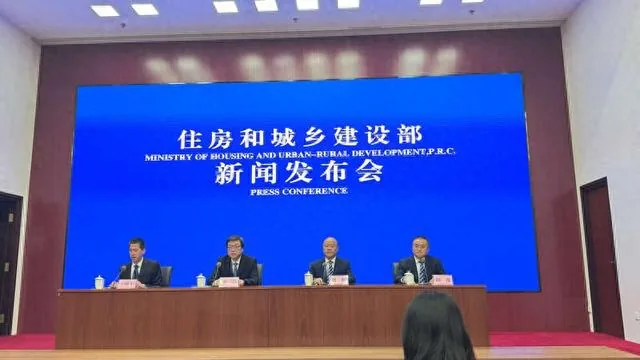
China’s Ministry of Housing and Urban-Rural Development officially declared on September 18 that the real estate market has entered a “stock era,” marked by second-hand home transactions rising from 27% of total sales in 2020 to 52% in the first eight months of 2026, surpassing new homes for the first time. The ministry outlined two major shifts: a fundamental change in supply-demand dynamics and the market’s entry into an existing-housing-stock phase. Policy reforms include a project company system, lead bank system, and a transition to completed-home sales to eliminate delivery risks. The announcement triggered a broad rally in Chinese real estate stocks on September 21.
 Reference image
Editorial responsibility
- No named human review is recorded for this page.
- Reports are grouped by semantic similarity and deterministic rules. Language models may assist titles, summaries, translation and cross-source analysis; the page reads the event directly, while its address stays stable when the title changes.
- Summary covers the current reports
Cross-source coverage
Reporting timeline
China to Reform Real Estate System with Project Company, Lead Bank, and Presale Abolition
According to an analysis published by state-affiliated media outlet 中国城市报, China's real estate market is undergoing a fundamental institutional restructuring to adapt to two major shifts: the market has moved from a supply shortage to a basic balance with local oversupply, and it has entered an 'era of existing stock' where second-hand home transactions now account for over 50% of total sales (52% in the first eight months of 2025, up from 27% in 2020). The reform focuses on three core systems targeting the development, financing, and sales stages. First, a project company system will require each real estate project to be run by an independent legal entity, preventing parent companies from misappropriating project funds. Second, a lead bank system will assign one bank or banking syndicate to each project to manage all funds and provide financing, creating shared risk and reward. Third, a presale-to-completed-sale transition will be implemented, prioritizing 'cash for completed homes' to eliminate delivery risks and 'presale' risks like unfinished buildings. The article asserts these measures aim to isolate risks, improve financing, protect buyers, and guide developers away from high-leverage, high-turnover models toward quality-focused 'good housing' providers, ultimately steering the industry toward stable, healthy, high-quality development.
Read sourceChina to Restructure Real Estate with Three Foundational Reforms as Market Enters Stock Era
According to an analysis published by Economic Daily via Tencent Stock, China's real estate market has undergone two fundamental shifts: supply-demand balance has been achieved with localized oversupply, and the market has entered a 'stock era' where second-hand home transactions rose from 27% of total in 2020 to 52% in the first eight months of 2025. In response, the article states that China will reform three foundational systems centered on individual projects: project company system (isolating each project as an independent legal entity to prevent fund diversion), lead bank system (assigning one bank per project for dedicated financing with shared risk/reward), and presale-to-completed-home sales system (requiring 'cash for completed home' to eliminate delivery risk). The reforms aim to prevent risks, protect homebuyers, and transition developers from high-leverage, high-turnover models to quality-focused 'good housing' providers. The article presents these reforms as a necessary and inevitable trajectory for the industry's healthy development.
Read sourceChina's Housing Ministry Says Real Estate Enters Stock Era as Second-Hand Home Sales Surpass 50%
On September 18, China's State Council Information Office held a press conference for the '15th Five-Year Plan' series. A senior official from the Ministry of Housing and Urban-Rural Development stated that China's real estate market has undergone two major shifts: a fundamental change in supply-demand dynamics, and the entry into a 'stock era' where second-hand home transactions rose from 27% of total sales in 2020 to 46% in 2025, and exceeded 50% (52%) in the first eight months of this year. During the 15th Five-Year Plan period (2026-2030), the ministry plans to adapt to these new trends by balancing risk prevention and transformation, improving people's livelihoods and stabilizing growth, accelerating the establishment of a new real estate development model, and promoting a multi-subject supply, multi-channel guarantee, and rent-purchase parallel housing system. The ministry will promote the shift to presale-free (cash) sales for new homes to eliminate delivery risks, with new projects prioritizing this model and supportive policies on land, finance, and taxation. For projects still using presales, supervision of presale funds will be strengthened to protect buyers' rights.
Read sourceShow 17 older updatesHide older updates
People's Daily: Real Estate Enters Stock Phase, Not a Sign of Industry Decline
An article published by People's Daily and authored by the Dean of Peking University's Guanghua School of Management argues that China's real estate market has entered a 'stock phase,' where existing housing transactions dominate over new construction. It cites data from the Ministry of Housing and Urban-Rural Development showing that second-hand home transactions rose from 27% of the market in 2020 to 46% in 2025, and reached 52% in the first eight months of 2026, surpassing new home sales. The article frames this shift as a natural economic evolution, driven by high per-capita housing area (over 40 sqm) and urbanization nearing 67%. It asserts that the core industry contradiction has moved from total supply shortage to structural supply issues, and that resident demand has shifted from 'having a home' to 'having a good home.' The piece emphasizes that the sector's value must return to its residential, livelihood-oriented purpose, focusing on quality improvement, urban renewal, and stable investment through renovation of old neighborhoods. It interprets the decline in new home sales (-12.1% YoY in first 8 months of 2026) alongside rising second-hand sales (+10.6%) as a structural shift in demand, not a market collapse.
Read sourceVanke A and Greenland Holdings Hit Daily Limit for Second Straight Day
On the afternoon of September 21, China's real estate sector strengthened again, with Vanke A (万科A) and Greenland Holdings (绿地控股) both hitting their daily price limits, marking their second consecutive 'limit-up' days. The rally was supported by a People's Daily article stating that the real estate sector entering a 'stock' phase does not represent a decline in industry development. The article cited data showing that the share of second-hand home transactions in China rose from 27% in 2020 to 46% in 2025, and reached 52% in the first eight months of 2026, surpassing new homes as the main force in the housing market. People's Daily argued that this shift from 'incremental' to 'stock' reflects a return to the fundamental purpose of housing, moving away from an overemphasis on investment attributes. It noted that the core industry contradiction has shifted from total shortage to structural supply insufficiency, and residents' demand has shifted from 'having a home' to 'having a good home', with increasing demands for housing quality, community environment, and property services.
Read sourcePeople's Daily: Real Estate Enters Stock Phase, Not a Decline for the Industry
On September 20, People's Daily published an article by the Dean of Peking University's Guanghua School of Management, arguing that China's real estate market entering a 'stock phase' is not a sign of industry decline but a natural evolution. The article cites Ministry of Housing and Urban-Rural Development data showing that second-hand home transactions rose from 27% of the market in 2020 to 46% in 2025, and 52% in the first eight months of 2026, surpassing new homes as the primary market. It attributes this shift to supply-side factors (per capita housing floor space exceeding 40 sqm, over 1.1 homes per household) and demand-side factors (urbanization near 67%, shift to 'sell old, buy new' improvement demand). The author asserts that the core contradiction has moved from total supply shortage to structural supply shortage, with residents prioritizing quality over quantity. The article concludes that the industry's value anchor is shifting from investment returns to livability, and that policies should focus on risk prevention, transformation, and improving people's livelihoods through urban renewal and quality upgrades.
People's Daily: Real Estate Enters Stock Phase, Not an Industry Decline
On September 21, Hong Kong-listed Chinese property stocks surged, with Sunac China up over 10% and Vanke over 7%, while A-share real estate stocks saw broad gains including multiple limit-up moves. The rally followed a People's Daily article on September 20 stating that China's real estate market has entered a 'stock phase,' citing data from the Ministry of Housing and Urban-Rural Development. The ministry reported that second-hand home transactions rose from 27% of total housing transactions in 2020 to 46% in 2025, and reached 52% in the first eight months of 2026, surpassing new homes as the market主力. The article argues this shift is a natural economic progression, not a decline, as per capita urban housing floor space exceeds 40 square meters and urbanization nears 67%. It emphasizes that the industry's focus should shift from investment to housing quality and livability, with policies supporting urban renewal, old neighborhood upgrades, and improved residential standards. The piece concludes that the decline in new home sales (-12.1% year-on-year in first eight months) alongside rising second-hand transactions (+10.6%) reflects a structural demand shift toward better living spaces rather than market contraction.
Read sourcePeople's Daily: China's Real Estate Enters Stock Phase, Not a Decline of the Industry
An article published by Tencent Stock, attributed to the Dean of Peking University's Guanghua School of Management, argues that China's real estate market has entered a 'stock' or existing-homes phase, which is a natural evolution rather than a downturn. Citing data from the Ministry of Housing and Urban-Rural Development, it notes that second-hand home transactions rose from 27% of the market in 2020 to 46% in 2025, and exceeded 52% in the first eight months of 2026, surpassing new home sales. The author states that per capita urban housing area exceeds 40 square meters, and the urbanization rate is near 67%, shifting demand from quantity to quality. The article asserts that the core contradiction is now structural supply insufficiency, and policy should focus on risk prevention, transformation, and improving living standards through urban renewal and higher-quality housing standards. It concludes that the shift from investment-driven to consumption-driven housing reflects a rational market where people prioritize livability over price speculation.
Read sourceChina's Housing Ministry Confirms Real Estate Enters Stock Era, Shifts to Quality Improvement Phase
According to a research report by Kaiyuan Securities, China's Ministry of Housing and Urban-Rural Development has stated that the real estate industry has entered a 'stock era,' transitioning to a phase focused on improving the quality of existing properties. The report notes that the 'August 28 package of new policies' is being gradually implemented, with local authorities intensively studying and providing feedback, and clearer implementation rules expected by the fourth quarter of 2026. The report maintains a 'positive' rating on the industry, citing significant reforms to foundational systems and potential for further relaxation in core cities regarding restrictive policies,公积金 loans, and urban renewal. Market data for the 38th week of 2026 shows a 6.4% year-on-year decline in new home sales across 30 cities, while second-hand home sales in 15 cities grew 7.7% year-on-year. Land transaction volume increased 13.3% year-on-year, with an average premium rate of 7.2%. The report also highlights risks including market confidence recovery and policy impact falling short of expectations.
Read sourceChina Real Estate Stocks Surge as People's Daily Says Shift to Stock Phase Is Not a Retreat
On September 21, Hong Kong-listed Chinese property stocks surged, with Sunac China rising over 10% and China Vanke over 7%, while A-share real estate stocks also gained. The rally followed a People's Daily article published on September 20, which argued that China's real estate market entering a 'stock phase' is not a retreat but a natural evolution. Citing data from the Ministry of Housing and Urban-Rural Development, the article noted that second-hand home transactions rose from 27% of total housing transactions in 2020 to 46% in 2025, and reached 52% in the first eight months of 2026, surpassing new homes as the market's main driver. The piece attributed this shift to economic development laws, with per capita urban housing floor space exceeding 40 square meters and urbanization nearing 67%. It emphasized that the core contradiction has moved from total shortage to structural supply insufficiency, and that demand is shifting from 'having a home' to 'having a good home.' The article concluded that the sector's value should return to its residential purpose, with policy focusing on risk prevention, transformation, and quality improvement through urban renewal and better housing standards.
Read sourceChina Real Estate Stocks Surge as Vanke Hits Two-Day Limit, Policy Shift Cited
On September 21, Chinese real estate stocks experienced a broad rally, with the Shenwan Real Estate Index closing up 3.95% to lead all sectors. Vanke A shares hit the daily trading limit for a second consecutive day, marking its first such occurrence since September 2024. The surge follows a September 18 press conference by the Ministry of Housing and Urban-Rural Development, which outlined 'two transformations' in the market: a major shift in supply-demand dynamics and the entry into an 'era of existing housing stock,' where second-hand home transactions accounted for 52% of total sales in the first eight months of the year. The ministry emphasized adapting to new market conditions, balancing risk prevention and transformation, and accelerating the construction of a new real estate development model. Analysts at Kaiyuan Securities noted that after the 'August 28' policy package, local authorities are expected to issue clearer implementation rules by the fourth quarter of 2026. The brokerage believes the policy represents a major overhaul of foundational real estate systems, with further room for easing in core cities, including restrictions, provident fund loans, and urban renewal. If policy intensity and pace increase, the stabilization and recovery of the real estate market could accelerate.
Read sourceChina Real Estate Stocks Surge as Housing Sector Enters 'Stock Era', Ministry Says
On September 21, A-share real estate stocks in China experienced a broad rally, with property services leading gains. Stocks such as Vanke, Greenland Holdings, and My Home Love hit their daily price limits. The surge follows a September 18 press conference by the Ministry of Housing and Urban-Rural Development, which declared that China's housing market has officially entered a 'stock era'. Data showed that second-hand home transactions accounted for 52% of total transactions in the first eight months of 2025, surpassing new home sales for the first time. Additionally, a revised Housing Provident Fund regulation took effect on September 20, expanding fund usage from home purchases to cover rental, renovation, and maintenance costs. Analysts at Kaiyuan Securities noted that after the '8·28' policy, foundational reforms are underway, and further easing in core cities could accelerate market stabilization.
Read sourceA-Share and H-Share Real Estate Stocks Rally; People's Daily Says Housing Market Enters Stock Phase
On September 21, Chinese real estate stocks listed in both A-shares and H-shares strengthened, with Sunac China (01918.HK) rising over 10% and Vanke (02202.HK) gaining over 5%. The rally followed a statement by the Ministry of Housing and Urban-Rural Development on September 18, declaring that China's housing market has entered a 'stock phase.' This was reinforced by a People's Daily commentary on September 20, which argued that this transition is not a retreat for the industry but a natural evolution. Data cited shows that second-hand home transactions rose from 27% of total housing transactions in 2020 to 46% in 2025, and reached 52% in the first eight months of 2026, surpassing new home sales as the market's main driver. The commentary attributes this shift to improved housing supply (per capita floor space over 40 sqm) and urbanization nearing 67%, shifting demand from quantity to quality. It emphasizes that the industry's core value must return to housing's residential function, focusing on quality improvement, urban renewal, and meeting residents' needs for better living spaces rather than investment speculation.
Read sourceChina's Housing Market Officially Enters Stock Era, Ministry Declares
The Chinese Ministry of Housing and Urban-Rural Development (MOHURD) has officially declared that China's real estate market has entered a 'stock era,' marking a systemic shift from new construction to existing housing transactions. The declaration is based on a historic change in transaction structure: the share of second-hand home transactions rose from 27% in 2020 to 46% in 2025, and reached 52% in the first eight months of 2026, surpassing new home sales for the first time. The article, authored by a senior researcher at Star Atlas Financial Research Institute and published on NetEase Finance, argues this transition is driven by fundamental changes in housing supply and demand, including a urbanization rate of 67.89% and average urban housing space exceeding 40 square meters per person. It outlines implications for the industry, including a shift from development-driven to operations-driven growth, policy reforms such as cash-sale systems and urban renewal, and challenges for developers and local governments. The analysis emphasizes that the stock era represents market maturation, not contraction, and presents both challenges and opportunities for quality improvement and sustainable development.
China's Second-Home Transactions Surpass 50% Share, Signaling Shift to Stock Housing Market
An analysis published by East Money, citing data from the Ministry of Housing and Urban-Rural Development, reports that second-hand homes now account for over half of all housing transactions in China, a milestone reached in the first eight months of 2026. The share rose from 27% in 2020 to 46% in 2025, crossing the 50% threshold in 2026. The article attributes this shift to China's urbanization transitioning from rapid growth to a stable phase, reducing demand for new housing development. On the demand side, rising homeownership rates have lowered first-time buyer numbers, while existing homeowners increasingly seek upgrades through 'sell old, buy new' transactions. On the supply side, available land for new development is shrinking, while the stock of existing urban homes has grown. The article forecasts that the market's focus will move from construction ('jian') to circulation and services ('liuzhuan' and 'fuwu'), opening growth opportunities in urban renewal, old community renovation, brokerage services, and property management. It calls for stakeholders to adapt to the new stock-dominated era to support economic and housing needs.
Read sourceChina's Housing Ministry Says Real Estate Enters Existing Stock Era, Expands Provident Fund
China's Ministry of Housing and Urban-Rural Development (MOHURD) announced that the country's real estate sector has entered the era of existing stock, making sales of completed homes an inevitable trend. During the 15th Five-Year Plan period, the ministry will expand coverage of the housing provident fund system and solidify the project company system in real estate development to clarify independent implementing entities for each project. MOHURD also urged cities at or above the prefecture level and qualified county seats to improve waiting lists for housing security. Market data showed a shift in buyer behavior in major cities: homebuyers in Guangzhou and Shenzhen prefer paying the full purchase price upfront, with Guangzhou's second-hand home mortgage proportion dropping to 35.6% in August and Shenzhen's full-cash purchases rising. Local governments in Taizhou (Jiangsu), Xi'an, and Changzhou introduced new housing provident fund policies allowing withdrawals for renovating owner-occupied housing, with caps ranging from 100,000 to 200,000 yuan per unit. A Cheung Kong Graduate School of Business survey indicated that respondents' bullish expectations for the property market rebounded to 56%, but willingness to exit remains strong.
Read sourceChina's Real Estate Enters Existing Stock Era as Full-Cash Home Purchases Rise
According to a report from NetEase Finance, Chinese officials from the Ministry of Housing and Urban-Rural Development (MOHURD) stated at a State Council Information Office press conference that the real estate sector has entered the 'era of existing stock' during the 15th Five-Year Plan period. The sector is undergoing transformational development characterized by 'two shifts, two transitions, and three transformations,' including a shift from rapid urbanization to stable development and a transition in supply-demand dynamics. The article cites August social financing data showing new RMB loans totaled only 60 billion yuan, a year-on-year decrease of 530 billion yuan, with household loans contracting by 202.9 billion yuan, indicating continued deleveraging and mortgage prepayment. Data from the Guangzhou Real Estate Agency Association shows the proportion of second-hand home purchases using mortgage financing in Guangzhou fell from 45.08% in June to 35.6% in August, implying a rise in full-cash payments. Similarly, Shenzhen Beike Research Institute data indicates full-cash second-hand home transactions reached 25.3% in the first half of 2026, up 6.3 percentage points year-on-year.
Read sourceChina Real Estate Enters Existing Stock Era as Full Cash Home Purchases Rise
According to a press conference by China's Ministry of Housing and Urban-Rural Development (MOHURD) as part of the 'Starting and Launching the 15th Five-Year Plan' series, the real estate sector has entered the era of existing stock. MOHURD officials outlined three major work areas—urban and rural construction, housing and real estate, and the construction industry—all at a critical transformational juncture characterized by 'two shifts, two transformations, and three modernizations.' The 'two transformations' specifically note that the supply-demand relationship in the real estate market has significantly changed and the sector has entered the existing stock era. Supporting this, August social financing data showed new RMB loans of only 60 billion yuan, a year-on-year decrease of 530 billion yuan, with household loans contracting by 202.9 billion yuan, indicating active deleveraging and early mortgage repayments. Data from the Guangzhou Real Estate Agency Association shows the proportion of mortgage-financed second-hand home transactions in Guangzhou fell from 45.08% in June to 35.6% in August, implying rising full cash payments. Similarly, Beike Research Institute data for Shenzhen in the first half of 2026 shows full cash payments reached 25.3% of second-hand transactions, up 6.3 percentage points year-on-year.
China Housing Ministry: Real Estate Market Enters Era Dominated by Existing Stock
At a State Council Information Office press conference on September 18, Zhang Xuetao, Director-General of the Real Estate Market Supervision Department at China's Ministry of Housing and Urban-Rural Development, stated that the real estate market is undergoing 'two major shifts.' First, there has been a significant change in the supply-demand relationship. Second, the sector has entered an era dominated by existing stock. He cited data showing the share of second-hand home transactions rose from 27% in 2020 to 46% in 2025, and reached 52% in the first eight months of this year. Exceeding the 50% threshold, he said, marks the official entry into the existing stock era. The remarks were part of the 'Starting and Launching the 15th Five-Year Plan' series of briefings.
China Housing Ministry Says Supply-Demand Relationship in Real Estate Has Significantly Changed
On September 18, the State Council Information Office held a thematic press conference as part of the 'Starting Strong for the 15th Five-Year Plan' series. Zhang Xuetao, Director-General of the Department of Real Estate Market Supervision at the Ministry of Housing and Urban-Rural Development, stated that the real estate market is currently experiencing 'two major shifts.' First, there has been a significant change in the supply-demand relationship. Second, the sector has entered an era dominated by existing housing stock. Zhang noted that the share of second-hand home transactions rose from 27% in 2020 to 46% in 2025, and reached 52% in the first eight months of this year, with the 50% threshold marking the entry into this era of existing housing stock.
Read source