China targets 4.5 trillion yuan annual grain industry output by 2030 under new plan
On September 21, China's State Council Information Office held a press conference where the National Food and Strategic Reserves Administration announced that during the 15th Five-Year Plan period (2026-2030), the country will deepen the high-quality grain project, targeting an annual industrial output value exceeding 4.5 trillion yuan. The initiative aims to shift consumer demand from "eating enough" to "eating well and nutritiously," supported by green storage, brand building, and technological innovation.
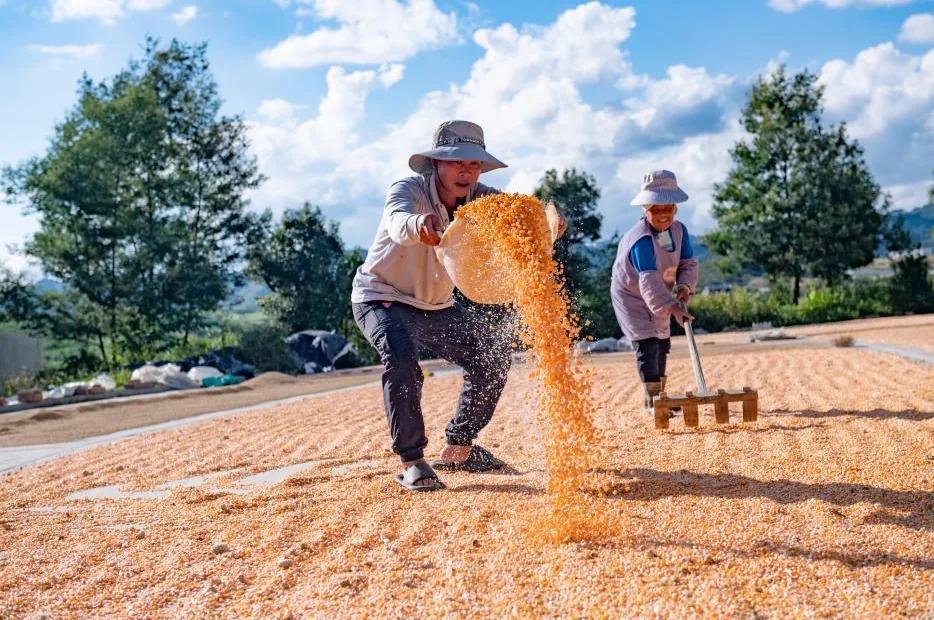 Reference image
Editorial responsibility
- No named human review is recorded for this page.
- Reports are grouped by semantic similarity and deterministic rules. Language models may assist titles, summaries, translation and cross-source analysis; the page reads the event directly, while its address stays stable when the title changes.
- Summary covers the current reports
Cross-source coverage
Reporting timeline
China's grain industry annual output may exceed 4.5 trillion yuan by 2030
According to a press conference held by China's State Council Information Office on the 21st, during the '15th Five-Year Plan' period (2026-2030), China will deepen the implementation of the high-quality grain project to strengthen the grain industry chain. The focus will be on green storage, processing and conversion, and modern logistics, accelerating equipment, product, and technological innovation. The grain industry's annual industrial output value is expected to exceed 4.5 trillion yuan. Qian Yi, Deputy Director of the National Food and Strategic Reserves Administration, stated that the industry will focus on structural optimization, brand building, and innovation-driven development to improve quality and efficiency. The administration plans to promote the development of special dietary foods and expand the use of by-products into food ingredients, feed, and bio-based materials. Qian noted that 33 provincial and 117 city/county-level regional public grain brands have been established. The government will continue to support equipment upgrades and logistics efficiency through fiscal policies and special projects, aiming to boost the industry's overall quality and benefits.
Read sourceChina Outlines Plans for Grain Security and Reserve Management in 15th Five-Year Plan
On September 21, China's State Council Information Office held a press conference on grain circulation work during the '15th Five-Year Plan' period (2026-2030). National Food and Strategic Reserves Administration Director Liu Huanxin stated that China will deepen its national food security strategy, focusing on three key tasks: improving grain购销 (purchase and sales) to ensure smooth market circulation; strengthening grain reserves to ensure stability; and developing the grain industry to enhance supply chain quality and resilience. Liu noted that market-based purchases account for over 90% of total grain procurement, with four channels including commercial buyers, state-owned enterprises, government reserve rotations, and minimum purchase price interventions. Preparations for autumn grain purchases are complete. Regarding global food price increases, Liu said China's grain market remains stable with reliable security guarantees. Deputy Director Qian Yi reported that China has a four-tier emergency response system with nearly 70,000 emergency supply enterprises and daily processing capacity exceeding 180,000 tons for grain and oil. Deputy Director Qin Yuyun stated that a national information platform for grain supervision has been established, and the '15th Five-Year Plan' will use AI-driven regulation for full-chain oversight.
Read sourceChina to Deepen Quality Grain Project Over Next Five Years, Targeting 4.5 Trillion Yuan Output
According to a report from 经济日报 (Economic Daily) on September 21, China's State Council Information Office held a press conference on the '15th Five-Year Plan' (2026-2030). National Food and Strategic Reserves Administration Director Liu Huanxin announced that over the next five years, China will deepen the implementation of the 'Quality Grain Project' to improve the quality and efficiency of the grain industry. The goal is for the annual industrial output value of the grain sector to exceed 4.5 trillion yuan, meeting the public's evolving demand from 'eating enough' to 'eating well' and 'eating nutritiously and healthily'. Deputy Director Qian Yi stated that the plan focuses on strengthening the grain industry chain through tiered utilization of grain as a raw material, fostering leading enterprises, and promoting brand development. The administration aims to build a modern grain circulation system commensurate with China's major-country status, linking farmers' income with consumers' food quality.
Read sourceShow 17 older updatesHide older updates
China Aims to Build Modern Grain Circulation System Under 15th Five-Year Plan
China's National Food and Strategic Reserves Administration outlined plans to establish a modern grain circulation system commensurate with the country's status during a September 21 press conference on the 15th Five-Year Plan (2026-2030). Administrator Liu Huanxin stated that the grain industry's annual industrial output value exceeded 4 trillion yuan during the 14th Five-Year Plan period and is expected to surpass 4.5 trillion yuan in the 15th Five-Year Plan period. Key tasks include improving grain purchasing and sales by balancing market forces and government intervention, optimizing grain reserves with better storage technology and regional distribution, and upgrading the grain industry through chain extension, loss reduction, and innovation. Officials also emphasized building 'safe, smart, green, and clean' grain depots, using AI for supervision, and advancing post-harvest loss reduction. The government plans to increase green grain storage demonstration sites from 70 to over 100 and implement a whole-grain action plan to promote health and food security.
China's grain industry annual output may exceed 4.5 trillion yuan in 15th Five-Year Plan period
According to a press conference held by China's State Council Information Office, the country's grain industry is expected to achieve an annual industrial output value of over 4.5 trillion yuan during the 15th Five-Year Plan period (2026-2030). The forecast was reported by financial media outlet 中金在线, citing officials including Qian Yi, deputy director of the National Food and Strategic Reserves Administration. Qian stated that the industry will focus on structural optimization, brand building, and innovation-driven development to improve quality and efficiency. The plan includes deepening the 'High-Quality Grain Project,' promoting equipment and technological innovation in green storage, processing, and logistics, and encouraging the development of specialty foods and by-product utilization. The industry's output value grew from 3 trillion yuan at the end of the 13th Five-Year Plan to over 4 trillion yuan in the 14th Five-Year Plan period. The government is implementing fiscal support projects for grain circulation and equipment upgrades to boost the sector.
Read sourceChina to Build Modern Grain Circulation System Under 15th Five-Year Plan
China's National Development and Reform Commission and the National Food and Strategic Reserves Administration outlined plans to establish a modern grain circulation system during the 15th Five-Year Plan period (2026-2030). At a September 21 press conference, officials stated that the grain industry's annual industrial output value is expected to exceed 4.5 trillion yuan, up from over 4 trillion yuan in the 14th Five-Year Plan period. Key tasks include improving grain procurement and sales by balancing market forces and government intervention, optimizing grain reserves through better regional distribution and smart storage technologies, and upgrading the grain industry chain to enhance quality and efficiency. The plan also emphasizes building 'safe, smart, green, and clean' grain depots, using AI for supervision, promoting green storage technologies, and reducing post-harvest losses. The government aims to strengthen emergency grain supply systems, with 7 regional emergency support centers and nearly 70,000 emergency supply enterprises already in place. Additionally, the 'Whole Grain Action Plan' will be advanced to promote health and reduce waste.
Read sourceChina's '15th Five-Year Plan' Targets 4.5 Trillion Yuan in Grain Industry Output
According to a press conference by the State Council Information Office, China's National Food and Strategic Reserves Administration announced that during the '15th Five-Year Plan' period (2026-2030), the country will deepen the implementation of the 'High-Quality Grain Project.' The core direction is to shift the grain industry's development model from scale expansion to quality and efficiency improvement, targeting an annual industrial output value of over 4.5 trillion yuan. This initiative aligns with the national 15th Five-Year Plan and the National Planting Industry Development Plan, focusing on upgrading the entire grain supply chain—including production, processing, distribution, and storage. The plan aims to meet rising consumer demand for nutritious and healthy food, supported by an agricultural science and technology contribution rate exceeding 64% and advancements in green production methods. The goal is to optimize value distribution across the industry while ensuring national food security.
Read sourceChina's Grain Bureau: Implementing Projects to Boost County-Level Grain Industry Economy
On September 21, China's State Council Information Office held a press conference on securing the '15th Five-Year Plan' period, focusing on safeguarding national grain security. National Food and Strategic Reserves Administration Deputy Director Qian Yi stated that China's grain industry has grown steadily, with total industrial output value rising from 3 trillion yuan at the end of the 13th Five-Year Plan to over 4 trillion yuan at the end of the 14th Five-Year Plan. For the 15th Five-Year Plan period, the administration will promote high-quality development through 'four strengthenings': optimizing structure by extending industrial chains and developing special dietary foods; strengthening brand leadership by building regional and enterprise brand systems; driving innovation through new technologies like flexible rice mills and AI color sorters; and enhancing support by implementing grain circulation quality and efficiency projects and equipment upgrade projects, with support from the Ministry of Finance and the National Development and Reform Commission, to boost county-level grain industry economies and improve enterprise technology levels.
Read sourceChina's grain regulator outlines plans to reduce storage losses in 15th Five-Year Plan period
On September 21, China's State Council Information Office held a press conference on safeguarding national grain security. A reporter from 21st Century Business Herald asked about further measures to reduce grain loss during the 15th Five-Year Plan period (2026-2030). National Food and Strategic Reserves Administration Deputy Director Qin Yuyun responded that while progress has been made, continued efforts are needed. He outlined three key strategies: First, accelerating facility upgrades by building high-standard granaries (current capacity 730 million tonnes) and expanding green grain storage technology demonstration sites from 70 to over 100 across seven ecological zones. Second, strengthening standards by revising national standards for wheat flour and rice to encourage moderate processing and byproduct utilization. Third, optimizing technical services by deploying experts to major production areas, promoting IoT-controlled ventilation drying and dry grain storage equipment that can reduce loss rates by over 1 percentage point, and addressing issues in grain cleaning, drying, short-term storage, and pest control for farmers.
Read sourceChina to Deepen Grain Security Strategy, Build Modern Distribution System in 15th Five-Year Plan
At a September 21 press conference held by the State Council Information Office, Liu Huanxin, head of China's National Food and Strategic Reserves Administration, announced that during the 14th Five-Year Plan period (2021-2025), China's comprehensive grain production capacity continued to improve, with annual output exceeding 700 million tonnes and the total industrial output value of grain enterprises surpassing 4 trillion yuan. Looking ahead to the 15th Five-Year Plan period (2026-2030), China will deepen its national food security strategy by simultaneously focusing on output and capacity, production ecology, and increasing both production and income. Key tasks include: improving coordination across grain production, purchasing, storage, processing, and sales; guiding diverse market entities to actively participate in grain procurement; organizing policy-based reserves to support price stability; optimizing reserve variety structures and regional layouts; and implementing a high-quality grain project to boost industry quality and efficiency, targeting an annual industrial output value of over 4.5 trillion yuan. The overarching goal is to accelerate the establishment of a modern grain circulation system that promotes better linkage between production and demand, structural optimization, and quality improvement.
Read sourceChina Vows to Strengthen Grain Security as Output Exceeds 700 Million Tons in 2024
In a September 21 press conference, China's National Food and Strategic Reserves Administration outlined plans for the '15th Five-Year Plan' period (2026-2030) to bolster national grain security. Officials stated that China's grain output exceeded 700 million tons for the first time in 2024, reaching 715 million tons in 2025, with per capita grain possession above 500 kg. The administration aims to increase the annual industrial output value of grain enterprises to over 4.5 trillion yuan, up from over 4 trillion yuan at the end of the '14th Five-Year Plan'. Key measures include improving the grain trading platform, enhancing logistics, extending the industrial chain to reduce post-harvest losses, and upgrading emergency supply systems. Officials noted that China's grain market remains stable despite international volatility, with a stock-to-consumption ratio well above the 17-18% international safety threshold. The government also plans to boost innovation in green storage, quality safety, and processing technology, and to expand the use of digital supervision across all state-controlled grain storage facilities.
Read sourceChina's grain industry annual output value expected to exceed 4.5 trillion yuan
At a State Council Information Office press conference on February 21, National Development and Reform Commission (NDRC) official and National Food and Strategic Reserves Administration Director Liu Huanxin stated that during the '14th Five-Year Plan' period, China's grain output surpassed 700 million tons, and the grain industry's annual industrial output value exceeded 4 trillion yuan. For the upcoming '15th Five-Year Plan' period, Liu outlined three key tasks: ensuring smooth grain购销 (purchase and sale), strengthening grain reserves, and upgrading the grain industry chain. He forecast that the grain industry's annual industrial output value could reach over 4.5 trillion yuan through the 'High-Quality Grain Project.' Liu also noted that despite international market fluctuations, China's grain market remains stable, with production resilience, a comprehensive reserve system (with a stock-to-consumption ratio well above the 17-18% international safety line), and a complete processing chain of 24,000 enterprises. Deputy Director Qin Yuyun added that the administration will strengthen quality and safety management in grain storage, focusing on risk monitoring, quality control, and improving regulations and standards to ensure food safety.
Read sourceChina's Grain Industry Eyes 4.5 Trillion Yuan Output During 15th Five-Year Plan
Liu Huanxin, head of China's National Food and Strategic Reserves Administration, announced at a State Council press conference on September 21 that during the '15th Five-Year Plan' period (2026-2030), the grain industry is expected to achieve an annual industrial output value of over 4.5 trillion yuan. The administration will implement the national food security strategy by improving production, storage, purchasing, processing, and sales coordination, and by establishing a modern grain circulation system. Key measures include extending the grain industry chain through deep processing, reducing post-harvest losses via green storage technology, and fostering innovation-driven growth. Deputy Director Qian Yi outlined four priorities: structural optimization to diversify grain-derived products, brand building with regional public brands, innovation in green storage and processing technologies, and enhanced policy support through fiscal projects and equipment upgrades. The goal is to meet rising consumer demand for nutritious and high-quality food while boosting county-level grain economies and farmer incomes.
Read sourceChina's Grain Industry Eyes 4.5 Trillion Yuan Output by 2030, Official Says
At a September 21 press conference held by China's State Council Information Office, Liu Huanxin, head of the National Food and Strategic Reserves Administration, outlined plans for the 15th Five-Year Plan period (2026-2030). He stated that the grain industry's annual industrial output value is expected to exceed 4.5 trillion yuan, driven by a strategy of extending industrial chains, reducing post-harvest losses, and promoting specialized and innovative small and medium-sized enterprises. The plan includes building 'four types of grain depots' (safe, smart, green, and clean), advancing green storage technologies, and boosting the consumption of whole grains, which currently accounts for less than 1% of total grain consumption in China versus 20-35% in developed countries. The goal is to transform the industry from merely ensuring adequate supply to meeting demands for better quality and nutrition.
Read sourceChina Vows to Protect Farmers' Grain Sales, Keep Prices Reasonable in 15th Five-Year Plan
On September 21, China's State Council Information Office held a press conference on safeguarding national grain security during the '15th Five-Year Plan' period (2026-2030). National Development and Reform Commission official and National Food and Strategic Reserves Administration Director Liu Huanxin stated that the grain industry aims to achieve an annual industrial output value of over 4.5 trillion yuan. The administration outlined four pathways for grain procurement: market-based purchases by multiple entities, leading enterprise-driven procurement, government reserve rotation purchases, and minimum purchase price intervention for wheat and rice. Deputy Director Qin Yuyun emphasized quality control through strict inspection at entry, storage, and exit stages to prevent substandard grain from entering the food market. Deputy Director Qian Yi reported that China has nearly 70,000 grain emergency supply enterprises and over 60,000 supply points, with daily processing capacity exceeding 180,000 tons. The administration also plans to promote industrial upgrading through structural optimization, brand building, innovation, and support projects for county-level grain economies.
Read sourceChina's Grain Reserves Reach 730 Million Tons; Official Outlines 'Four Granaries' Plan for 15th Five-Year Period
On September 21, China's State Council Information Office held a press conference on safeguarding national food security during the 15th Five-Year Plan period. Liu Huanxin, head of the National Food and Strategic Reserves Administration, responded to a question from the National Business Daily (NBD), stating that China's standard warehouse capacity has reached 730 million tons. He outlined plans to build 'four granaries'—safe, smart, green, and clean—to improve grain storage management. Liu also noted that China's grain market remains stable despite global uncertainties from El Niño and geopolitical conflicts, citing robust domestic production (715 million tons in 2025), a comprehensive reserve system with a stock-to-consumption ratio well above the international safety line of 17-18%, and a strong processing industry with 24,000 enterprises. The '15th Five-Year' period aims to achieve an annual industrial output value of over 4.5 trillion yuan for the grain sector.
Read sourceChina to Build Safe, Smart, Green, Clean Grain Warehouses in 15th Five-Year Plan Period
On September 21, China's State Council Information Office held a press conference on safeguarding national food security during the 15th Five-Year Plan period (2026-2030). Liu Huanxin, head of the National Food and Strategic Reserves Administration, told reporters from National Business Daily that the administration will focus on building four types of grain warehouses: safe, smart, green, and clean. He noted that China's standard warehouse capacity has reached 730 million tons. The plan includes promoting 'AI + grain storage,' digitalizing processes, and applying green storage technologies. Liu also stated that China's grain output reached 715 million tons in 2025, with per capita grain possession exceeding 500 kg, well above the world average. The administration aims to achieve annual industrial output value of over 4.5 trillion yuan from the grain sector. Liu addressed concerns about global food price volatility due to El Niño and geopolitical conflicts, asserting that China's food security is reliably guaranteed through stable production, comprehensive reserves, and strong processing capacity.
Read sourceChina Targets 4.5 Trillion Yuan in Grain Industry Output by 2030 Under New Food Security Plan
China's National Food and Strategic Reserves Administration outlined plans for the 15th Five-Year Plan period (2026-2030) to strengthen the country's grain circulation system and boost the annual industrial output value of the grain sector to over 4.5 trillion yuan, up from 4 trillion yuan during the 14th Five-Year Plan. At a State Council press conference on September 21, Administrator Liu Huanxin detailed strategies including extending the grain industry chain, reducing post-harvest losses, and promoting specialized development of small and medium enterprises. The plan emphasizes quality improvements alongside quantity, aiming to meet public demand for healthier and more nutritious food. Key initiatives include building 'four types of grain depots' (safe, smart, green, and clean), advancing green storage technologies, and promoting whole-grain consumption through the National Whole Grain Action Plan (2024-2035). Officials stressed the importance of food safety, with strict controls to prevent substandard grain from entering the market. The plan also focuses on technological innovation in grain storage, logistics, and processing, with China's grain storage technologies already reaching advanced global levels.
Read sourceChina's Grain Agency Outlines Measures to Reduce Storage Losses in 15th Five-Year Plan
At a September 21 press conference held by the State Council Information Office, Qin Yuyun, deputy director of China's National Food and Strategic Reserves Administration, outlined plans to reduce grain storage losses during the 15th Five-Year Plan period (2026-2030). The agency will focus on three areas: upgrading storage facilities, with current capacity reaching 730 million tonnes and plans to expand green grain storage demonstration sites from 70 to over 100 across seven ecological zones; strengthening standards by revising national standards for wheat flour and rice to encourage moderate processing and byproduct utilization; and optimizing technical services for farmers, including推广ing IoT-controlled wet grain ventilation drying and dry grain storage technologies in northwest and Huang-Huai-Hai regions, which can reduce loss rates by over 1 percentage point. Qin emphasized that grain conservation is a long-term effort requiring sustained policy implementation.
Read sourceChina to Deepen Grain Security Strategy, Build Modern Circulation System in 15th Five-Year Plan
On September 21, China's State Council Information Office held a press conference where National Food and Strategic Reserves Administration Director Liu Huanxin outlined achievements under the 14th Five-Year Plan (2021-2025) and priorities for the 15th Five-Year Plan (2026-2030). During the 14th plan period, China's comprehensive grain production capacity continued to improve, with annual output exceeding 700 million tonnes, and the grain industry's total industrial output value surpassed 4 trillion yuan. For the 15th Five-Year Plan period, Liu stated that China will deepen implementation of the national food security strategy, simultaneously focusing on output and capacity, production and ecology, and increasing output and income. Key tasks include: improving coordination of grain production, purchasing, storage, processing, and sales; strengthening grain procurement and reserve management; promoting quality and efficiency in grain circulation; optimizing reserve variety structure and regional layout; and implementing the high-quality grain project. The grain industry is expected to achieve an annual total industrial output value of over 4.5 trillion yuan during this period.
Read source