China baijiu market shows structural divergence; Moutai firm, many brands at floor prices
Ahead of the Mid-Autumn Festival and National Day holidays, China's baijiu market shows a "peak season not booming" trend with structural divergence. Feitian Moutai's retail price remains firm around 1,800 yuan per bottle, while many other brands have fallen to "floor prices," according to dealers. Consumption is largely limited to gift and corporate welfare uses, both weakening. Distilleries are shifting from forcing inventory on distributors to tracking real consumption via bottle-opening rates. Brokerages forecast year-on-year sales declines may narrow to near flat, with channel destocking nearing completion.
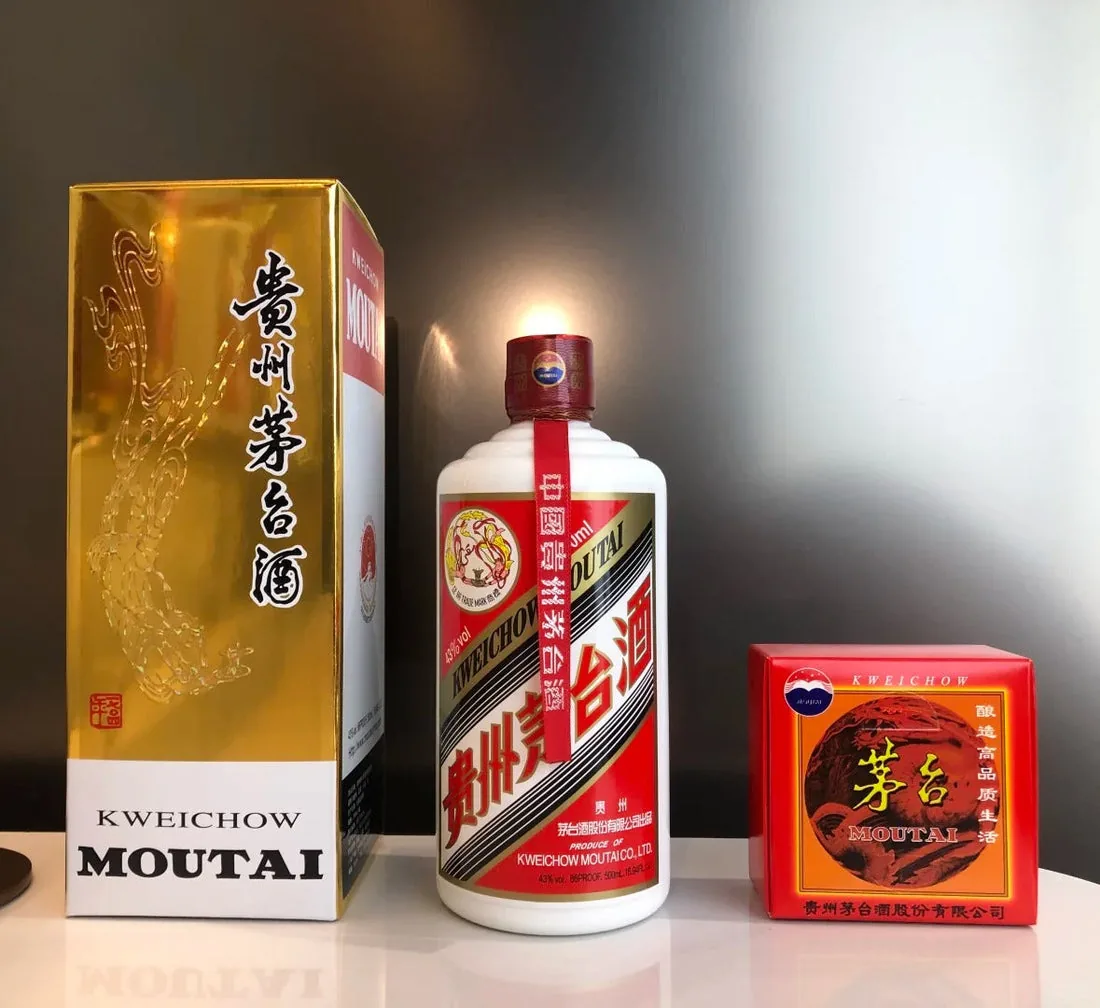 Reference image
Editorial responsibility
- No named human review is recorded for this page.
- Reports are grouped by semantic similarity and deterministic rules. Language models may assist titles, summaries, translation and cross-source analysis; the page reads the event directly, while its address stays stable when the title changes.
- Summary covers the current reports
Cross-source coverage
Common ground
- The holiday season is creating a temporary boost in baijiu demand, but this doesn't signal a long-term recovery.
- Moutai's wholesale price at 1,800 yuan is a key benchmark, but it's influenced by managed supply and state backing, not just consumer demand.
- Geopolitical factors like capital controls are trapping Chinese wealth domestically, which props up luxury baijiu as a store of value.
- The baijiu market is facing structural challenges, including demographic shifts and changing consumer tastes among younger generations.
Points of contention
- Whether the current rally is a genuine recovery or a 'dead cat bounce' masking long-term decline.
- If Moutai's price stability reflects real consumer demand or is artificially maintained by state-owned distributors and managed scarcity.
- Whether the decline in gift-giving and corporate procurement is a healthy correction or a sign of a legitimacy crisis in the consumption model.
- If younger Chinese are significantly shifting away from baijiu to alternatives like whiskey and craft beer, or if this trend is overstated.
Blind spots
- The human cost of the market downturn on farmers, migrant workers, and small distributors is largely ignored in analyst reports.
- The divergence between premium baijiu (like Moutai) and mid-tier brands is often overlooked, with each facing different risks.
- The impact of Western financial weaponization and sanctions on Chinese capital flows and domestic luxury demand is underappreciated.
- The role of speculative demand from wealth parking, rather than genuine consumption, in propping up prices is not fully addressed.
WorldAttention’s read
The baijiu market is experiencing a temporary holiday rally, but this masks deeper structural issues like demographic decline, shifting consumer preferences, and a loss of moral authority in the gift-giving economy. Moutai's price stability is a managed outcome, not a sign of broad market health, and mid-tier brands face genuine demand destruction. Geopolitical factors like capital controls are creating artificial demand, but this is fragile and could reverse with policy changes. The industry needs to adapt to a generation that drinks less and diversifies more, or every rally will remain a short-term bounce on a long-term decline.
Reporting timeline
Zhenjiu Lidu Shares Rise Over 3% as Mid-Autumn and National Day Holiday Season Nears
Zhenjiu Lidu (HK6979) shares rose over 3% to 7.84 Hong Kong dollars in trading, with turnover of 16.56 million Hong Kong dollars. The stock gained amid the approaching Mid-Autumn Festival and National Day holiday season, traditionally a peak period for baijiu consumption. CICC research noted that channel inventory pressure has eased and expects holiday sales to beat current cautious expectations. Huachuang Securities pointed out that baijiu companies generally relieved channel pressure in the second quarter, and with a low base in the second half of the year, more companies may see sales and financial reports turn positive. Looking ahead, analysts believe baijiu companies are moving from passive response to active adjustment, with a potential bottoming out after Moutai's wholesale price stabilizes. The cyclical recovery is expected to see active adjustments in the first half of 2026, with a clearer turning point and gradual improvement in the second half of 2026.
Read sourceZhenjiu Lidu Shares Rise Over 3% as Mid-Autumn and National Day Holidays Approach
Shares of Zhenjiu Lidu (06979) rose over 3% to 7.84 Hong Kong dollars in Hong Kong trading, with turnover of 16.56 million Hong Kong dollars. The gain comes as the Mid-Autumn Festival and National Day holiday season approaches, a peak period for baijiu consumption. Analysts at CICC published a research note stating that channel inventory pressure has eased and that holiday sales may exceed current cautious expectations. Huachuang Securities noted that baijiu companies generally relieved channel pressure in the second quarter, which may further reduce financial report pressure. Under a low base in the second half of the year, more companies' sales and reports are expected to turn positive. The brokerage added that baijiu companies are moving from passive response to active adjustment, with the opportunity lying in the stabilization of Moutai's wholesale price, which would help stabilize market expectations. Huachuang forecasts that active adjustments by baijiu companies in the first half of 2026 will show early signs of improvement, with a clearer turning point and gradual recovery expected in the second half of 2026.
Read sourceZhenjiu Lidu Shares Rise Over 3% as Mid-Autumn and National Day Sales Window Nears
Zhenjiu Lidu (06979) saw its shares rise over 3% to 7.805 Hong Kong dollars in late morning trading, with a turnover of 11.94 million Hong Kong dollars. Guojin Securities issued a note stating that as the Mid-Autumn Festival and National Day holiday sales window approaches, the baijiu sector is showing signs of gradual improvement from its deepest pressures in terms of sales momentum, pricing, and apparent financial strain. The brokerage noted that regional and consumption scenarios continue to diverge, driven by differences in local industrial structures and the recovery of consumption scenarios compared to last year. It highlighted that consumer sentiment among both residents and enterprises is becoming more cautious, leading to a contraction in discretionary hospitality demand, with mid-to-high-end price segments underperforming mass-market price points. While mass gathering demand has not fully materialized, expectations are relatively positive across regions. Feitian Moutai's sales momentum has remained solid since the start of the year, as reflected in its stable-to-rising wholesale prices. Guojin Securities believes the baijiu sector's fundamentals are improving quarter-over-quarter and recommends a medium-to-long-term perspective for valuing baijiu companies based on earnings per share and price-to-earnings ratios, favoring companies with differentiated competitive advantages.
Read sourceShow 3 older updatesHide older updates
Feitian Moutai retail price stays firm; baijiu market shifts to real consumption metrics for Mid-Autumn and National Day
Ahead of the Mid-Autumn Festival and National Day, China's baijiu market shows a 'peak season but not booming' trend, with structural divergence in sales. Feitian Moutai's terminal retail price remains firm at around 1,800 yuan per bottle, while many other baijiu brands have fallen to 'floor prices'. Industry analysts note that consumption is now largely limited to gift and corporate welfare use, both weakening. Distilleries are shifting from forcing inventory on distributors to assessing real consumption rates, using digital incentives to boost bottle-opening rates. Experts like Xiao Zhuqing and Cai Xuefei predict the industry is entering a period of volume contraction and head-brand consolidation, with a true reversal unlikely before 2027. Brokerages such as Huachuang and Guojin Securities see inventory destocking nearing completion and price stabilization as positive signals, forecasting a further narrowing of year-on-year sales decline to near flat.
Read sourceChina Baijiu Prices Rise: Feitian Moutai Hits 5-Day Winning Streak, Fenjiu and Guojiao 1573 Surge
According to Sina Finance's 'Wine Price Insider' data for September 23, the average terminal retail prices of 12 major Chinese baijiu products showed six increases, three decreases, and three stable readings, with rising products dominating in both number and magnitude. Feitian Moutai rose 1 yuan to 1,806 yuan, marking a five-day winning streak and staying above the 1,800 yuan mark for four consecutive days, hitting a one-month high. Wuliangye Puwu 8th Gen rose 3 yuan to 805 yuan, recovering all of yesterday's losses. Qinghua Fen 20 rose 5 yuan to 398 yuan, approaching the 400 yuan threshold. Guojiao 1573 rose 6 yuan to 887 yuan, breaking above its recent trendline. Xijiu Junpin rose 4 yuan to 640 yuan, and Shuijing Jiannanchun rose 3 yuan to 411 yuan, tying a 30-day high. On the downside, Jingpin Moutai fell 1 yuan to 2,459 yuan, extending a three-day decline. The total basket price of all 12 products reached 10,732 yuan, up 19 yuan from the previous day, a seven-day high. Separately, a Pengpai News report noted that the pre-holiday market shows 'peak season not booming, structural divergence,' with high-end prices relatively firm while mid-tier products face pressure. Guojin Securities maintained its view that the industry's 'downturn is moderating,' expecting year-on-year sales declines during the Mid-Autumn and National Day holidays to narrow to slight declines or flat, with channel destocking nearing completion for most brands.
China Baijiu Market Shows Weak Holiday Sales, Moutai Prices Firm, Others at Floor Levels
Ahead of the Mid-Autumn Festival and National Day holidays, China's baijiu (white liquor) market is experiencing a 'peak season but not booming' trend, with structural divergence in sales. According to a survey by The Paper, Feitian Moutai's retail price remains relatively firm at around 1,800 yuan per bottle, while many other baijiu brands have fallen to 'floor prices,' according to dealers. Industry analysts attribute this to a deep adjustment phase, with shrinking demand primarily limited to gift and corporate welfare uses. Independent commentator Xiao Zhuqing noted that 2026 Mid-Autumn sales show clear structural divergence and overall contraction. Analyst Cai Xuefei said the industry is learning to prioritize healthy inventory and price stability over inflated sales, with a true reversal not expected until 2027. Institutions like Huachuang Securities and Guojin Securities forecast that industry sales declines may narrow to a slight drop or stabilization, with channel inventories declining as distilleries shift from pressuring dealers to tracking real consumption via bottle-opening rates.
Read source