23rd China-ASEAN Expo closes with over 1 billion yuan in preliminary AI cooperation deals
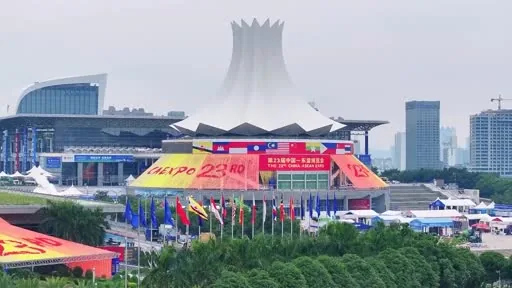
The 23rd China-ASEAN Expo (CAEXPO) concluded in Nanning, Guangxi, from September 17-21, featuring over 3,400 exhibitors from 73 countries. The event emphasized artificial intelligence (AI) cooperation, with an AI exhibition area growing 60% year-on-year. A new AI "supermarket" generated over 28 million yuan in transactions. The expo released 42 AI cooperation demands from ASEAN countries and reached nearly 100 preliminary cooperation intentions, with intended cooperation amounts exceeding 1 billion yuan. The event also featured a first-ever ASEAN Demand Exhibition Area and AI supply-demand matchmaking meetings.
 Reference image
Editorial responsibility
- No named human review is recorded for this page.
- Reports are grouped by semantic similarity and deterministic rules. Language models may assist titles, summaries, translation and cross-source analysis; the page reads the event directly, while its address stays stable when the title changes.
- Summary covers the current reports
Cross-source coverage
Reporting timeline
China-ASEAN Expo Highlights: AI Integration and Demand-Driven Cooperation
The 23rd China-ASEAN Expo, held from September 17 to 21 in Nanning, Guangxi, featured over 3,400 exhibitors across 170,000 square meters. Two key themes emerged: 'integration' and 'demand'. The 'integration' concept refers to a differentiated AI development path of 'R&D in Beijing/Shanghai/Guangzhou, integration in Guangxi, and application in ASEAN'. Companies like Runjian Co. showcased AI solutions, including a photovoltaic station platform monitoring nearly 3,000 sites in Malaysia. The company's vice president Hu Yuele noted Guangxi's 15 fiber-optic cables connecting to ASEAN and efforts to create a 'data free trade zone'. The 'demand' theme was highlighted by a first-ever 'ASEAN Demand Exhibition Area' displaying 89 cooperation needs in transport, logistics, and urban management. A China-ASEAN AI supply-demand matchmaking meeting also took place, with 90 buyers from nine ASEAN countries meeting 80 Chinese AI firms.
Read source23rd China-ASEAN Expo Blends Traditional Products with AI Tech to Boost Regional Trade
The 23rd China-ASEAN Expo (CAEXPO) in Nanning showcases a blend of traditional ASEAN specialties like coffee and fruit with cutting-edge AI technologies, under the theme 'Sharing 3.0 Opportunities, Creating a Better Life'. For the first time, the expo features an 'AI Consumer Marketplace' with over 500 products, including AI glasses and rehabilitation robots, allowing visitors to purchase items on-site. A smart sugarcane robot attracted Thai sugar industry interest for its cost-effectiveness. The event also debuts an 'ASEAN Demand Zone' highlighting needs in smart logistics and AI, supported by an 'AI+Trade Matching' system that pre-matched over 8,000 pairs. The expo coincides with the accelerated implementation of the China-ASEAN FTA 3.0 upgrade protocol, driving new cooperation in digital and green economies. Organizers note that traditional 'specialty products' now serve as a foundation while AI 'special skills' act as a new engine for regional integration.
Read source23rd China-ASEAN Expo Closes with AI-Driven Economic Cooperation Achievements
The 23rd China-ASEAN Expo (CAEXPO) and China-ASEAN Business and Investment Summit concluded in Nanning on September 21, with a strong focus on artificial intelligence (AI) cooperation. According to Wang Jicai, Secretary-General of the CAEXPO Secretariat, the expo's AI exhibition area grew 60% compared to the previous year, featuring 296 exhibitors, a 48% increase. A new AI 'supermarket' attracted over 70 companies selling 500+ products across 8 categories, with total transactions exceeding 28 million yuan. The event released 42 AI application cooperation demands from ASEAN countries and reached nearly 100 preliminary cooperation intentions, including over 1 billion yuan in intended cooperation amounts with ASEAN nations. Yang Yanyan, Secretary-General of the Summit Secretariat, stated that the summit prioritized AI as the main theme, holding four AI-themed side events for the first time and deploying AI tools such as digital hosts and real-time multilingual translation. The expo covered 170,000 square meters across three venues, with 3,432 exhibitors from 73 countries and regions. The 24th CAEXPO is preliminarily scheduled for September 17-21, 2027, with Singapore as the theme country and Nanjing as China's 'Charming City'.
Read sourceShow 5 older updatesHide older updates
China-ASEAN Expo Builds Broad Platform for Cross-Border AI Cooperation
According to a report from Xinhua, the China-ASEAN Expo, currently being held in Nanning, is serving as a broad platform for cross-border AI cooperation. The article states that AI has become a key direction for China-ASEAN digital cooperation, shifting the partnership towards technology collaboration and ecosystem co-building. The expo is focusing on integrating AI with the real economy. Events include the 'China-ASEAN AI Supply-Demand Matchmaking Meeting' and a '2026 AI Future Unicorn Top 100 List Release and AI Scenario Matchmaking Meeting'. The exhibition features an 'AI Supermarket' displaying over 500 products, and for the first time, an 'ASEAN Country Demand Exhibition Area' showcasing project and application needs from ASEAN nations in sectors such as transportation, smart logistics, AI applications, urban management, and park construction. The report is attributed to reporters Qin Guanghua, Huang Kaiying, and Liang Yulang, produced by the Xinhua News Agency Audio and Video Department.
Read source23rd China-ASEAN Expo Showcases Latest Products, AI Innovations in Premier Debut Event
The 23rd China-ASEAN Expo (CAEXPO) opened on September 17 in Nanning, featuring a dedicated 'Premier Debut' zone for new product launches and technological innovations. Since 2023, the expo has established this area in the Nanning International Convention and Exhibition Center to facilitate the display of cutting-edge innovations to ASEAN markets. This year's event focused on developing 'new quality productive forces,' with a strong emphasis on artificial intelligence. A total of 98 enterprises launched 141 new products, including AI-powered robots, smart glasses, and brainwave-based sleep aid systems. Notable exhibitors included Shenzhen Xuanji Power Technology with its intelligent quadruped robot, Shanghai Quanlan Technology with a personalized brain-region sleep aid system, and Guangxi-based Maivei Technology, which demonstrated AI glasses capable of real-time translation between Chinese and multiple ASEAN languages. A Maivei Technology representative noted that the upgraded ASEAN-China Free Trade Area 3.0 protocol has increased demand for cross-border data processing, prompting the company to shift from hardware exports to co-creating intelligent application scenarios with ASEAN partners. Attendees, including long-time expo buyers, remarked that China has evolved beyond being a traditional 'world factory' to possessing globally competitive smart equipment and cutting-edge technology.
Read sourceChina-ASEAN Expo Highlights AI Integration, Demand Matching, and Future Cooperation
The 23rd China-ASEAN Expo, held in Nanning from September 17-21, features 17,000 square meters of exhibition space and over 3,400 exhibitors. Three key themes emerge: 'integration' of AI development via a 'Beijing-Shanghai-Guangzhou R&D + Guangxi integration + ASEAN application' path, with companies like Runjian Co. showcasing smart platforms; 'demand' through a first-ever ASEAN National Demand Exhibition Area and AI supply-demand meetings matching 90 ASEAN buyers with 80 Chinese AI firms; and 'future' with a Future Space Zone displaying electric aircraft, AI glasses, and humanoid robots supporting 20+ languages. The expo aims to deepen industrial integration, as China's intermediate goods trade with ASEAN grew 24.5% year-on-year in the first half of 2025. A permanent 'AI Supermarket' will continue selling Chinese AI consumer products post-expo.
Read sourceChina-ASEAN Expo Blends Traditional Products with AI Tech to Boost Regional Trade
The 23rd China-ASEAN Expo in Nanning showcases a fusion of traditional regional specialties like coffee and fruit with cutting-edge AI technologies, reflecting the theme 'Shared 3.0 Opportunities, Create a Better Life'. For the first time, the expo features an 'AI Consumer Marketplace' with over 500 products, including AI glasses and rehabilitation robots, allowing visitors to purchase items directly. An 'ASEAN Needs Exhibition Area' highlights regional demand in smart logistics and AI applications. The event also introduces an 'AI+Trade Matching' system that has pre-matched over 8,000 trade pairs, shifting from chance encounters to data-driven partnerships. Notable products include a smart sugarcane robot priced at 150,000 yuan, offering cost-effective farming solutions. The expo coincides with the accelerated implementation of the China-ASEAN FTA 3.0 upgrade protocol, boosting cooperation in digital and green economies. The article attributes the shift to a new economic model where traditional products serve as a foundation and AI as a growth engine.
Read sourceChina-ASEAN Expo Highlights AI Integration, Demand Matching, and Future Tech Cooperation
The 23rd China-ASEAN Expo, held September 17-21 in Nanning, Guangxi, featured 3,400 exhibitors across 170,000 square meters. Three key themes emerged: 'integration' of AI development along a 'Beijing-Shanghai-Guangzhou R&D + Guangxi integration + ASEAN application' path, with companies like Runjian Co. showcasing smart solar farm management systems for Malaysia; 'demand' matching through a first-ever ASEAN Needs Exhibition area and an AI supply-demand meeting connecting 90+ buyers from 9 ASEAN countries with 80 Chinese AI firms; and 'future' technologies including electric aircraft, AI glasses, humanoid robots supporting 20+ ASEAN languages, and a permanent 'AI Supermarket' for ASEAN markets. The expo reflects deepening China-ASEAN industrial integration, with bilateral trade in intermediate goods reaching 2.86 trillion yuan in H1 2025, up 24.5% year-on-year. Guangxi Social Sciences Academy researcher Lei Xiaohua noted the platform now seeks 'puzzle pieces' for industrial chain collaboration, signaling higher-level cooperation.
Read source