Over 4,300 Stocks Fall as Analysts Advise Caution Ahead of China's Mid-Autumn Holiday
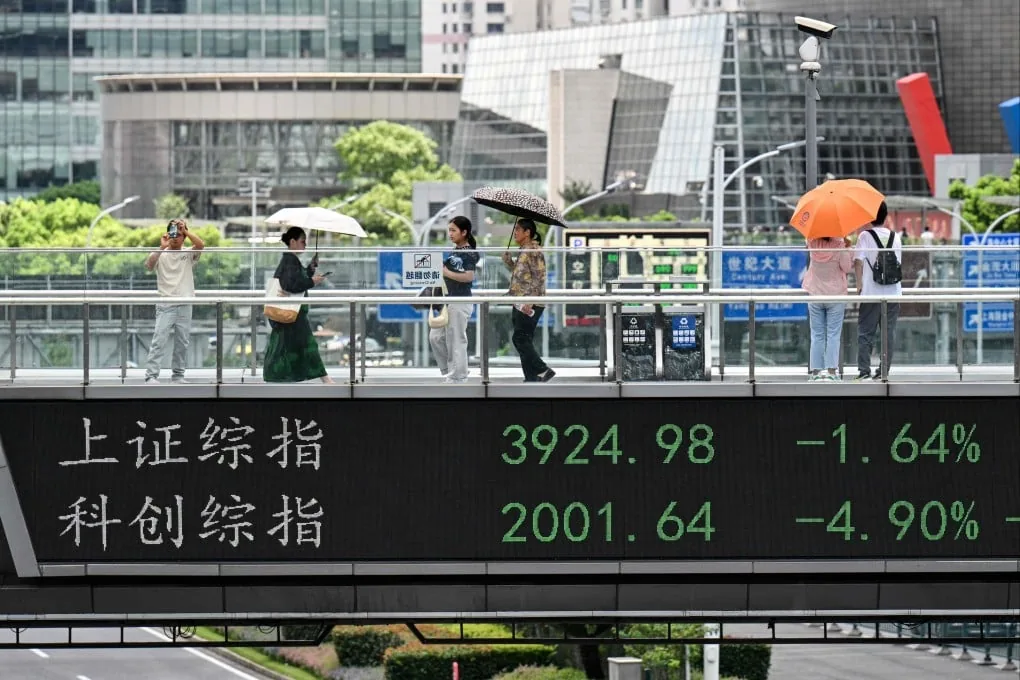
On September 28, Chinese A-share markets fell sharply, with the Shanghai Composite Index down 1.67%, the Shenzhen Component Index dropping 3.44%, and the ChiNext Index plunging 4.53%. Over 4,500 stocks declined. Analysts cited pre-National Day holiday risk aversion, global market weakness, quarter-end institutional rebalancing, and a proposed US Senate bill targeting Chinese-made AI optical transceivers. The bill has not been voted on and faces an uncertain path. Small-cap and dividend stocks showed relative resilience.
 Illustration
Editorial responsibility
- No named human review is recorded for this page.
- Reports are grouped by semantic similarity and deterministic rules. Language models may assist titles, summaries, translation and cross-source analysis; the page reads the event directly, while its address stays stable when the title changes.
- Summary covers the current reports
Cross-source coverage
Reporting timeline
China A-shares plunge on holiday effect, global market pressure, and fund rebalancing
Chinese A-share markets experienced a sharp decline on September 28, with the Shanghai Composite Index falling 1.67%, the Shenzhen Component Index dropping 3.44%, and the ChiNext Index plunging 4.53%. Only 898 stocks rose while 4,554 fell. The article attributes the sell-off to four main factors: the upcoming National Day holiday prompting risk-off behavior; global market resonance with Japan, South Korea, and US futures falling alongside oil price surges and precious metals declines; end-of-quarter institutional portfolio rebalancing causing volatility; and a US Senate bill targeting Chinese-made AI data center optical transceivers for sensitive federal systems. Analysts quoted in the report downplay the bill's impact, noting it only affects a small portion of the market and that major US cloud providers have already diversified supply chains. The bill has not yet been voted on and faces an uncertain legislative path.
Read sourceChina A-shares Fall Sharply on Monday, Breaking Support Levels, as Tech Weighs
Chinese A-share markets experienced a sharp and unexpected decline on Monday, September 28, with the Shanghai Composite Index falling 1.67%, the Shenzhen Component Index dropping 3.44%, and the ChiNext Index plunging 4.53%. Over 4,500 stocks fell, and trading volume reached 1.7 trillion yuan. The decline was described as 'unexpected' and 'breaking support levels' by the source, as weekend sentiment was cautiously optimistic. The primary driver was a steep sell-off in major technology stocks, particularly in the optical module sector, which fell over 8%. Analysts attributed the drop to a combination of factors: pre-holiday trading effects, weakness in overseas markets (Japan, Korea, US futures), quarter-end institutional rebalancing, and concerns over renewed US legislative proposals to ban Chinese optical modules. Despite the broad sell-off, small-cap and dividend stocks showed relative resilience. The article cites a report from GF Securities strategy team, which advises against further selling before the holiday, noting that markets have historically rebounded after the National Day holiday. The report forecasts that TMT sectors are likely to outperform in the first week after the holiday and suggests that any further correction in growth stocks could present a buying opportunity for Q4, citing Q3 earnings advantages and AI industry catalysts.
Read sourceChina's A-shares fall below 3,900 points on external pressures and sentiment, analysts say
On September 27, China's A-share market experienced a significant decline, with the Shanghai Composite Index falling 1.22% to below 3,900 points, the Shenzhen Component Index dropping 2.34%, and the ChiNext Index losing 2.68%. Total trading volume reached approximately 1.65 trillion yuan. Multiple market experts attributed the adjustment primarily to external market volatility and sentiment amplification, rather than fundamental changes. Key external factors include strong U.S. economic data (September PMI at 58.4) raising expectations of further Federal Reserve rate hikes, pushing 10-year U.S. Treasury yields to 19-year highs, and Middle East geopolitical tensions driving oil prices back to $100 per barrel. The article notes that A-shares fell more sharply than overseas markets, suggesting sentiment-driven selling. Despite the downturn, the report emphasizes China's stable economic fundamentals, with H1 2026 GDP growth of 4.7%, corporate earnings growth of 19.5%, accommodative monetary policy, and continued inflow of long-term capital including ETFs and dividend-paying stocks. Experts advise investors to maintain a long-term perspective.
Show 3 older updatesHide older updates
Pre-holiday adjustment releases risk; post-holiday capital return seen as key to A-share recovery
On the last trading day before China's Mid-Autumn and National Day holidays, A-share markets fell sharply, with the Shanghai Composite closing at 3888.37 points, down 1.22%, and the Shenzhen Component and ChiNext indices dropping over 2.3%. Trading volume shrank to 1.67 trillion yuan. Analysts attribute the decline to a combination of external factors, including hawkish signals from a Federal Reserve official and rising US long-term bond yields, and domestic pre-holiday liquidity contraction and weak sentiment. However, analysts cited in the article note that the probability of a US rate hike has fallen from 75% to 68.6%, and that the rise in US bond yields reflects inflation concerns and supply pressure rather than a sustained tightening path. Domestic data shows private equity fund positions rising for two consecutive weeks, with 67% of funds over 80% invested, suggesting institutional confidence in the medium term. Analysts from Jufu Investment and other securities firms expect that the rapid decline has released risk, and that a rebound is possible after the holiday if capital flows back and external uncertainties ease. They caution that risks remain from overseas tightening, pre-holiday liquidity swings, and sentiment volatility, recommending position management.
Read sourceA-share market plunges with over 4,300 stocks falling; hot new stocks crash
On September 24, 2026, ahead of the Mid-Autumn Festival, China's A-share market experienced a broad decline, with the Shanghai Composite Index falling over 1% to below 3,900 points, and the Shenzhen Component Index and ChiNext Index both dropping over 2%. More than 4,300 stocks declined. Analysts attributed the sell-off to a combination of internal and external factors. Guo Yiming from Jufeng Investment Advisors cited hawkish signals from Fed Governor Barr, which pushed up global risk-free rates and pressured risk assets, particularly growth stocks. Additionally, the approaching National Day holiday reduced trading activity. Notable new stocks like Shengu Group and Century Digital saw sharp declines of over 56% from their highs. Star Rock Investment noted that pre-holiday risk aversion is typical, but the medium-term outlook remains positive with structural opportunities. Yang Delong from First Seafront Fund predicted a potential rebound in Q4, contingent on US stock market stability. Guo Yiming advised maintaining a reasonable position for the holiday, focusing on sectors with strong earnings visibility and industrial trends.
Read sourceOver 4,300 Stocks Fall as Analysts Advise Caution Ahead of China's Mid-Autumn Holiday
On September 24, A-shares continued a broad decline with shrinking volume, as the Shanghai Composite fell 1.22% to 3888.37, the ChiNext dropped 2.68%, and the Shenzhen Component lost 2.34%. Total turnover in the Beijing-Shanghai-Shenzhen markets fell by 114 billion yuan to 1.7 trillion yuan. Margin balances stood at about 2.66 trillion yuan as of September 23. Only 4 of 31 Shenwan primary sectors were slightly positive, with coal and banking supporting the market. Over 4,300 stocks declined, while 1,120 rose. Ge Shang Fund researcher Bi Mengran attributed the sell-off to pre-holiday risk aversion ahead of the long Mid-Autumn and National Day break, with funds reducing exposure to avoid external uncertainties. She noted that overseas long-term interest rates are pressuring growth sectors like electronics and communications, and the market lacks a new sustained theme. Bi assessed that the decline is not panic-driven but reflects typical pre-holiday weakness and low risk appetite. She expects continued low-volume, weak consolidation before the holiday, with defensive sectors outperforming. She advised investors to control overall risk, reduce high-risk positions lacking earnings support, and maintain fundamentally backed core holdings with strict leverage control.
Read source