Merz vows to continue reforms after CDU suffers ‘disaster’ in Mecklenburg-Vorpommern state election
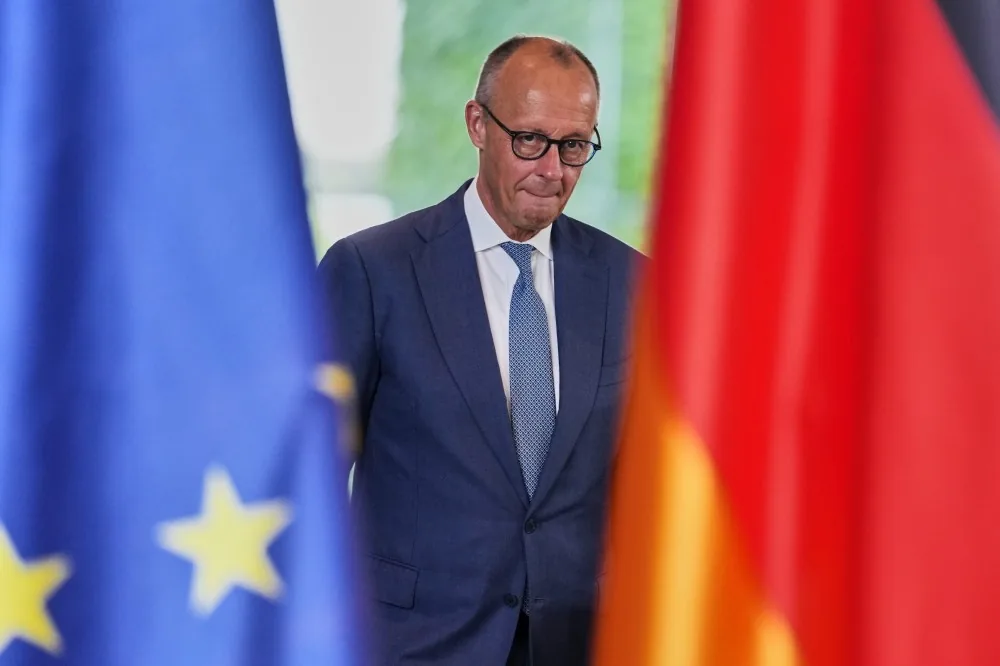
German Chancellor Friedrich Merz called the CDU’s result in the Mecklenburg-Vorpommern state election a “disaster,” with projections showing the party at just over 5% and risking failure to enter parliament for the first time. The CDU also performed poorly in Berlin, landing at 20%. Merz vowed to persist with government reforms, describing them as “the antidote to authoritarian poison,” and rejected any policy reversal.
 Reference image
Editorial responsibility
- No named human review is recorded for this page.
- Reports are grouped by semantic similarity and deterministic rules. Language models may assist titles, summaries, translation and cross-source analysis; the page reads the event directly, while its address stays stable when the title changes.
- Summary covers the current reports
Cross-source coverage
Common ground
- Merz's refusal to take questions after the election loss is a democratic failure, whether from panic or malice.
- The CDU lacks a clear identity and offers no specific policies on energy, migration, or public investment.
- Economic neglect and cultural humiliation in eastern Germany are real factors driving voter discontent.
- Voters are abandoning the CDU for both the AfD and the Left Party, showing a rejection of the status quo.
- Merz is a symptom of a deeper problem, not the root cause of the CDU's decline.
Points of contention
- Whether Merz's actions are a deliberate strategy to delegitimize dissent or just incompetence and panic.
- Whether the AfD's rise is primarily due to economic neglect or cultural anxiety and xenophobia.
- Whether eastern Germany's situation is best described as 'colonial extraction' or mismanagement by local elites.
- Whether humiliation inevitably leads to far-right backlash or if the AfD's choices are independent of context.
- Whether the Left Party's gains are a sign of democratic alternatives or just another protest vote.
Blind spots
- The debate overlooks how the Left Party's concrete policies on housing and transport offer a democratic alternative that challenges both the CDU and AfD.
- There is little discussion of how EU and federal subsidies were controlled by western interests, not just local elites.
- The role of cultural erasure and patronizing attitudes from western elites in fueling regional resentment is underplayed.
- The comparison to similar patterns in other countries (France, UK, US) is mentioned but not fully explored.
- The possibility of a genuine third way—economic justice without xenophobia—is raised but not developed.
WorldAttention’s read
The CDU's disaster in Mecklenburg-Vorpommern is not just about losing an election—it's about a party that has lost its way. Merz's refusal to take questions after calling the result a 'disaster' shows a leader who panics rather than listens, whether from incompetence or a deliberate strategy. Voters are abandoning the CDU for both the far-right AfD, which offers scapegoats, and the Left Party, which offers concrete solutions on housing and public services. The real problem is that the CDU offers nothing but nostalgia and empty rhetoric. While economic neglect and cultural humiliation in eastern Germany are real, the AfD's rise isn't inevitable—it's a choice that feeds on grievance. Until the CDU offers specific policies on energy, migration, and investment, and until Merz learns that losing means listening, these losses will keep happening. This isn't just Germany's problem; it's a warning for democracies everywhere.
Reporting timeline
CDU faces worst-ever results in Berlin and Mecklenburg-Vorpommern state elections
On September 20, 2026, the Christian Democratic Union (CDU) suffered historically poor results in two German state elections. In Mecklenburg-Vorpommern, the CDU achieved just over 5 percent according to projections, risking failure to enter the state parliament for the first time ever. In Berlin, the CDU landed at 20 percent, trailing behind the Left Party. Federal Chancellor and CDU leader Friedrich Merz appeared before the press unusually quickly after the projections, calling the Mecklenburg-Vorpommern result 'a disaster.' Merz declared he would remain steadfast and push through reforms as both chancellor and party leader, describing reforms as 'the antidote to the authoritarian poison.' He allowed no follow-up questions. The article, written by Anna Lehmann and Stefan Alberti for taz.de, notes that the worst-case scenario of failing to enter the Mecklenburg-Vorpommern parliament could reignite discussions about replacing Merz as chancellor, which had only recently been stifled.
Read sourceGerman Chancellor Merz Calls Mecklenburg-Vorpommern Election Result a Disaster for CDU
On September 20, following exit polls for the Berlin and Mecklenburg-Vorpommern state parliament elections, German Chancellor Friedrich Merz described the Mecklenburg-Vorpommern result as a disaster for his party, the CDU. Merz attributed the outcome to declining public trust in state institutions, citing challenges and uncertainties brought by change. He acknowledged personal responsibility as party leader and chancellor, stating he is prepared to move the country forward with determination, resolve, and patience. The report notes that a far-right party is leading in the Mecklenburg-Vorpommern election. Merz emphasized that Germany cannot return to the past but must embrace change to become a country full of new beginnings.
Read sourceGerman Chancellor Merz Calls Mecklenburg-Vorpommern Election Result a Disaster for CDU
On September 20 local time, exit polls for the Berlin state parliament and Mecklenburg-Vorpommern (Mecklenburg-Western Pomerania) state parliament elections were released. German Chancellor Friedrich Merz stated that the election results in Mecklenburg-Vorpommern were a disaster for his Christian Democratic Union (CDU). Merz said the results indicated that Germans' trust in state institutions is declining, and that the changes brought challenges and new uncertainties. He added, 'We cannot return to the good old days; we need change, and Germany must become a country full of new beginnings.' The report was sourced from CCTV International News via Cailian Press on September 21.
Read sourceShow 2 older updatesHide older updates
Merz vows to continue reforms despite CDU losses in state elections, calls them 'antidote to authoritarian poison'
Following poor results for the Christian Democratic Union (CDU) in state elections in Mecklenburg-Vorpommern and Berlin, German Chancellor Friedrich Merz has stated his intention to persist with the government's reform course. In a statement reported by Die Welt on September 20, 2026, Merz described the reforms as 'the antidote to the poison of authoritarianism.' He emphasized that proceeding with the agenda requires 'backbone, steadfastness, and patience.' The article notes that the CDU performed poorly in both state elections, but Merz remains committed to the chosen path despite the electoral setbacks.
Merz calls CDU defeat in Mecklenburg-Vorpommern a 'disaster,' vows to continue reforms
German Chancellor Friedrich Merz (CDU) described the party's result in the Mecklenburg-Vorpommern state election as a 'disaster' during a statement at the Konrad Adenauer House in Berlin on September 20, 2026. Despite the poor showing, Merz firmly rejected any policy reversal, stating that the government's reforms are 'the antidote to authoritarian poison.' He acknowledged that the reforms require sacrifices and will not be immediately popular, but insisted they are necessary for Germany to become 'a land of new beginnings' and to restore upward mobility and prosperity, especially for young people. Merz characterized the CDU's result in Berlin as 'decent,' noting the difficult circumstances faced by lead candidate Stefan Evers. The Chancellor called for 'backbone, steadfastness, and patience' in implementing the reform agenda.
Read source