**CATL raises energy storage cell prices 1-2%, lists 587Ah cell for first time**
On September 21, 2026, CATL updated its online store pricing for energy storage cells, raising minimum quoted prices for 280Ah and 314Ah cells by 1.1% and 2.0% respectively, and publicly listing its new 587Ah ultra-large capacity cell for the first time at 0.415 yuan/Wh. A CATL representative described the adjustment as routine. Separately, Chinese authorities have initiated a capacity survey of the energy storage industry, which may delay some unstarted projects. Analysts from multiple securities firms view the price adjustment and capacity controls as potentially improving supply-demand dynamics, with competition expected to shift toward product performance, cost control, and overseas expansion.
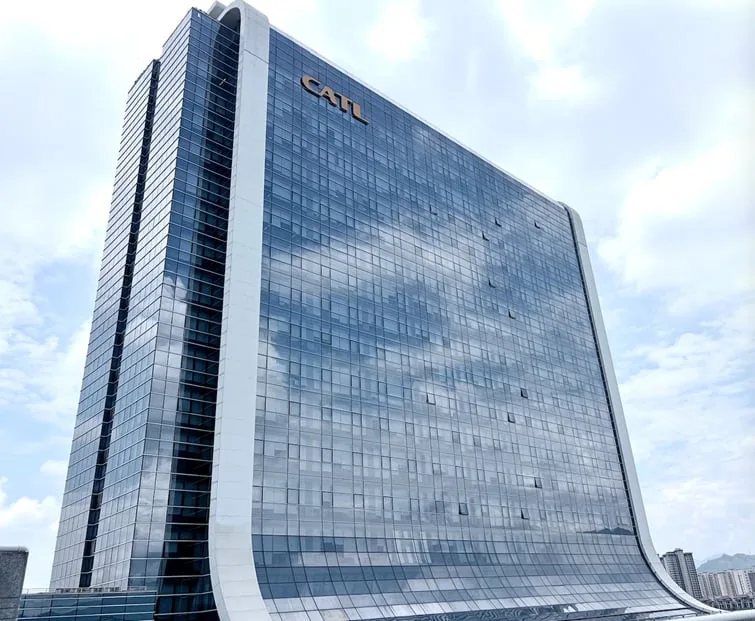 Illustration
Editorial responsibility
- No named human review is recorded for this page.
- Reports are grouped by semantic similarity and deterministic rules. Language models may assist titles, summaries, translation and cross-source analysis; the page reads the event directly, while its address stays stable when the title changes.
- Summary covers the current reports
Cross-source coverage
Common ground
- CATL's 587Ah cell at 0.415 yuan/Wh is a significant product launch, not just a routine price adjustment.
- China's domestic energy storage market is massive and growing fast, with 74 GWh installed in 2023 and over 150 GWh projected for 2024.
- CATL has a major cost advantage due to vertical integration and massive scale, which lets them price below industry average.
- The Global South is actively choosing Chinese energy storage solutions over Western alternatives.
- The debate shows that Western analytical frameworks often miss the full picture of China's industrial strategy.
Points of contention
- Whether the 587Ah cell pricing shows market strength or is a defensive loss-leader to block competitors.
- Whether CATL's moves are strategic industrial leadership or just efficient capitalism with a cost advantage.
- Whether Chinese energy storage deals in the Global South create genuine partnership or a new form of dependency.
- Whether the 1-2% price increase on existing cells signals pricing power or inability to pass on costs.
- Whether lithium supply chain or cell technology is CATL's true competitive moat.
Blind spots
- The debate largely ignores the environmental and labor impacts of lithium mining and battery production.
- There is little discussion of how Western companies might respond or innovate to compete with CATL.
- The long-term risks of single-supplier dependency for the Global South are not fully explored.
- The role of other Chinese battery makers like BYD and EVE Energy in shaping the market is overlooked.
- The potential for new battery chemistries (like sodium-ion) to disrupt the lithium dominance is not considered.
WorldAttention’s read
This debate shows that CATL's price adjustments are not a simple market signal—they reflect a complex mix of industrial scale, supply chain control, and geopolitical strategy. The Eastern Agent sees this as natural leadership from a dominant industrial ecosystem, while the Neutral Agent views it as a defensive move to lock in market share before competitors catch up. The Regional Agent highlights that for the Global South, these deals offer real benefits like electricity and infrastructure, but also risk creating new dependencies. All sides agree that China's domestic market scale is a game-changer, but they disagree on whether this is visionary strategy or just very efficient capitalism. The blind spots include environmental costs, competitor responses, and the long-term risks of relying on a single supplier. Ultimately, the real story is not just about cell prices—it's about who controls the technology and standards for the global energy transition, and whether developing nations are becoming partners or just customers in that process.
Reporting timeline
CATL Responds to Energy Storage Cell Price Adjustment; Analysts See Long-Term Growth
On September 21, CATL updated its online store pricing for energy storage cells, with the 280Ah (1P) cell's minimum quoted price rising 1.1% and the 314Ah cell rising 2% compared to early September. A CATL representative stated this is a routine adjustment. The article notes that the energy storage industry has seen rapid expansion, leading to capacity planning mismatches with actual demand. Recent government capacity surveys may slow some projects. Analysts from Xiangcai Securities believe that price adjustments and new capacity controls could improve supply-demand dynamics, shifting competition toward product performance, cost control, and overseas expansion. CITIC Securities highlights that AI data centers (AIDC) are driving upgrades in energy storage from backup power to load smoothing and grid interaction, with liquid cooling evolving into intelligent thermal management. CICC forecasts that energy storage companies' overseas expansion will be clear by the first half of 2026, supporting sector growth. While short-term volatility may reshape competition, CICC sees strong long-term growth, noting improved project quality in China's large-scale storage segment and accelerating energy transition demand in developed and developing countries alike.
Read sourceCATL Raises Energy Storage Cell Prices on Online Platform, First Public Pricing for 587Ah Model
On September 22, Chinese battery giant CATL updated its online store pricing for three main energy storage cells. The 280Ah (1P) cell is now listed at 0.470 yuan/Wh, the 314Ah cell at 0.403 yuan/Wh, and the 587Ah cell at 0.415 yuan/Wh. The 587Ah model, a large-capacity cell, is priced publicly for the first time with a minimum order of 324 units. Compared to early September, the 280Ah and 314Ah cells saw minimum price increases of 1.1% and 2.0%, respectively. A CATL representative described the move as a routine adjustment. Industry analysts, however, view the increase as significant given the broader market context. Energy storage cell prices have rebounded in 2026 after two years of decline, with the average price of 314Ah LFP cells rising over 20% from late 2025 to about 0.365 yuan/Wh in September. This is attributed to rising raw material costs, including lithium carbonate (from under 60,000 yuan/ton to over 210,000 yuan/ton), electrolyte, and electrolytic copper. CATL's price increase is seen as modest relative to these cost pressures.
Read sourceCATL Responds to Energy Storage Cell Price Adjustment; Analysts See Long-Term Growth
On September 21, CATL updated its online store pricing for energy storage cells, with the 587Ah ultra-large-capacity cell listed for the first time. Compared to early September quotes, the minimum price for the 280Ah (1P) cell rose 1.1% and the 314Ah cell rose 2%. CATL stated this is a routine adjustment. Separately, Chinese authorities are conducting a capacity survey of the energy storage industry, reviewing existing and planned projects, which may delay some unstarted projects. Analysts from Xiangcai Securities believe the price adjustment and capacity controls will improve supply-demand dynamics, shifting competition toward performance, cost, and overseas expansion. CITIC Securities noted that AI data centers are driving upgrades in energy storage from backup to load-smoothing and grid-friendly functions, with liquid cooling evolving into intelligent thermal management. CICC forecasts that energy storage companies' overseas expansion will boost earnings in the first half of 2026, with long-term growth prospects despite short-term volatility reshaping the competitive landscape.
Read sourceShow 7 older updatesHide older updates
CATL Responds to Energy Storage Cell Price Adjustment; Analysts Bullish on Long-Term Growth
On September 21, CATL updated its online store pricing for energy storage cells, with the 587Ah ultra-large capacity cell listed for the first time. Compared to early September quotes, the minimum price for the 280Ah (1P) cell rose 1.1% and the 314Ah cell rose 2%. A CATL representative called it a routine adjustment. Separately, Chinese authorities have begun surveying energy storage production capacity, reviewing existing and planned projects, which may slow some unstarted projects. Analysts from Xiangcai Securities believe the price adjustment and capacity controls will improve the supply-demand outlook, shifting competition toward performance, cost, and overseas expansion. CITIC Securities notes that AI data centers (AIDC) are driving upgrades in storage from backup to load-smoothing and grid-friendly functions, with liquid cooling evolving into intelligent thermal management. CICC expects a clear overseas expansion trend for storage firms in the first half of 2026, supporting sector earnings, though short-term volatility will reshape the competitive landscape. Large-scale storage project numbers were flat year-on-year in the first eight months of 2026, but project quality improved as entry standards tightened.
Read sourceCATL Responds to Energy Storage Cell Price Adjustment; Analysts See Long-Term Growth
On September 21, 2026, CATL updated its online store pricing for energy storage cells, with the minimum quoted price for the 280Ah (1P) cell rising 1.1% and the 314Ah cell rising 2% compared to early September. A CATL representative described the move as a routine market adjustment. The article notes that the energy storage industry has seen rapid expansion, leading to capacity planning mismatches. Recent government efforts to survey and manage production capacity may slow some projects but are expected to improve supply-demand dynamics. Xiangcai Securities believes the price adjustment combined with capacity controls will improve the industry's supply-demand balance, shifting competition toward product performance, cost control, customer structure, and overseas expansion. CITIC Securities highlights that AI data centers (AIDC) are evolving toward larger scales, requiring energy storage for load smoothing and grid support, with liquid cooling upgrades. CICC forecasts that energy storage companies' overseas expansion will drive earnings growth in the first half of 2026, with long-term growth prospects despite short-term volatility reshaping the competitive landscape.
CATL Raises Energy Storage Cell Prices; Analysts Positive on Pre-2030 Demand
According to a report by Zhitong Finance, CATL has adjusted its online store prices for energy storage battery cells, with the starting prices for its 280Ah, 314Ah, and 587Ah cells set at 0.470 yuan/Wh, 0.403 yuan/Wh, and 0.415 yuan/Wh respectively. Compared to early September, the minimum quotes for the 280Ah and 314Ah cells increased by 1.1% and 2.0%. CATL described the move as a routine adjustment. The price increase is attributed to multiple factors, including a new 2% consumption tax on lithium-ion batteries effective September 1, 2026, rising raw material costs, and strong demand from AI data centers. Global energy storage battery shipments surged 76% in 2025 and 71% in the first half of 2026. Morgan Stanley published a report maintaining a positive outlook on energy storage demand through 2030, forecasting 22% CAGR for China's storage installations and 20% year-on-year battery shipment growth in 2027, contrary to market expectations of near-zero growth. The bank lists CATL, Sungrow Power, and Deye Technology as top picks, with a target price of 725 HKD for CATL.
Read sourceCATL Responds to Energy Storage Cell Price Adjustment, Calls It Routine Change
On September 21, CATL updated its online store pricing for energy storage cells, including the first public listing of its ultra-large 587Ah energy storage cell. Compared to early September prices disclosed by the outlet 'Energy Storage and Power Market', the minimum quoted price for the 280Ah (1P) cell rose by 1.1%, and the 314Ah cell rose by 2%. In response, a CATL representative stated that the price adjustment is a routine change, noting that the company has previously adjusted prices based on market conditions. The report was sourced from Jiemian and published by Jin10 Data.
Read sourceCATL Responds to Energy Storage Cell Price Adjustment, Calls It Routine Change
On September 21, CATL (Contemporary Amperex Technology Co.) updated its energy storage cell prices on its online商城, marking the first public listing of its ultra-large capacity 587 Ah energy storage cell. Compared to early September prices disclosed by 'Energy Storage and Power Market,' the minimum listed price for the 280 Ah (1P) cell rose by 1.1%, and the minimum listed price for the 314 Ah cell rose by 2%. In response, a CATL representative stated that the price adjustment is a routine change, and the company has previously adjusted prices based on market conditions. The report was sourced from Interface News and published by Cailianshe.
Read sourceCATL Adjusts Energy Storage Cell Prices Online, Lists 587Ah Cell for First Time
Contemporary Amperex Technology Co. Ltd. (CATL), the world's largest battery manufacturer, has adjusted the listed prices for its energy storage cells on its online mall, introducing a new price reference for the small-to-medium energy storage market. According to the latest information on the mall, the starting prices for three main energy storage cells are: 280Ah (1P) at 0.470 yuan/Wh, 314Ah at 0.403 yuan/Wh, and the newly listed 587Ah ultra-large capacity cell at 0.415 yuan/Wh. Compared to prices disclosed by the outlet 'Energy Storage and Power Market' in early September, the minimum listed price for the 280Ah cell has increased by 1.1%, and the minimum listed price for the 314Ah cell has increased by 2.0%. This marks the first time CATL has publicly listed a price for its 587Ah cell, providing a new benchmark for the market.
Read sourceCATL Online Mall Adjusts Prices for Energy Storage Battery Cells
On September 21, according to information from CATL's online mall, the company publicly listed its new ultra-large capacity 587Ah energy storage battery cell at a starting price of 0.415 yuan/Wh. Additionally, the company raised the starting prices for its existing 280Ah and 314Ah energy storage cells. The 280Ah cell was increased from 0.465 yuan/Wh to 0.470 yuan/Wh, while the 314Ah cell was raised from 0.395 yuan/Wh to 0.403 yuan/Wh. The report originates from China Securities Journal.
Read source