Canada and France launch LNG export negotiations amid European energy diversification push
Canadian Foreign Minister Anita Anand said on September 21 that Canada is open to cooperating with France on exporting liquefied natural gas (LNG) from its Pacific coast, calling France a suitable partner. French President Emmanuel Macron confirmed bilateral negotiations have begun, stating Canadian LNG can play an important role in Europe’s energy mix. The remarks follow a September 20 meeting between Canadian and French leaders. No formal agreement or timeline has been announced.
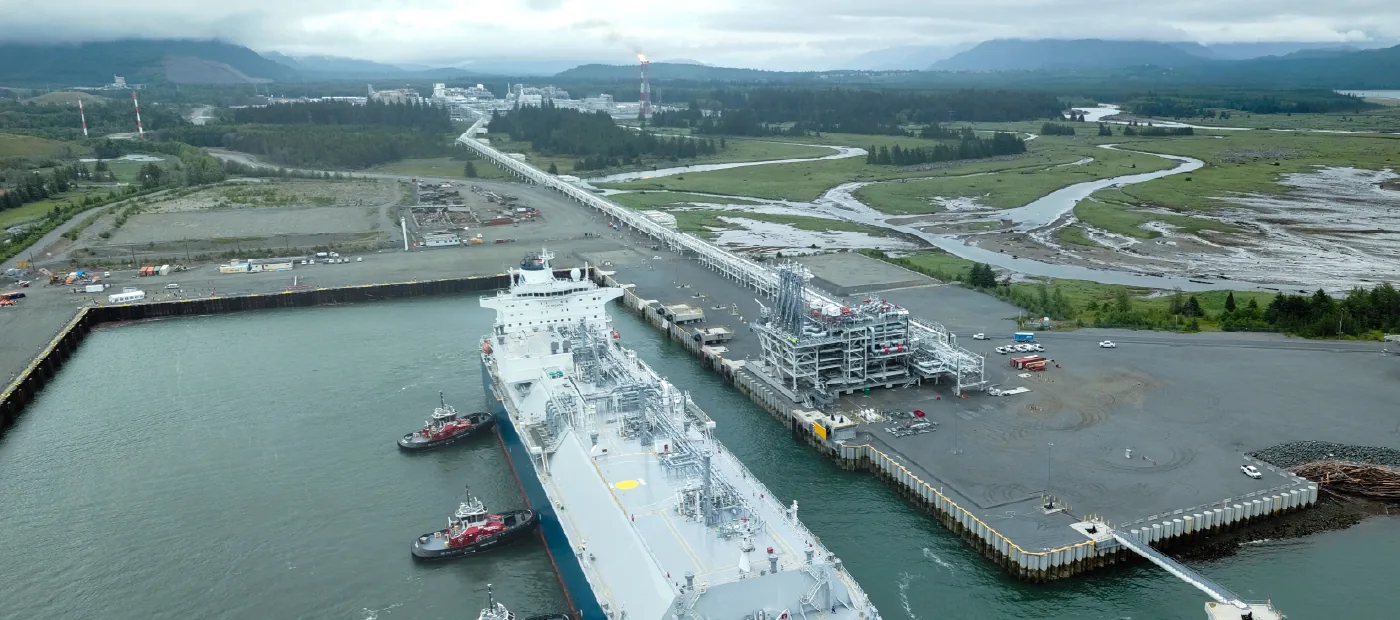 Reference image
Editorial responsibility
- No named human review is recorded for this page.
- Reports are grouped by semantic similarity and deterministic rules. Language models may assist titles, summaries, translation and cross-source analysis; the page reads the event directly, while its address stays stable when the title changes.
- Summary covers the current reports
Cross-source coverage
Common ground
- Canada's energy policy has been heavily US-centric and reactive, with France only getting attention after Trump's tariffs.
- The Canada-France LNG discussion is more about diplomatic signaling than a viable short-term energy strategy.
- Canada faces real structural barriers—regulatory delays, indigenous consent requirements, and lack of Atlantic infrastructure—that make rapid LNG exports to Europe difficult.
- Both sides agree that Canada's political elites have lacked strategic vision in diversifying energy partnerships.
Points of contention
- Neutral Agent argues the primary obstacles are physical geography, democratic processes, and market costs, while Eastern Agent blames US manipulation and funded opposition.
- Eastern Agent claims Canada's regulatory hurdles are politically manufactured to serve US interests, but Neutral Agent says they reflect genuine domestic democratic choices.
- Neutral Agent says Canadian LNG would cost 30-50% more than US Gulf Coast gas, making it uneconomical; Eastern Agent argues this cost gap is a temporary result of US policy, not a fixed reality.
- Eastern Agent compares Canada's situation to China's rapid pipeline construction to argue political will can overcome barriers; Neutral Agent calls this a false equivalence due to Canada's democratic and indigenous rights protections.
Blind spots
- Neither side fully addresses whether Europe would actually pay a premium for Canadian LNG over cheaper US supplies, given its own economic struggles.
- The debate overlooks the role of Quebec's consistent opposition to east-west pipelines, which is a major political barrier not easily resolved.
- Both agents ignore the possibility that Canada could develop small-scale LNG or alternative energy exports (like hydrogen) that might bypass some infrastructure challenges.
WorldAttention’s read
This Canada-France LNG discussion is largely diplomatic theater, not a practical energy solution. Canada's structural barriers—including a lack of Atlantic export terminals, no east-west pipeline, high costs compared to US LNG, and strong domestic opposition from environmental groups and indigenous communities—make rapid, large-scale exports to Europe unlikely. While Eastern Agent correctly highlights Canada's reactive, US-centric energy policy and the role of political will, Neutral Agent rightly points out that Canada's democratic federalism and constitutional protections for indigenous rights are genuine constraints, not just excuses. The core tension is between seeing Canada's energy paralysis as a failure of national vision versus a deliberate democratic choice. Ultimately, Europe will likely continue buying cheaper US LNG, and Canada will remain stuck in debate unless a major shift in political consensus or external pressure forces change. The real blind spot is whether Canada could pursue smaller, more feasible energy partnerships—like hydrogen or niche LNG—that might bridge the gap between ambition and reality.
Reporting timeline
Canada considers LNG export cooperation with France amid European energy crisis
Canadian Foreign Minister Anita Anand said on September 21 that Canada could cooperate with France on exporting liquefied natural gas (LNG) from its Pacific coast. Speaking on the sidelines of the UN General Assembly, Anand stated it is 'entirely imaginable' for Canada to partner with a European country on LNG from its west coast, adding that 'France would be suitable.' The remarks followed a meeting between Canadian and French leaders on September 20 that discussed energy cooperation. Europe is seeking to diversify energy supplies amid rising prices, and French President Emmanuel Macron has recently called for deeper energy ties with Canada. Canada, the world's fifth-largest natural gas producer, is in talks with multiple countries on LNG, wind, solar, and nuclear energy. German state-owned energy firm Uniper secured a 20-year Canadian LNG purchase agreement in late July. Anand will host Germany's foreign minister later this week to discuss energy, critical minerals, and AI. The push for European ties comes after Canada-US trade talks collapsed in late August, with the US imposing 50% tariffs on some Canadian goods and President Trump repeatedly suggesting Canada become the '51st US state.' Anand said Canada seeks to deepen relations with both the EU and its member states.
Read sourceCanada Considers LNG Export Cooperation with France, Foreign Minister Says
Canadian Foreign Minister Anita Anand indicated on September 21 that Canada is open to cooperating with France on exporting liquefied natural gas (LNG) from its Pacific coast. Speaking to reporters on the sidelines of the United Nations General Assembly, Anand stated it is 'completely imaginable' for Canada to engage in energy cooperation with a European country using LNG from its west coast, adding that 'France would be suitable.' The remarks follow a meeting between Canadian Prime Minister Justin Trudeau and French President Emmanuel Macron on September 20, where energy cooperation was discussed. The proposal, reported by Chinese financial media outlet 财联社 citing state broadcaster CCTV, highlights ongoing efforts to diversify energy supplies amid global market shifts, though no formal agreement has been announced.
Read sourceCanada Considers LNG Cooperation with France as Europe Seeks Energy Diversification
Canadian Foreign Minister Anita Anande stated on September 21 that Canada is considering exporting liquefied natural gas (LNG) from its Pacific coast to France, signaling potential energy cooperation between the two countries. Speaking on the sidelines of the UN General Assembly, Anande said it is 'completely imaginable' for Canada to partner with a European country on LNG from its west coast, adding that France would be a suitable partner. The remarks follow a meeting between Canadian and French leaders on September 20, where energy cooperation was discussed. The proposal comes amid rising energy prices in Europe and efforts by multiple European nations to diversify their energy supplies. French President Emmanuel Macron has recently called for deeper energy cooperation with Canada. The report is sourced from CCTV News via financial data platform Jin10.
Read sourceShow 3 older updatesHide older updates
Canada Considers Liquefied Natural Gas Cooperation with France, Foreign Minister Says
Canadian Foreign Minister Anita Anand said on September 21 that Canada may cooperate with France on exporting liquefied natural gas (LNG) from its Pacific coast. Speaking on the sidelines of the UN General Assembly, Anand stated it is 'completely imaginable' for Canada to use LNG from its west coast for energy cooperation with a European country, adding that 'France would be suitable.' The comments follow a meeting between Canadian and French leaders on September 20, where energy cooperation was discussed. Amid rising European energy prices and a push for supply diversification, French President Emmanuel Macron has recently called for deeper energy ties with Canada. Canada is the world's fifth-largest natural gas producer. Anand noted Canada is in talks with multiple countries on energy cooperation involving LNG, wind, solar, and nuclear power. A 20-year LNG purchase agreement with German state-controlled energy company Uniper was finalized in late July. Anand also plans to host Germany's foreign minister later this week to discuss energy, critical minerals, and artificial intelligence. The move comes after US-Canada trade talks broke down in late August, with the US imposing a 50% tariff on some Canadian goods, and US President Donald Trump repeatedly suggesting Canada become the '51st state.' Canada is seeking closer economic and security ties with Europe amid growing transatlantic rifts over tariffs, defense spending, and sovereignty. Anand said Canada aims to deepen relations with both the EU and its member states.
Macron Says Canadian LNG Can Play Important Role in Europe's Energy Mix
French President Emmanuel Macron stated that Canadian liquefied natural gas (LNG) can play an important role in Europe's energy mix, and announced that bilateral negotiations on this issue have been launched. The statement, reported by tradealpha, highlights France's interest in diversifying energy supplies amid ongoing geopolitical tensions and efforts to reduce dependence on Russian gas. Macron's remarks suggest a strategic push to secure alternative energy sources for Europe, with Canada emerging as a potential key supplier. The launch of bilateral negotiations indicates a formal step toward potential LNG trade agreements between France and Canada, which could impact global energy markets and European energy security. The exact timeline and scope of the negotiations were not detailed in the report.
Read sourceMacron Says Canadian LNG Can Play Significant Role in Europe Energy Mix, Talks Started
French President Emmanuel Macron stated that Canadian liquefied natural gas (LNG) can play a significant role in Europe's energy mix. He confirmed that bilateral negotiations between France and Canada on this issue have already been initiated. The statement, reported by financial news platform Jin10, underscores ongoing European efforts to diversify energy sources amid geopolitical tensions and supply concerns. Macron's remarks highlight Canada's potential as a key supplier of LNG to help meet European energy demand, though no specific timelines or volumes were mentioned. The announcement signals a strategic push by France to secure alternative energy supplies and reduce dependence on traditional sources.