Brazil runoff pits Lula against Flávio Bolsonaro in knife-edge presidential vote
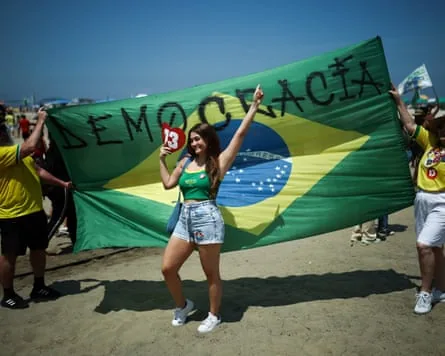
Brazil held a presidential runoff on Sunday pitting incumbent left-wing President Luiz Inácio Lula da Silva against right-wing Senator Flávio Bolsonaro, son of imprisoned former president Jair Bolsonaro. Bolsonaro narrowly won the first round on 4 October, and polls showed a dead heat. More than one million Lula supporters rallied on the eve of the vote. Both candidates cast their ballots as coverage described a tight, closely watched contest with implications for Brazil's political direction and regional geopolitics. The outcome remained undecided.
 Reference image
Editorial responsibility
- No named human review is recorded for this page.
- Reports are grouped by semantic similarity and deterministic rules. Language models may assist titles, summaries, translation and cross-source analysis; the page reads the event directly, while its address stays stable when the title changes.
- Summary covers the current reports
Cross-source coverage
Reporting timeline
Brazil runoff pits Lula against Flávio Bolsonaro in tight race
Brazil's presidential election is heading to a runoff between incumbent Lula da Silva and Flávio Bolsonaro, according to a WELT report. Correspondent Tobias Käufer said many factors point to a narrow victory for Bolsonaro, adding that this would complete a rightward shift. The report frames the contest as a head-to-head race and does not provide further details on polling, campaign issues, or the broader political context. The outcome remains undecided, and the assessment of a Bolsonaro win is presented as a forecast attributed to Käufer rather than a confirmed result.
Read sourceBrazil votes in tight runoff between leftist Lula and Bolsonaro Jr.
Brazil held a tight presidential runoff election between leftist former President Lula and Bolsonaro Jr., according to Reuters. Coverage from Politico, Reuters, The New York Times, and the BBC framed the contest as a close race, with questions about whether Lula could be on the brink of defeat and what Brazilian voters' main concerns were. The Left's last great survivor was described as running out of road. Voters chose between Lula and Bolsonaro's son in the runoff.
Read sourceFlavio Bolsonaro's Rise Threatens Brazil's Foreign Policy Alliances
Flavio Bolsonaro, son of imprisoned former President Jair Bolsonaro, has strong chances of winning Brazil's presidential runoff against incumbent Luiz Inácio Lula da Silva, according to polls showing a dead heat. His potential victory would mark a major geopolitical shift. A Bolsonaro presidency would likely align Brazil closely with the United States under Donald Trump, reconsider BRICS membership, and deepen ties with South America's growing center-right governments. Brazil expert Hans-Dieter Holtzmann notes the US would become Brazil's most important ally. Bolsonaro also strongly supports Israel, unlike Lula's sympathy for Palestine. The runoff is described as the world's most important election in 2026 outside the US, with far-reaching consequences for Europe and global alliances.
Read sourceShow 4 older updatesHide older updates
Brazil voters head to runoff polls between Lula and Bolsonaro's son
Brazil is holding a presidential runoff election in which voters must choose between leftist former president Luiz Inácio Lula da Silva and a son of former president Jair Bolsonaro, according to BBC and U.S. News & World Report headlines. The New York Times describes the younger Bolsonaro as "the other Bolsonaro who could become Brazil's next president," while Politico frames Lula as "the Left's last great survivor" who is "running out of road," and the Wall Street Journal calls Lula "a giant of Latin America's left" fighting for "one last shot at power." The aggregated coverage presents the contest as a pivotal choice between two rival political dynasties and ideological camps, with the outcome still to be determined by voters.
Read sourceBrazil presidential runoff pits Lula against Flávio Bolsonaro
Brazilians will vote on Sunday in a presidential runoff between incumbent left-wing President Luiz Inácio Lula da Silva and right-wing Senator Flávio Bolsonaro, the son of imprisoned former president Jair Bolsonaro. According to the BBC report, Bolsonaro narrowly defeated Lula in the first round of voting on 4 October. BBC Americas correspondent Ione Wells, reporting from Rio de Janeiro, describes the choice as one between two very different candidates. The article does not provide further detail on policy platforms, polling figures, or the outcome of the runoff.
Lula Rally Draws Over a Million on Eve of Brazil Runoff
More than one million supporters of Luiz Inácio Lula da Silva rallied on the eve of Brazil's presidential election runoff, according to The Guardian. The runoff pits Lula against a Bolsonaro, with BBC framing the choice as between Lula and Bolsonaro's son, while The New York Times profiles 'the other Bolsonaro' who could become Brazil's next president. NBC4 WCMH-TV describes a tense Lula vs Bolsonaro runoff with US influence over Latin America at stake, and the Financial Times calls the contest a knife-edge election. The aggregated headlines indicate a highly competitive, closely watched vote whose outcome carries implications for Brazil's political direction and regional geopolitics.
Read sourceBrazil Election Coverage Focuses on Lula and a Bolsonaro Rival
A Google News aggregation of top stories covers Brazil's presidential election, where voters are choosing between President Lula and a Bolsonaro rival. The New York Times profiles 'the other Bolsonaro' who could become Brazil's next president, while the BBC frames the contest as a choice between Lula and Bolsonaro's son. Politico describes the left's 'last great survivor' as running out of road, and DW.com reports that both Lula and his rival Bolsonaro have cast their votes in the deciding round. Al Jazeera's live coverage characterizes the 2026 race as tight between Lula and Bolsonaro. The aggregated headlines present competing framings of the same election without full article text, and no AI-related content appears in the source item.