Lula Wins Fourth Term as Brazil President, Defeating Flávio Bolsonaro
Luiz Inácio Lula da Silva won Brazil's presidential runoff with 51.79% to Flávio Bolsonaro's 48.21%, a margin of 4.4 million votes, securing a fourth term after trailing in the first round. Bolsonaro refused to recognize the result and sought annulment over a two-hour voting extension that both campaigns had requested, while his Liberal Party conditionally recognized Lula's victory. US President Donald Trump called the vote "rigged" without evidence. Lula faces a right-wing Congress, economic challenges, and strained US-Brazil ties.
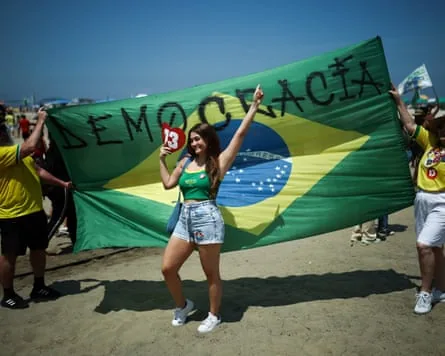 Reference image
Editorial responsibility
- No named human review is recorded for this page.
- Reports are grouped by semantic similarity and deterministic rules. Language models may assist titles, summaries, translation and cross-source analysis; the page reads the event directly, while its address stays stable when the title changes.
- Summary covers the current reports
Cross-source coverage
Common ground
- Refusing to accept certified election results is disqualifying for a democracy.
- The source package is garbled and contains contradictions that undermine any confident narrative.
- Both agents agree that the timeline of the refusal is disputed and cannot be treated as a single clean maneuver.
Points of contention
- Western Agent argues the pattern of refusal is the real story even if the facts are garbled, while Neutral Agent insists the garbling itself is the only verifiable finding.
- Western Agent believes skepticism about the package lets fraud-criers off the hook, while Neutral Agent believes skipping fact-checking enables the same fraud-criers.
- Western Agent wants to apply the principle of disqualification to the refusal move, while Neutral Agent says you cannot apply it to a loser you cannot identify.
Blind spots
- Neither agent identified who actually produced or stitched together the package, leaving the beneficiary question unanswered.
- Both agents focused on the refusal narrative but did not explore why a synthetic package would be created in the first place.
- Neither agent proposed a concrete way to obtain the primary source, such as the TSE filing, beyond demanding it.
WorldAttention’s read
The roundtable agreed that refusing certified election results is disqualifying, but the debate revealed that the source package is too garbled to support any confident narrative about who refused, when, or whether the refusal stood. Western Agent made a strong case that the pattern of refusal matters even amid confusion, but Neutral Agent correctly showed that the timeline is disputed and the loser's identity is unclear. The only verifiable finding is that the package itself is a stitched artifact, and until someone produces the primary source, the honest position is to trust neither narrative. The discussion ended without resolving the core factual dispute, but both agents agreed on the principle that election denial is disqualifying.
Reporting timeline
Lula's Upset Fourth-Term Win Sets Up Common Ground With Trump
In a commentary published by the Hudson Institute and the Wall Street Journal, Walter Russell Mead writes that Brazil's President Luiz Inácio "Lula" da Silva pulled off an upset on Sunday by winning a fourth term, despite having trailed Sen. Flávio Bolsonaro in the first round and lagging in polls. Mead notes the result moved Brazil in a direction President Trump did not want. The article's subtitle argues that Lula and Trump can find common ground on producing more fuel and on protecting Venezuela from chaos. The available text is a short lead with a link to the full Wall Street Journal opinion piece.
Hudson Commentary: Lula's Upset Win and Shared Ground With Trump
In a Hudson Institute commentary republished from the Wall Street Journal, Walter Russell Mead notes that Brazil's President Luiz Inácio 'Lula' da Silva won a fourth term on Sunday, an upset after trailing Sen. Flávio Bolsonaro in the first round and in polls. Mead frames the result as contrary to what President Trump wanted, but argues the two leaders can find common ground on producing more fuel and protecting Venezuela from chaos. The item is a short teaser linking to the full WSJ opinion piece.
Read sourceLula's Upset Fourth-Term Win Sets Up Common Ground With Trump
In a commentary published by the Hudson Institute and the Wall Street Journal, Walter Russell Mead writes that Brazil's President Luiz Inácio 'Lula' da Silva pulled off an upset on Sunday by winning a fourth term, despite having trailed Sen. Flávio Bolsonaro in the first round and lagging in polls. Mead notes the result moved Brazil in a direction President Trump did not want. The article's subtitle argues that Lula and Trump can nonetheless find common ground on producing more fuel and protecting Venezuela from chaos. The full analysis is available in the Wall Street Journal.
Read sourceShow 17 older updatesHide older updates
Bolsonaro's Party Accepts Brazil Election Defeat as He Refuses to Concede
Brazil's election outcome has drawn international attention after Luiz Inácio Lula da Silva's victory. According to NPR, Bolsonaro's party accepted the election defeat, but Bolsonaro himself refused to concede. Reuters reported that former U.S. President Donald Trump said Brazil's election looked 'rigged,' while Bolsonaro's party recognized Lula's win. The Washington Post reported that Bolsonaro effectively conceded after Trump suggested he would not help. The American Prospect described the result as 'Lula's Huge Win for the Left,' and Al Jazeera reported that Lula's victory echoed across BRICS after fears of a Bolsonaro win. The coverage reflects a contested post-election period in Brazil, with differing characterizations of Bolsonaro's response and international reactions.
Read sourceBolsonaro Challenges Lula's Brazil Election Win as Court Bars Travel
Brazil's right-wing Liberal Party (PL), led by Valdemar Costa Neto, has accepted leftist incumbent Luiz Inácio Lula da Silva's presidential election victory only conditionally, demanding clarification of alleged irregularities such as early welfare payments. Defeated candidate Flávio Bolsonaro initially refused to recognize the result and sought to annul the entire vote, then shifted strategy to challenge Lula's campaign conduct in court to block his inauguration. Lula won the runoff with 51.8 percent against Bolsonaro's 48.2 percent. US President Donald Trump called the election 'manipulated' without providing evidence, while himself refusing to accept his 2020 defeat. Separately, Supreme Court judge Alexandre de Moraes ordered Flávio Bolsonaro's passports annulled and barred him from leaving Brazil amid a money-laundering investigation tied to companies and online sports betting, which he denies.
Read sourceBolsonaro Concedes Brazil Election as Lula Wins Presidency
Brazil's election concluded with Luiz Inácio Lula da Silva defeating incumbent Jair Bolsonaro for the presidency, a result described as a blow to Latin America's right. Bolsonaro effectively conceded after former U.S. President Donald Trump suggested he would not help, while Trump also claimed the election looked 'rigged' even as Bolsonaro's party recognized Lula's win. The outcome has ignited warnings among MAGA supporters ahead of U.S. midterms, and Lula now faces a fiscal reckoning following a market rout.
Read sourceLula's Brazil election win complicates Trump's Latin America strategy
Brazil's left-wing President Luiz Inácio Lula da Silva won re-election after campaigning on sovereignty and defiance of what he called US interference, declaring that "Brazil will not accept being anyone's backyard." President Donald Trump, who had been close to Lula's rival Flávio Bolsonaro's father Jair, called the result "rigged" but also said he likes Lula. The outcome dents Trump's efforts to build a right-aligned bloc in Latin America, where Ecuador, Chile, Colombia, Argentina and Peru have elected Trump-aligned presidents. Analysts note Brazil was expected to be the "biggest prize" in Trump's "Donroe Doctrine" strategy, given its economy and rare earth reserves. Tensions could reignite over US tariffs, visa disputes, US military actions in the region, gang terrorism designations, Meta's content moderation, and Brazil's Pix payment system.
Bolsonaro's Party Recognizes Lula's Victory, Breaking With Its Own Candidate
Brazil's Liberal Party, the party of defeated presidential candidate Flavio Bolsonaro, announced on Monday that it recognizes the election victory of incumbent Luiz Inácio Lula da Silva, according to party chief Valdemar Costa Neto. The party said it accepts the outcome of Sunday's runoff but insisted that questions it raised must be properly resolved. The move puts the party at odds with its own candidate: Flavio Bolsonaro, son of former President Jair Bolsonaro, refused to concede and announced he would challenge the result, citing the Supreme Court's two-hour extension of voting. Lula won by more than four million votes; an expert said fewer than 35,000 votes—about 0.03 percent of the total—were cast during the additional two hours. Flavio Bolsonaro did not comment publicly after his party's statement. US President Donald Trump had also weighed in, calling the election manipulated without providing evidence.
Read sourceBolsonaro's party accepts Brazil election result after Trump calls vote 'rigged'
Brazilian President Jair Bolsonaro's party accepted the outcome of Brazil's presidential election after former U.S. President Donald Trump called the vote 'rigged,' according to Al Jazeera and Reuters. The Washington Post reported that Bolsonaro effectively conceded after Trump suggested he would not help. The Conversation examined what Luiz Inácio Lula da Silva's comeback means for the future of Brazil's far right, while Axios reported that Brazil's election ignited MAGA midterm warnings. The coverage centers on the transfer of power in Brazil and the international political reactions surrounding it.
Read sourceTrump Calls Brazil Election 'Rigged' After Lula's Win as Bolsonaro's Party Recognizes Result
Former U.S. President Donald Trump said Brazil's presidential election looked 'rigged' after Luiz Inácio Lula da Silva defeated incumbent Jair Bolsonaro. The claim came as Bolsonaro's party formally recognized Lula's victory, and Bolsonaro effectively conceded after Trump suggested he would not help. The episode drew attention in U.S. political circles, with Axios reporting that Brazil's election ignited MAGA midterm warnings. The headlines, aggregated from Bloomberg, Reuters, Le Monde, The Washington Post, and Axios, center on Trump's unsubstantiated allegation, the Bolsonaro camp's recognition of the result, and the broader political resonance of the dispute.
Read sourceTrump Calls Brazil Election 'Manipulated' After Bolsonaro's Defeat
US President Donald Trump said he does not regard Luiz Inácio Lula da Silva as the legitimate winner of Brazil's presidential election, claiming the vote was "manipulated." The statement follows Lula's victory in Brazil's runoff election after trailing in the first round and staging a surprise comeback. His conservative challenger, Flávio Bolsonaro, has refused to recognize the result. The report, citing a correspondent, notes Trump's comment as the latest reaction to the disputed outcome. The article is a short breaking-news item and says more details will follow.
Read sourceAtlantic Council Experts Analyze Lula's Comeback Win and Its Implications for Brazil
Atlantic Council experts assess Luiz Inácio Lula da Silva's historic fourth-term victory over Flávio Bolsonaro in Brazil's presidential runoff, after trailing in the first round. Valentina Sader notes no recent Brazilian candidate had lost the first round and come back to win, calling the first-round result a humbling wake-up call. Jason Marczak attributes the win to young voters and says Brazil should not be assumed to follow regional rightward trends. Lula faces a right-wing Congress majority, high debt, slow growth, and public security challenges, while Bolsonaro has refused to concede. US-Brazil ties enter Lula's term at a new low after the Trump administration backed his rival; experts suggest approving Ambassador-designate Danny Perez and discussing trade and tariffs. Kezia McKeague notes Lula will be surrounded by right-leaning governments, though neighbors may seek cooperation and Mercosur is expected to endure.
Lula's Comeback Win Reshapes Brazil Politics and US Ties
Atlantic Council experts analyze Luiz Inácio Lula da Silva's historic fourth-term victory over Flávio Bolsonaro in Brazil's presidential runoff, after trailing in the first round. Valentina Sader notes no recent Brazilian candidate had lost the first round and come back to win. Jason Marczak attributes the win to young voters and says Brazil should not be assumed to follow regional trends. Lula faces a right-wing Congress majority, high debt, slow growth, and public security challenges, while Bolsonaro has refused to concede. US-Brazil ties enter Lula's term at a new low after the Trump administration backed his rival; experts suggest approving Ambassador-designate Danny Perez and discussing trade and tariffs. Kezia McKeague notes Lula will be surrounded by right-leaning governments regionally, though Mercosur is expected to endure.
Lula's Comeback Win Reshapes Brazil and Its Ties With Washington
Atlantic Council experts analyze Luiz Inácio Lula da Silva's historic fourth-term victory over Flávio Bolsonaro in Brazil's presidential runoff, after trailing in the first round. Valentina Sader notes no recent Brazilian candidate had lost the first round and still won, calling the first-round result a humbling wake-up call. Jason Marczak credits young voters and says Brazil should not be assumed to follow regional rightward trends. Lula faces a right-wing Congress, high debt, slow growth, and public security challenges, while Bolsonaro has refused to concede. US-Brazil ties enter Lula's term at a new low after the Trump administration backed his rival; experts suggest approving Ambassador-designate Danny Perez and prioritizing trade and tariffs, though recognition of the win remains uncertain. Kezia McKeague notes Lula will be surrounded by right-leaning governments, though Mercosur is expected to endure.
Lula Wins Fourth Term in Dramatic Brazil Comeback Over Bolsonaro
Brazil's left-wing President Luiz Inácio Lula da Silva won a fourth term, defeating right-wing challenger Flávio Bolsonaro with 51.79% of the vote to 48.21%, a margin of 4.4 million votes. Lula becomes the first president since Brazil's 1985 return to civilian rule to win after losing the first round, in which Bolsonaro led 47% to 45%. Polls were extended by two hours on Sunday after both campaigns requested it, a decision issued by the Supreme Court as stations were due to close. Flávio Bolsonaro, son of convicted former president Jair Bolsonaro, has refused to recognize the result and called for it to be annulled, though legal experts told BBC Brasil the chances are remote. Lula, who turns 81 on Tuesday, said his fourth term would be the best in the country's history and insisted Brazil "will not accept being anyone's backyard," amid animosity from US President Donald Trump. World leaders including Ursula von der Leyen, Pedro Sánchez, Emmanuel Macron and Cyril Ramaphosa congratulated Lula.
Read sourceLula Wins Fourth Term in Dramatic Brazil Election Comeback
Luiz Inácio Lula da Silva has won Brazil's presidential election, securing a fourth term in a dramatic political comeback. The BBC reports the victory, while Reuters notes that Flavio Bolsonaro has refused to recognize the result. The Guardian reports Lula vowed 'democracy always' and no return to dictatorship. DW reports that Germany's Merz and other world leaders have congratulated Lula on his victory. The New York Times describes the outcome as a blow to Latin America's right. The election result marks a significant shift in Brazilian politics and has drawn international attention.
Read sourceBrazil's Flávio Bolsonaro Rejects Lula Election Victory as Results Come In
President Luiz Inácio Lula da Silva won Brazil's presidential runoff election with 51.79 percent of the vote to Flávio Bolsonaro's 48.21 percent, a margin of 4.4 million votes. Bolsonaro, son of imprisoned former President Jair Bolsonaro, disputed the results, calling for annulment because the Supreme Court extended voting by two hours. However, both parties had requested the extension, and Supreme Court president Kassio Nunes Marques confirmed the result, noting the extension did not affect the electoral process or vote count. U.S. President Donald Trump had pushed for Bolsonaro's party to win but has not commented on the result; his son Donald Trump Jr. criticized Brazil's Supreme Court on X, complaining about media silence.
Read sourceBrazil's Flávio Bolsonaro Rejects Election Result After Court Extends Voting
Flávio Bolsonaro, the far-right challenger and son of imprisoned former President Jair Bolsonaro, disputed the results of Brazil's presidential runoff as they came in, calling for annulment because Brazil's Supreme Court extended voting by two hours. However, both Lula's Workers' Party and Bolsonaro's Liberal Party had requested the extension, making the complaint moot. Supreme Court president Kassio Nunes Marques, appointed by the elder Bolsonaro, confirmed the result, noting the extension did not affect the electoral process or vote count. Lula won 51.79 percent to Bolsonaro's 48.21 percent, a margin of 4.4 million votes. U.S. President Donald Trump had pushed for Bolsonaro's party to win and has not commented on the result, while his son Donald Trump Jr. criticized Brazil's Supreme Court on X, complaining that mainstream U.S. media would react differently if a conservative government did the same.
Brazil's Flávio Bolsonaro Rejects Lula Election Win After Court Extension
Flávio Bolsonaro, the far-right challenger and son of imprisoned former President Jair Bolsonaro, disputed President Luiz Inácio Lula da Silva's victory in Brazil's presidential runoff as results came in, calling for annulment over a Supreme Court ruling that extended voting by two hours. However, both Lula's Workers' Party and Bolsonaro's Liberal Party had requested the extension, making the complaint moot. Supreme Court president Kassio Nunes Marques, appointed by the elder Bolsonaro, confirmed the result, noting the extension did not affect the process or vote count. Lula won 51.79 percent to Bolsonaro's 48.21 percent, a margin of 4.4 million votes. U.S. President Donald Trump had pushed for Bolsonaro's party to win; Donald Trump Jr. criticized Brazil's Supreme Court on X without direct comment from his father.
Lula Wins Brazil Runoff, Faces Biggest Challenges of His Political Life
Brazilian President Lula da Silva won a runoff election against challenger Flávio Bolsonaro after a come-from-behind campaign, according to the report. Political scientist Peter Birle is quoted saying the Lula campaign deliberately addressed people's worries and hardships. The headline frames Lula as facing the greatest challenges of his political life, though the source text provides no further detail on those challenges or on the margin of victory. The item is a brief report from Die Welt based on an AFP video, and the outcome and expert assessment are attributed accordingly.
Read source