Lula Trails Flávio Bolsonaro in First Round, Faces October 25 Runoff
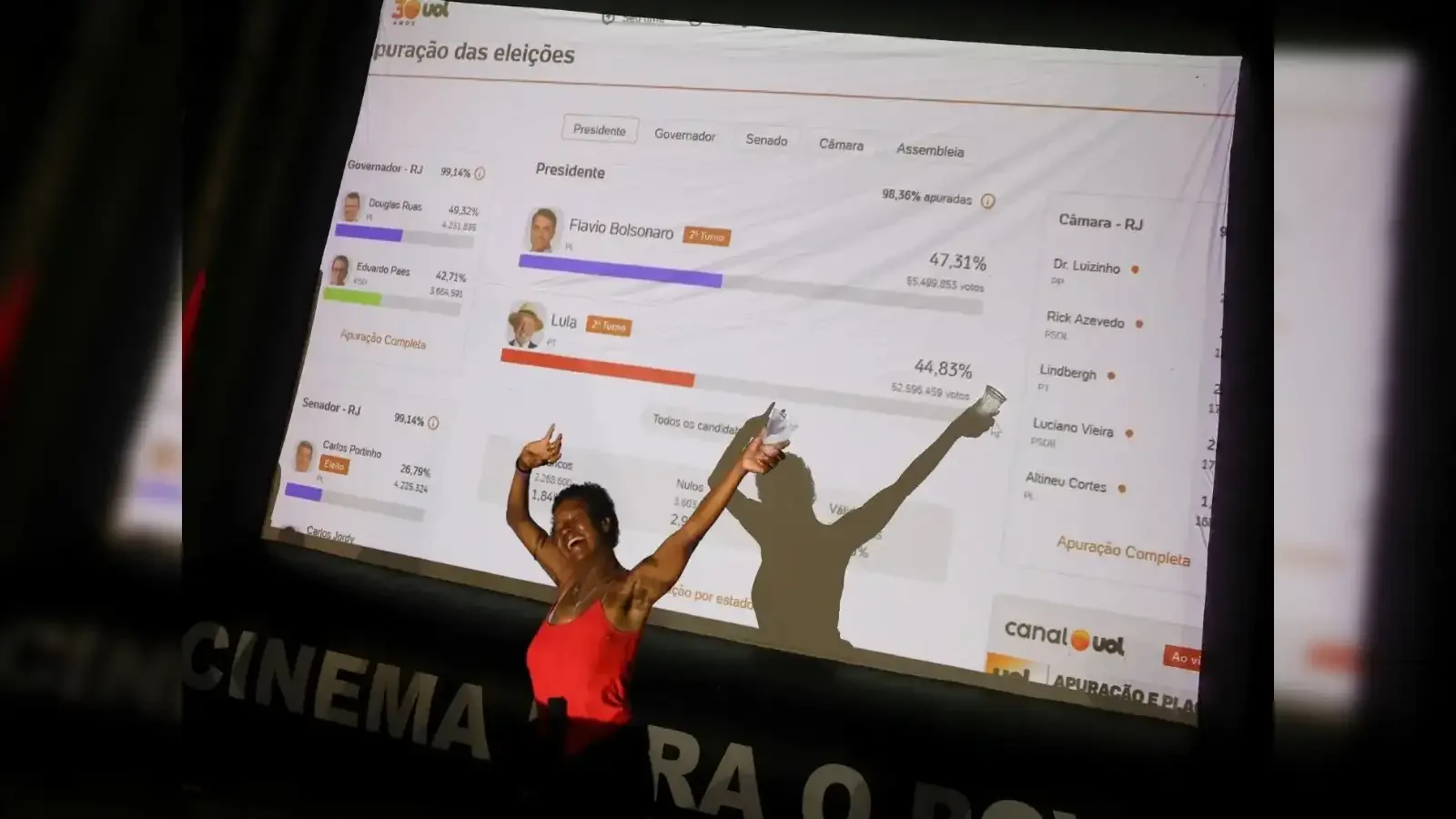
Brazil's presidential election heads to an October 25 runoff after Flávio Bolsonaro, son of jailed former president Jair Bolsonaro, led the first round with 47% to President Luiz Inácio Lula da Silva's 45%. Lula, 80 and seeking a fourth term, faces an uphill battle as right-wing third-party votes consolidate behind Bolsonaro. Analysts cite Lula's age, establishment status, corruption perceptions, and the growing evangelical vote, despite economic gains including a 40% drop in extreme poverty. Both candidates have high negatives, and Lula's path depends on turning out non-voters.
 Reference image
Editorial responsibility
- No named human review is recorded for this page.
- Reports are grouped by semantic similarity and deterministic rules. Language models may assist titles, summaries, translation and cross-source analysis; the page reads the event directly, while its address stays stable when the title changes.
- Summary covers the current reports
Cross-source coverage
Reporting timeline
Brazil Before Runoff: Lula Trails as Bolsonaro's Son Leads
Brazil's presidential runoff pits Lula da Silva against Flávio Bolsonaro, son of jailed former president Jair Bolsonaro. Lula, over 80 and seeking a fourth term, has failed to groom a successor, and his Workers' Party (PT) performed worse in the first round than four years ago, with fewer young candidates and weak digital campaigning. Despite Lula's achievements in reducing deforestation and hunger, rising costs, a stalled agrarian reform, and a Supreme Court corruption scandal have soured public opinion. Flávio Bolsonaro, despite involvement in multiple corruption scandals, positions himself as an anti-system candidate promising a strong hand against crime, privatization, and Christian values. He also vows to pardon his father, if necessary by force. Analysts note corruption is generally blamed on the current government, and voter fatigue has led to high abstention.
Lula Trails Bolsonaro in Brazil Runoff as Progressives Face Warning Signs
Left-wing President Luiz Inácio Lula da Silva finished behind far-right Flávio Bolsonaro in the first round of Brazil's elections and is an underdog in the October 25 runoff. If Bolsonaro wins, it would be a dramatic turnaround after his father, Jair Bolsonaro, lost to Lula in 2022 and was later sentenced to more than 27 years in prison for attempting to overturn the election results. In the latest edition of Right Now, Michael Paarlberg, a political science professor at Virginia Commonwealth University and Latin America expert, explains why Lula is struggling politically. He argues that it is not the economy, which has grown around the left-wing leader. Instead, Bolsonaro is benefiting from antiestablishment sentiment, Lula's age (80), and the growing number of Brazilians who are evangelical Christians, Paarlberg says. According to Paarlberg, there are many parallels between Lula and former U.S. President Joe Biden.
Read sourceLula Trails Far-Right Bolsonaro in Brazil Runoff, Analyst Warns Progressives
Brazilian left-wing President Luiz Inácio Lula da Silva finished behind far-right candidate Flávio Bolsonaro in the first round of Brazil's elections and is an underdog in the October 25 runoff. If Bolsonaro wins, it would be a dramatic turnaround, as his father Jair lost to Lula in 2022 and was later sentenced to over 27 years in prison for attempting to overturn the election results. In a New Republic podcast, political science professor Michael Paarlberg argues that Lula's struggles are not due to the economy, which has grown under his leadership. Instead, Bolsonaro is benefiting from antiestablishment sentiment, Lula's age (80), and the growing number of evangelical Christians in Brazil. Paarlberg draws parallels between Lula and former U.S. President Joe Biden.
Read sourceShow 4 older updatesHide older updates
Lula Trails Far-Right Bolsonaro in Brazil Runoff, Expert Cites Age and Evangelical Vote
Brazilian left-wing President Luiz Inácio Lula da Silva finished behind far-right candidate Flávio Bolsonaro in the first round of Brazil's elections and is an underdog in the October 25 runoff. Flávio is the son of former President Jair Bolsonaro, who lost to Lula in 2022 and was later sentenced to more than 27 years in prison for attempting to overturn the election results. In an episode of Right Now With Perry Bacon, Virginia Commonwealth University political science professor Michael Paarlberg argues that Lula's struggles are not due to the economy, which has grown under his leadership. Instead, Paarlberg attributes Bolsonaro's rise to antiestablishment sentiment, Lula's age of 80, and Brazil's growing evangelical Christian population. Paarlberg also draws parallels between Lula and former U.S. President Joe Biden.
Read sourceBrazil Election Runoff: Lula Faces Uphill Battle Against Flávio Bolsonaro
In an interview with The New Republic, political scientist Michael Paarlberg analyzed Brazil's upcoming October 25 runoff between Lula and Flávio Bolsonaro. Paarlberg said Lula faces an uphill battle because right-wing third-party votes consolidated behind Bolsonaro in the first round, leaving Lula dependent on turning out non-voters, which he called historically unprecedented. He described Flávio as a smoother but policy-aligned version of his father, Jair Bolsonaro, and noted both candidates have high negatives. Paarlberg attributed Lula's vulnerability to his age, his establishment status after decades in politics, and a shift toward social and religious issues over economic voting. He said Brazil's election is 'vibes-based,' with narratives set by media, evangelical churches, and right-wing forces, and noted Trump administration efforts to boost Bolsonaro, including tariffs and sanctions.
Lula Faces Uphill Runoff Battle as Bolsonaro's Son Leads First Round
In an interview with The New Republic, political scientist Michael Paarlberg analyzed Brazil's presidential election, where Flávio Bolsonaro led the first round with 47% to Lula's 45%, forcing an October 25 runoff. Paarlberg said Lula faces an uphill battle, as his only path is turning out non-voters, which would be historically unprecedented. He attributed Lula's vulnerability to his age, his establishment status after decades in politics, and a shift in the electorate toward social issues like religion and gender, despite economic gains including a 40% drop in extreme poverty and unemployment. Paarlberg described the race as "vibes-based," with right-wing forces setting the narrative, and noted Trump administration efforts to boost Bolsonaro.
Read sourceLula's Struggles in Brazil Election Offer Cautionary Tale for Progressives
In an interview with The New Republic, political scientist Michael Paarlberg analyzes the Brazilian election runoff between Lula and Flávio Bolsonaro. Paarlberg says Lula faces an uphill battle despite economic improvements like a 40% drop in extreme poverty and record-low unemployment, because the election is 'vibes-based' and shaped by social issues, corruption perceptions, and right-wing forces including evangelical churches and media. He notes Flávio Bolsonaro is a smoother but ideologically similar version of his father, and that the Trump administration is blatantly interfering to boost him. Paarlberg argues progressives should be skeptical of purely materialist politics, as class-based voting is insufficient, and that tackling corruption and organizing workers are key.