Bärbel Bas Resigns as German Labor Minister and SPD Co-Leader, Schweitzer Named Successor
Bärbel Bas resigned as Germany's Labor Minister and co-leader of the SPD in October 2026, citing grief over the death of her stepdaughter and public attacks from within the coalition partner CDU/CSU. SPD co-leader Lars Klingbeil called the attacks indecent and announced a federal party congress to elect the entire leadership. Alexander Schweitzer, former Minister-President of Rhineland-Palatinate, was appointed as her successor. The resignation strained the black-red coalition under Chancellor Friedrich Merz, with SPD figures calling the Union's conduct inhumane and CDU leaders rejecting the accusations.
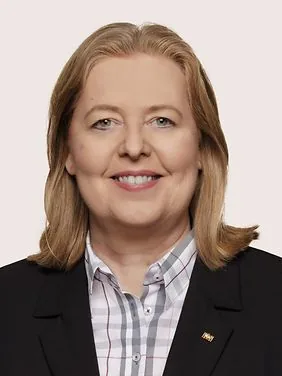 Reference image
Editorial responsibility
- No named human review is recorded for this page.
- Reports are grouped by semantic similarity and deterministic rules. Language models may assist titles, summaries, translation and cross-source analysis; the page reads the event directly, while its address stays stable when the title changes.
- Summary covers the current reports
Cross-source coverage
Reporting timeline
Frei Criticizes SPD Rhetoric in Dispute Over Bärbel Bas's Resignation
After the resignation of SPD leader and Labor Minister Bärbel Bas, SPD politicians accused the Union of behaving "inhumanely" toward her. Union parliamentary group leader Thorsten Frei (CDU) rejected this wording as "excessive" and said it did not reflect the facts, speaking on ARD's "Caren Miosga" show in response to SPD parliamentary group leader Matthias Miersch. Bas had resigned following the death of her stepdaughter and complained about personal attacks, including from the coalition partner. Mecklenburg-Vorpommern Minister-President Manuela Schwesig (SPD) called the Union's conduct "inhuman," and SPD leader Lars Klingbeil called it "indecent." Miersch said there had been great dismay in his faction over Bas's resignation. Both he and Frei emphasized the stability of the black-red coalition.
Read sourceCDU's Frei Criticizes SPD Rhetoric in Dispute Over Bärbel Bas
After the withdrawal of SPD leader Bärbel Bas, SPD politicians accused the Union of behaving "inhumanely" toward her. Union parliamentary group leader Thorsten Frei (CDU) rejected what he called "excessive" wording, saying on ARD's "Caren Miosga" that the SPD had "obviously gone too far" and that the rhetoric did not match the facts. Bas had resigned following the death of her stepdaughter and complained about personal attacks, including from the coalition partner. Mecklenburg-Vorpommern Minister-President Manuela Schwesig (SPD) called the Union's conduct "inhuman," and SPD leader Lars Klingbeil called it "indecent." SPD parliamentary group leader Matthias Miersch spoke of "everlasting attacks" and said his faction was deeply affected. Both Miersch and Frei stressed the stability of the black-red coalition.
SPD in Crisis: Bärbel Bas Resigns as Klingbeil Calls Party Congress
Bärbel Bas has resigned as co-leader of Germany's SPD and as labor minister, citing the death of her stepdaughter and accusing the CDU/CSU of intensified public attacks during her personal crisis. SPD co-chair Lars Klingbeil responded by announcing a federal party congress, likely in Bremen on January 16, where the entire leadership is to stand for election. The article argues the personnel turmoil masks a deeper crisis: the SPD lacks a clear programmatic identity and vision within the Merz coalition. Bas, elected with 95 percent support in June 2025, struggled amid the pension debate and a widely circulated image of employers laughing at her. A Grundwertekommission manifesto calls for the party to offer orientation. The coalition dispute marks a new low in Union-SPD relations.
Read sourceShow 17 older updatesHide older updates
SPD in Crisis: Bärbel Bas Resigns as Klingbeil Calls Federal Party Congress
Bärbel Bas has resigned as co-leader of Germany's SPD and as labor minister, prompting party co-chair Lars Klingbeil to announce a federal party congress where the entire leadership will stand for election. Bas cited the death of her stepdaughter and accused the CDU/CSU of intensifying attacks on her during a difficult personal time, a charge CDU leader Friedrich Merz rejected. The resignation exposes a deeper crisis within the SPD, which is struggling to define its programmatic identity within the coalition with Merz's conservatives. A party convention planned for December was already intended to let members vent frustration over reforms, the party's lack of vision, and the rise of the AfD. A manifesto from the SPD's basic values commission argues the party must offer voters a vision of where society should develop.
After Bas's Resignation, How Stable Is Germany's Coalition?
Bärbel Bas, Germany's Labor Minister and co-leader of the SPD, has resigned, citing a family bereavement and heavy attacks from coalition partner CDU. The Union denies allegations of sexism and mobbing. The SPD leadership quickly found a successor, with former Rhineland-Palatinate state premier Alexander Schweizer seen as a possible chance for a fresh start. It remains unclear who will succeed Bas as party chair at the SPD conference around the turn of the year, and whether Vice Chancellor Lars Klingbeil will keep his post as SPD leader. The episode of taz's "Bundestalk" podcast examines how stable the government under Chancellor Friedrich Merz still is, noting both the SPD and the Union are struggling with poor poll numbers, and discusses the future of announced reforms.
Read sourceAfter Bas's Resignation, How Stable Is Germany's Coalition?
Bärbel Bas, Germany's Labor Minister and co-leader of the SPD, has resigned, citing a family bereavement as well as sharp attacks from coalition partner CDU. The Union denies allegations of sexism and mobbing, while SPD leadership quickly named former Rhineland-Palatinate state premier Alexander Schweizer as a possible successor, seen as a chance for a fresh start. It remains unclear who will replace Bas as party chair at the SPD conference around the turn of the year, and whether Vice Chancellor Lars Klingbeil will keep his role as SPD leader. The episode raises questions about the stability of the coalition under Chancellor Friedrich Merz, as both SPD and CDU struggle with poor poll numbers, and the future of announced reforms remains uncertain. taz journalists Anna Lehmann, Cem-Odos Güler, and Ulrike Winkelmann discuss these issues, moderated by Anja Krüger.
SMS from JU Chief Sheds New Light on Union Attacks on Bas
The SPD continues to accuse the Union of publicly attacking former Labor Minister Bärbel Bas while knowing about her personal tragedy. Bas resigned citing grief over her stepdaughter's death and public attacks from the Union. A newly published SMS from Johannes Winkel, federal chairman of the Junge Union, sent in early October, shows he asked the Tagesspiegel not to mention Bas personally because he understood she had suffered a bereavement. The Tagesspiegel interprets this as an effort to show consideration. Chancellor Friedrich Merz and Union parliamentary leader Thorsten Frei deny any hurtful remarks, while SPD figures like Lars Klingbeil and Manuela Schwesig maintain that Bas faced inhumane attacks. Schwesig's spokesperson pointed to critical remarks by Merz about Bas's absence, reportedly made in a background briefing with Brussels correspondents.
Read sourceBärbel Bas Thanks Entertainer on Instagram After Resigning from Politics
Former German Labor Minister and SPD co-leader Bärbel Bas has withdrawn from active politics following the death of her stepdaughter. Days after resigning both top posts, Bas commented on an Instagram post by entertainer and reality-TV participant Julian F. M. Stoeckel, who had posted a photo with her praising her as unpretentious, charming, and approachable. Bas replied thanking him and saying she always enjoyed their brief chats. Stoeckel expressed regret that the political establishment had worn her down. Bas cited grief and public attacks, including criticism from coalition partner the Union, as reasons for her resignation. Vice Chancellor Lars Klingbeil called the attacks indecent, while Chancellor Friedrich Merz rejected SPD accusations, saying he had demanded personal and Christian consideration for her from his own party.
Schwesig Details Accusations Against Merz Over Bas Resignation
Mecklenburg-Vorpommern Minister-President Manuela Schwesig (SPD) has specified her accusations against Chancellor Friedrich Merz (CDU) regarding the resignation of SPD leader Bärbel Bas. Schwesig's spokesperson, Lilly Blaudszun, said Merz complained to journalists that Bas was barely present and producing nothing, despite knowing about her personal hardship after her stepdaughter's death. Bas was also allegedly called a "wrong choice," "unacceptable," and a "blocker." Schwesig called these "personal defamations." The CDU criticized Schwesig's sharp tone, while Merz denied the accusations, saying he demanded Christian consideration for Bas from his party. The dispute continues amid Schwesig's strong state election result and speculation about her as a possible successor to Bas as SPD leader.
CDU Demands Apology from Schwesig After Bas Resignation Sparks Coalition Row
Following the surprise resignation of Bärbel Bas as German Labor Minister and SPD co-leader, the CDU is demanding an apology from SPD Minister-President Manuela Schwesig. CDU MP Christoph Ploß told the Rheinische Post that Schwesig should recognize she has "completely lost her way" and apologize. Bas cited grief over her stepdaughter's death and accused the coalition partner of intensifying public attacks during a difficult personal time. Schwesig described the CDU's attacks as "inhumane and ruthless." SPD leader Lars Klingbeil criticized the CDU for lacking the restraint shown when CDU minister Katherina Reiche was ill. Chancellor Friedrich Merz rejected the accusations as "unfair," while CDU MP Tilman Kuban accused the SPD of double standards, noting Schwesig herself had sharply criticized the pension reform Bas presented with Merz.
Read sourceSteinmeier Appoints Alexander Schweitzer as Germany's New Labor Minister
German President Frank-Walter Steinmeier has formally appointed Alexander Schweitzer of the Social Democratic Party (SPD) as the country's new Federal Minister for Labor and Social Affairs. Schweitzer succeeds Bärbel Bas, also of the SPD, who was dismissed from the post at her own request. The report, published by WELT, centers on the official handover of the appointment certificate at the presidential office. No further details on the reasons for Bas's resignation or Schweitzer's policy plans were provided in the source item.
Read sourceSchweitzer Receives Appointment Certificate as New German Labor Minister
Alexander Schweitzer (SPD) received his appointment certificate from President Frank-Walter Steinmeier on Tuesday, becoming Germany's new labor minister after Bärbel Bas's resignation. He will take his oath of office in the Bundestag on Wednesday, after attending his first cabinet meeting. Chancellor Friedrich Merz (CDU) demanded rapid progress on planned reforms, particularly the pension reform, stating the draft should reach the cabinet this year and the Bundestag in early 2027. Merz criticized delays, noting the pension commission's proposals have existed since June. Bas reportedly received her dismissal certificate before the public ceremony and avoided public appearances. She cited a family bereavement and attacks from coalition partner ranks as reasons for her surprise resignation.
Read sourceSPD's Miersch Praises Bas as Schweitzer Becomes Labor Minister
SPD parliamentary leader Matthias Miersch called for respect for Bärbel Bas's performance as labor minister after her surprise resignation. Incoming Labor Minister Alexander Schweitzer, speaking at a Berlin press conference with Vice Chancellor Lars Klingbeil, thanked Bas for her work and urged more optimism, saying "a little less downturn of the mouth corners" and warning that democracy is more contested than ever. Schweitzer, former premier of Rhineland-Palatinate, said he looks forward to working with Chancellor Friedrich Merz and promised to push decisions through the legislative process. Klingbeil called Schweitzer "the right man" and said the government has a chance at a grand pension compromise, though many points still need clarification. Bas's successor as SPD co-leader remains open, with the full leadership to be elected at a party congress late in the year.
CDU Politicians See Strategy Behind SPD Attacks After Bas Resignation
The resignation of Bärbel Bas from all her senior SPD posts has severely strained the relationship between Germany's CDU/CSU Union and the SPD within the coalition government. Bas cited personal tragedy, but observers and CDU politicians suspect a calculated strategy behind the sharp criticism directed at the Union by SPD figures, especially Mecklenburg-Vorpommern Minister-President Manuela Schwesig, who called the Union's treatment of Bas 'inhumane,' 'indecent,' and 'reckless.' Former Green leader Reinhard Bütikofer said Schwesig's rhetoric suggests she wants to exit the coalition. CDU MPs Pascal Reddig and Saskia Ludwig pushed back, accusing the SPD of using Bas's personal tragedy to justify 1.5 years of obstruction. CDU General Secretary Franziska Hoppermann also hinted at political calculation. Journalist Robin Alexander highlighted leadership weakness, noting Chancellor Merz was informed only minutes before Bas's announcement, raising questions about coalition stability and the SPD's future leadership.
Read sourceCDU Business Council Urges New Labor Minister Schweitzer to Change Course
The CDU-Wirtschaftsrat (CDU Business Council) has called on Germany's new Labor Minister Alexander Schweitzer (SPD) to pursue a change of course at the ministry previously led by the resigned SPD leader Bärbel Bas. Council General Secretary Wolfgang Steiger told the Augsburger Allgemeine that Bas's resignation deserves respect given her personal circumstances, but that the leadership change offers a chance to bring new momentum to stalled reform and social policy debates. Steiger urged that the pension reform be placed on a new foundation of coalition cooperation and pushed forward with high priority to prevent a further sharp rise in contributions. He also called the reform of the Working Hours Act no less urgent, criticizing the previous ministry draft under Bas for effectively blocking needed flexibility through extensive binding to collective agreements and for creating a new bureaucracy monster with mandatory working time recording. Bas announced her resignation on Monday, citing grief over her stepdaughter's death and public attacks from the Union coalition partner. Schweitzer, former premier of Rhineland-Palatinate, is her designated successor.
Read sourceKlingbeil Leaves Open New Candidacy for SPD Leadership After Bas Resignation
SPD co-leader Lars Klingbeil has left open whether he will run again for the party leadership following Bärbel Bas's resignation as federal labor minister and SPD chair. Bas cited a family bereavement and attacks from coalition partner ranks for her withdrawal. Klingbeil said a party congress around the turn of the year would elect the entire SPD leadership, and he wants to retain the dual leadership structure. He stated he is not clinging to office and that the party leadership will jointly decide on top candidates. Klingbeil criticized that 'boundaries were crossed' in attacks on Bas, and Defense Minister Boris Pistorius, also mentioned as a possible leadership contender, condemned additional public attacks on a minister during such a tragic occasion while denying his own ambitions.
Read sourceBärbel Bas Resignation Exposes SPD's Programmatic Emptiness and Coalition's Human Abyss
A taz commentary by Cem-Odos Güler analyzes the resignation of Bärbel Bas as Germany's Labor Minister and SPD leader. The author argues her departure reveals the SPD's lack of substantive policy positions on core social issues like work, health, and housing, and that her biographical narrative had masked this programmatic void. The commentary criticizes the SPD's concessions on Bürgergeld rollback, dismissal protections, and the eight-hour workday, where Bas appeared before cameras announcing painful compromises as successes. It also notes the coalition's human failings, citing Bas's stated reason of her stepdaughter's death and questioning how governing partners can rely on each other in catastrophic moments. The author concludes that both governing parties—CDU and SPD—are consumed with themselves and appear both programmatically and humanly bankrupt, boding ill for the coming months.
Read sourceBärbel Bas Resignation Exposes SPD's Programmatic Emptiness and Coalition's Human Abyss
A taz commentary by Cem-Odos Güler analyzes the resignation of Bärbel Bas as Germany's Labor Minister and SPD leader. The author argues her departure reveals the SPD's lack of substantive policy positions on social issues like work, health, and housing, and that her biography had been used to mask this programmatic void. The commentary criticizes the SPD's concessions on Bürgergeld rollback, dismissal protections, and the eight-hour workday, where Bas announced painful compromises as successes. It also highlights the human dimension: Bas cited the death of her stepdaughter and lack of support from coalition partners as reasons for resigning. The author contends both governing parties—CDU and SPD—are consumed with internal matters and appear both programmatically and humanly bankrupt, boding ill for the coming months.
Read sourceGerman Labor Minister Bärbel Bas Resigns, Criticizes Coalition Treatment
Bärbel Bas resigned as Germany's Labor Minister and co-leader of the SPD on Monday, citing a family bereavement and stating she needs time to process grief after the death of her stepdaughter. In her resignation statement, Bas also criticized public attacks on her, including from within the coalition partner. Bas, a Duisburg politician known for her social policy focus, had clashed with employers over pension reforms and briefly became a left-wing hope figure within the government. Chancellor Friedrich Merz denied that the CDU bore any responsibility for her resignation, saying he had always discussed matters with her on substantive grounds only. SPD leader Lars Klingbeil proposed Alexander Schweitzer as her successor and announced a party conference in December to elect a new SPD executive.
Read sourceSPD Personnel Change: A Swiftie to Become Germany's Labor Minister
Alexander Schweitzer is set to become Germany's new labor minister, succeeding Bärbel Bas, who resigned as labor minister and SPD chair on Monday. Schweitzer, a trained lawyer and former minister-president of Rhineland-Palatinate, lost his state's election in March and blamed the federal SPD for failing to provide tailwind. A protégé of former SPD premier Kurt Beck, he served as social minister from 2021 to 2024, working closely with unions and managing structural transformation in rural Rhineland-Palatinate. As labor minister, he may diverge from Bas on pensions: while Bas praised the pension package as a "Gesamtkunstwerk," Schweitzer supports most pension commission proposals but opposes abolishing retirement at 63. He has sharply criticized Chancellor Friedrich Merz, saying he breathes "the cold neoliberal spirit of the nineties," and hopes the rhetoric about "lazy Germans" and welfare cuts ends.
Read source