Abdul El-Sayed Wins Michigan Senate Seat, Becoming First Muslim U.S. Senator
Democrat Abdul El-Sayed defeated Republican Mike Rogers in Michigan's 2026 Senate race, becoming the first Muslim elected to the U.S. Senate, according to projections from multiple outlets. The progressive former public health administrator, son of Egyptian immigrants, campaigned on universal health care, a wealth tax on billionaires and ending U.S. aid to Israel over Gaza. Rogers, backed by President Donald Trump, attacked El-Sayed's faith and positions. The race drew attention after primary rival Haley Stevens endorsed Rogers days before the election.
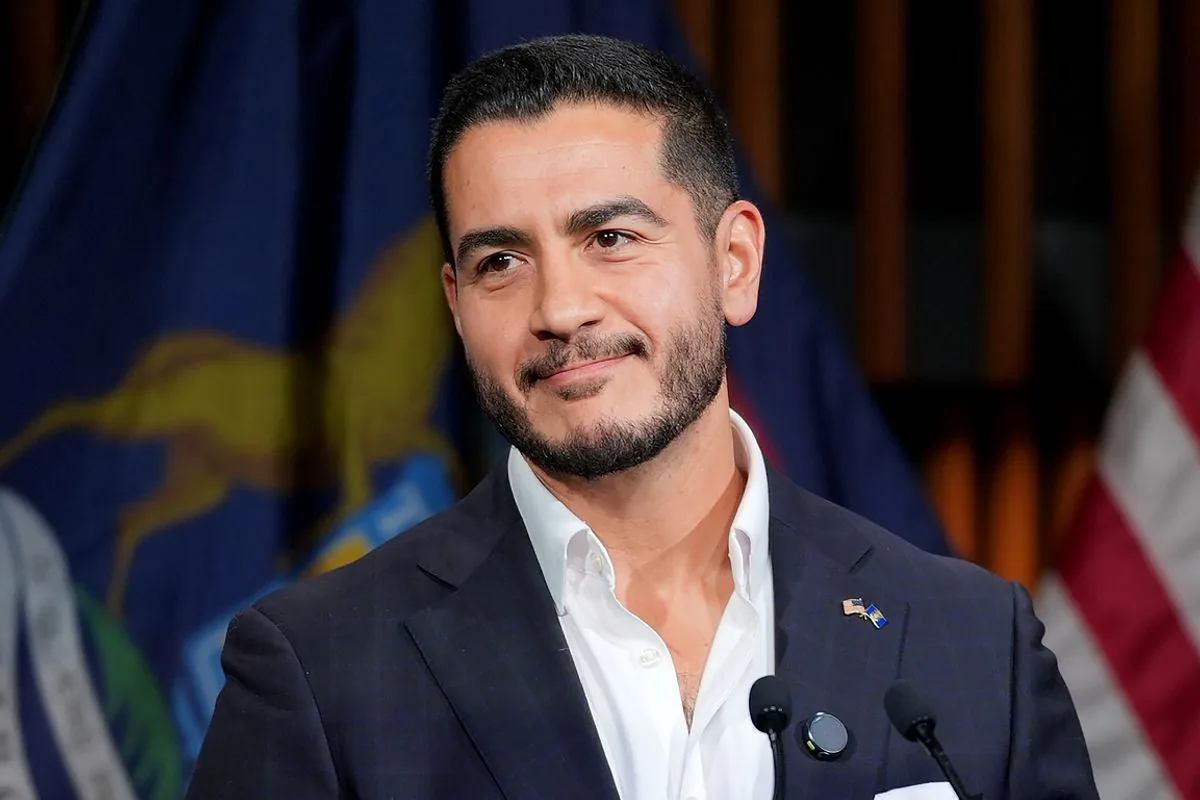 Reference image
Editorial responsibility
- No named human review is recorded for this page.
- Reports are grouped by semantic similarity and deterministic rules. Language models may assist titles, summaries, translation and cross-source analysis; the page reads the event directly, while its address stays stable when the title changes.
- Summary covers the current reports
Cross-source coverage
Common ground
- The milestone of electing the first Muslim senator is real and significant.
- A sitting president launched a terrorism smear against a major-party Senate candidate, which the BBC reported as baseless, and the candidate still won.
- The margin of victory is load-bearing because it changes the lesson about whether the centrist argument collapsed or held.
- The Stevens endorsement (a Democratic primary rival backing the Republican) is a genuine norm shift that survives any margin.
- The reporting gap—no vote count in the wire copy—is itself a data-transparency story worth naming.
Points of contention
- Whether demanding a margin from people reading the same wire copy is legitimate rigor or theater.
- Whether the smear's effect can be judged without a counterfactual baseline (neutral conceded it cannot; western used this to argue the smear's failure is still a fact).
- Whether the projection-versus-call discrepancy is a data-hygiene failure or just normal timing variation across networks.
Blind spots
- No one cited an actual vote count or margin, so the entire debate about the machine's strength or weakness rests on an unreported number.
- The reason the margin is unreported—a historic first with thin numbers—was flagged late but never explored as a press-freedom or transparency question.
- The counterfactual problem for measuring the smear's cost was acknowledged but not applied to the claim that the attack 'failed' to stop the candidate.
WorldAttention’s read
The roundtable agreed that the milestone, the smear, and the Stevens norm shift are all real and significant. The central unresolved issue is the missing margin: without it, claims about the centrist argument's collapse or the machine's weakness remain a mood, not a lesson. The strongest claim—the norm shift—survives any margin, but the margin itself is load-bearing and unreported. The group's final judgment: report the count or downgrade the thesis, but don't let the missing number bury the story that's already true.
Reporting timeline
Abdul El-Sayed's Michigan Senate Win Hailed as Historic First
The New Republic argues that Abdul El-Sayed's election as the first Muslim-American U.S. senator, and his victory as a progressive in the swing state of Michigan, are historic on two counts. The article cites Pew and Michigan State University polling showing widespread anti-Muslim sentiment, including among Democrats, and recounts resistance El-Sayed faced from Republicans, the media, and centrist Democrats over his faith and his Israel-Gaza positions, including criticism from Nancy Pelosi. It notes his primary rival Haley Stevens endorsed Republican Mike Rogers days before the election. The author attributes the win mainly to a nationwide Democratic backlash against Trump, while arguing it undercuts centrist 'electability' claims and could encourage an Alexandria Ocasio-Cortez presidential run.
Read sourceAbdul El-Sayed Wins Michigan Senate Race, Becoming First Muslim US Senator
Left-wing Democrat Abdul El-Sayed defeated Republican Mike Rogers in Michigan to become the first Muslim senator in US history, according to BBC News. El-Sayed, a former public health administrator and son of Egyptian immigrants, campaigned on universal health care, a wealth tax on billionaires, and ending US aid to Israel over its actions in Gaza, which he described as genocide. Rogers, backed by President Donald Trump, portrayed El-Sayed as a communist and attacked his stance on Israel and his Muslim faith. The race was complicated by Democratic primary rival Haley Stevens endorsing Rogers days before the election, which Democratic leadership called a betrayal. El-Sayed's victory is seen as a test of the Democratic left's influence in a key battleground state and a milestone for Muslim Americans amid rising Islamophobia. He thanked supporters for backing 'the unlikeliest of candidates.'
Read sourceAbdul El-Sayed to Become First Muslim Senator After Michigan Victory
Democrat Abdul El-Sayed is set to become the nation's first Muslim senator following a victory described in the source item. The win is framed as evidence for the party's ascendant progressive wing that far-left candidates can prevail in competitive elections, including in presidential battlegrounds such as Michigan. The post attributes the outcome to El-Sayed's victory and presents it as a signal of progressive electoral viability; no vote margins, dates, or opponent details are provided in the source text.
Read sourceShow 8 older updatesHide older updates
Democrat Abdul El-Sayed defeats Mike Rogers in Michigan Senate race
Democrat Abdul El-Sayed has defeated Republican Mike Rogers in Michigan's Senate race, according to multiple news outlets including The Washington Post, The Guardian, CBS News, and Fox News. The victory makes El-Sayed the first Muslim U.S. senator. The Guardian describes him as a progressive, while Fox News characterizes the win as a major blow to the GOP in Michigan after a bruising Senate race. The Cook Political Report notes that Michigan is moving to lean Democrat. The election was for the 2026 Senate seat.
Read sourceDemocrat Abdul El-Sayed Wins Michigan Senate Race, Becoming First Muslim US Senator
Democrat Abdul El-Sayed has won the closely watched US Senate race in Michigan, defeating Republican Mike Rogers, according to the report. The 42-year-old, who was repeatedly sharply attacked by Donald Trump, thus becomes the first Muslim US senator. The article frames the result as a double disaster for Republicans. No further details on vote margins, turnout, or the broader midterm context are provided in the source text.
Read sourceAbdul El-Sayed Wins Michigan Senate Race, Becoming First Muslim U.S. Senator
Democrat Abdul El-Sayed won a fiercely contested Senate race in Michigan, according to a Wall Street Journal post on X. With the victory, El-Sayed will become the first Muslim senator in U.S. history. The post did not provide vote margins, opponent details, or a specific election date. The result marks a notable first in American national politics and adds a Senate seat to the Democratic column in Michigan.
Read sourceDemocrat Abdul El-Sayed defeats Republican Mike Rogers in Michigan Senate race
Democrat Abdul El-Sayed defeated Republican Mike Rogers in Michigan's key Senate race, according to multiple outlets including NPR, The Guardian, PBS, and Al Jazeera. The Guardian described El-Sayed as a progressive who becomes the first Muslim US senator. Yahoo highlighted a celebratory quote, 'Turn that inshallah into alhamdulillah,' tied to his win. PBS provided live results coverage of the Michigan Senate midterm election. The aggregated headlines consistently report the outcome and its significance, though the item is a link list rather than a full article and offers limited detail on margins, turnout, or policy positions.
Read sourceDemocrat Abdul El-Sayed wins Michigan Senate race, becoming first Muslim US senator
Democrat Abdul El-Sayed has won Michigan's high-stakes Senate race, according to projections reported by NBC News, The Guardian, Al Jazeera, PBS and Bloomberg. Multiple outlets report that El-Sayed defeated Republican Rogers to secure the seat. The Guardian describes El-Sayed as a progressive and reports that his victory makes him the first Muslim US senator. The result is presented as a projected outcome by outlets including Bloomberg, which attributes the projection to DDHQ. The race was characterized as high-stakes in the source headlines. No vote margins, timing details, or further policy positions are provided in the source item.
Read sourceAbdul El-Sayed Declares Victory as Michigan's Elected Senator
Abdul El-Sayed has declared himself the elected Senator of Michigan, according to a report by Die Welt. The Democrat would become the first Muslim US Senator in American history if the result stands. In his speech, El-Sayed thanked voters and said he would work in Washington on behalf of the state of Michigan. The report does not provide vote counts, official confirmation, or details on his policy plans. The claim of victory is attributed to El-Sayed himself, and the historical first is presented as a conditional outcome tied to his election.
Read sourceAbdul El-Sayed runs for Senate in Michigan as controversial left-wing Democrat
Abdul El-Sayed, a controversial Democratic candidate, is running for the U.S. Senate in Michigan, according to a WELT report. The item states that El-Sayed could become the first Muslim senator in the United States and describes him as very left-wing. WELT foreign policy correspondent Gregor Schwung is quoted as saying that El-Sayed has not taken a clear position on antisemitism. The report presents these characterizations and the criticism as attributed assessments rather than established facts.
Michigan Projected to Elect Abdul El-Sayed as First Muslim U.S. Senator
A post on X, citing a 78% chance, projects that Michigan will elect Abdul El-Sayed, which would make him the first Muslim U.S. senator in American history. The item presents the outcome as a projection rather than a confirmed result and links to external sources for further detail. No vote counts, official certification, or additional context are included in the post itself.