Abdul El-Sayed Wins Michigan Senate Race, Becoming First Muslim U.S. Senator
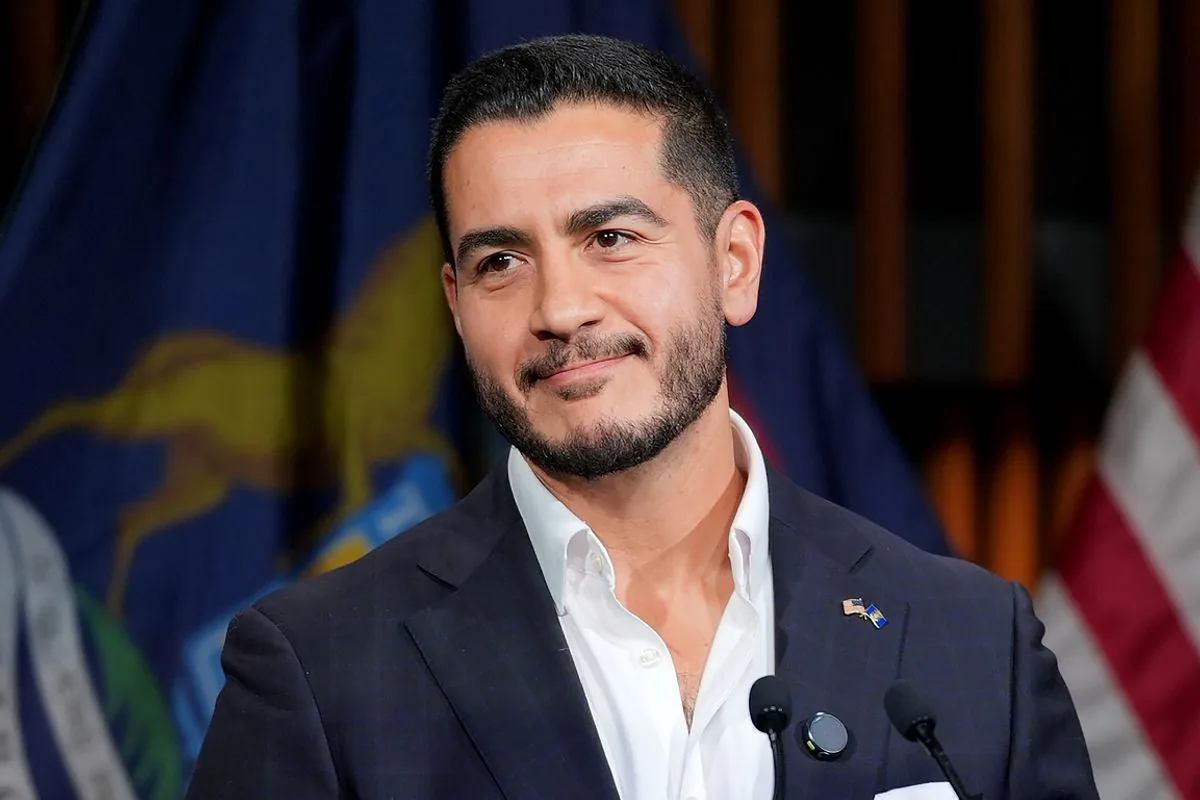
Democrat Abdul El-Sayed defeated Republican Mike Rogers in Michigan's 2026 U.S. Senate race, becoming the first Muslim elected to the Senate. The progressive former public health official, son of Egyptian immigrants, campaigned on Medicare for All, taxing billionaires and ending U.S. military aid to Israel. He withstood heavy AIPAC spending in the primary and Islamophobic attacks from Trump and other Republicans, and won despite primary rival Haley Stevens endorsing Rogers days before the election.
 Reference image
Editorial responsibility
- No named human review is recorded for this page.
- Reports are grouped by semantic similarity and deterministic rules. Language models may assist titles, summaries, translation and cross-source analysis; the page reads the event directly, while its address stays stable when the title changes.
- Summary covers the current reports
Cross-source coverage
Common ground
- A 78% forecast is not an election result; it is a probability, not a call.
- The 'first Muslim senator' milestone is real and newsworthy, but it should not substitute for reporting on the race's substance.
- The conduct of the race — money, framing, and labels — is reportable before the vote is certified.
- Both sides agree that key evidence is missing: a timestamped forecast, FEC filings on spending, and the candidate's own record.
- The vote count tells you who won, but it does not settle whether the coverage was fair or accurate.
Points of contention
- Whether the 'far-left' label is a smear or an accurate description depends on measuring the candidate's positions against the median voter — a measure neither side provided.
- The Neutral Agent initially argued the vote count adjudicates the journalism, then conceded it only adjudicates the seat.
- The Western Agent argued the framing itself is the main story, while the Neutral Agent insisted the framing critique is only as strong as the underlying numbers.
- They disagree on whether the 'historic first' framing receives enough scrutiny compared to the 'controversial' framing.
Blind spots
- Neither agent quoted the candidate's actual words on Israel aid, the wealth tax, or other policies, so the 'smear vs. accurate' question was never tested.
- No one cited a specific poll number, turnout model, or date for the 78% forecast, leaving the central number unverified.
- The claim that 'thirty, forty million' in spending narrowed the field was called plausible but never backed by FEC filings.
- The 'historic first Muslim senator' headline was not scrutinized for the emotional or political work it might be doing.
WorldAttention’s read
This debate was about how to describe an election that has not yet happened, using numbers nobody sourced. Both agents agreed that a 78% forecast is not a result, that the milestone is real, and that the conduct of the race is reportable before certification. But they never produced the three documents that would settle the argument: a timestamped forecast, FEC filings on spending, and the candidate's own record. The framing critique — whether 'far-left' is a smear or an accurate label — remains untested without those numbers. The final judgment is to treat this as an unverified forecast about an uncalled race, framed by two competing narratives that both skipped the homework. Report the milestone, report the money, quote the candidate, and stop letting 'wait for the count' skip the argument happening in plain sight.
Reporting timeline
Abdul El-Sayed Launches Habibi PAC After Winning Michigan Senate Seat
Days after defeating Republican Mike Rogers in Michigan's Senate election, Dr. Abdul El-Sayed launched the "Habibi PAC," according to a Federal Election Commission filing. The article states El-Sayed overcame $38 million in American Israel Public Affairs Committee funds, what it describes as a tidal wave of bigotry and Islamophobia, and an eleventh-hour betrayal by Democratic Representative Haley Stevens. The leadership PAC is not connected to his campaign and will allow him to raise money for other candidates, which the article suggests may signal greater political ambitions. El-Sayed, described as the first Muslim elected to the U.S. Senate, has used the Arabic term "habibi" ("my beloved") throughout his campaign, including in his victory speech when he addressed Vice President JD Vance and noted the irony that Vance is constitutionally obligated to swear him in in January.
Abdul El-Sayed Launches Habibi PAC After Winning Michigan Senate Seat
Days after defeating Republican Mike Rogers in Michigan's Senate election, Dr. Abdul El-Sayed launched the "Habibi PAC," according to a Federal Election Commission filing made official on Thursday. The article reports that El-Sayed overcame $38 million in American Israel Public Affairs Committee funds, a wave of bigotry and Islamophobia, and an eleventh-hour betrayal by Democratic Representative Haley Stevens. The leadership PAC is not connected to his campaign and will allow him to raise money for other candidates, which the outlet suggests may signal greater political ambitions. Habibi means "my beloved" in Arabic, a term El-Sayed used often during his campaign, including in his victory speech when he addressed Vice President JD Vance, saying there is "delicious irony" in Vance being constitutionally obligated to swear him in in January. El-Sayed is described as the first Muslim elected to the U.S. Senate.
Abdul El-Sayed Launches Habibi PAC After Winning Michigan Senate Seat
Days after defeating Republican Mike Rogers in Michigan's Senate election, Dr. Abdul El-Sayed launched a leadership PAC called "Habibi PAC," according to a Federal Election Commission filing made official on Thursday. The article states El-Sayed overcame $38 million in American Israel Public Affairs Committee funds, what it describes as a wave of bigotry and Islamophobia, and an eleventh-hour betrayal by Democratic Representative Haley Stevens. The PAC is not connected to his campaign and will allow him to raise money for other candidates, which the article suggests may signal greater political ambitions. El-Sayed, described as the first Muslim elected to the U.S. Senate, has often used "habibi"—Arabic for "my beloved"—during his campaign, including in his victory speech when he told Vice President JD Vance there was "delicious irony" in Vance being constitutionally obligated to swear him in in January.
Show 17 older updatesHide older updates
Abdul El-Sayed Wins Michigan Senate Seat as First Muslim US Senator
Abdul El-Sayed, the son of Egyptian immigrants and a progressive Democrat, defeated Republican Mike Rogers by about seven points (52.5% to 45.5%) to become the first Muslim elected to the US Senate, riding a nationwide Democratic wave in the 2026 midterms. He won majorities among Black voters and Jewish early voters and outperformed Kamala Harris and Senator Elissa Slotkin in 2024 in Wayne, Oakland and Macomb counties, despite Republican attacks on his faith and objections from some Jewish leaders over his stance on Israel. Trump and other Republicans repeatedly used Islamophobic rhetoric against him, which El-Sayed dismissed. Some Jewish leaders said his rhetoric made parts of the community feel excluded, though preliminary analyses show most Michigan Jews backed him. El-Sayed campaigned on ending US military aid to Israel and welcomed Trump's election-day statement that such aid would be cut off, while saying he would work with anyone to serve Michigan.
Read sourceAbdul El-Sayed Wins Michigan Senate Race, Becomes First Muslim US Senator
Left-wing Democrat Abdul El-Sayed won a historic US Senate race in Michigan, becoming the first Muslim senator in US history, according to BBC and Reuters. In his victory speech, El-Sayed called out JD Vance, WSJ reported. He told AP that Michigan rejected a 'hateful, spiteful campaign' following months of Republican attacks, and Reuters framed the result as a failure of the 'politics of fear.' The New York Times reported that the win is significant to Muslim Americans, though not primarily because of faith. The outcome marks a notable political milestone and a rebuke of the attacks directed at El-Sayed during the campaign.
Read sourceAbdul El-Sayed Wins Historic Michigan Senate Seat, Becomes First Muslim U.S. Senator
Democrat Abdul El-Sayed declared victory in Michigan's U.S. Senate race, defeating Republican former Rep. Mike Rogers in one of the midterms' most contentious contests. CBS News projects El-Sayed, 42, a former Michigan health official, will become the first Muslim elected to the U.S. Senate. In his Detroit victory speech, he said 'the bad guys lost' after opponents—including President Trump and Sen. Ted Cruz, who called him a 'jihadist' and Muslim Brotherhood member, claims he denies—attacked his name and faith. He told Rogers to 'enjoy your retirement,' saying 'You chose hate, and Michigan chose hope.' He addressed Vice President JD Vance as 'habibi,' noting the irony that Vance must swear him in, and criticized AIPAC for spending $42 million against him. El-Sayed said opponents spent over $350 million across the primary and general elections, a Michigan record, and pledged to pursue money out of politics, money in people's pockets, and Medicare for All.
Democrat El-Sayed wins Michigan Senate race in midterms upset
Democrat Abdul El-Sayed declared victory in Michigan's Senate race early Wednesday, becoming the first Muslim US senator, according to the taz.de report. The progressive physician and former health official ran on 'money out of politics, money in your pockets, Medicare for all,' refusing corporate donations and relying on small donors. He faced a multimillion-dollar attack campaign from Republicans and right-wing media; opponent Mike Rogers sought to link him to the Muslim Brotherhood, and President Donald Trump called him a 'jihadist' and mocked his name. El-Sayed criticized Israel's war in Gaza and West Bank occupation, while AIPAC reportedly spent $30 million in the primary against him. Michigan's Senate seat has been Democratic-held for over 30 years, but some critics saw an openly left candidate as a risk. His win in a state Trump carried twice is framed as a signal to other progressive candidates.
Read sourceEl-Sayed Backs Trump Plan to Cut Israel Aid, Urges End to Arms Sales
Democrat Abdul El-Sayed, who defeated Republican Mike Rogers to become Michigan's first Muslim U.S. senator, said in an NPR Morning Edition interview that he welcomes President Trump's plan to end roughly $4 billion in annual military aid to Israel by year's end, saying 'the president is actually right on this policy.' El-Sayed also called for halting weapons sales to Israel that he said are used for 'genocide and apartheid,' and questioned U.S. military support for Egypt, Saudi Arabia, Jordan and Pakistan, arguing tax dollars should be spent at home. The U.S. currently provides Israel $3.8 billion annually under an agreement running through 2028. El-Sayed, 42, campaigned on lowering costs, Medicare for All and removing corporate money from politics; Israel and Gaza defined the race, with primary rival Haley Stevens endorsing Rogers days before the election. He acknowledged continued work to build support among Jewish and Black voters.
Abdul El-Sayed's Michigan Senate Win Hailed as Historic for Muslims and Progressives
The New Republic argues that Abdul El-Sayed's election as the first Muslim American ever elected to the U.S. Senate is historic on two counts: it advances a multicultural democracy, and it shows a progressive can win a swing state. The piece cites Pew polling that 42 percent of Americans say Muslims have a negative impact and a Michigan State survey finding 39 percent of Michigan voters less likely to back a Muslim candidate. It recounts resistance from Republicans, who implied he was a terrorist, and from centrist Democrats over his Gaza genocide characterization and calls to suspend military aid to Israel; Nancy Pelosi criticized him a week before the election, and the party only fully backed him after Haley Stevens endorsed Republican Mike Rogers. The author attributes his win mainly to a nationwide anti-Trump backlash, while arguing it undercuts centrist electability claims and could encourage an Alexandria Ocasio-Cortez presidential run.
Read sourceAbdul El-Sayed's Michigan Senate Win Hailed as Historic for Muslims and Progressives
The New Republic argues that Abdul El-Sayed's election as the first Muslim American ever elected to the U.S. Senate is historic for two reasons: it advances a multicultural democracy in a fairly white, moderate swing state like Michigan, and it shows a progressive candidate can win despite opposition from Republicans and centrist Democrats. The article cites Pew polling that 42 percent of American adults say Muslims have a negative impact on the U.S. and a Michigan State University survey finding 39 percent of Michigan voters said a candidate being Muslim made them less likely to vote for that person. It recounts resistance El-Sayed faced over his faith, his Gaza positions, and his ties to the progressive wing, including criticism from Nancy Pelosi and primary rival Haley Stevens, who endorsed Republican Mike Rogers. The author attributes his win mainly to a nationwide Democratic backlash against Trump, and forecasts that Alexandria Ocasio-Cortez may run for president, arguing centrist 'electability' claims were weakened.
Abdul El-Sayed's Michigan Senate Win Hailed as Historic First
The New Republic argues that Abdul El-Sayed's election as the first Muslim-American U.S. senator, and his victory as a progressive in the swing state of Michigan, are historic on two counts. The article cites Pew and Michigan State University polling showing widespread anti-Muslim sentiment, including among Democrats, and recounts resistance El-Sayed faced from Republicans, the media, and centrist Democrats over his faith and his Israel-Gaza positions, including criticism from Nancy Pelosi. It notes his primary rival Haley Stevens endorsed Republican Mike Rogers days before the election. The author attributes the win mainly to a nationwide Democratic backlash against Trump, while arguing it undercuts centrist 'electability' claims and could encourage an Alexandria Ocasio-Cortez presidential run.
Read sourceAbdul El-Sayed Wins Michigan Senate Race, Becoming First Muslim US Senator
Left-wing Democrat Abdul El-Sayed defeated Republican Mike Rogers in Michigan to become the first Muslim senator in US history, according to BBC News. El-Sayed, a former public health administrator and son of Egyptian immigrants, campaigned on universal health care, a wealth tax on billionaires, and ending US aid to Israel over its actions in Gaza, which he described as genocide. Rogers, backed by President Donald Trump, portrayed El-Sayed as a communist and attacked his stance on Israel and his Muslim faith. The race was complicated by Democratic primary rival Haley Stevens endorsing Rogers days before the election, which Democratic leadership called a betrayal. El-Sayed's victory is seen as a test of the Democratic left's influence in a key battleground state and a milestone for Muslim Americans amid rising Islamophobia. He thanked supporters for backing 'the unlikeliest of candidates.'
Read sourceAbdul El-Sayed to Become First Muslim Senator After Michigan Victory
Democrat Abdul El-Sayed is set to become the nation's first Muslim senator following a victory described in the source item. The win is framed as evidence for the party's ascendant progressive wing that far-left candidates can prevail in competitive elections, including in presidential battlegrounds such as Michigan. The post attributes the outcome to El-Sayed's victory and presents it as a signal of progressive electoral viability; no vote margins, dates, or opponent details are provided in the source text.
Read sourceAbdul El-Sayed Defeats Mike Rogers in Michigan, Becomes First Muslim U.S. Senator
Democrat Abdul El-Sayed, a progressive who campaigned on disrupting Washington's way of doing business, defeated Republican former congressman Mike Rogers in Michigan's competitive Senate race. The victory makes El-Sayed the first Muslim elected to the U.S. Senate. The race was widely viewed as consequential for control of the Senate, with multiple outlets projecting his win. The contest drew national attention, and the result was characterized by Fox News as a major blow to the GOP in Michigan.
Read sourceDemocrat Abdul El-Sayed Wins Michigan Senate Race, Becoming First Muslim US Senator
Democrat Abdul El-Sayed has won the closely watched US Senate race in Michigan, defeating Republican Mike Rogers, according to the report. The 42-year-old, who was repeatedly sharply attacked by Donald Trump, thus becomes the first Muslim US senator. The article frames the result as a double disaster for Republicans. No further details on vote margins, turnout, or the broader midterm context are provided in the source text.
Read sourceAbdul El-Sayed Wins Michigan Senate Race, Defeating Mike Rogers
Progressive Democrat Abdul El-Sayed has been elected to the U.S. Senate from Michigan, defeating Republican Mike Rogers. El-Sayed's campaign drew national attention after his association with far-left influencer Hasan Piker, from whom he later distanced himself. His primary opponent, moderate Democratic Rep. Haley Stevens, endorsed Rogers two days before the general election, though the move appears not to have affected the outcome. As a senator, El-Sayed is expected to be one of the furthest-left legislators, supporting Medicare for All, higher taxes on the wealthy, and restrictions on tech and AI, while opposing the Trump administration's war with Iran and police surveillance technology like Flock. His victory came amid a massive blue wave giving Democrats large majorities in both chambers.
Read sourceAbdul El-Sayed Wins Michigan Senate Race, Becomes First Muslim U.S. Senator
Democrat Abdul El-Sayed defeated Republican Mike Rogers in Michigan's closely watched U.S. Senate race, the Associated Press projected, making him the nation's first Muslim senator. The win shows an unapologetically progressive candidate can prevail in a battleground state Trump carried two years ago. The two competed for the seat vacated by retiring Democratic Sen. Gary Peters; Republicans hoped to flip it but failed, and the GOP has already lost its Senate majority. In the race's final days, Democratic Rep. Haley Stevens, who narrowly lost the August primary to El-Sayed, endorsed Rogers, sparking backlash and staff resignations. El-Sayed, a former Detroit health director, ran on Medicare for All, taxing billionaires and reducing corporate influence. Rogers, a former congressman and FBI agent, portrayed him as too extreme; Trump escalated attacks questioning his loyalty. El-Sayed's win gives progressives a new national figure ahead of 2028.
Abdul El-Sayed Wins Michigan Senate Race, Becoming First Muslim U.S. Senator
Democrat Abdul El-Sayed won a fiercely contested Senate race in Michigan, according to a Wall Street Journal post on X. With the victory, El-Sayed will become the first Muslim senator in U.S. history. The post did not provide vote margins, opponent details, or a specific election date. The result marks a notable first in American national politics and adds a Senate seat to the Democratic column in Michigan.
Read sourceProgressive Abdul El-Sayed Wins Michigan Senate Race, Becoming First Muslim US Senator
Abdul El-Sayed, a 42-year-old doctor and progressive former Wayne County health director, defeated Republican Mike Rogers in Michigan's US Senate race to become the first Muslim US senator. Declaring victory in Detroit, El-Sayed said voters 'took a chance on the unlikeliest of candidates' and credited a year-and-a-half movement across the state. The race was marked by Islamophobic attacks from Donald Trump and JD Vance, who called him a 'jihadist' and 'communist.' El-Sayed advocated Medicare for All and an end to US military aid to Israel; the pro-Israel lobby Aipac spent about $30m in the primary against him. His win contributed to a decisive Democratic Senate majority after victories in Texas, Kansas and South Carolina. Rogers, a former congressman endorsed by Trump, had backed tariffs and war with Iran before breaking with the president late in the campaign.
Read sourceDemocrat Abdul El-Sayed defeats Republican Mike Rogers in Michigan Senate race
Democrat Abdul El-Sayed won Michigan's U.S. Senate election, defeating former Republican Rep. Mike Rogers, according to an Associated Press race call. The 42-year-old former public health official, who ran health departments in Wayne County and Detroit, becomes the first Muslim American to serve in the Senate. El-Sayed campaigned on single-payer healthcare and curbing corporate money in politics, galvanizing young and infrequent voters amid anger over the cost of living and corruption. He narrowly defeated Rep. Haley Stevens in the primary by about 1 percentage point despite opposition from Michigan heavyweights including Gov. Gretchen Whitmer and retiring Sen. Gary Peters. In the general election's closing days, Stevens endorsed Rogers after initially saying she would back the Democratic ticket. El-Sayed's positions on Israel alienated some Jewish voters, and he criticized opponents for Islamophobic rhetoric. Rogers, endorsed early by President Trump, embraced some of Trump's false election-fraud claims before later distancing himself from some policies.
Read source