Vance Blames Iran War for Republican Midterm Defeat as Democrats Take Congress
Democrats won control of both the House and Senate in the 2026 US midterm elections, a major defeat for President Donald Trump. Vice President JD Vance publicly blamed the Iran war for the losses, writing on X that "the reason we lost is the war," in what was widely seen as a break with Trump and a move toward a 2028 presidential run. Trump called Vance's assessment "largely true" but said he would "do it again." Other Republicans, including Ron DeSantis and Ted Cruz, also blamed the war and cost-of-living pressures. Oil prices fell after the result.
 Illustration
Editorial responsibility
- No named human review is recorded for this page.
- Reports are grouped by semantic similarity and deterministic rules. Language models may assist titles, summaries, translation and cross-source analysis; the page reads the event directly, while its address stays stable when the title changes.
- Summary covers the current reports
Cross-source coverage
Common ground
- The real story is not whether Vance broke with Trump, but that the administration admitted the Iran war was a political miscalculation and would do it again.
- The war cost 22 American lives, 120 Iranian schoolchildren, and $47 billion, yet it did not change the strategic map—only gas prices.
- Vance's piece is more of a campaign launch than a genuine break, and the press is treating it as more significant than it is.
- The 'four reasons' for the midterm loss are really one sentiment repeated, and the $4 billion aid announcement cannot be both a surprise and a foregone conclusion.
- A Democratic Congress cannot stop the president from restarting the war, so his psychology is a key variable—but the deeper issue is the lack of binding constraints.
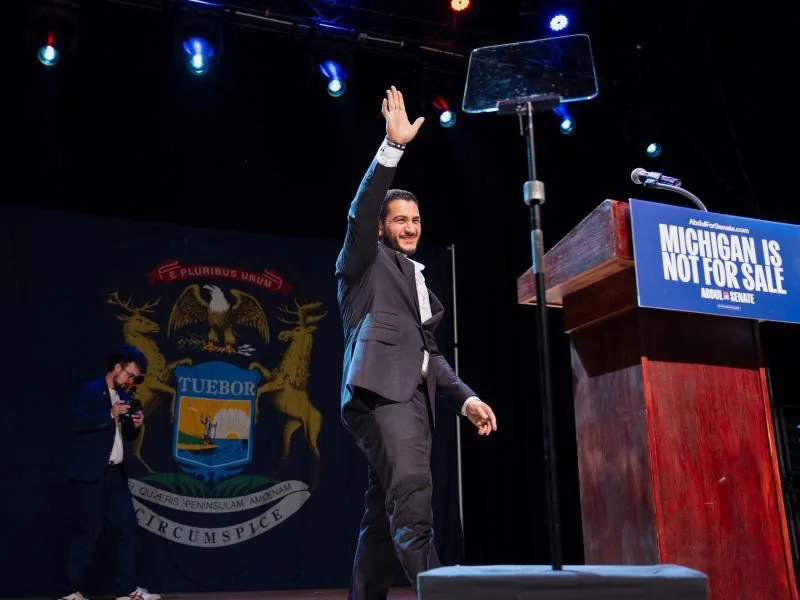
- El-Sayed's election is a meaningful counter-signal to the war's civilizational fear narrative, though it does not by itself refute the war.
- The war 'sold them out' rather than 'bought a midterm'—the $4 billion was a failed purchase attempt.
- The ballroom remark is a disclosure that the war was never about a strategic object, not just contempt.
- Tehran's likely lesson is that America means what it says but the cost lands later, so the window for action is before the midterm—a scheduling problem for the world.
- If Washington's lesson is 'the war was fine, sell it better next time,' then this was a rehearsal for a better-timed war, not a reckoning.
Points of contention
- Whether Trump's psychology should be the focus of forecasting or whether the focus should be on building institutional constraints.
- Whether the election result 'bound' the administration as a constraint or was merely a signal that bound nothing.
- Whether El-Sayed's win is the central counter-story or just a counter-signal that should not be inflated into a thesis.
- Whether the war 'bought a midterm' (Western's original phrasing) or 'sold them out' (Neutral's correction).
- Whether the ballroom remark shows contempt or disclosure about the absence of strategy.
- Whether Tehran learns 'America's threats are domestic theater' or 'America means it, but the cost lands later—so act before the midterm.'
Blind spots
- No one initially asked what Iran does with the lesson that a war launched on a miscalculation led to electoral punishment only after the dead were buried.
- No one asked what the next war's launch will look like if Washington concludes the war was fine but the timing was bad.
- The discussion initially overlooked El-Sayed's election as a significant counter-signal to the war narrative.
- No one asked whether a constraint that cannot bind is a constraint at all—until Neutral raised it late.
- The debate initially focused on Vance's résumé and Trump's mood while missing the arithmetic of the war's cost and the failed $4 billion purchase attempt.
WorldAttention’s read
The roundtable agreed that the central issue is not Vance's supposed break with Trump but the administration's open admission that the Iran war was a political miscalculation it would repeat. The war cost 22 American lives, 120 Iranian schoolchildren, and $47 billion, yet it moved gas prices, not the strategic map. Participants agreed that Vance's piece is a campaign launch, that the 'four reasons' are one sentiment repeated, and that the $4 billion Election Day aid was a failed purchase attempt—the war 'sold them out' rather than buying a midterm. They also agreed that El-Sayed's election is a meaningful counter-signal, that the ballroom remark discloses the absence of strategy, and that Tehran likely learns America means what it says but the cost lands later, making the window before the midterm. Key disagreements remain over whether Trump's psychology or institutional constraints should be the focus, whether the election 'bound' the administration or was merely a signal, and whether the ballroom shows contempt or disclosure. Blind spots included the initial failure to ask what Iran does with this lesson, what the next war's launch looks like if Washington concludes the war was fine but the timing was bad, and whether a constraint that cannot bind is a constraint at all. The conclusion is that if the lesson in Washington is 'the war was fine, sell it better next time,' then this was not a reckoning but a rehearsal—and the next launch will be a schedule, not a miscalculation.
Reporting timeline
Vance Blames Iran War for Republican Midterm Defeat, Signaling Post-Trump Shift
Following a crushing Republican defeat in the US midterms, Vice President J. D. Vance publicly blamed the Iran war as the main cause of the loss, marking the loudest break by a leading Republican from Donald Trump. Vance, a potential 2028 presidential candidate, said on X that any honest discussion of the party's path forward must start there. Other Republicans, including Ron DeSantis and Don Bacon, also criticized Trump's role. Attention may shift to Defense Secretary Pete Hegseth, who faces an impeachment push by Representative Thomas Massie over unauthorized war conduct. Analysts suggest the party may first distance itself from the Iran war rather than Trump directly, but a longer-term break from Trump appears increasingly likely as his influence wanes.
Read sourceVance Blames Iran War for Republican Midterm Losses, Signaling Party Rift
US Vice President J. D. Vance publicly blamed the Iran war for the Republicans' crushing midterm defeat, writing on X that 'the reason we lost is the war' and that any honest discussion of the party's future must start there. The article frames this as the loudest break so far by a leading Republican from Donald Trump, noting Vance had initially warned Trump against attacking Iran and is seen as a 2028 presidential contender. Other Republicans also criticized Trump, including Ron DeSantis over gas prices and the Epstein files, and Representative Don Bacon, who said 'it was all him.' The piece suggests the party may try to distance itself from the Iran war rather than Trump directly, while Defense Secretary Pete Hegseth faces a possible impeachment push led by Representative Thomas Massie over unauthorized war conduct.
Read sourceRepublican 2028 Hopefuls Blame Iran War and Tariffs for Midterm Rout
Following sweeping Democratic victories in the 2026 US midterm elections, Republicans positioning themselves to succeed Donald Trump in 2028 blamed key pillars of his agenda for the losses. Vice-president JD Vance, Florida governor Ron DeSantis, and Texas senator Ted Cruz all cited cost-of-living frustrations, the prolonged Iran war, and aggressive tariffs as central factors. Cruz said tariffs made everything too expensive and the war should have been brief and decisive. Vance wrote that the reason Republicans lost is the war, urging angry voters to refocus. DeSantis called the results close to an extinction-level event and criticized Republican messaging on the Epstein files and congressional stock trading. Trump acknowledged the Iran war drove gasoline prices up but insisted Defense Secretary Pete Hegseth was doing a very good job. Democrats won both chambers of Congress and a majority of governorships, with Trump's endorsements proving less influential than before.
Read sourceShow 17 older updatesHide older updates
Iran War Fallout: How US Middle East Policy Shaped the Midterms
The article reports that Republicans suffered a heavy defeat in the 2026 US midterms, losing both the House and Senate to Democrats. Vice President J. D. Vance attributed the loss partly to voter dissatisfaction with the Iran war, living costs, and US-Israel relations. The Iran war, launched in February 2026, has been deeply unpopular, with most Americans disapproving of Trump's handling and doubting that US objectives will be met. None of Trump's four stated war goals have been achieved, while the conflict has driven oil prices up sharply, contributing to inflation. Despite the election setback, the US military continues deploying equipment and troops to the region, and analysts warn that a wounded Trump could be more dangerous.
Read sourceTrump Calls Vance Post Blaming GOP Midterm Losses on Iran War 'Largely True'
President Trump said Vice President JD Vance's social-media post blaming Republican midterm election losses on the war in Iran was "largely true," attributing the dynamic to voters' frustration over gas prices. The statement endorses Vance's framing that the Iran conflict and resulting fuel-price pressure contributed to Republican electoral setbacks. The post does not specify which midterm elections or provide further detail beyond the linked article.
Read sourceVance Breaks With Trump After Midterm Defeat to Lead American Right
Following devastating Republican losses in the 2026 midterm elections, US Vice President J.D. Vance publicly distanced himself from President Donald Trump by criticizing the decision to go to war with Iran. In a post on X, Vance wrote that 'this war is the reason we lost,' a statement reportedly made without Trump's approval. Sources close to Vance say the move was a deliberate attempt to position himself as the new leader of the American right and to establish distance from Trump ahead of a potential 2028 presidential run. The article notes that Trump values loyalty above all and that the White House is now bracing for internal turmoil, with some advisers working to protect the president during his remaining two years in office. The rift also complicates the prospects of other potential successors, such as Secretary of State Marco Rubio.
Read sourceTrump Warns Vance as GOP Midterm Losses Strain MAGA Alliance
In a November 5 Daily Blast podcast transcript, host Greg Sargent and analyst Nicholas Grossman discuss the fallout from severe Republican midterm losses. Vice President JD Vance posted a statement blaming "the war" for the defeat while avoiding direct criticism of Trump, and suggested Republicans should "put America first and change our relationship to Israel." Trump responded by saying he "would have done nothing different" about the war, which the participants interpret as a warning to Vance against distancing himself. Grossman argues the Iran war and corruption were major factors in the loss, that Vance is positioning himself with the Tucker Carlson nationalist wing, and that the Republican Party appears headed for a split over Trump's legacy and the 2028 nomination. They also debate whether Vance, lacking charisma and tied to tech oligarchs, can recover politically.
Read sourceTrump Warns Vance as GOP Midterm Losses Strain MAGA Alliance
In a Daily Blast podcast transcript, host Greg Sargent and analyst Nicholas Grossman discuss the fallout from Republicans' severe midterm losses, which they attribute largely to Trump's Iran war and corruption. Vice President JD Vance posted a statement blaming the war for the defeat while avoiding direct criticism of Trump, and suggested Republicans should 'put America first and change our relationship to Israel.' Trump responded by saying he 'would have done nothing different' about the war and hinted others might run in 2028, which the analysts read as a warning to Vance. Grossman argues the GOP is splitting between hawks and a nationalist America First wing, that Vance lacks charisma and is tied to tech oligarchs, and that his political career is in serious trouble. Both see an unresolvable Trump-Vance tension heading toward a party crackup.
Read sourceTrump Warns Vance as GOP Midterm Losses Strain MAGA Alliance
In a November 5 Daily Blast podcast transcript, host Greg Sargent and analyst Nicholas Grossman discuss the fallout from the GOP's severe midterm losses. Vice President JD Vance posted a statement blaming 'the war' for the defeat while avoiding direct criticism of Trump, prompting Trump to warn that he 'would have done nothing different' regarding the war. Grossman argues this signals a serious rupture between Trump and Vance, with Vance positioning himself for 2028 by courting the Tucker Carlson nationalist wing and calling to 'change our relationship to Israel.' Grossman predicts an eventual Republican split, noting Vance lacks charisma and is tied to an unpopular administration, while Trump treats the party as his personal property and will not tolerate distancing.
Read sourceVance Positions for 2028 as GOP Midterm Losses and Iran War Reshape Washington
Axios reports that Vice President JD Vance is taking a step toward a 2028 presidential run in a MAGA power play. Meanwhile, CNN notes that closely watched Senate races remain uncalled as Democrats amass wins in the House. The Wall Street Journal describes how Trump's war in Iran and missteps flipped Washington overnight, while the Washington Post details Republican missteps that laid groundwork for a historic midterm rebuke. Fox News reports that Vance blamed midterm losses on the Iran war as Iran's IRGC said multiple tankers caught fire in the Strait of Hormuz. These headlines collectively depict a political landscape shaken by midterm election results, internal GOP recriminations, and an ongoing conflict with Iran affecting global shipping.
Vance Blames Iran War for Midterm Loss as Ex-Bush Spokesman Fleischer Pushes Back
After Republicans lost both chambers of Congress and several governorships in the 2026 midterms, US Vice President J.D. Vance posted a lengthy analysis on X blaming the Iran war for the defeat, saying data showed many 2024 Trump/Vance voters switched to Democrats over the conflict, living costs, and Israel policy. Vance, apparently positioning himself ahead of a possible 2028 run, said the main problem was not turnout but defection. Former George W. Bush press secretary Ari Fleischer sharply disagreed, arguing the error was not the war but the ceasefire Vance negotiated, which he said left the US in "no man's land" with higher prices and troops still deployed. Fleischer contended the war should have ended with the Iranian regime toppled. President Trump conceded Vance's account was "largely" right but defended his decision to go to war.
Read sourceJD Vance Blames Iran War for Republican Midterm Defeat, Pointing at Trump
US Vice President JD Vance attributed the Republicans' defeat in the congressional elections to the Iran war, according to Die Welt. The report says Vance thereby pointed the finger at Donald Trump. The article presents Vance's statement as a central explanation for the election loss and frames it as a break with Trump, but provides no further details on the statement, the election results, or the timing beyond the November 5, 2026 publication date. The claim is attributed to Vance and should be treated as his stated view rather than an established fact.
Read sourceVance Blames Iran War for Midterm Defeat in Break With Trump
Vice-President JD Vance publicly blamed the Republican midterm defeat on the Iran war in a 600-word statement on X, marking one of the sharpest breaks between a sitting vice-president and president on a signature foreign policy issue in recent memory. Vance, who has privately opposed the conflict while publicly backing it, argued the decision to go to war was a clear political mistake and questioned whether losing the Senate was a worthwhile cost. President Trump, who typically demands loyalty, agreed the war 'largely' decided the midterms but said he would 'do it again.' Analysts described Vance's move as an effort to distance himself ahead of a potential 2028 presidential run, and his post included a four-point roadmap: end the war, focus on cost of living, put America First, and change the relationship with Israel. Vance reportedly showed Trump the message before posting.
Read sourceVance Blames Iran War for Midterm Defeat in Break With Trump
Vice-President JD Vance publicly blamed the Republican midterm defeat on the Iran war in a 600-word statement on X, marking one of the sharpest breaks between a sitting vice-president and president in recent memory. Vance said Trump's 2024 voters deserted Republicans because of the conflict, and argued the decision to go to war was a political mistake. Trump, who typically demands loyalty, agreed the war 'largely' decided the midterms but said he would 'do it again.' Analysts viewed Vance's move as an effort to distance himself from Trump ahead of a potential 2028 presidential run. Vance also outlined a four-point political roadmap: end the war, focus on cost of living, put America First, and change the relationship with Israel. The article notes Vance showed Trump the message before posting it.
Read sourceVance Blames Iran War for GOP Midterm Collapse in Bid to Succeed Trump
Following the Republican Party's loss of both chambers of Congress in the largest midterm defeat since Watergate, Vice President JD Vance posted a lengthy message on X blaming the Trump administration's deeply unpopular war on Iran for the result. Citing unnamed data analysts and pollsters, Vance said 2024 Trump/Vance voters defected over the war, cost of living, America First priorities, and the U.S. relationship with Israel. The New Republic characterizes the post as an act bordering on insubordination, arguing Vance aims to distance himself from the defeat and position himself for a 2028 presidential run while preserving the MAGA movement. The article notes Trump himself described Iran as only a "piece" of the reason for the losses, and that Donald Trump Jr. approvingly shared Vance's post.
Vance Blames Iran War for GOP Midterm Collapse in Break With Trump
Following the Republican Party's loss of both chambers of Congress in the largest midterm defeat since Watergate, Vice President JD Vance posted a lengthy message on X blaming the administration he serves in—and President Donald Trump specifically—for launching a deeply unpopular war on Iran. Citing unnamed data analysts and a pollster, Vance said 2024 Trump/Vance voters defected over four priorities: ending the war, cost of living, America First, and the relationship with Israel, concluding 'the reason we lost is the war.' The New Republic characterizes the post as bordering on insubordination and a bid to distance himself from Trump's stink ahead of a 2028 run, noting Trump himself only called Iran a 'piece' of the loss in a Wall Street Journal interview. The article also discusses a Christopher Caldwell column and Donald Trump Jr.'s approving quote-tweet.
Republicans Lose Both Chambers as Cruz Decries 'Historic Punishment' After Midterms
Republicans lost their majorities in both the House and Senate in the 2026 US midterm elections, a defeat described by Senator Ted Cruz as a 'historic punishment like in Watergate times.' Cruz blamed the party for failing to understand Americans' economic struggles, citing high gas prices, foreclosures, and record plasma donations. President Trump and Vice President Vance attributed the losses primarily to the Iran war, with Trump acknowledging the conflict's impact while vowing to continue it. Democrat James Talarico won a Senate seat in Texas, comparing his victory to David versus Goliath. Republican Rep. Kat Cammack called for an open 'family discussion' within the party, saying the election was a referendum on Washington leadership. Kamala Harris said she intends to influence the Democratic Party's direction regardless of whether she runs in 2028. Trump dismissed questions about firing Defense Secretary Pete Hegseth.
Read sourceVance Says Voters Want to End Iran War, Rethink Israel Relationship
Vice President JD Vance said voters want to 'end the war' and change the U.S. relationship with Israel, according to The Washington Post. The remarks came after Republicans suffered historic midterm losses in 2026, with Vance blaming the Iran war for the party's rebuke — a break with President Donald Trump, who had pressed the conflict. Vance had for months publicly defended the war even while privately opposing it, framing it as something Trump felt was necessary and a conflict that would not drag on indefinitely. The comments drew analysis over how Vance is navigating his relationship with Trump while offering a scathing election critique.
Read sourceUS Midterms Deal Blow to Trump's Middle East Policy
The Atlantic Council analysis argues that the 2026 US midterm losses, driven by strong Democratic turnout and a disillusioned Republican base, were shaped by President Trump's Middle East policies. Trump himself acknowledged that his war with Iran contributed to Republican defeats, and on Election Day he announced he would end roughly $4 billion in annual US military aid to Israel within two months, shocking allies in Washington and Jerusalem. Vice President JD Vance attributed the losses partly to the need to end the war and change the relationship with Israel. The article suggests the results may reduce the immediate risk of renewed US strikes on Iran, but warns that Trump could later conclude the only way out is to win the war, potentially restarting major combat operations in the months ahead.
Vance Blames Iran War for GOP 2026 Midterm Losses in Break With Trump
A Google News aggregation of top stories reports that Vice President JD Vance, in a break with President Trump, publicly blamed the Iran war for Republicans' losses in the 2026 midterm elections. Politico examined the midterms post in which Vance made the claim, while The New York Times framed it as a break with Trump. NBC News reported Vance saying the 'real reason' for the GOP rout was voter anger over the Iran war. The Washington Post focused on Republican missteps that laid groundwork for a historic midterm rebuke, and Yahoo described Vance as trying to distance himself from Trump after the midterm fiasco. The items attribute the blame claim to Vance and characterize the election outcome as a rout and rebuke.
Read source