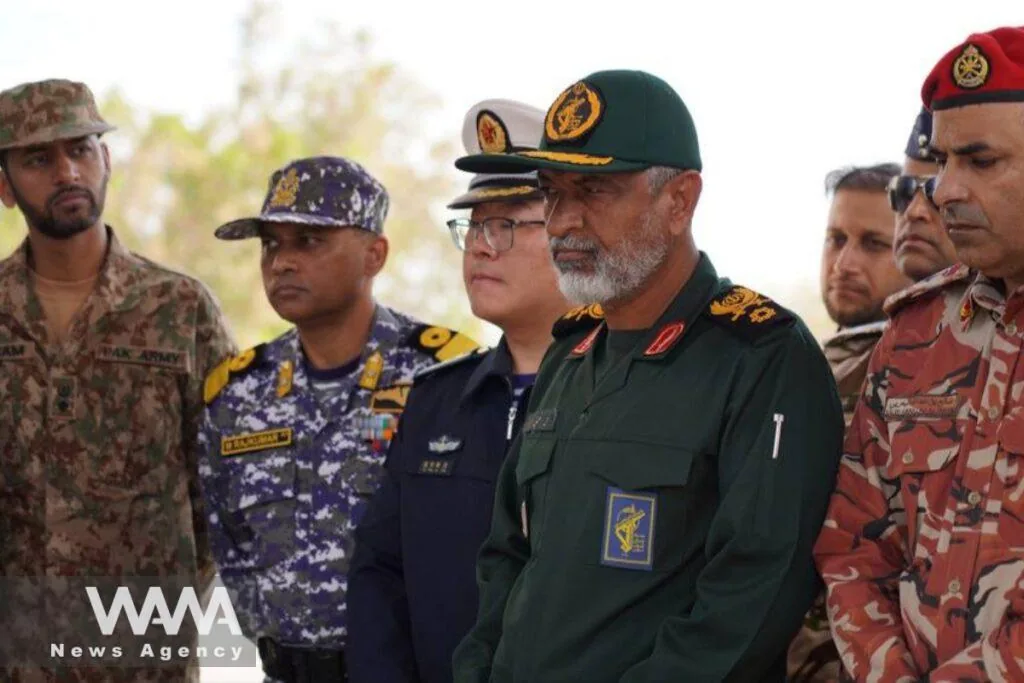
U.S. President Donald Trump threatened to bomb Oman if it interferes with U.S. naval operations or a potential U.S.-Iran deal regarding the Strait of Hormuz. The threat follows Iran’s closure of the strait in late February amid ongoing U.S.-Israeli attacks, and as Iran negotiates with Oman over shipping regulations. Trump also claimed a backchannel with Iran’s Revolutionary Guard and plans to declare the strait U.S. territory. The conflict has driven up global energy prices and remains deeply unpopular ahead of U.S. midterm elections.
On August 1-2, 2026, U.S. President Donald Trump announced a temporary suspension of planned U.S.-Israeli strikes on Iran, claiming Tehran and other Middle Eastern states requested the halt after agreeing on a basic deal framework. The proposed deal demands immediate opening of the Strait of Hormuz and an end to Iran’s nuclear threat. Iran’s state media denied requesting the pause and warned of proportionate retaliation. The conflict, ongoing since February 28, 2026, has seen tit-for-tat attacks, with a previous June ceasefire collapsing. Trump threatened massive retaliation if no deal is reached quickly.
Iran’s Revolutionary Guards have blockaded the Strait of Hormuz since late February 2026, following US-Israeli strikes. On August 8, the UAE accused Iran of attacking an ADNOC tanker in the strait, calling it piracy. Iran and Oman are nearing a deal on an alternative shipping route, but Iran insists the strait will not reopen until the US meets conditions including ending aggression, lifting sanctions, and paying compensation. The US opposes Iranian tolls. The blockade disrupts about one-fifth of global oil and LNG shipments.
On August 3, 2026, former U.S. President Donald Trump announced on Truth Social that he had canceled a planned military strike on Iran, opting instead for talks to reopen the Strait of Hormuz and end Iran’s nuclear threat. Oil prices fell sharply—Brent crude dropped up to 7.3% and WTI over 5%—as geopolitical risk premiums eased. The decision followed a 20% surge in July due to U.S.-Iran hostilities and tanker attacks. OPEC+ approved a modest production increase, but analysts warn of potential renewed escalation.
On July 30-31, 2026, an avalanche struck Broad Peak in Pakistan’s Karakoram range, leaving 10 international climbers missing, including renowned mountaineer Nirmal Purja. Four bodies have been recovered, including climbers from Oman, Nepal, and the United States. Search and rescue operations by the Pakistani Army and Alpine Club are ongoing, hampered by weather. The incident has also halted summit attempts on nearby K2 in solidarity.
Yemen’s Houthi rebels escalated the Middle East conflict by threatening shipping companies and striking Saudi oil tankers in the Red Sea, forcing reroutes and pushing Brent crude above $98 per barrel. Saudi Aramco shipped record volumes from Yanbu port to preempt disruptions. Two tankers reversed course to avoid Houthi drones and missiles. The attacks, linked to the Israel-Hamas war, threaten global energy supply through the Bab el-Mandeb Strait, with oil prices rising nearly 20% in two weeks.
Global oil prices surged past $105 per barrel after US President Donald Trump rejected Iran’s peace proposal, labeling it unacceptable. The diplomatic breakdown has intensified fears of prolonged conflict and supply disruptions, particularly with the Strait of Hormuz largely closed. Saudi Aramco reported significant weekly oil losses due to the blockade. While equity markets remained mixed, energy volatility heightened concerns over global economic stability. The situation underscores the fragility of Middle East security, with analysts warning of further price hikes if the ceasefire completely collapses and shipping routes remain obstructed.
The Dow Jones Industrial Average surged 659 points (1.3%) on Tuesday, July 28, 2026, driven by strong earnings from Coca-Cola and Sherwin-Williams. Coca-Cola stock rose 5% after beating revenue and earnings estimates and raising its full-year guidance. Sherwin-Williams jumped 8% after topping Q2 estimates. Salesforce also gained 5%. A broad rotation out of technology stocks into other sectors fueled the rally, with the Technology Select Sector SPDR Fund hitting its lowest since May 7, while healthcare and financials ETFs hit record highs. Chip stocks continued to decline, with the VanEck Semiconductor ETF dropping over 3% for a fourth straight session. Micron fell 8% and AMD shed 7%. Falling oil prices added support, with WTI crude falling 5% to $78/barrel amid reports of Iran-Saudi-Oman talks over the Strait of Hormuz. The Federal Reserve is set to announce its rate decision on Wednesday, with markets pricing in a quarter-point hike in September.
On May 25, 2026, Japan's Nikkei 225 surged past 65,000 for the first time, driven by optimism over US-Iran negotiations to reopen the Strait of Hormuz. Oil prices dropped over 5% as President Trump signaled progress toward a deal. Asian markets broadly rose, with Taiwan's Taiex also hitting a record. The rally followed strong Wall Street closes, though liquidity was thin due to holidays in Hong Kong, South Korea, the US, and UK.
Gold climbed above $4,100 an ounce on Monday as a temporary halt in U.S.-Iran hostilities sent oil prices tumbling, reducing inflation fears ahead of a Federal Reserve meeting. Spot gold rose as much as 1.6% to top $4,100, while silver jumped 1.9% to $59.27. Brent crude fell up to 9.5%. The lull followed Iranian and Omani officials meeting over the weekend to discuss shipping through the Strait of Hormuz. Iran said it would halt attacks as long as the U.S. does the same. Attention is turning to the Fed's Wednesday announcement, with 66% of market participants expecting no rate change. Analysts noted gold is flashing cautiously positive signals, with one eye on Iran and the other on the Fed. Gold has shed more than a fifth of its value since the U.S. and Israel launched strikes on Iran in late February.
A temporary halt in U.S.-Iran hostilities held on Monday after two weeks of U.S. strikes and Iranian restraint, following a China-led push to resume stalled diplomatic efforts in Pakistan. However, fresh hurdles emerged over the weekend as Saudi Arabia conducted strikes on Iran-backed Houthi targets in Yemen, and Ukraine reportedly struck an Iranian commercial vessel in the Caspian Sea, killing one sailor. Negotiators face complex challenges including Iran's nuclear program, sanctions relief, proxy group support, and maritime security through the Strait of Hormuz, which remains closed. Oil prices fell 6% on the pause, but analysts warn the situation remains fragile with side conflicts ongoing.
The FTSE 100 is expected to open lower on Monday, with futures indicating a 19-point drop (0.18%), following a week of renewed Middle East hostilities. Brent crude oil reached a two-month high of $100 per barrel on Thursday before easing slightly on Friday. Over the weekend, US President Donald Trump paused strikes on Iran as an Omani delegation pursued negotiations to secure shipping transit through the Strait of Hormuz. On Sunday, an oil tanker exploded after hitting a naval mine in the Strait, according to Iran's Tasnim news agency. The Bank of England's Monetary Policy Committee is widely expected to hold interest rates on Thursday, but RSM UK chief economist Thomas Pugh warned that if oil prices remain near $100 per barrel, a September rate hike could become likely. The FTSE 100 defied global caution last week, gaining 1.3%.
Abu Dhabi National Oil Company (ADNOC) has issued its seventh crude tender since June, offering millions of barrels for loading between August and October from UAE ports inside and outside the Persian Gulf, including Zirku, Das Island, and Fujairah, as well as via ship-to-ship transfers offshore Fujairah or Malaysia. This comes despite renewed threats to supply from the Strait of Hormuz and new shipping risks in the Red Sea from Iran-aligned Houthis. ADNOC has sold over 74 million barrels in previous tenders since June, using shuttle services and dark-mode tankers to bypass the Strait of Hormuz blockade. The UAE's crude production surged to a record 4.1 million barrels per day in June after leaving OPEC effective May 1, up from 3.3 million bpd in May. ADNOC will automatically reject discounted bids in the current tender.
Abu Dhabi National Oil Company (ADNOC) has issued its seventh crude oil tender since early June, offering millions of barrels for loading between August and October from UAE ports including Zirku, Das Island, and Fujairah, as well as via ship-to-ship transfers offshore Fujairah or Malaysia. The tender proceeds despite renewed threats to supply from the Strait of Hormuz and new shipping risks in the Red Sea from Iran-aligned Houthis in Yemen. ADNOC has sold over 74 million barrels in previous tenders since June, utilizing shuttle services and dark-mode tanker operations to bypass the Strait of Hormuz blockade. The UAE's crude production surged to a record 4.1 million barrels per day in June after leaving OPEC effective May 1, up from 3.3 million bpd in May. ADNOC will automatically reject discounted bids in this tender.
India and Pakistan have been granted direct entry into the quarterfinals of both the men's and women's cricket competitions at the 2026 Asian Games in Aichi, Japan. The Indian women's team will begin their campaign against Japan, while the men's opponents will be determined after the preliminary stage. The women's event runs from September 17 to 22, and the men's competition from September 24 to October 1. Both tournaments will be played in T20 format at Korogi Athletic Park. Shreyas Iyer will captain the Indian men's team, and Harmanpreet Kaur will lead the women's side. Cricket is featured in the Asian Games for the fourth time, having previously appeared in 2010, 2014, and 2023.
OPEC+ is expected to approve another 188,000 barrels per day production target increase for September when eight key producers meet on August 2, continuing a months-long campaign to unwind voluntary supply cuts. However, actual production has been declining due to disruptions: the Iran war affected Gulf exports, Houthi attacks on Red Sea shipping threaten Saudi Arabia's alternative export route, Iraq faces export bottlenecks, Kazakhstan cut production after drone attacks on a Black Sea terminal, and Russia deals with refinery disruptions from Ukrainian drone strikes. Brent crude topped $100/barrel amid these concerns. The increase would complete the rollback of the 1.65 million bpd voluntary cut adopted in 2023, with seven producers restoring roughly 1.15 million bpd of quotas since April. Higher quotas signal OPEC+ intends to replace lost barrels when export routes allow.
Kerala Tourism Minister P.C. Vishnunadh announced that 20% of the state's marketing funds will be dedicated to attracting tourists from Arab countries, citing their high spending and growing numbers. Arab tourists spend an average of $3,000 per day, significantly more than European visitors. Kerala hosted over 100,000 Arab tourists in 2025, with Oman ranking as the third-largest source market. The announcement came ahead of the Indo-Arab Connect 2026 tourism summit, to be inaugurated by Chief Minister V.D. Satheesan on August 31. The summit, organized by the Association of Arab Tour Operators and partners, will feature over 500 Indian and 200 Arab tour operators. The state aims to attract 300,000 Arab tourists and generate over ₹25,000 crore for Kerala's economy, focusing on Ayurveda, medical tourism, and luxury travel during the traditional June-September off-season.
The Indian sub-junior boys' hockey team maintained its winning streak at the FIH Youth Hockey5s Asian Championship in Muscat, defeating Oman 14-0 and Pakistan 7-4 in the Elite Pool. Captain Ketan Kushwaha scored four goals against Oman, while Karan Gautam completed a hat-trick against Pakistan. The Indian sub-junior girls' team drew 2-2 with China after trailing early, with Nousheen Naz scoring twice, but conceded a late equalizer. The girls then thrashed Uzbekistan 16-0, with Naz scoring four goals and Sandeepa Kumari and captain Sweety Kujur each scoring hat-tricks. The tournament serves as a qualifier for the inaugural FIH Youth Hockey5s World Cup.
U.S. Secretary of State Marco Rubio warned that Iran's demand to control traffic in the Strait of Hormuz sets a dangerous global precedent, as U.S. Central Command conducted airstrikes against Iranian targets for the 11th consecutive night. Speaking at the ASEAN Foreign Ministers' meeting in Manila, Rubio accused Tehran of not honoring the interim June 17 memorandum of understanding that halted military operations and established a 60-day negotiation window. He emphasized that freedom of navigation is a fundamental principle and that Iran has no right under international law to charge tolls or restrict shipping. The strikes targeted military operations centers, drone storage, and logistics infrastructure. Rubio also made a veiled reference to China regarding freedom of navigation in the South China Sea. Iran and Oman issued a joint statement asserting coastal state sovereignty over the strait.
Elon Musk's brain-chip startup Neuralink is being valued as high as $42 billion in secondary market transactions, according to Business Insider. This represents a nearly fivefold increase from its $9 billion valuation in its last funding round. Private market data provider Caplight reports recent transactions ranging from $29 billion to $42 billion, with some bidders attempting to buy shares at an almost $60 billion valuation. The surge reflects growing investor appetite for Musk's AI and robotics empire, particularly following SpaceX's blockbuster IPO. Neuralink, which builds brain implants to help paralyzed people control computers, has so far implanted chips in 21 trial patients. The company's official valuation and whether it is raising new funding remain unclear, though Oman's sovereign wealth fund disclosed an investment in May at an undisclosed valuation. Some investors are balking at the high prices, but demand remains intense.
This analysis applies Carl von Clausewitz's principles to Operation Epic Fury, the U.S. military campaign against Iran that began on Feb. 28, 2026. The ceasefire (MOU) signed in mid-June collapsed after Iran attacked commercial vessels in the Strait of Hormuz, prompting U.S. retaliation and President Trump declaring the ceasefire over. Iran then shut down the Strait, leading to sustained combat, a U.S. blockade of Iranian ports, Iranian attacks on several Gulf states, oil price spikes, and market plunges. The article argues that while the operation was a limited military success in degrading Iranian capabilities, it was a strategic failure due to a deficient architecture linking military action to political purpose. Key evidence includes the replacement of Ali Khamenei by hard-liners, failed diplomacy, uncertainty over Iran's nuclear ambitions, and continued fighting. The analysis uses six Clausewitzian concepts: war as political intercourse, ends-means matching, center of gravity, culminating point, friction, and the paradoxical trinity.
The article analyzes Operation Epic Fury, the US military campaign against Iran that began on February 28, 2026, through the lens of Carl von Clausewitz's strategic principles. A ceasefire signed in mid-June collapsed after Iran attacked commercial vessels in the Strait of Hormuz, prompting US retaliation and President Trump declaring the ceasefire over. Iran subsequently shut down the Strait, leading to sustained combat, a US blockade of Iranian ports, Iranian attacks on Gulf states, oil price spikes, and market plunges. The author argues that while the operation achieved measurable military degradation of Iranian capabilities with low US casualties, the strategic design linking military action to political purpose was fundamentally deficient. Evidence includes the replacement of Ali Khamenei by hardliners, failed diplomacy, uncertainty over Iran's nuclear program, and continued fighting. The article applies six Clausewitzian concepts: war as political intercourse, ends-means matching, center of gravity, culminating point, friction/uncertainty, and the paradoxical trinity, concluding the war represents a limited military success in service of strategic failure.
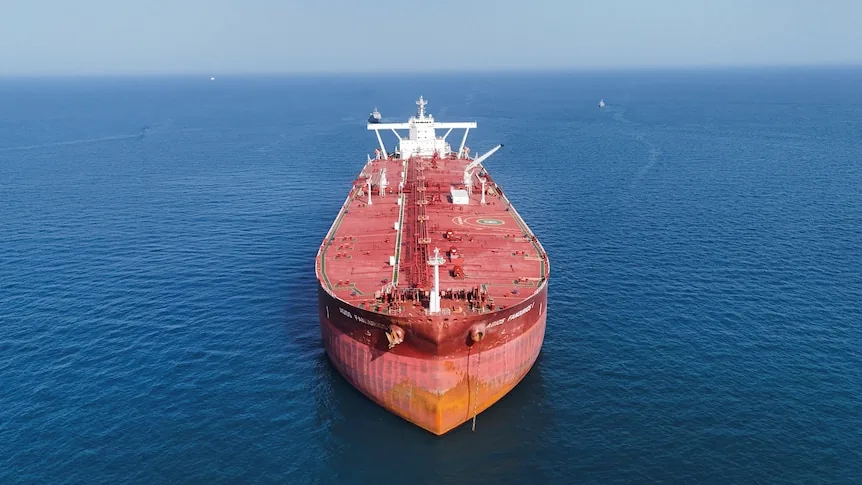
A Kuwait-owned oil products tanker, the Kaifan, was struck by an unknown projectile in the Strait of Hormuz near Oman, escalating regional tensions and pushing Brent crude oil prices back above $90 per barrel. The United Kingdom Maritime Trade Operations (UKMTO) reported the incident 8 nautical miles northeast of Limah, Oman, stating the crew abandoned the vessel and are in a lifeboat. No environmental impact has been reported. The attack follows a series of Iranian actions against vessels in the strait, including the interception of four ships last week. Tanker traffic through the Strait of Hormuz has collapsed to a two-month low, raising fears of supply shortages during peak summer oil demand. Additionally, Yemen's Iran-aligned Houthis declared an immediate naval blockade on Saudi Arabia, threatening alternative export routes via the Red Sea.
Oil prices edged lower on Tuesday as investors balanced renewed US-Iran military tensions against ongoing diplomatic efforts to prevent wider energy supply disruptions. Brent crude fell 0.5% to $88.80 per barrel, and WTI slipped 0.5% to $82.81. Diplomatic talks continued in Islamabad between Pakistani and Iranian officials, while US Secretary of State Marco Rubio signaled potential negotiations. However, military operations persisted: a tanker was attacked in the Strait of Hormuz near Oman, with Iran's Islamic Revolutionary Guards Corps claiming responsibility. The US military completed a tenth consecutive day of strikes targeting Iranian assets. Meanwhile, Yemen's Houthi movement announced plans to blockade Saudi vessels, raising concerns about the Bab al-Mandab Strait, a critical shipping lane for global oil trade. Analysts noted that geopolitical risks provide underlying support for crude prices, but expectations that past crises have not caused prolonged disruptions limited gains. Investors await US inventory data for further demand indications.
The Strait of Hormuz has become the central battleground of the U.S.-Iran conflict, with commercial shipping nearly halted due to nightly U.S. airstrikes and Iranian missile/drone attacks on shipping. The Joint Maritime Information Center reports 10 Iranian attacks since June 25, maintaining a severe threat level. Crews are increasingly unwilling to transit the strait regardless of incentives. Amid the disruption, a controversial proposal to charge tolls for safe passage is gaining traction. Oxford Economics argues a toll system could be less costly than prolonged disruption. Iran proposes mandatory fees of $2 million per Very Large Crude Carrier ($1 per barrel), while Oman explores a voluntary model. Combined, the fees could generate $6.8 billion annually for Iran and Oman, exceeding Suez Canal revenues. The proposal is also backed by the Bourse & Bazaar Foundation think tank.
Shipping through the Strait of Hormuz has nearly halted after a U.S.-Iran interim peace agreement collapsed. Data from Kpler and Lloyd's List Intelligence shows transits fell to eight vessels on July 16, a 66.2% weekly drop. Recent Iranian attacks on ships and a reinstated U.S. blockade on Iran-linked shipping have caused most vessels to stop or reverse course. The traditional shipping lane remains hazardous due to mines. Meanwhile, Iran-backed Houthis announced a maritime blockade on Saudi Arabia, threatening oil supplies through the Bab el-Mandeb Strait. Oxford Economics proposed a toll system for the Strait of Hormuz, estimating Iran and Oman could raise $6.8 billion annually. The article also covers Saudi-backed EV maker Lucid Motors hiring AlixPartners to improve operations amid financial struggles.
Shipping through the Strait of Hormuz has nearly halted after U.S.-Iran tensions escalated, with transits falling 66.2% in a week. Iranian attacks and a U.S. blockade have made the traditional shipping lane too hazardous due to mines. The Houthis announced a maritime blockade on Saudi Arabia, threatening oil supplies. A toll system has been proposed as a less costly alternative to disruption. Separately, Saudi-backed EV maker Lucid Motors hired AlixPartners to improve operations amid financial struggles, drawing $800 million from its credit line with Saudi Arabia's sovereign wealth fund.
On July 21, 2026, a tanker was struck by an unknown projectile northeast of Oman's Limah, according to the UK Maritime Trade Operations. The attack occurred in the Strait of Hormuz, a critical maritime chokepoint, amid heightened regional risks attributed to Houthi activities. Data showed the strait was deserted on the day of the attack, with no ships observed transiting. The incident underscores escalating threats to commercial shipping in the region, with Houthi forces adding to existing geopolitical tensions. The source of the projectile remains unidentified, and no group has claimed responsibility as of the report.
On July 21, 2026, a tanker was struck by an unknown projectile northeast of Oman's Limah, according to the UK Maritime Trade Operations. The attack occurred in the Strait of Hormuz, a critical maritime chokepoint, amid heightened regional risks attributed to Houthi activities. Data showed the strait was deserted on the day of the incident, with no ships observed transiting. The attack underscores escalating threats to commercial shipping in the region, with the Houthis adding to existing geopolitical tensions. The source of the projectile remains unidentified, and no group has claimed responsibility as of the report's publication.
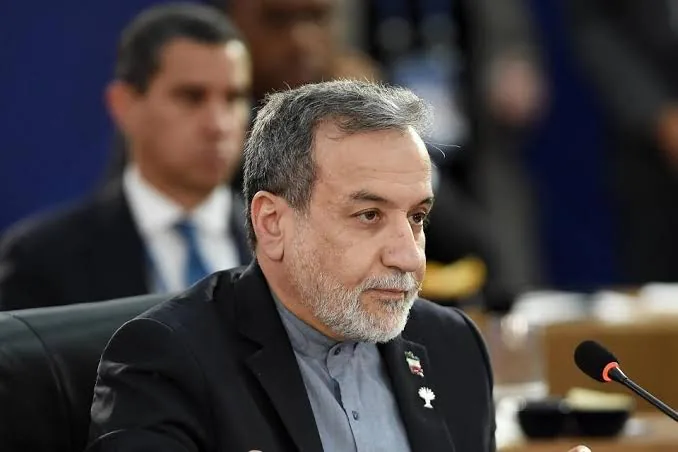
The article analyzes the renewed internal power struggle in Iran following the collapse of a memorandum between Iran and the USA. Supreme Leader Mojtaba Khamenei issued a communiqué opposing the understanding, while rumors persist about his health and whereabouts. Foreign Minister Abbas Araghchi returned empty-handed from Oman after failing to reach an agreement on the Strait of Hormuz, which Iran considers vital leverage. Subsequently, the Revolutionary Guards launched symbolic attacks on Kuwait, Bahrain, and Oman. Journalist Hamid Assefi notes a power vacuum at the highest level. Araghchi revealed on a TV program that a 'security gap at the highest level' betrayed state secrets, including details of the assassination of former Supreme Leader Ali Khamenei, and that this gap still influences policy. The article highlights the dual conflict: external tensions with the US and Gulf states, and internal factional strife between reformers and radicals.
1 reports · 1 sources · Updated
Periodic recap
What changed for this subject in each tracking window — generated from matched events, delta-first.
→· 1 event in window
Oman and Iran showed signs of diplomatic de-escalation this period, with foreign ministers proposing a temporary joint shipping corridor and mine-clearing mission in the Strait of Hormuz during talks in Tehran. The proposal comes against the backdrop of U.S. President Trump's earlier threat to bomb Oman, indicating that Oman continues to actively pursue diplomatic channels to ease the regional crisis. However, Iran simultaneously warned that the strait would remain closed unless the U.S. ends the war, underscoring the fragility of the situation.
Iranian and Omani foreign ministers proposed a temporary joint shipping corridor and mine-clearing mission in the Strait of Hormuz during talks in Tehran.
Iran warned that the Strait of Hormuz would remain closed unless the U.S. ends the war.
The diplomatic effort follows U.S. President Trump's earlier public threat to bomb Oman, with Oman's mediating role continuing.
Earlier recaps
→· 1 event in window
Oman-related developments this period saw a major escalation, with U.S. President Donald Trump publicly threatening to bomb Oman. The threat is directly linked to Oman's ongoing shipping negotiations with Iran and Iran's continued blockade of the Strait of Hormuz. Trump also claimed a backchannel with Iran's Revolutionary Guard and plans to declare the strait U.S. territory, placing Oman's mediating role in the regional crisis under unprecedented pressure.
→· 1 event in window
Oman-related developments this period center on the ongoing tension from the Strait of Hormuz blockade. In contrast to the previous period's signals of US-Iran diplomatic easing, this period's events show Iran maintaining a hardline stance, refusing to reopen the strait until the US meets a list of conditions. The UAE's accusation that Iran attacked one of its tankers has further escalated regional friction. Against this backdrop, Oman and Iran are making progress on a deal for an alternative shipping route, highlighting Oman's role in seeking a pragmatic solution to the crisis.
→· 2 events in window
Oman-related developments this period are dominated by a dramatic turn in the US-Iran conflict. US President Trump announced between August 1 and 3 the suspension and subsequent cancellation of planned military strikes on Iran, opting instead for negotiations to reopen the Strait of Hormuz and end Iran's nuclear threat. This diplomatic pivot caused a sharp drop in oil prices, with Brent crude falling as much as 7.3%. While Oman itself is not directly involved in the conflict, as a littoral state of the Strait of Hormuz, its surrounding geopolitical security environment has shown significant signs of easing.
→· 2 events in window
Oman-related developments this period are dominated by a mountaineering accident in which an Omani citizen was killed in an avalanche on Broad Peak in Pakistan. A separate event, a drone strike on US-owned LNG vessels at Egypt's Damietta port, does not directly involve Oman but occurs amid Iran's blockade of the Strait of Hormuz and Houthi attacks on Red Sea shipping, threatening regional energy routes. There are no direct updates on Oman's domestic political or economic affairs.
→· 1 event in window
Only one event matched for Oman in this period, but it concerns Houthi attacks on Saudi tankers in the Red Sea and the resulting oil price surge, without directly involving Oman's domestic affairs. The event mentions threats to shipping through the Bab el-Mandeb Strait but does not specify Oman's role in or impact from the crisis. Consequently, there are no substantive developments regarding Oman.
Tracked events
Events matched to this subject by the tracking pipeline, with signal scores.