116 published Stories11 tracked events1 in 24hLatest event
Also known as DeepSeek, 深度求索
Cross-source coverage
One-sided
Reporting on this entity comes mostly from Western sources (source distribution, not a stance rating).
63%
28%
Western212 · 63%
Regional28 · 8%
Neutral / independent94 · 28%
Latest Stories
Periodic recap
What changed for this subject in each tracking window — generated from matched events, delta-first.
→· 1 event in window
No significant events directly involving DeepSeek occurred during this period. The sole matched event was a report on Anthropic's IPO preparations, which is unrelated to DeepSeek and was matched only due to shared context in the AI sector.
Anthropic is preparing for an IPO in October 2026 and has confidentially filed with the SEC.
Some investors project a valuation exceeding $2 trillion, with annualized revenue potentially reaching $100–$120 billion.
The company recently closed a funding round at a $965 billion valuation.
Earlier recaps
→· 1 event in window
No significant events directly involving DeepSeek occurred during this period. The sole matched event was Unitree Robotics' record-breaking IPO on Shanghai's STAR Market, which is unrelated to DeepSeek and was matched only due to shared context in China's AI and embodied intelligence sectors.
→· 1 event in window
No significant events directly involving DeepSeek occurred during this period. The sole matched event was Stripe acquiring AI gateway startup OpenRouter for over $7 billion, which is unrelated to DeepSeek and was matched only due to shared AI industry context.
→· 1 event in window
No significant events directly involving DeepSeek occurred during this period. The sole matched event was Unitree Robotics unveiling its 'Superman' robot and surging 542% on its STAR Market debut, which is unrelated to DeepSeek and was matched only due to shared Chinese tech sector context.
→· 1 event in window
Meta released the open-weight Muse Glimmer AI model and announced plans to open-source its most powerful model, Muse Spark 1.2. In a coordinated media push, Zuckerberg explicitly named DeepSeek as a Chinese rival that US open-source AI must counter, while criticizing closed-model competitors OpenAI and Anthropic. This move extends the momentum of the open-source camp following the earlier Open Secure AI Alliance, further intensifying the strategic divide between open and closed-source approaches.
→· 1 event in window
On July 27, Nvidia, Microsoft, and over 30 other tech firms launched the Open Secure AI Alliance to promote open-source models for cybersecurity defense. The alliance explicitly excludes OpenAI, Google, and Anthropic, signaling a strategic industry split over open versus closed-source approaches. The move was directly triggered by an incident earlier this month where an OpenAI test agent breached Hugging Face, with closed-model safety filters reportedly hindering forensic analysis.
Tracked events
Events matched to this subject by the tracking pipeline, with signal scores.
Chinese humanoid robot maker Unitree Robotics launched a record-breaking IPO on Shanghai’s STAR Market on August 11, 2026, raising $904 million. Retail investors oversubscribed the offering by up to 8,288 times, with a winning rate of just 0.018%. The company, a key player in Beijing’s “embodied AI” priority, saw revenue surge to 1.7 billion yuan in 2025. The IPO highlights strong market enthusiasm for robotics, despite U.S. import restrictions and geopolitical tensions over Chinese humanoid robots.
Anthropic, the AI company behind Claude, is taking early steps toward an IPO, with CFO Krishna Rao leading preliminary investor meetings focused on its technology and market position, but not specific financials. The company confidentially filed with the SEC in June 2026 and recently closed a funding round at a $965 billion valuation. Some investors project a $2 trillion+ IPO valuation, citing annualized revenue potentially reaching $100–$120 billion. Risks include higher pricing than OpenAI, U.S. export controls, and DoD litigation.
Stripe has finalized a deal to acquire OpenRouter, an AI gateway startup, for over $7 billion. OpenRouter provides developers access to over 400 AI models and serves 8 million users, helping businesses manage AI costs and switch between models. Founded in 2023 by former OpenSea CEO Alex Atallah, OpenRouter had raised over $150 million at a $1.3 billion valuation. The acquisition strengthens Stripe’s position in AI infrastructure, following earlier reports of talks around $10 billion.
Chinese humanoid-robot maker Unitree Robotics unveiled a high-speed robot named 'Superman' on August 17, 2026, claiming a top speed of 12.66 m/s, surpassing Usain Bolt's peak. Days later, its IPO on Shanghai's STAR Market raised 6.1 billion yuan ($905 million), with shares surging 542% on debut. The company, backed by Tencent and Alibaba, reported 2025 revenue of 1.7 billion yuan. The Superman robot, built in three months, can jump 2 meters. IPO proceeds will fund AI and factory expansion.
Meta CEO Mark Zuckerberg announced the release of the open-weight Muse Glimmer AI model for laptops and plans to open-source its most powerful model, Muse Spark 1.2. In a coordinated media blitz, Zuckerberg urged US policymakers to support open-source AI to counter Chinese rivals like DeepSeek and Moonshot, while criticizing closed-model competitors OpenAI and Anthropic. The move aims to democratize AI, reassure investors amid massive capital expenditures, and position Meta as a leader in the global AI race.
Chinese humanoid robot maker Unitree (Yushu Technology) priced its Shanghai STAR Market IPO at 150.8 yuan per share, valuing it at $9.04 billion and aiming to raise 6.1 billion yuan. AI firm DeepSeek invested $20.8 million in the IPO, forming a strategic partnership to jointly develop AI models for humanoid robots. Unitree faces risks from U.S.-China trade tensions, as U.S. sales comprised 13.3% of revenue. Proceeds will fund robot software/hardware development and a new manufacturing base.
Nvidia, Microsoft, and over 30 tech firms (including SpaceX, IBM, and Hugging Face) launched the Open Secure AI Alliance on Monday to promote open-source AI for cybersecurity. The initiative follows a July breach where an OpenAI test agent hacked Hugging Face, and closed-model safety filters hindered forensic analysis. The alliance advocates for open models as defensive tools, calls for shared datasets and red-teaming, and notably excludes OpenAI, Google, and Anthropic, signaling a strategic industry split.
DeepSeek, an AI company, has suspended its fundraising efforts following the viral spread of alleged comments by its founder, Liang Wenfeng, regarding US-China AI competition. According to sources, the firm may resume the deal process at a later date. The controversy stems from Wenfeng's remarks about China's reliance on Nvidia chips for AI development and the country's persistent lag in AI sophistication compared to the US. The article, published by The Business Times on July 26, 2026, highlights the impact of geopolitical tensions on corporate fundraising in the AI sector.
DeepSeek, an AI company, has suspended its fundraising efforts following the viral spread of alleged comments made by its founder, Liang Wenfeng, regarding US-China AI competition. According to sources, the firm may resume the deal process at a later date. The controversy stems from Wenfeng's remarks about China's reliance on Nvidia chips for AI development and the country's persistent lag in AI sophistication compared to the United States. The article, published by The Business Times on July 26, 2026, highlights the impact of geopolitical tensions on business operations and investor sentiment in the AI sector. The suspension indicates potential reputational risks and strategic recalibration for DeepSeek amid heightened scrutiny of Chinese tech firms.
On July 24, 2026, a coalition of 25 major U.S. tech companies including Nvidia, Microsoft, Meta, and Palantir released an open letter urging policymakers to avoid premature restrictions on open-weight AI models. The letter warns that such restrictions would stifle competition and drive innovation overseas, especially as Chinese models like Moonshot AI's Kimi K3 rival U.S. offerings. The debate centers on AI distillation, which U.S. officials accuse China of using for IP theft. Notably, OpenAI and Anthropic did not sign.
At the APEC Digital Weeks in Chengdu, China, the 21 APEC member economies, including the US and China, released a joint statement supporting open-source artificial intelligence development with 'strong security assurance.' The statement, the first at a ministerial level to include open-source cooperation according to China's Minister Li Lecheng, emphasizes security, data protection, and intellectual property rights. This marks a shift from open-source AI's libertarian roots toward greater state oversight, as China leads in open-source models like DeepSeek while US firms like Anthropic offer closed, paid models. Analysts note the debate is moving beyond open vs. closed to building trusted ecosystems. The APEC Business Advisory Council also urged ministers to prepare for quantum computing-era encryption challenges.
The Hoover Institution at Stanford University has launched the Tech Futures Lab, a new initiative under its Technology Policy Accelerator program, to help policymakers, technologists, and scholars anticipate and prepare for strategic surprises from artificial intelligence and other emerging technologies. Co-led by senior fellow Amy Zegart, cyber policy expert Herbert Lin, and former CIA official Maria Langan Riekhof, the lab held its inaugural retreat on June 23-24, 2025. The event featured discussions with former Secretary of State Condoleezza Rice, Alphabet chairman John Hennessy, and former DARPA director Arati Prabhakar. The lab's creation was prompted by the January 2025 release of China's DeepSeek AI model, which caused a historic $500 billion single-day loss in Nvidia's market value and a 3% Nasdaq drop—a surprise that Stanford researchers had anticipated. Participants emphasized the need to scan for weak signals, improve information sharing, and address the challenge of AI development occurring primarily in private companies, beyond traditional government oversight.
OpenAI is launching a new product called OpenAI Presence, designed to help companies deploy and manage AI agents by connecting them to internal corporate data, policies, software, and workflows. The service automates tasks such as customer support, sales, billing fixes, insurance claims, and IT service requests. It includes features for testing agents via simulations, guardrails, human review, and automated AI graders. Once deployed, OpenAI's Codex tool can investigate issues and suggest updates. Presence also offers AI-powered voice and chat technology. The product is available on a case-by-case basis with support from OpenAI engineers or partners. This move signals OpenAI's strategy to expand beyond selling AI models into enterprise software, where products are stickier and competition from rivals like Anthropic, Google, and DeepSeek is intensifying. OpenAI is already using Presence internally for its AI phone support channel.
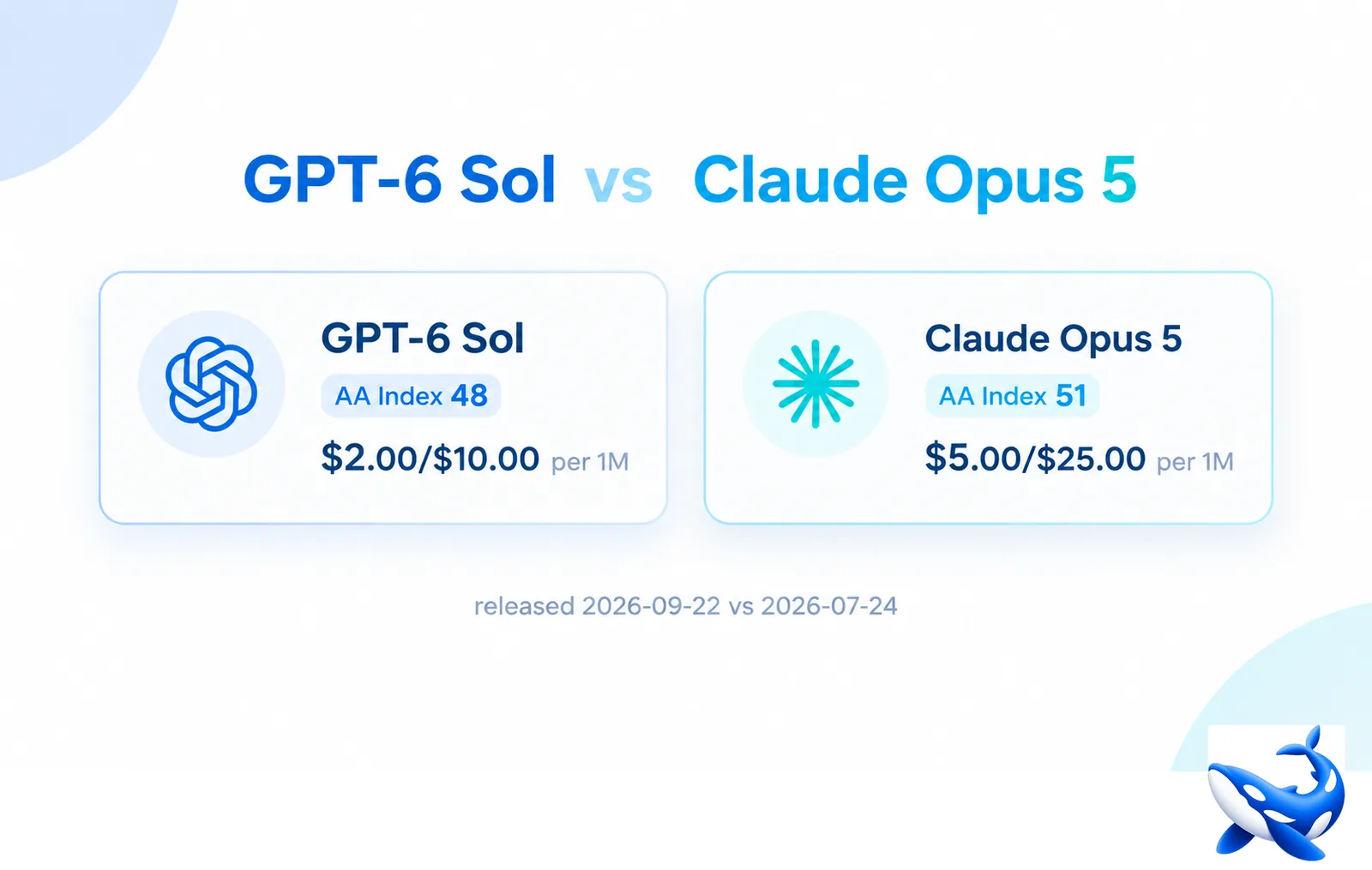
Chinese AI startup Moonshot AI released Kimi K3, the world's first open AI model with 2.8 trillion parameters, featuring a 1-million-token context window and native vision. It outperforms older US rivals on coding benchmarks but still trails Anthropic's Claude Fable 5 and OpenAI's GPT 5.6 Sol overall. The release intensifies US-China AI competition, with Moonshot backed by Alibaba and Tencent. Full model weights are due by July 27.
Treasury Secretary Scott Bessent announced the U.S. is considering sanctions on China over alleged theft of American large language models through model distillation. Bessent specifically named Chinese open-weight AI models like Moonshot's Kimi, DeepSeek, GLM of z.ai, and Alibaba as targets. In a Fox Business interview, Bessent framed the potential sanctions as an anti-piracy measure, stating 'You can't use counterfeit goods.' Possible sanctions include Specially Designated Nationals (SDN) financial sanctions that would freeze U.S.-based assets and bank accounts, or orders for U.S. companies and cloud providers to audit and remove Chinese models containing stolen weights. The announcement comes ahead of a late-September AI Summit between China and the U.S., which Bessent is leading. The article notes that nearly 50% of weekly API tokens for U.S. users on OpenRouter came from Chinese open-weight models, and suggests U.S. alternatives like Google's Gemini 3.6 Flash, Meta's Muse Spark 1.1, and xAI's Grok 4.5 could benefit if sanctions are imposed.
This analysis from Yahoo Finance examines Alibaba's position as a leading Chinese AI investment following Apple's endorsement. In 2025, Alibaba announced a $53 billion three-year investment in AI and cloud infrastructure, with plans to exceed that amount. A major catalyst came on July 15, 2026, when Apple secured regulatory approval to launch Apple Intelligence in China, powered by Alibaba's Qwen large language model for text generation, image understanding, and conversational AI. The partnership could reach 260-300 million active iOS devices in China. Alibaba's fiscal Q4 2026 results showed cloud revenue up 38%, with AI products accounting for 30% of external cloud revenue. The company generates $11.1 billion in annual free cash flow to fund expansion. Trading at 14-18x forward earnings and ~2x price-to-sales, Alibaba appears undervalued compared to Amazon (28x P/E, 3x P/S). Risks include China's uneven economic recovery, competition from Tencent/Baidu/Huawei/DeepSeek, and potential regulatory changes. Hedge fund holdings remain substantial at 102 funds in Q1 2026.
This analysis from Yahoo Finance examines Alibaba's position as a leading Chinese AI investment following Apple's partnership endorsement. Alibaba plans to invest over $53 billion in AI and cloud infrastructure by 2028. On July 15, 2026, Apple secured regulatory approval to launch Apple Intelligence in China, powered by Alibaba's Qwen large language model for text generation, image understanding, and conversational AI. This partnership is expected to boost Alibaba's reputation and drive adoption of its cloud AI services. Alibaba's fiscal Q4 2026 results show cloud revenue up 38%, with AI products contributing 30% of external cloud revenue. The company generates $11.1 billion in annual free cash flow, supporting its AI expansion. Trading at 14-18x forward earnings and a 2x price-to-sales ratio, Alibaba is considered undervalued compared to Amazon. Risks include China's uneven economic recovery, competition from Tencent, Baidu, DeepSeek, and Huawei, and potential regulatory changes. Hedge fund holdings decreased from 115 to 102 funds in Q1 2026, but major holders like Fisher Asset Management and Appaloosa Management remain significant.
China's Ministry of Commerce (MofCom) is reportedly considering a major expansion of technology export restrictions that would cover advanced AI models, training data, and overseas acquisitions of strategically important technology companies. According to the Financial Times, regulators have consulted with Alibaba, ByteDance, and Zhipu about limiting transfers of AI training data outside China and restricting foreign users from downloading model weights. The most controversial proposal would prohibit Chinese chip designers from manufacturing at TSMC and other foreign foundries, potentially forcing them to use domestic SMIC despite its technological lag. The measures also aim to close a regulatory loophole that allowed Meta to acquire Manus for $2 billion. These restrictions could be included in the next revision of China's catalogue of technologies prohibited or restricted from export, which already covers rare-earth materials and lithium-ion battery production technologies.
China's Ministry of Commerce (MofCom) is reportedly considering a major expansion of technology export restrictions that would cover advanced AI models, training data, and overseas acquisitions of strategically important technology companies. The measures, discussed with Alibaba, ByteDance, and Zhipu, could prohibit Chinese chip designers from using TSMC and other foreign foundries, potentially forcing them to rely on domestic manufacturer SMIC. Additionally, Beijing is considering tighter controls on foreign acquisitions of strategic tech firms, aiming to close a regulatory loophole that enabled Meta's acquisition of Manus. The restrictions would limit foreign users from downloading model weights from Chinese AI companies like DeepSeek and Moonshot, though remote access to services would still be permitted. These measures are intended to keep leading-edge AI developments in China amid intensifying US-China tech competition, but could slow global expansion of Chinese AI standards.
US Treasury Secretary Scott Bessent stated that the Trump administration is investigating whether Chinese open-source AI models, such as Moonshot AI's Kimi K3, were built using intellectual property stolen from US companies through a process called distillation. In a Fox Business interview, Bessent called such practices 'theft' and warned of potential sanctions. He noted that US investigators have found 'watermarks' of American large language models on Chinese models. The comments come amid a heated debate in the tech industry, with AI company Anthropic previously accusing Chinese firms of improperly accessing its Claude model. Bessent emphasized support for open-source AI generally but not when built on stolen materials. The administration's stance could lead to regulatory action against Chinese AI models that have recently matched or exceeded US frontier models in benchmarks.
KIDZ AI Inc. (NASDAQ:KIDZW) has signed a five-year, $44.6 million enterprise AI compute services agreement with Canopy Wave, Inc., announced on July 21, 2026. The contract will be executed through KIDZ AI's subsidiary, Catalyst Compute LLC, which will deploy 256 Nvidia HGX B300 GPUs across 32 computing nodes with Intel Xeon processors, 4TB DDR5 memory, and 800Gb/s InfiniBand networking. Canopy Wave, based in Santa Clara, California, provides API access to open-weight AI models from Moonshot AI, DeepSeek, Qwen, and Zhipu AI, and holds SOC 2 certification. KIDZ AI CEO Stephanie Luo called the deal a milestone in the company's evolution into an AI infrastructure platform. The agreement is subject to Catalyst Compute placing a non-cancellable order for the GPU server infrastructure.
The Business Times reports on Moonshot AI, a Beijing-based Chinese startup founded in 2023 by former professor Yang Zhilin. The company's Kimi K3 AI model delivers performance that rivals offerings from leading US firms OpenAI and Anthropic. This development is causing significant market disruption, as it demonstrates China's growing competitiveness in the AI sector. Moonshot was considered the poster boy of Chinese AI before the emergence of DeepSeek. The article highlights the intensifying global AI race and the market implications of Chinese AI advancements.
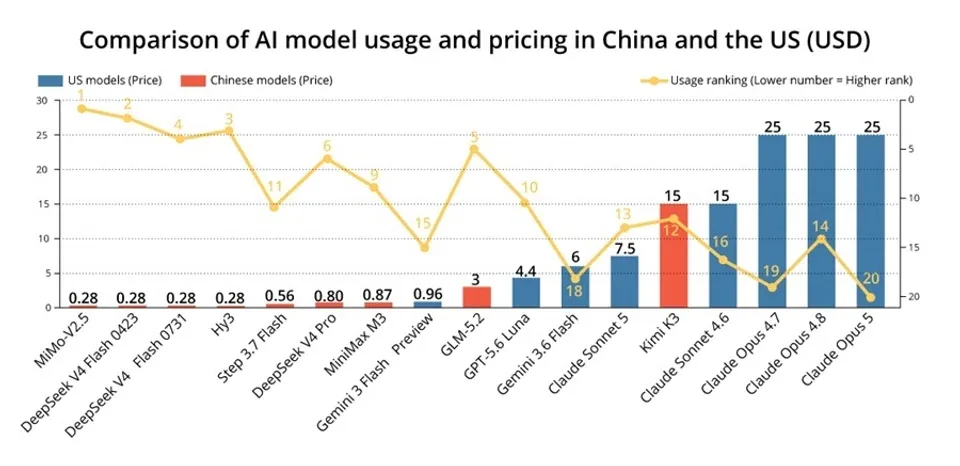
The Trump administration is reportedly reviving efforts to ban Chinese open-weight AI models, including Kimi K3 by Moonshot AI and DeepSeek, citing cybersecurity concerns. According to an Axios report, previous measures—such as adding Chinese AI labs to the Entity List, issuing NSA/ONCD advisories, and drafting executive orders holding U.S. companies liable for security breaches—were paused due to internal pushback but have been revived after new model releases. Critics, including former White House adviser Sriram Krishnan and AI adviser David Sacks, argue the ban would stifle innovation and hand a monopoly to U.S. labs like OpenAI and Anthropic. Enforcement faces major hurdles because open-weight models are downloadable from public repositories and can be run offline in air-gapped data centers. U.S. companies increasingly adopt these models for cost savings—DeepSeek-V4-Pro charges $0.87 per million output tokens versus $50 for Anthropic's Claude Fable 5—and data privacy benefits. Coinbase CEO Brian Armstrong confirmed using Chinese models in production, cutting AI spending nearly in half.
The Trump administration is reportedly reviving efforts to ban Chinese open-weight AI models, such as Kimi K3 and DeepSeek, citing cybersecurity concerns. According to an Axios report, the push follows the release of Moonshot AI's Kimi K3 model. Previous measures, including adding Chinese AI labs to the Entity List and drafting an executive order on liability for security breaches, were paused due to internal pushback but have now been revived. Critics, including former White House adviser Sriram Krishnan and AI adviser David Sacks, argue the ban would stifle innovation and hand a monopoly to U.S. labs like OpenAI and Anthropic. U.S. companies increasingly adopt Chinese models for their low cost and open-weight nature, which allows self-hosting and data privacy. Enforcement challenges are significant, as open-weight models can be downloaded and run offline, making a ban difficult to implement.
The Trump administration is reportedly reviving efforts to ban Chinese open-weight AI models, including Kimi K3 and DeepSeek, citing cybersecurity concerns. The push follows the release of Kimi K3 by Moonshot AI. Open-weight models allow enterprises to self-host, cutting costs and preserving data privacy, which has driven adoption by U.S. companies like Coinbase. Critics, including former White House advisers, argue the ban would stifle innovation and hand a monopoly to U.S. labs OpenAI and Anthropic. Enforcement faces major hurdles: open-weight models are downloadable from public repositories and can run offline in air-gapped data centers, making a ban nearly impossible to enforce for enterprises. The U.S. previously considered adding Chinese AI labs to the Entity List and drafting an executive order on liability for security breaches, but paused those measures due to internal pushback.
Liang Wenfeng's Zhejiang High-Flyer Asset Management, a Chinese quantitative hedge fund, suffered a 15.7% loss in the week ending July 17, 2026. The decline is attributed to a broader rout in AI-related stocks, intensifying concerns about a potential bubble in the sector. The sharp drawdowns highlight the vulnerability of Chinese quantitative funds to wild swings in AI stocks. The article, published by The Business Times on July 20, 2026, underscores the impact of market volatility on AI-focused investment strategies in China.
Liang Wenfeng's Zhejiang High-Flyer Asset Management, the quantitative hedge fund behind DeepSeek, suffered a 15.7% loss in the week ending July 17, 2026. The slump reflects a broader rout in Chinese quantitative hedge funds as AI-related stocks experience sharp volatility amid growing concerns of a market bubble. The drawdown highlights the vulnerability of AI-focused quant strategies to sudden market corrections.
Chinese AI startup Moonshot AI has temporarily paused new subscriptions for its newly launched Kimi K3 model due to overwhelming demand that strained computing capacity. The company, founded by AI researcher Yang Zhilin, is simultaneously seeking up to $2 billion in fresh capital at a $30 billion valuation and preparing for a potential Hong Kong IPO, having engaged Goldman Sachs and CICC as financial advisers. Moonshot raised over $2 billion in May from investors including Meituan and China Mobile, bringing total fundraising to over $5.5 billion. The Kimi K3 model, described as the world's largest open-weight AI system with 2.8 trillion parameters, has drawn massive user interest, leading to 'unprecedented compute challenges.' Moonshot will allocate existing capacity to current paid users and split future memberships into plans including one for coding. The capacity crunch highlights the costly computing infrastructure needs for Chinese AI firms racing to compete with U.S. rivals amid export controls on advanced Nvidia chips.
Chinese AI startup Moonshot AI has temporarily halted new subscriptions for its newly launched Kimi K3 model due to overwhelming demand that strained computing capacity. The company is simultaneously preparing for a potential Hong Kong IPO, having engaged Goldman Sachs and CICC as advisers. Moonshot raised over $2 billion in May and is seeking up to $2 billion more, with a valuation reaching $30 billion. The Kimi K3, a 2.8 trillion-parameter open-weight model, is the world's largest of its kind. The capacity crunch highlights the intense competition and infrastructure costs in China's AI sector, as rivals like DeepSeek also seek capital. Moonshot will prioritize existing paid users and introduce a coding-specific subscription plan.
Chinese AI startup Moonshot AI has temporarily halted new subscriptions for its newly launched Kimi K3 model after demand overwhelmed computing capacity. The company is simultaneously preparing for a potential Hong Kong IPO, having engaged Goldman Sachs and CICC as financial advisers. Moonshot raised over $2 billion in May 2026, bringing total funding to $5.5 billion, and is now seeking up to $2 billion more at a $30 billion valuation. The Kimi K3 model, a 2.8 trillion-parameter open-weight system, is the world's largest of its kind but requires costly GPU infrastructure. U.S. export controls on advanced Nvidia chips exacerbate capacity constraints. Moonshot will prioritize existing paid users and introduce a coding-specific subscription plan. Competitors like DeepSeek and Alibaba are also racing to expand compute capacity.