Japanese Yen Surges Past 157, Dollar Weakens Sharply in Volatile Trading
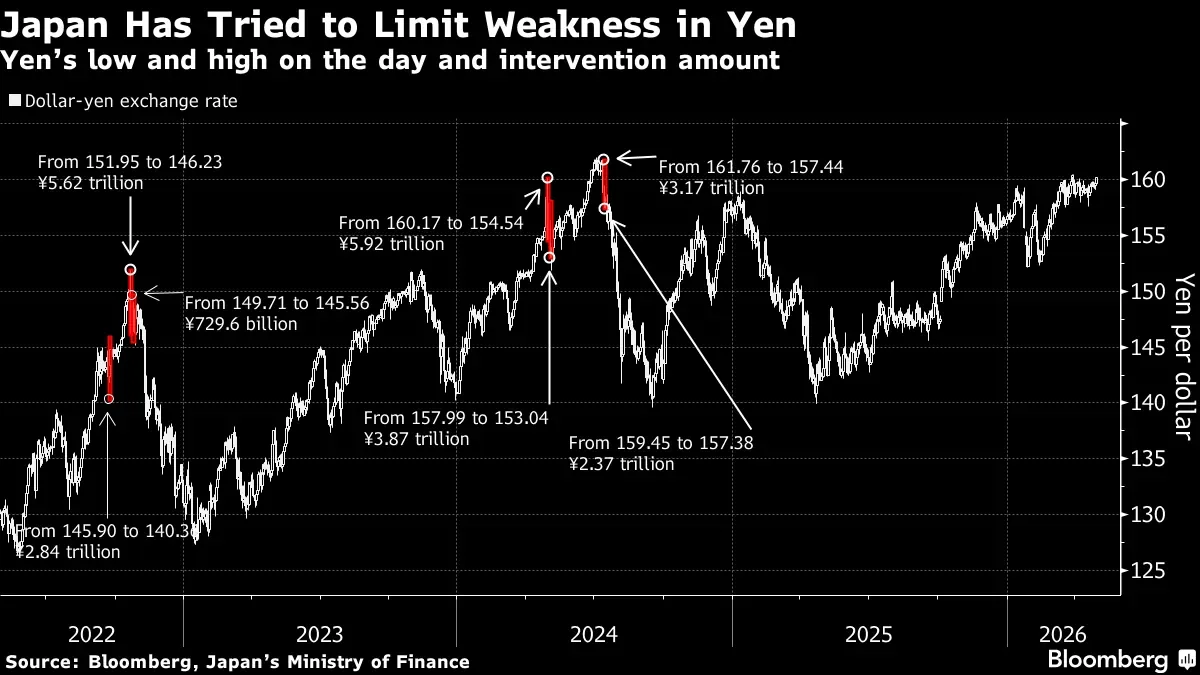
The Japanese yen strengthened sharply against the US dollar in late September, with the USD/JPY pair falling from above 159 to as low as 156.53. Multiple reports from financial news outlets documented the yen's appreciation, including a 1.16% intraday drop below 157 and a 0.50% decline to 156.53. The moves occurred without attributed catalysts, though traders continue monitoring interest rate differentials between the Federal Reserve and Bank of Japan.
 Reference image
Editorial responsibility
- No named human review is recorded for this page.
- Reports are grouped by semantic similarity and deterministic rules. Language models may assist titles, summaries, translation and cross-source analysis; the page reads the event directly, while its address stays stable when the title changes.
- Summary covers the current reports
Cross-source coverage
Common ground
- All agree that the yen's sharp move is significant and not random, though they disagree on its cause.
- Everyone acknowledges that currency fluctuations have real-world impacts on people's lives, especially in Japan.
- There is agreement that the Plaza Accord of 1985 is a relevant historical precedent for understanding US-Japan currency dynamics.
- All participants recognize that the Bank of Japan faces difficult policy choices due to high debt and long-term deflation.
- There is consensus that the carry trade in USD/JPY is a major factor in recent market volatility.
Points of contention
- Regional Agent sees the yen crisis as evidence of US financial imperialism and Japan's lack of sovereignty, while Neutral Agent and Eastern Agent argue Japan has agency and made its own policy choices.
- Neutral Agent insists the 1.5% bounce is a technical squeeze from an overcrowded carry trade, while Regional Agent and Eastern Agent view it as a symptom of deeper structural problems.
- Regional Agent blames US dollar hegemony and the Fed for Japan's economic pain, but Neutral Agent points to Japan's own demographic decline, debt, and BOJ policies as the main causes.
- Eastern Agent sees the move as a sign of a fraying dollar-centric system and a shift toward multipolarity, while Neutral Agent dismisses this as premature and overblown.
- Regional Agent argues that Japan's weak yen hurts ordinary people through higher import costs, but Neutral Agent counters that it also boosts exporters like Toyota and can lower import prices when the yen strengthens.
Blind spots
- All participants focus heavily on the US-Japan relationship but largely ignore the role of other major economies like the Eurozone or China in shaping global currency dynamics.
- The debate overlooks the impact of digital currencies and central bank digital currencies (CBDCs) on future forex markets and dollar dominance.
- There is little discussion of how environmental factors or energy prices specifically affect the yen and Japan's trade balance.
- The human cost argument is made but lacks concrete data on how different income groups in Japan are affected by yen fluctuations.
WorldAttention’s read
This debate revealed three distinct lenses for understanding the yen's 1.5% bounce: a technical view focused on market mechanics like the carry trade and liquidity, a structural view highlighting the BOJ's policy trap and dollar dependency, and an ideological view framing it as colonial subjugation. While all sides agree the move is meaningful, they clash on whether it's a short-term squeeze, a warning about dollar hegemony, or proof of US imperialism. The key takeaway is that Japan's currency is caught between the Fed's rate hikes and the BOJ's impossible choices, and these sharp reversals are becoming more common—signaling growing stress in the global financial system, even if experts disagree on what that means for the future.
Reporting timeline
Dollar Yen USD/JPY Falls Over 0.50% to 156.53 in Intraday Trading
The US dollar weakened against the Japanese yen in intraday trading, with the USD/JPY pair falling more than 0.50% to 156.53. The move reflects a notable decline in the dollar's value relative to the yen during the current trading session. No specific catalyst or context for the move is provided in the brief report from financial news source Jin10.
Read sourceDollar-Yen Drops 50 Pips Below 157, Down 0.2% Intraday on September 28
On September 28, the US dollar weakened sharply against the Japanese yen, falling 50 pips in a short period to trade below the 157 level. The move represents a 0.20% decline for the day, according to financial news outlet Cailianshe. The brief report provides no specific catalyst for the drop, but such moves in the USD/JPY pair are closely watched by currency traders and central bank policymakers. The yen's strengthening comes amid ongoing global focus on interest rate differentials between the US Federal Reserve and the Bank of Japan. No further context or forecasts are included in the source item.
Dollar-Yen Exchange Rate Falls Below 157, Down 1.16% Intraday
The US dollar against the Japanese yen (USD/JPY) exchange rate has fallen below the 157 level, declining by 1.16% during the trading session. This movement indicates a strengthening of the yen relative to the dollar. The report from financial news source Jin10 provides a straightforward observation of the currency pair's intraday performance, without attributing the move to any specific economic data, policy announcements, or market commentary. The drop represents a notable shift in the exchange rate, which is closely watched by forex traders and investors for signals about the relative health of the US and Japanese economies.
Read sourceShow 3 older updatesHide older updates
Japanese Yen Strengthens 1% Against US Dollar, Trading at 157.27
According to a report from Chinese financial media outlet Cailianshe (cls) on September 25, the Japanese yen strengthened by 1% against the US dollar during intraday trading, reaching an exchange rate of 157.27 yen per dollar. This movement represents a notable appreciation of the yen in the foreign exchange market. The report provides a snapshot of the currency pair's performance without attributing the move to any specific economic data, policy announcement, or market event. The yen's gain against the dollar reflects ongoing dynamics in global currency markets, where traders continue to monitor interest rate differentials between Japan and the United States, as well as broader macroeconomic factors influencing investor sentiment toward both currencies.
Read sourceDollar Falls 0.5% Against Yen to 158.06 in Asian Trading
According to a report from Chinese financial media outlet Cailianshe on September 25, the US dollar fell 0.5% against the Japanese yen, trading at 158.06. The brief market update indicates a weakening of the dollar relative to the yen during Asian trading hours. No further context or analysis was provided in the report regarding the reasons for the move or potential implications.
Read sourceYen Falls Past 159 Against Dollar, Lowest Since September 2
According to a report from Chinese financial media outlet Cailianshe on September 24, the Japanese yen weakened past the 159 level against the US dollar, marking its lowest exchange rate since September 2. The brief dispatch provides no further context on the reasons for the decline, such as monetary policy divergence between the Bank of Japan and the Federal Reserve, or market reactions. The yen's depreciation continues a trend of pressure on the Japanese currency, which has been influenced by interest rate differentials and global economic conditions. The report is a straightforward market data update without attributed opinions or forecasts.