Bitcoin Surges Past $86,000, Reversing US Spot ETF Holders to Profit for First Time Since January
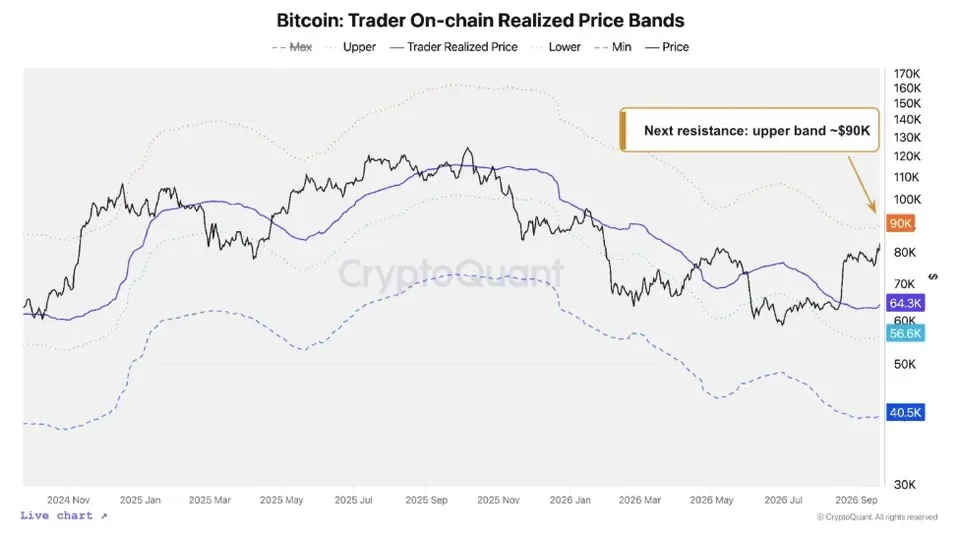
Bitcoin's price surged past $86,000, reversing US spot Bitcoin ETF holders from a net unrealized loss of $780 million on September 18 to a net gain, the first time since January. The move broke through the estimated average buy-in cost of $81,722 per coin. However, capital inflows lag, with cumulative net inflows remaining about $6.03 billion below the October 2025 peak and year-to-date net outflows of $1.46 billion. Weekly ETF flows were nearly flat at $6.21 million despite daily swings of up to $1.6 billion.
 Illustration
Editorial responsibility
- No named human review is recorded for this page.
- Reports are grouped by semantic similarity and deterministic rules. Language models may assist titles, summaries, translation and cross-source analysis; the page reads the event directly, while its address stays stable when the title changes.
- Summary covers the current reports
Cross-source coverage
Common ground
- Both agents agree that the recent Bitcoin price surge to $86,000 is not backed by strong new demand, with year-to-date ETF outflows of $1.46 billion and weekly inflows of only $6 million.
- They both see the $81,722 cost basis as a critical level—if Bitcoin falls below it, a wave of selling could follow.
- Both agree that the rally is fragile and driven more by existing holders marking up their positions than by fresh capital entering the market.
- They concur that watching weekly flow data is more important than daily price action to understand the market's true health.
Points of contention
- Neutral Agent argues the rally is a 'vacuum'—a price move on thin volume without frenzy—while Western Agent calls it a 'frenzy' or 'phantom rally' because price is disconnected from fundamentals.
- Neutral Agent sees Bitcoin ETFs as legitimate, transparent markets with sound mechanics, while Western Agent views them as casinos wrapping a speculative asset with no intrinsic value.
- Western Agent emphasizes the regulatory vacuum and political risks as the main story, while Neutral Agent focuses more on the technical divergence between price and flows.
- Neutral Agent believes patient holders who survived past crashes will hold the bag, while Western Agent argues those same holders are trapped by sunk cost fallacy and will lose again.
Blind spots
- Neither agent fully explores how global macroeconomic factors, like inflation or interest rate changes, could impact Bitcoin's price beyond ETF flows.
- Both overlook the potential for sudden regulatory clarity—either positive or negative—to dramatically shift market dynamics overnight.
- The debate ignores the role of retail sentiment and social media hype in driving short-term price moves, even without large institutional inflows.
WorldAttention’s read
This debate reveals a fragile Bitcoin rally where price has surged 44% to $86,000, but the underlying flows tell a different story—$1.46 billion in year-to-date ETF outflows and just $6 million in weekly inflows. Both agents agree the $81,722 cost basis is the key line in the sand; if it breaks, a slow bleed of selling could follow as holders exit into a market with few new buyers. They disagree on whether this is a 'vacuum' or a 'frenzy,' but both warn it's not a healthy recovery. The real risk isn't a sudden crash but a gradual grind lower, and the biggest blind spot is how outside factors like regulation or the broader economy could change everything. Watch the flows, not the price—that's where the truth lies.
Reporting timeline
Bitcoin ETFs Attract Nearly $1 Billion as Crypto Rally Strengthens
Spot Bitcoin exchange-traded funds (ETFs) attracted nearly $1 billion U.S. in capital on September 21, 2026, as the cryptocurrency rally continues. A dozen U.S. Bitcoin ETFs registered a combined net inflow of $998.95 million, the largest single-day intake since October 6, 2025, when Bitcoin hit a record high of $126,000. The inflow was the ninth-largest one-day total since the ETFs began trading on January 11, 2024, according to data from SoSoValue. The strong capital allocation is seen as a vote of confidence by institutional investors, coming as crypto prices continue a rally that began in late August. The September 21 inflow brought the month-to-date tally to $1.31 billion, building on August's $3.52 billion inflow. Bitcoin's price has surged 44% over the past month to trade at $86,000 on September 22, outperforming all other asset classes including gold. However, due to big redemptions earlier in the year, spot Bitcoin ETFs remain down $450 million in 2026.
Bitcoin ETFs Attract Nearly $1 Billion as Crypto Rally Strengthens in September
On September 21, 2026, spot Bitcoin exchange-traded funds (ETFs) in the United States attracted nearly $1 billion in net inflows, marking the largest single-day intake since October 6, 2025, when Bitcoin hit a record high of $126,000. According to data from SoSoValue, the combined net inflow of $998.95 million was the ninth-largest daily total since the ETFs launched on January 11, 2024. The strong capital allocation is interpreted as a vote of confidence by institutional investors amid a crypto rally that began in late August. The September 21 inflow brought the month-to-date total to $1.31 billion, building on August's $3.52 billion inflow. Bitcoin's price surged 44% over the past month to $86,000 on September 22, outperforming all other asset classes including gold. However, due to large redemptions earlier in the year, spot Bitcoin ETFs remain down $450 million in 2026.
Bitcoin Breaks $86,000, Reversing US Spot ETF Losses Amid Diverging Capital Flows
Bitcoin's price surged past $86,000, reversing the aggregate position of US spot Bitcoin ETF holders from a net unrealized loss of $780 million on September 18 to a net gain, according to CryptoSlate and Bloomberg Intelligence data. The move broke through the estimated average buy-in cost of $81,722 per Bitcoin, bringing ETF net asset values positive for the first time since January. However, the price recovery has not been matched by capital inflows. SoSoValue data shows cumulative net inflows into US spot Bitcoin ETFs remain about $6.03 billion below their October 2025 peak of $61.19 billion, with net outflows of $1.46 billion year-to-date in 2026. Weekly flows were nearly flat at just $6.21 million, despite daily swings of up to $1.5 billion, including a $433 million inflow on Friday led by Fidelity's FBTC. The analysis, citing Woofun AI and Bloomberg Intelligence analyst James Seyffart, highlights a divergence: price gains are driven by existing asset appreciation rather than new capital. The report warns that future price direction depends on whether holders, now near break-even, choose to sell or hold, and whether sustained inflows can attract new capital to sustain the rally.
Read sourceShow 2 older updatesHide older updates
Bitcoin Breaks $86K, Lifts US Spot ETF Holders to Profit; Capital Flows Lag Behind Price Rally
Bitcoin's price surged past $86,000, reversing the aggregate position of US spot Bitcoin ETF holders from a net unrealized loss of about $780 million on September 18 to a net gain, according to CryptoSlate data cited by Woofun AI. Bloomberg Intelligence ETF analyst James Seifert noted that the average ETF holder's net asset value turned positive for the first time since January. The estimated buy-only cost basis is $81,722 per Bitcoin, while the net cost is near the current market price of around $85,165. However, cumulative net inflows into US spot Bitcoin ETFs remain about 10% below the October 2025 peak of $61.19 billion, standing at roughly $55.16 billion. SoSoValue data shows net outflows of about $1.46 billion year-to-date through June, with volatile weekly flows: a net inflow of only $6.21 million this week despite daily swings of up to $1.6 billion. The report suggests that the price recovery has been driven by smaller capital inflows than in 2025, and that future price direction depends on whether holders near break-even sell or new capital enters.
Read sourceBitcoin Breaks $86,000, Reversing US Spot ETF Losses Amid Divergent Capital Flows
Bitcoin's price surged past $86,000, reversing the aggregate position of US spot Bitcoin ETF holders from a loss to a profit for the first time since January 2025, according to Bloomberg Intelligence analyst James Seyffart. CryptoSlate data showed a 6% daily gain, pushing the price above the estimated average buy-in cost of $81,722 per coin. However, SoSoValue data revealed that cumulative net inflows into these ETFs remain about $60.3 billion below the October 2025 peak of $611.9 billion, with net outflows of $14.6 billion year-to-date in 2026. The article notes that the price recovery has been driven by smaller capital inflows compared to the previous rally, creating a divergence. Weekly ETF flows were nearly flat at $6.21 million despite daily swings of up to $1.6 billion, with Fidelity's FBTC leading recent inflows. The analysis suggests future price direction depends on whether holders near break-even sell or new capital enters, with the potential for either sustained recovery or renewed selling pressure.
Read source