White House weighs diesel export ban as record prices hit $6.51 per gallon
The Trump administration is evaluating a short-term ban on diesel exports to combat record-high domestic prices of $6.51 per gallon. A cross-agency study led by NEC Director Hassett, Treasury Secretary Bessent, and Trade Representative Greer is assessing economic impacts. Republican lawmakers from agricultural states are pushing for the ban to relieve farmers ahead of autumn harvest. However, the energy industry warns that blocking exports could force refineries to cut output, potentially triggering a price rebound. President Trump has not yet decided.
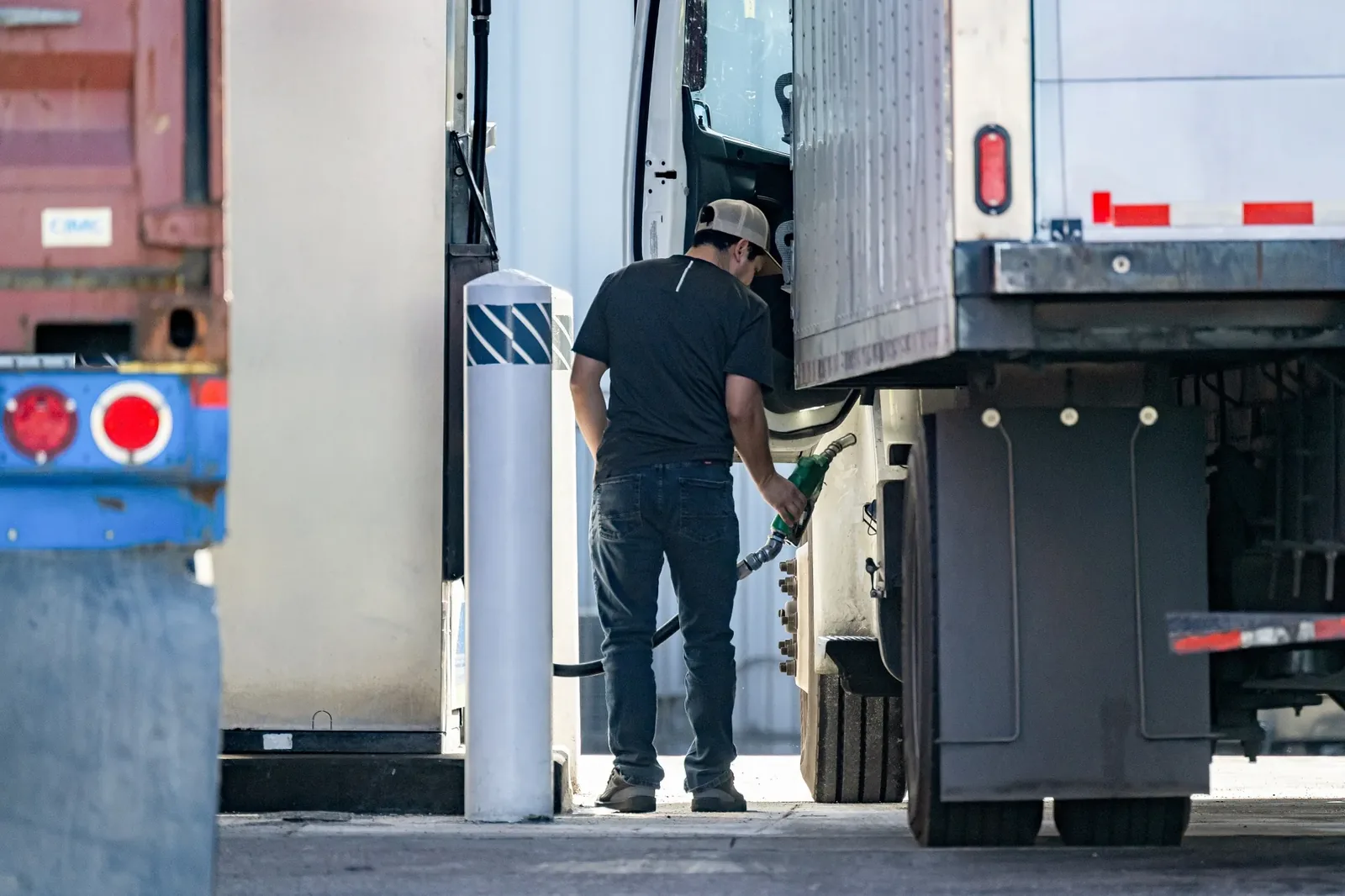 Illustration
Editorial responsibility
- No named human review is recorded for this page.
- Reports are grouped by semantic similarity and deterministic rules. Language models may assist titles, summaries, translation and cross-source analysis; the page reads the event directly, while its address stays stable when the title changes.
- Summary covers the current reports
Cross-source coverage
Reporting timeline
White House Weighs Diesel Export Ban; Industry Warns of Output Cuts and Price Spike
The Trump administration is evaluating a potential short-term ban on diesel exports to combat record-high domestic prices, which have reached $6.51 per gallon. The cross-agency study, led by NEC Director Hassett, Treasury Secretary Bessent, and Trade Representative Greer, is assessing the economic impact. Republican senators from agricultural states, including John Hoeven, are pushing for the ban to relieve farmers and truckers ahead of the autumn harvest. However, the energy industry and analysts warn that blocking exports could backfire. They argue that U.S. refineries, which exported a record 1.6 million barrels per day in August, would face storage constraints and profit collapses, forcing them to cut output. This would reduce overall fuel supply, including gasoline and jet fuel, and potentially trigger a price rebound. Energy Secretary Chris Wright prefers voluntary measures to boost domestic supply. President Trump has not yet decided on the ban, and the policy review is ongoing.
Read sourceTrump and Lawmakers Push Diesel Export Ban; Analysts Warn of Latin American Supply Chain Risks
According to a report from tradealpha, former President Donald Trump and some members of the U.S. Congress are actively pushing for a ban on diesel exports. Analysts cited in the report argue that while such a ban could temporarily lower local fuel prices, it carries significant risks. They warn it could easily trigger a breakdown in Latin American supply chains, which would in turn backfire on U.S. food inflation and severely damage the AI hardware supply chain. The analysis highlights the interconnected nature of global trade and the potential unintended consequences of protectionist energy policies.
Read sourceAnalysis: US diesel export ban could disrupt supply chains and raise grocery prices
An analysis by the Atlantic Council warns that a proposed US diesel export ban, gaining momentum in Washington due to record-high diesel prices, could have significant negative consequences beyond lowering domestic fuel costs. While the ban might temporarily lower diesel prices for consumers in the Gulf Coast, Midwest, and possibly East Coast, it could raise prices on the West Coast and for global buyers. The analysis highlights second- and third-order effects, particularly for Latin American countries heavily reliant on US diesel for their agricultural sectors. A disruption to their farming and transport could, in turn, disrupt US food supply chains, as the US imports a large share of its fresh produce from the region. The article also notes potential disruptions to supply chains related to artificial intelligence development. The author argues that the positive and negative consequences must be weighed before any decision is made.
Show 2 older updatesHide older updates
Atlantic Council Analysis Warns US Diesel Export Ban Could Disrupt Supply Chains and Raise Grocery Prices
An Atlantic Council analysis warns that a proposed US diesel export ban, gaining momentum in Washington due to record-high diesel prices, could create more problems than it solves. While the ban might temporarily lower diesel prices for consumers in the Gulf Coast, Midwest, and possibly East Coast, it would likely raise prices on the West Coast and for global buyers. The analysis highlights second- and third-order consequences, including potential disruptions to Latin American agricultural supply chains, which could lead to higher US grocery prices. It also notes possible disruptions to AI development supply chains. The article details the mechanics of a ban, including potential refinery responses like reduced crude throughput and delayed maintenance, and warns that a prolonged ban could lead to higher global crude oil prices. The author urges the Trump administration to weigh both positive and negative consequences before deciding.
Read sourceAtlantic Council warns US diesel export ban could disrupt supply chains and raise grocery prices
The Atlantic Council analyzes the potential consequences of a proposed US diesel export ban, which has gained momentum as diesel prices hit all-time highs. Lawmakers including Rep. Tim Burchett (R-TN) have proposed legislation, and President Trump has expressed openness to the idea. The analysis argues that while a ban would temporarily lower diesel prices for some US consumers in the Gulf Coast, Midwest, and possibly East Coast, it would likely create significant second- and third-order problems. These include higher prices for West Coast consumers, reduced refinery throughput, and potential supply chain disruptions in Latin America, which is heavily reliant on US diesel for agricultural production. Since the US imports about 40% of its agricultural products from Latin America, disruptions there could lead to higher grocery prices in the US. The article also notes potential disruptions to AI development supply chains and stock market effects. The analysis concludes that the positive and negative consequences must be weighed before any decision.