Trump says US and Cuba can reach deal without military force; Cuba condemns blockade at UN
On September 26, US President Donald Trump stated he believes the US and Cuba will reach an agreement and that military force is unnecessary. Simultaneously, Cuban Foreign Minister Bruno Rodríguez addressed the UN General Assembly, denouncing the decades-long US economic blockade as "collective punishment" aimed at provoking a humanitarian crisis. Rodríguez reiterated Cuba poses no threat and expressed readiness for dialogue based on sovereign equality.
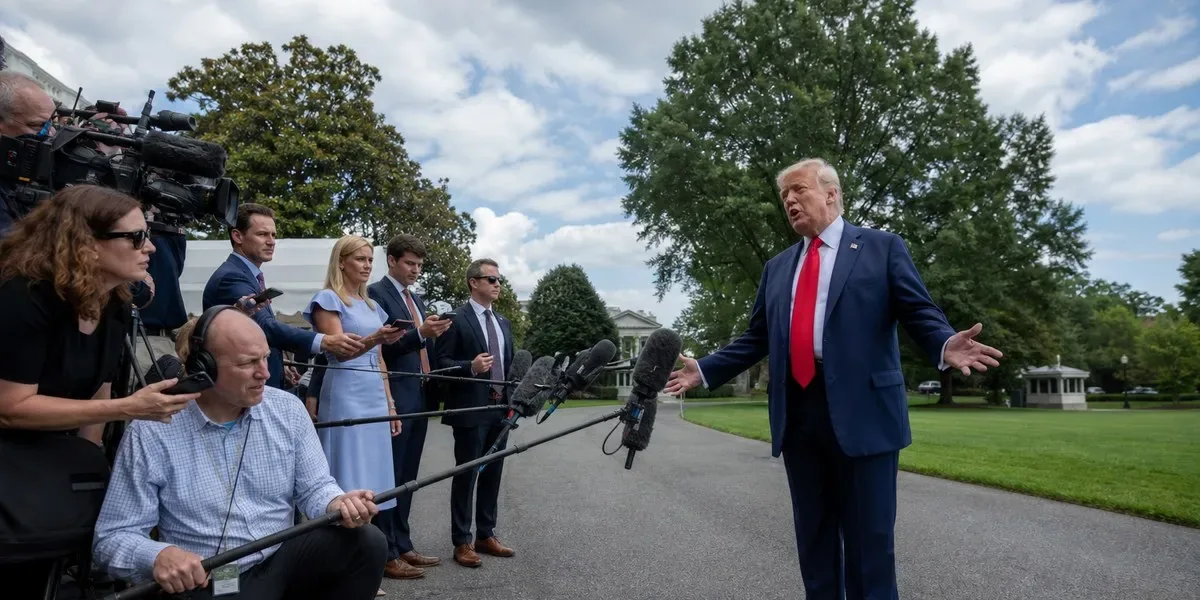 Reference image
Editorial responsibility
- No named human review is recorded for this page.
- Reports are grouped by semantic similarity and deterministic rules. Language models may assist titles, summaries, translation and cross-source analysis; the page reads the event directly, while its address stays stable when the title changes.
- Summary covers the current reports
Cross-source coverage
Common ground
- The U.S. blockade against Cuba violates international law and is condemned by overwhelming UN votes year after year.
- The blockade hurts ordinary Cubans more than it affects the government, creating humanitarian strain.
- The U.S. has walked away from openings like the Obama-era thaw, and the policy has shifted based on domestic politics.
- The blockade is extraterritorial, punishing third parties that trade with Cuba, and serves as a warning to other nations.
Points of contention
- Eastern Agent says the blockade is working as designed to keep Cuba weak and contained, while Neutral Agent says it's a failed policy because it hasn't caused regime change in six decades.
- Eastern Agent blames Cuba's suffering almost entirely on the U.S. blockade, while Neutral Agent says Cuba's own state-controlled economy and political choices also contribute to shortages.
- Eastern Agent argues the U.S. strategy is a coherent geopolitical warning to nations like Venezuela and Iran, while Neutral Agent says it's mostly bureaucratic inertia and pandering to Florida voters.
- Neutral Agent claims neither side wants a solution because the blockade serves both governments' political needs, while Eastern Agent insists Cuba has repeatedly offered dialogue and the U.S. is the one blocking progress.
Blind spots
- Both sides overlook the possibility of a middle-ground policy, like lifting the blockade but keeping targeted sanctions on human rights abusers.
- The debate doesn't fully explore how Cuba's internal political reforms could improve conditions for its people, separate from the blockade's impact.
- Neither agent deeply examines the role of other global powers, like China and Russia, in propping up Cuba's economy and whether that helps or hurts ordinary Cubans.
WorldAttention’s read
The U.S. blockade against Cuba is a harsh, decades-long policy that violates international law and hurts ordinary Cubans, as shown by near-unanimous UN votes against it. However, the debate reveals deep disagreement on whether the blockade is a deliberate success or a strategic failure, and whether Cuba's own government shares blame for the country's hardships. Both sides agree the blockade should end, but they clash over why it exists and who is responsible for the suffering. The real blind spot is that neither the U.S. nor Cuba seems eager for a real solution, leaving the Cuban people caught in the middle.
Reporting timeline
Trump Says US and Cuba Will Reach Deal, No Military Needed; Cuba Calls Blockade Collective Punishment
On August 26, US President Donald Trump stated that he believes the United States and Cuba will reach an agreement, and that the US 'does not need to use military force.' He made the remarks to the media on the South Lawn of the White House before departing for Tennessee. Meanwhile, Cuban Foreign Minister Bruno Rodríguez, speaking at the UN General Assembly debate, described the US blockade of Cuba as 'a collective punishment act' aimed at provoking a humanitarian crisis in Cuba. He reiterated that Cuba poses no threat to the US and expressed readiness for dialogue based on sovereign equality and respect for international law. The US has long imposed economic, financial, and trade embargoes on Cuba. Following military actions against Venezuela and Iran this year, the US has escalated pressure on Cuba, including an oil blockade and expanded sanctions. US media reports indicate that the Trump administration's strategy toward Cuba increasingly focuses on economic sanctions and pressure rather than military deployment.
Read sourceCuban Foreign Minister Accuses US of 'Collective Punishment' Through Ongoing Blockade
On September 26, Cuban Foreign Minister Bruno Rodríguez, speaking during the general debate of the 81st United Nations General Assembly, condemned the decades-long U.S. economic blockade against Cuba. He characterized the blockade as a form of 'collective punishment' deliberately aimed at provoking a humanitarian crisis on the island. Rodríguez's remarks highlight Cuba's longstanding position that the U.S. sanctions violate international law and cause widespread suffering among the Cuban population. The statement was reported by Chinese state media outlet CCTV News and relayed by financial news service 财联社 on September 27.
Read sourceCuban Foreign Minister Condemns US Blockade as 'Collective Punishment' at UN Assembly
On September 26, Cuban Foreign Minister Bruno Rodríguez addressed the 81st United Nations General Assembly general debate, denouncing the decades-long US economic blockade against Cuba. He characterized the blockade as a 'collective punishment' deliberately aimed at provoking a humanitarian crisis on the island. Rodríguez firmly rejected US claims that Cuba poses a threat, calling them 'nonsense,' and reiterated that Cuba is a peaceful nation. He stated that Cuba does not threaten the United States and expressed readiness to engage in dialogue with Washington on the basis of sovereign equality and respect for international law. The speech underscores Cuba's longstanding position against US sanctions and its call for normalized bilateral relations.
Read sourceShow 3 older updatesHide older updates
Cuba's Foreign Minister Condemns US Blockade as 'Collective Punishment' at UN
On September 26, Cuban Foreign Minister Bruno Rodríguez addressed the 81st United Nations General Assembly, denouncing the decades-long US economic blockade against Cuba. He characterized the blockade as a 'collective punishment' aimed at provoking a humanitarian crisis on the island. Rodríguez rejected US claims that Cuba poses a threat, calling them 'nonsense,' and reiterated that Cuba is a peaceful nation. He stated that Cuba does not threaten the United States and expressed readiness to engage in dialogue with Washington on the basis of sovereign equality and respect for international law. The speech underscores ongoing tensions between the two countries and Cuba's continued push for an end to the embargo.
Read sourceTrump Says US and Cuba Will Reach a Deal, No Military Force Needed
U.S. President Donald Trump stated on September 26 that he believes the United States and Cuba will reach an agreement, adding that the U.S. 'does not need to use military force.' He made the remarks on the South Lawn of the White House before departing for Tennessee. In response, Cuban Foreign Minister Bruno Rodríguez, speaking at the United Nations General Assembly, described the U.S. blockade as 'a collective punishment' aimed at causing a humanitarian crisis in Cuba. He reiterated that Cuba poses no threat to the U.S. and expressed readiness for dialogue based on sovereign equality and international law. The report notes that the U.S. has long maintained an economic and financial blockade and trade embargo against Cuba. Following recent military actions against Venezuela and Iran, the Trump administration has increased pressure on Cuba through oil blockades and expanded sanctions, with a strategy reportedly focused on economic coercion rather than military deployment.
Read sourceTrump Says US and Cuba Will Reach a Deal, No Military Force Needed
In a statement on September 26, U.S. President Donald Trump said he believes the United States and Cuba will reach an agreement, adding that the U.S. 'does not need to use the military.' Trump made the remarks to reporters on the South Lawn of the White House before departing for Tennessee. Meanwhile, Cuban Foreign Minister Bruno Rodríguez, speaking at the United Nations General Assembly, described the U.S. blockade of Cuba as 'a collective punishment' aimed at provoking a humanitarian crisis. He reiterated that Cuba poses no threat to the United States and expressed readiness for dialogue based on sovereign equality and respect for international law. The U.S. has long maintained an economic and financial embargo against Cuba. Following recent military actions against Venezuela and Iran, the Trump administration has escalated pressure on Cuba, including an oil blockade and expanded sanctions. According to previous U.S. media reports, the Trump administration's strategy toward Cuba is increasingly focused on intensifying economic sanctions and pressure rather than deploying military forces.
Read source