Unitree Technology stock plunges 55% from peak, erasing over 240 billion yuan in market value
Unitree Technology's stock price fell 55% from its August 19 debut peak of 1,100 yuan to 494.85 yuan on September 21, erasing over 240 billion yuan in market value. On September 28, the stock dropped further to 458.90 yuan amid a broad A-share sell-off. The decline is attributed to a high IPO price-to-earnings ratio of 219 times, short-term speculation, and broader robotics sector weakness. Despite this, Unitree shipped 5,900 robots in H1 2026, holding 31% global market share.
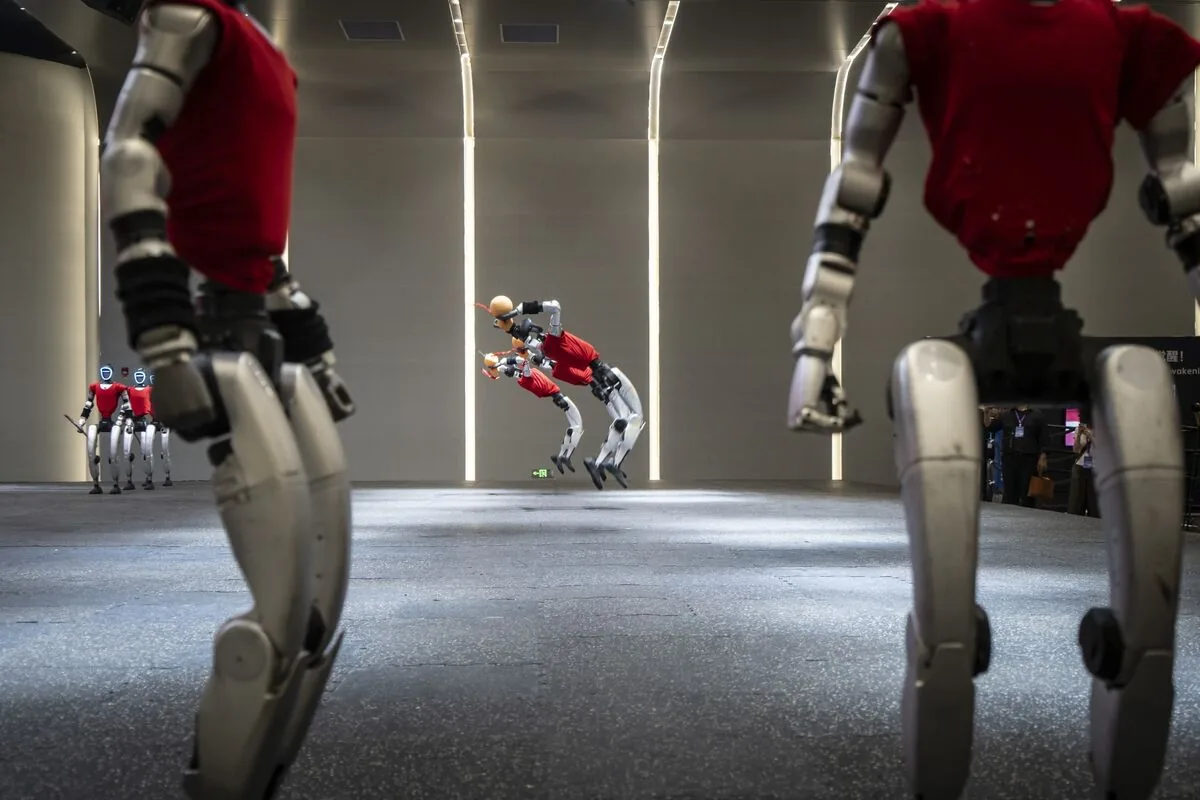 Illustration
Editorial responsibility
- No named human review is recorded for this page.
- Reports are grouped by semantic similarity and deterministic rules. Language models may assist titles, summaries, translation and cross-source analysis; the page reads the event directly, while its address stays stable when the title changes.
- Summary covers the current reports
Cross-source coverage
Reporting timeline
China's ChiNext Index Falls Over 4%, Unitree Technology Drops 6%
On September 28, A-share markets in China experienced a broad sell-off, with the ChiNext (创业板指) index falling 4.32% and the Shenzhen Component Index dropping 3.37%. Unitree Technology (宇树科技) shares plunged 5.96% to 458.90 yuan per share, with a market cap of 185.63 billion yuan. Over 4,800 stocks declined, and half-day turnover reached 1.16 trillion yuan, up 93.4 billion from the previous session. The robotics sector also weakened, with the CSI Robot Index down 2.59%. Separately, Unitree founder Wang Xingxing spoke at the 5th Global Digital Trade Expo on September 24, stating that the key challenge in embodied AI is the precise matching of AI model inputs/outputs with the physical world, where robots currently have errors of a few millimeters. He noted that large robots are an inevitable industry trend. Unitree reported H1 2026 revenue of 1.152 billion yuan, up 48.54% year-on-year, and a net profit of 274 million yuan versus a loss a year earlier. The company also signed a strategic cooperation agreement with China Southern Power Grid on September 22 and increased its registered capital.
Read sourceChina's ChiNext Index Plunges 4%; Robotics Firm Unitree Stock Drops 6%
On September 28, A-share markets experienced a broad sell-off, with the ChiNext Index falling 4.32% and the Shenzhen Component Index dropping 3.37%. Unitree Technology, a robotics company, saw its stock decline 5.96% to 458.90 yuan per share, with a market cap of 185.63 billion yuan. The robotics sector also weakened, with the CSI Robotics Index down 2.59%. The sell-off came amid a speech by Unitree founder Wang Xingxing at the 5th Global Digital Trade Expo on September 24, where he discussed challenges in embodied AI, noting that current AI models have a few millimeters of error in matching inputs and outputs with the physical world. He stated that solving this issue would fully resolve robotics problems. Wang also commented on Unitree's GD01 manned变形机甲 (transforming mech), priced at 3.9 million yuan, calling large robots an inevitable industry trend. Unitree reported H1 2026 revenue of 1.152 billion yuan, up 48.54% year-on-year, and a net profit of 274 million yuan, reversing a loss. The company also signed a strategic cooperation agreement with China Southern Power Grid and increased its registered capital.
Read sourceChina's ChiNext Index Falls Over 4%, Unitree Stock Drops 6% on Market Rout
On September 28, A-share markets experienced a broad sell-off, with the ChiNext Index plunging 4.32% and the Shenzhen Component Index falling 3.37%. Unitree Technology's stock dropped 5.96% to 458.90 yuan per share, with a market cap of 185.63 billion yuan. Over 4,800 stocks declined, and half-day turnover reached 1.16 trillion yuan, up 93.4 billion from the previous session. The robotics sector also weakened, with the CSI Robot Index down 2.59%. Separately, Unitree founder Wang Xingxing spoke at the 5th Global Digital Trade Expo on September 24, stating that the biggest challenge in embodied AI is the imprecise matching of AI model inputs/outputs with the physical world, causing errors of a few millimeters. He noted that large robots are an inevitable industry trend. Unitree reported H1 2026 revenue of 1.152 billion yuan (up 48.54% YoY) and net profit of 274 million yuan, reversing a loss. The company also signed a strategic agreement with China Southern Power Grid and increased its registered capital to 404 million yuan.
Read sourceShow 4 older updatesHide older updates
China's ChiNext Index Falls Over 4%, Unitree Robotics Drops 6% on Market Rout
On September 28, A-share markets experienced a broad sell-off, with the ChiNext Index plunging 4.32% and the Shenzhen Component Index falling 3.37%. Unitree Technology (宇树科技) saw its stock drop 5.96% to 458.90 yuan per share, with a market cap of 185.63 billion yuan. Over 4,800 stocks declined, and half-day turnover reached 1.16 trillion yuan, up 93.4 billion from the previous session. The robotics sector also weakened, with the CSI Robotics Index down 2.59%. Separately, Unitree founder Wang Xingxing spoke at the 5th Global Digital Trade Expo on September 24, stating that the biggest challenge in embodied AI is the imprecise matching of AI model inputs/outputs with the physical world, causing errors of a few millimeters. He argued that large robots are an inevitable industry trend, referencing Unitree's GD01 manned变形机甲 (transforming mech), priced at 3.9 million yuan and weighing 500 kg when occupied. Unitree reported H1 2026 revenue of 1.152 billion yuan, up 48.54% year-on-year, and net profit of 274 million yuan versus a loss a year earlier. The company also signed a strategic agreement with China Southern Power Grid and increased its registered capital to 404 million yuan.
Read sourceUnitree Stock Halves from Peak; Overvaluation Drains Company Future, Says Commentary
This financial commentary analyzes the sharp decline of Unitree Technology's stock price, which fell 55% from its peak of 1,100 yuan on its August 19 debut to 494.85 yuan on September 21, erasing over 240 billion yuan in market value. The article attributes the drop to three main factors: the stock's ultra-high IPO price-to-earnings ratio of 219 times, which overvalued the company relative to its declining net profit; short-term speculative trading rather than long-term investment, as evidenced by an 85.28% first-day turnover rate; and broader market concerns about the robotics sector's valuation, with the CSI Robotics Index falling nearly 30% year-to-date. The piece notes that the downturn has prompted industry introspection, including criticism from Meikamander founder Shao Tianlan of 'assembly-type' embodied intelligence firms using related-party transactions to inflate revenue. It also reports that regulators have issued informal 'window guidance' to investment banks and funds, requiring companies to demonstrate recurring revenue, narrowing losses, or genuine innovation before IPO applications are considered. The Shanghai Stock Exchange has revised its STAR Market listing rules to include robotics and embodied intelligence as key support areas while tightening entry standards. Despite the stock decline, the article acknowledges Unitree's competitive strengths, including 5,900 robot shipments in the first half of the year (31% global share), and argues that the correction reflects a return to rational capital allocation, which could benefit the industry long-term by directing funds toward truly innovative companies.
Read sourceUnitree Stock Halves from Peak, High Valuation Overextends Future, Says Commentary
This commentary from Shangguan News, published on Tencent Stock, analyzes the sharp decline of Unitree Technology's stock price. After listing on August 19 at a peak of 1,100 yuan, giving it a market cap of 444.9 billion yuan, the stock fell to 494.85 yuan by September 21, a drop of about 55% and a loss of over 240 billion yuan in market value. The article attributes the decline to three main factors: the stock's high price-to-earnings ratio of 219 times, which overextended future performance expectations given a 19.34% drop in net profit; short-term speculative trading rather than long-term investment, as evidenced by an 85.28% turnover rate on the first day; and broader market concerns about the robotics sector, with the China Securities Index Robotics Index falling nearly 30% year-to-date. The article notes that industry insiders, such as Meikamander founder Shao Tianlan, have publicly questioned revenue practices at some 'assembly-type' embodied intelligence firms. It also reports that regulators have issued informal guidance to investment banks and institutions, requiring companies to demonstrate recurring revenue, narrowing losses, or genuine innovation for IPO consideration. The Shanghai Stock Exchange has revised its STAR Market listing rules to include robotics and embodied intelligence as key support areas while tightening entry standards. Despite the stock decline, the article notes Unitree shipped 5,900 robots in the first half of the year, holding a 31% global market share, and argues that the correction reflects a return to rational capital, which is healthy for the long-term development of the hard-tech sector.
Read sourceUnitree Stock Halves from Peak, Overvaluation Drains Future, Analyst Warns
Unitree Technology's stock price fell to 494.85 yuan on September 21, down 55% from its August 19 debut peak of 1,100 yuan, erasing over 240 billion yuan in market value. The article attributes the decline to three factors: the stock's 219 times price-to-earnings ratio overvalued future performance, as first-half net profit fell 19.34% despite revenue growth; the high debut turnover rate of 85.28% signaled short-term speculation rather than long-term investment; and the decline may reinforce market concerns about overvaluation in the robotics sector, with the CSI Robot Index falling nearly 30% this year. The article notes industry criticism from Meckamander founder Shao Tianlan, who questioned some firms' use of related-party transactions to inflate revenue. Regulators have issued informal guidance requiring companies to demonstrate recurring revenue, narrowing losses, or genuine innovation for IPO approval. The Shanghai Stock Exchange has added robotics and embodied intelligence to its STAR Market support list while tightening IPO standards. Despite the stock decline, Unitree shipped 5,900 robots in the first half, holding 31% global market share. The article concludes that the correction reflects capital returning to rationality, and that moderate bubbles can attract resources to the long-cycle hard-tech sector, but real output must eventually justify valuations.