Unitree open-sources humanoid robot foundation model, leading seven benchmarks
Unitree Robotics fully open-sourced its general-purpose humanoid robot foundation model, UnifoLM-WLA-1.0, on September 10, 2026. The 6-billion-parameter model, trained on 2,500 hours of real-world data, performs 64 tasks including household chores. It leads open-source models in seven out of 16 embodied reasoning benchmarks and rivals closed-source models. Unitree plans to invest nearly half its IPO proceeds into AI model R&D, signaling a strategic shift from hardware to software-hardware synergy.
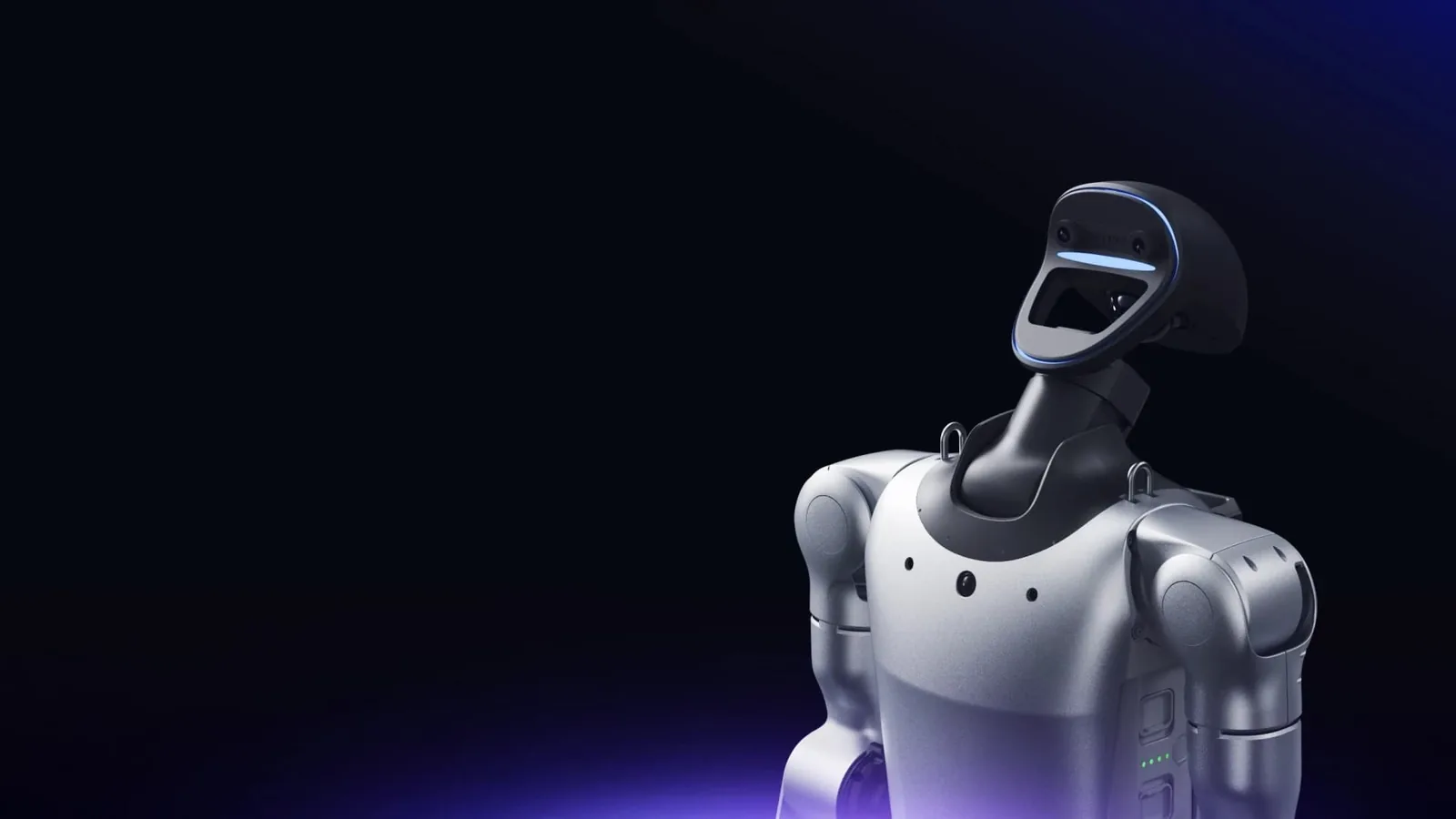 Reference image
Editorial responsibility
- No named human review is recorded for this page.
- Reports are grouped by semantic similarity and deterministic rules. Language models may assist titles, summaries, translation and cross-source analysis; the page reads the event directly, while its address stays stable when the title changes.
- Summary covers the current reports
Cross-source coverage
Common ground
- Unitree's open-source strategy for its UnifoLM model is a bold and unprecedented move in humanoid robotics, creating a potential ecosystem advantage.
- Real-world deployment data from factories and labs has qualitative value over curated lab data for training embodied AI.
- Unitree's control over both hardware and software gives it a vertical integration advantage.
- The company's IPO investment in AI R&D signals a smart pivot from hardware to platform company.
Points of contention
- Whether 2,500 hours of real-world data is sufficient to compete with larger datasets from Google or Tesla, or if quality can truly compensate for scale.
- If Unitree's 80% success rate on 64 tasks proves it has solved generalization, or if it's just a proof of concept with a 20% failure rate that's unacceptable in real-world settings.
- Whether Unitree is leading or catching up in software, given its hardware origins and later entry into open-source AI compared to Chinese LLM companies.
- If the H1 robot's hands are too primitive for fine manipulation, or if hardware can be easily upgraded while ecosystem lock-in is the real moat.
Blind spots
- Both sides overlooked how quickly competitors like Figure or 1X might leapfrog Unitree with more focused AI teams and newer hardware designs.
- The debate didn't fully explore the long-term monetization challenge of open-sourcing the core AI, which could let others build on it without paying Unitree.
- Neither side deeply analyzed the safety and regulatory implications of open-sourcing a model that controls physical robots in the real world.
WorldAttention’s read
Unitree is making a smart strategic bet by open-sourcing its embodied AI model and investing IPO funds into software, aiming to build an ecosystem in China's manufacturing belt. Its real-world deployment data is valuable, but the hype around its 64-task success rate and benchmark scores needs tempering—the 20% failure rate and primitive hardware are real hurdles. The race for embodied intelligence is still wide open, and the winner will be the one that iterates fastest on the full hardware-software stack, not just the one with the best demo today.
Reporting timeline
Unitree Robotics Open-Sources Embodied Foundation Model UnifoLM-WLA-1.0 for Humanoid Robots
Unitree Robotics announced on September 10 the full open-source release of its new general-purpose humanoid robot foundation model, UnifoLM-WLA-1.0. The model, with 6 billion parameters, was trained on 2,500 hours of real-world robot data and can perform 64 distinct tasks across multiple robot platforms and environments. According to independent benchmark tests from Robocurve, top large models like GPT-6 Astra and Claude Fable 5.1 showed high success rates in simple tasks (95% and 40% respectively for placing blocks in a bowl) but struggled with fine manipulation (GPT-6 Astra dropped to 10% for inserting puzzle pieces). Unitree's model reportedly outperforms open-source models and rivals closed-source models in seven out of 16 embodied reasoning evaluations, including scoring 82.0 on Where2Place versus GPT-6 Astra's 69.0. The model integrates perception, interaction prediction, and action generation to improve spatial understanding and decision-making. Unitree founder Wang Xingxing stated that the biggest bottleneck in humanoid robotics is insufficient generalization of embodied intelligence, particularly the alignment between AI model inputs/outputs and the real physical world. The company aims to build an ecosystem of tools, developers, applications, and data through open-source contributions.
Read sourceUnitree Robotics Shifts Focus to AI Models, Releases New UnifoLM-WLA-1.0 for Home Tasks
Unitree Robotics, known for its hardware robots capable of running, martial arts, and combat, is pivoting toward AI software by releasing a series of embodied intelligence models. On September 10, 2025, the company open-sourced the UnifoLM-WLA-1.0 model, a 6-billion-parameter system trained on 2,500 hours of real robot data, capable of 64 tasks including dish sorting, trash disposal, and laundry. The model combines a multimodal backbone (UnifoLM-ER-Flow) for world understanding with an MMDiT Action Expert module for motion execution. Founder Wang Xingxing stated that the company's AI model team focuses on home and factory applications, and that Unitree's overall embodied AI capabilities are now among the global top tier. The company plans to invest nearly half of its IPO proceeds into intelligent robot model R&D. Unitree has released multiple models since September 2025, including VLA, industrial, and world-model variants, signaling a strategic shift from hardware-only to a hardware-software synergy approach.
Read sourceUnitree Robotics Shifts Focus to AI Models, Releases UnifoLM-WLA-1.0 for Home Tasks
Unitree Robotics, known for its hardware-centric humanoid robots capable of running, jumping, and martial arts, is pivoting toward AI software by releasing a series of embodied intelligence models. On September 10, 2026, the company open-sourced the UnifoLM-WLA-1.0 model, a 6-billion-parameter system trained on 2,500 hours of real-world data, capable of performing 64 tasks including household chores like tidying shelves, washing clothes, and taking food from a microwave. The model combines a multimodal backbone (UnifoLM-ER-Flow) for understanding and an action expert module (MMDiT) for execution. Founder Wang Xingxing stated the company's AI team focuses on home and factory applications, and that the technical roadmap for embodied models has become clearer. Unitree plans to invest nearly half of its IPO proceeds into AI model R&D. The article notes that the model outperforms open-source peers and rivals closed-source models like OpenAI's GPT-6-Astra on several benchmarks. Analysts at Dongwu Securities suggest Unitree could evolve from a hardware leader into a platform company covering components, robots, models, and ecosystems.
Read sourceShow 4 older updatesHide older updates
Unitree Robotics Shifts Focus to AI Models, Releases UnifoLM-WLA-1.0 for Home Tasks
Unitree Robotics, a hardware-focused robotics company, is undergoing a strategic shift toward AI model development, as reported by East Money citing Southern Metropolis Daily. On September 10, 2026, Unitree open-sourced its embodied foundation model UnifoLM-WLA-1.0, capable of driving robots to perform over 60 whole-body and desktop manipulation tasks such as tidying shelves, washing clothes, and throwing away trash. The model, with 6 billion parameters trained on 2,500 hours of real robot data, reportedly outperforms open-source models and rivals closed-source models in embodied reasoning benchmarks. Founder Wang Xingxing stated that the company's AI model team focuses on home and factory applications, and that the technical roadmap for embodied models has become clearer in 2026. Unitree has released multiple UnifoLM series models since September 2025, including industrial and world-model variants. The company plans to invest nearly half of its IPO proceeds into intelligent robot model R&D. Wang acknowledged the risk of falling behind in the fast-evolving AI landscape and emphasized the need for rapid self-iteration. The article notes Unitree's transition from a hardware-dominated company to a software-hardware synergy approach.
Unitree Releases Humanoid Robot Foundation Model, Leads Open-Source Benchmarks
Unitree Robotics has released UnifoLM-WLA-1.0, a foundational model for general-purpose humanoid robots, along with its embodied reasoning variant UnifoLM-ER-1-4B. According to the company's reported results, the model leads open-source models on 7 out of 16 multimodal perception and understanding benchmarks, with overall performance comparable to several closed-source models. The model's advantages are concentrated in spatial understanding and reasoning, covering tasks like object reference, placement location, and visual pointing. UnifoLM-WLA-1.0 covers 64 tasks, including both desktop manipulation and whole-body operations, using a single 6-billion-parameter model. Unitree has released some model weights and data, with more planned. The article forecasts that this release will extend competition in the humanoid robot industry from hardware to foundational models and developer ecosystems, and that the released models could lower costs for smaller companies and research institutions.
Read sourceUnitree Releases Humanoid Robot Foundation Model, Leads Open-Source Benchmarks
Unitree Robotics has unveiled its general-purpose humanoid robot foundation model, UnifoLM-ER-1, which achieved top-tier results among open-source models in seven embodied reasoning benchmarks, including spatial understanding and reasoning tasks. The model, built on Qwen3-VL-4B, outperformed other open-source models in benchmarks such as RefSpatial-Bench, Where2Place, and PixMo-Point, with some metrics exceeding closed-source models like Gemini-ER 2. Additionally, Unitree introduced UnifoLM-WLA-1.0, a unified World-Language-Action model covering 64 tasks (10 whole-body operations and 54 tabletop manipulations), integrating embodied reasoning, future dynamic region prediction, and action generation. Unitree has released partial model weights and data, with plans to open post-training code and additional datasets. The company aims to lower development costs for small and medium-sized robotics firms and research institutions, fostering a developer ecosystem. The article notes that competition in humanoid robotics is expected to shift from hardware to foundation models, development interfaces, and application ecosystems, though real-world generalization remains to be validated.
Unitree Robotics Open-Sources Embodied Foundation Model for Humanoid Robots, Leading Open-Source Models in Seven Benchmarks
Unitree Robotics has fully open-sourced its next-generation general-purpose humanoid robot foundation model, UnifoLM-WLA-1.0, on September 10. The model, with 6 billion parameters, was trained on 2,500 hours of high-quality real-world data covering multiple robot platforms and scenarios, enabling a single model to complete 64 different tasks. According to the company, the model integrates embodied reasoning, future change prediction, and action learning to enhance spatial perception and understanding. In tests on the independent Robocurve benchmark platform, the model outperformed leading open-source models in seven out of 16 multimodal perception and understanding evaluations, and rivaled top closed-source models. For example, it scored 82.0 on Where2Place, 13 points higher than GPT-6 Astra. Unitree founder Wang Xingxing stated at the 2026 World Robot Conference that the biggest bottleneck in the global humanoid robot industry is insufficient generalization of embodied intelligence. The company aims to build an ecosystem of toolchains, developers, applications, and data to accelerate the deployment of humanoid robots from labs to real-world industries.