Unitree founder: Millimeter-level AI-physical world mismatch is key robot bottleneck
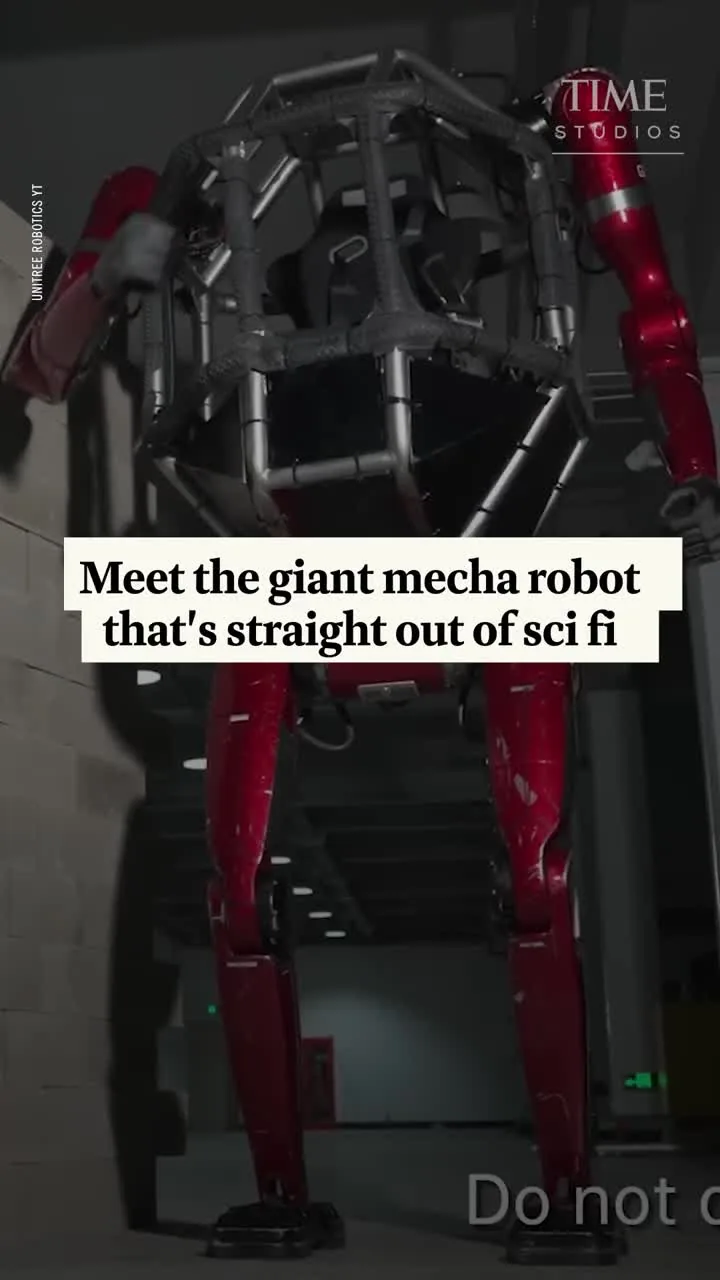
At the 5th Global Digital Trade Expo in Hangzhou on September 24, Unitree Robotics founder Wang Xingxing identified the mismatch between AI model input/output and the real physical world, causing millimeter-level errors, as the core bottleneck in robotics. He predicted an embodied intelligence "ChatGPT moment" within a few years when robots can complete 80% of tasks in 80% of unfamiliar scenarios via voice commands. Wang also introduced the GD01 manned mecha and proposed an AI-driven autonomous iteration system to scale robot testing.
 Reference image
Editorial responsibility
- No named human review is recorded for this page.
- Reports are grouped by semantic similarity and deterministic rules. Language models may assist titles, summaries, translation and cross-source analysis; the page reads the event directly, while its address stays stable when the title changes.
- Summary awaiting refresh
Summary awaiting refresh
Cross-source coverage
Reporting timeline
Unitree Robotics Founder: Key to Embodied AI Breakthrough Lies in Solving Millimeter-Level Errors
At the 5th Global Digital Trade Expo in Hangzhou on September 24, Wang Xingxing, founder of Unitree Robotics, delivered a speech titled 'From Mechanics to Intelligence: The Evolution of Embodied Future.' Wang stated that the embodied intelligence industry may soon experience a breakthrough moment similar to ChatGPT. He believes the industry will reach a critical threshold for large-scale application when robots can complete about 80% of tasks in roughly 80% of unfamiliar environments through voice interaction and embodied intelligence capabilities. Wang noted that while the ability for robots to understand and execute specific tasks based on voice commands achieved a breakthrough last year, the industry still faces a core technical bottleneck: the precise matching problem between AI models and the real physical world. He explained that current robots still have millimeter-level errors in actual operations, limiting their stability and reliability in complex environments. Wang concluded that whoever solves this problem will essentially solve the robot challenge.
Read sourceUnitree Robotics Founder Says Key Bottleneck Is Solving Millimeter-Level Work Errors
At the 5th Global Digital Trade Expo in Hangzhou on September 24, Wang Xingxing, founder of Unitree Robotics, delivered a speech titled 'From Machinery to Intelligence — The Evolution of Embodied Future.' He stated that the emergence of ChatGPT reshaped public perception of AI and opened up industry imagination. Wang predicted that the embodied intelligence sector will also experience its own 'ChatGPT moment.' He believes the industry will reach a critical tipping point when robots can complete 80% of tasks in 80% of unfamiliar scenarios using voice and embodied capabilities, a milestone he expects within a few years. While making robots execute specific tasks via commands was achievable last year, Wang identified the core bottleneck as the insufficient precision matching between AI model inputs/outputs and the real physical world, resulting in millimeter-level errors. He concluded that whoever solves this problem will fully resolve the challenges facing robotics.
Read sourceUnitree Robotics Founder Says Core Bottleneck Is Solving Millimeter-Level Errors
At the 5th Global Digital Trade Expo in Hangzhou on September 24, Wang Xingxing, founder of Unitree Robotics, delivered a speech titled 'From Mechanics to Intelligence — The Evolution of Embodied Future.' He stated that ChatGPT reshaped public perception of AI and predicted that embodied intelligence will soon have its own 'ChatGPT moment.' Wang believes the industry will reach a tipping point when robots can complete 80% of tasks in 80% of unfamiliar scenarios using voice and embodied capabilities, a milestone he expects within a few years. He noted that while robots can already follow commands and perform symbolic tasks, the main bottleneck is the insufficient precision of AI model input and output matching the real physical world, resulting in errors of a few millimeters. Wang concluded that whoever solves this precision problem will fully solve the robotics challenge.
Read sourceShow 4 older updatesHide older updates
Unitree founder says embodied intelligence breakthrough hinges on solving millimeter-level error problem
At the 5th Global Digital Trade Expo in Hangzhou on September 24, Wang Xingxing, founder of robotics company Unitree, delivered a speech titled 'From Machinery to Intelligence: The Evolution of Embodied Future.' Wang stated that the embodied intelligence industry may soon experience a breakthrough moment similar to ChatGPT. He believes the industry will reach a critical threshold for large-scale application when robots can complete about 80% of tasks in about 80% of unfamiliar environments through voice interaction and embodied intelligence capabilities. Wang noted that the ability for robots to understand and execute specific tasks based on voice commands achieved a breakthrough last year. However, he identified a core technical bottleneck: the precise matching problem between AI models and the real physical world. He explained that current robots still have millimeter-level errors in actual operations, limiting their stability and reliability in complex environments. Wang concluded that whoever solves this problem will essentially solve the robot challenge.
Read sourceUnitree CEO: Robot Industry's Core Bottleneck Is Solving Millimeter-Level Errors
Wang Xingxing, founder of Unitree Robotics, delivered a keynote speech at the 5th Global Digital Trade Expo in Hangzhou on September 24, discussing the company's latest robot technology and industry trends. He introduced the GD01 manned mecha, a 3-meter-tall 'off-road vehicle' for complex outdoor terrain, which Unitree launched in May as the world's first mass-produced version. Wang stated that large robots are an inevitable industry trend. He noted that Unitree's robot large models now support real-time action generation from voice commands, though slight delays remain. Wang identified the key bottleneck as the mismatch between AI model input/output and the real physical world, resulting in millimeter-level errors. He predicted an embodied AI 'ChatGPT moment' when robots can complete 80% of tasks in 80% of unfamiliar scenarios via voice commands, which could arrive within a few years. Wang also proposed an AI-driven autonomous iteration system to replace manual processes, enabling thousands of robots to be tested daily instead of dozens, addressing the industry's data scarcity challenge.
Read sourceUnitree founder says robot core bottleneck is solving millimeter-level work errors
At the 5th Global Digital Trade Expo in Hangzhou on September 24, Unitree Robotics founder Wang Xingxing delivered a speech on embodied intelligence trends. He introduced the company's GD01 manned mecha, a 3-meter-tall mass-produced vehicle-like robot designed for outdoor complex terrain. Wang stated that Unitree's robot large models now support real-time action generation from voice commands, though slight latency remains. He aims for the system to generate any action on command by late 2024 or 2025. Wang identified the key bottleneck as the mismatch between AI model input/output and the physical world, resulting in millimeter-level errors. He proposed an AI-driven autonomous iteration loop to replace manual code generation, training, and testing, which could scale testing from dozens to thousands of robots per day. Wang predicted an industry 'ChatGPT moment' when robots can complete 80% of tasks in 80% of unfamiliar environments via voice commands, a tipping point he expects within a few years. He emphasized that Unitree's core value is advancing the global quadruped and humanoid robot industry rather than sales or profit.
Read sourceUnitree Founder Wang Xingxing: Robot Core Bottleneck Is Solving Millimeter-Level Errors
At the 5th Global Digital Trade Expo in Hangzhou on September 24, Unitree Technology founder Wang Xingxing delivered a speech titled 'From Machinery to Intelligence — The Evolution of Embodied Future.' He discussed the company's GD01 carrier robot, a 3-meter-tall mass-produced model defined as the 'off-road vehicle' of robotics, designed for complex outdoor terrain. Wang noted that large-scale robots are an inevitable industry trend. He reported progress in Unitree's AI large model, which now generates real-time robot actions from voice commands, though slight latency remains due to real-time AI computation. Wang aims for the system to generate any action on command by late 2024 or 2025, enabling large-scale deployment. He predicted an industry 'ChatGPT moment' for embodied intelligence when robots can perform 80% of tasks in 80% of unfamiliar scenarios via voice commands, a tipping point expected within a few years. Wang identified the key bottleneck as the mismatch between AI model input/output and the physical world, causing millimeter-level errors. He proposed an AI-driven autonomous iteration system to replace manual code generation, training, and testing, which could scale testing from dozens to hundreds or thousands of robots per day, addressing the scarcity of real-world data. Wang emphasized that Unitree's core value lies in advancing the global quadruped and humanoid robot industry through its products and partnerships, rather than sales or profit.