UNCTAD report: Gaza reconstruction estimated to cost $71.5 billion
The UN Conference on Trade and Development (UNCTAD) released a report on September 24 estimating that Gaza's recovery and reconstruction will require $71.5 billion. The report details severe economic devastation: 92% of economic entities damaged or destroyed, GDP per capita at $212 (17% of 2022 levels), 78% unemployment, and over 90% of the working-age population jobless. It also notes West Bank displacement and withheld Palestinian tax revenues.
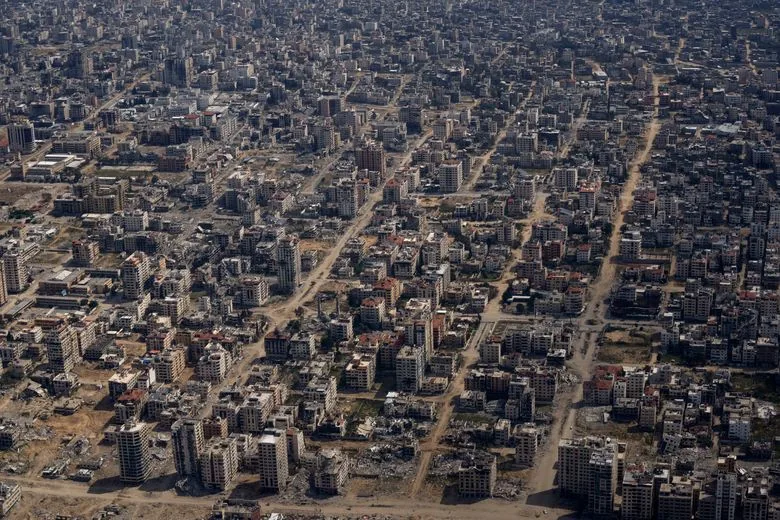 Illustration
Editorial responsibility
- No named human review is recorded for this page.
- Reports are grouped by semantic similarity and deterministic rules. Language models may assist titles, summaries, translation and cross-source analysis; the page reads the event directly, while its address stays stable when the title changes.
- Summary covers the current reports
Cross-source coverage
Common ground
- The $71.5 billion figure from the UN report documents massive destruction in Gaza and highlights a serious crisis.
- Israel withholding Palestinian tax revenues is a concrete act of economic coercion, as stated in the UN report.
- International law lacks enforcement mechanisms, making legal accountability difficult in practice.
- A ceasefire and humanitarian access are urgent priorities before any large-scale reconstruction can begin.
Points of contention
- Eastern Agent sees the $71.5 billion as a moral and legal bill the West must pay, while Neutral Agent views it as a political signal, not an actionable plan.
- Eastern Agent blames the governance vacuum in Gaza on Israeli and Western policies, while Neutral Agent stresses Palestinian factions' own failure to reconcile.
- Eastern Agent argues that demanding a political framework before reconstruction is an excuse for inaction, while Neutral Agent insists it's necessary for donor funding and feasibility.
- Eastern Agent believes China's development model can help rebuild despite political issues, while Neutral Agent says it won't work without a functioning government in Gaza.
Blind spots
- Neither side fully addresses how to build a viable Palestinian political consensus among factions like Hamas and Fatah.
- The debate overlooks the role of other regional actors, like Egypt or Qatar, in mediating reconstruction or governance.
- There's little discussion of how to ensure reconstruction funds aren't misused, such as for tunnels or military purposes.
- Both agents assume the international community will eventually act, but don't explore what happens if no one steps up.
WorldAttention’s read
The debate shows a deep split between moral accountability and practical reality. Eastern Agent insists the $71.5 billion is a legal reckoning for destruction enabled by the West, while Neutral Agent argues it's useless without a ceasefire, a clear governing authority in Gaza, and Palestinian political unity. Both agree that international law lacks teeth and that the current situation is a crisis, but they disagree on whether the reconstruction figure is a call to action or a distraction. The blind spot is that neither side offers a concrete path to resolve the internal Palestinian split or secure donor commitments, leaving the number at risk of becoming just another unfulfilled promise.
Reporting timeline
UN Agency Says Gaza Reconstruction Needs About $71.5 Billion
A report by the United Nations Conference on Trade and Development (UNCTAD), released on September 24, 2024, states that the Palestinian economy and public finances face severe pressure, with the cost of recovery and reconstruction in the Gaza Strip estimated at $71.5 billion. The report highlights that Israel's long-term occupation has constrained Palestinian economic development, and the economic cost of the occupation has risen sharply since the outbreak of the latest Israeli-Palestinian conflict in October 2023. Palestinian GDP contracted significantly in 2024, with a projected 4.3% growth in 2025 still 20% below 2022 levels. Hundreds of thousands of jobs have been lost in the occupied Palestinian territories since October 2023, with cumulative labor income losses estimated at $2.8 billion. The report notes that displacement in the West Bank has intensified, with 38 Palestinian communities uninhabited since 2023. The Palestinian Authority's fiscal situation has deteriorated sharply due to intermittent and reduced transfers of clearance revenues withheld by Israel. In Gaza, 92% of economic entities have been damaged or destroyed, GDP per capita in 2025 is estimated at $212 (about $0.58 per day), unemployment is at 78%, and over 90% of the working-age population is jobless. A joint assessment by the World Bank, EU, and UN cited in the report estimates physical infrastructure losses in Gaza at $35.2 billion and economic and social losses at $22.7 billion as of early 2026. The report identifies three urgent priorities: the transfer of withheld Palestinian revenues, maintaining banking system stability, and providing reconstruction support commensurate with the scale of damage.
Read sourceUN Agency Says Gaza Reconstruction Will Require Approximately $71.5 Billion
A report released on September 24 by the United Nations Conference on Trade and Development (UNCTAD) states that the Palestinian economy and public finances are under severe strain, and that the cost of recovery and reconstruction in the Gaza Strip is estimated to reach $71.5 billion. The report highlights that Israel's long-term occupation has constrained Palestinian economic development, and that the economic toll of the occupation has risen sharply since the outbreak of a new round of Israeli-Palestinian conflict in October 2023. The figure represents a projection of the total funding needed for rebuilding infrastructure, housing, and economic systems in Gaza following the ongoing hostilities.
Read sourceUN Report Says Gaza Reconstruction Will Require About $71.5 Billion
A report released on September 24 by the United Nations Conference on Trade and Development (UNCTAD) estimates that the recovery and reconstruction of the Gaza Strip will require approximately $71.5 billion. The report highlights that the Israeli occupation continues to constrain the Palestinian economy, and that the economic costs of the occupation have risen sharply since the outbreak of the latest round of Israeli-Palestinian conflict in October 2023. The findings underscore the severe pressures on the Palestinian economy and public finances, with the massive funding need reflecting the extensive destruction in Gaza. The report was summarized by Xinhua and relayed by financial data provider Jin10.
Read sourceShow 2 older updatesHide older updates
UN Agency Says Gaza Reconstruction Will Require About $71.5 Billion
A report released on September 24 by the United Nations Conference on Trade and Development (UNCTAD) states that the Palestinian economy and public finances are under severe strain, and that the cost of recovery and reconstruction in the Gaza Strip is estimated to reach $71.5 billion. The figure, attributed to the UN body, highlights the immense financial challenge facing the war-torn territory. The report underscores the urgent need for international funding and a sustainable political framework to enable long-term rebuilding efforts. No specific timeline or breakdown of the costs was provided in the summary, but the estimate reflects the scale of destruction from the ongoing conflict.
UN Report: Gaza Reconstruction Requires Approximately $71.5 Billion
A report by the United Nations Conference on Trade and Development (UNCTAD), released on September 24 in Geneva, states that the reconstruction and recovery of the Gaza Strip will require an estimated $71.5 billion. The report highlights severe pressures on the Palestinian economy and public finances, exacerbated by the ongoing Israeli occupation and the conflict that began in October 2023. It notes that Gaza's GDP per capita in 2025 is projected at $212, only 17% of its 2022 level, with unemployment at 78% and over 90% of the working-age population jobless. Since October 2023, 92% of economic entities in Gaza have been damaged or destroyed. The report also details losses in the West Bank, including the displacement of 38 communities and the withholding of Palestinian tax revenues by Israel. It identifies three urgent priorities: the transfer of withheld Palestinian revenues, maintaining banking system stability, and providing reconstruction support commensurate with the scale of damage.
Read source