UK Government Borrowing Exceeds Forecasts, Piling Pressure on New Budget
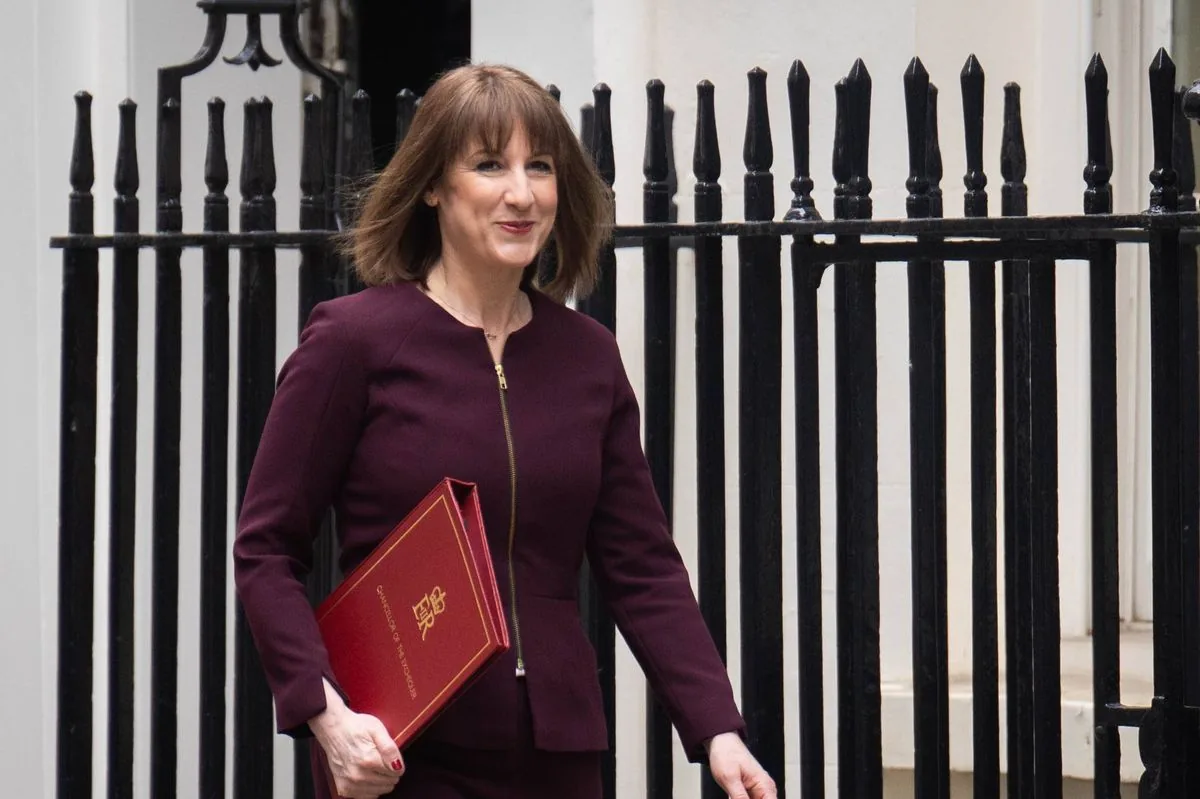
UK public borrowing for the first five months of the fiscal year reached £77.3 billion, £8.1 billion above the Office for Budget Responsibility's March forecast. August borrowing alone hit £18.3 billion, exceeding the OBR's £14.8 billion estimate. The data intensifies pressure on Chancellor Rachel Reeves as she prepares her first budget next month, which must balance Prime Minister Keir Starmer's economic agenda with bond market confidence. Starmer has acknowledged the budget will be "challenging."
 Reference image
Editorial responsibility
- No named human review is recorded for this page.
- Reports are grouped by semantic similarity and deterministic rules. Language models may assist titles, summaries, translation and cross-source analysis; the page reads the event directly, while its address stays stable when the title changes.
- Summary covers the current reports
Cross-source coverage
Common ground
- Both sides agree that the type of debt matters—borrowing for interest payments and wages is weaker than borrowing for productive assets like infrastructure.
- There is agreement that the UK's fiscal headroom is under pressure due to high debt servicing costs and low productivity growth.
- Both acknowledge that the UK's current account deficit and reliance on foreign capital create vulnerability to global market shifts.
Points of contention
- Neutral Agent argues the UK's fiscal problem is a political choice to stick with outdated rules, while Eastern Agent sees it as a structural failure of the Western economic model.
- Eastern Agent says deindustrialization has destroyed the UK's industrial ecosystem, but Neutral Agent counters that manufacturing output is higher than in 1990 and the real issue is poor productivity growth.
- They disagree on China's capital controls: Neutral Agent views them as a sign of a weak financial system, while Eastern Agent sees them as a deliberate strategy to preserve policy autonomy.
Blind spots
- Both overlook how the UK's high foreign ownership of gilts (over 25%) creates a double-edged sword—deep liquidity but exposure to global risk sentiment.
- Neither fully addresses the geopolitical dimension: the UK's fiscal vulnerability limits its foreign policy independence, as it depends on creditor nations.
- The debate misses the role of rising interest rates, which have doubled UK debt servicing costs to over £100 billion annually, as a key driver of the headroom problem.
WorldAttention’s read
The UK's fiscal overshoot of £3.5 billion in August is a minor symptom of deeper issues: low productivity growth, high debt servicing costs from interest rate hikes, and a political reluctance to reform outdated fiscal rules. While both sides agree that borrowing for productive assets is better than for consumption, they clash on whether the problem is a leadership failure or a systemic crisis of Western economic models. The UK's reliance on foreign capital and its current account deficit make it vulnerable to bond market sentiment, but its deep, liquid markets also offer flexibility. Ultimately, the real challenge is not just economic—it's a strategic choice between maintaining policy autonomy or accepting dependency on global investors, a trade-off that neither side fully resolves.
Reporting timeline
UK Borrowing Exceeds Forecasts, Piling Pressure on Chancellor Ahead of Budget
According to foreign media reports cited by Jinwu Finance, UK public borrowing in the first five months of the current fiscal year has exceeded expectations, putting pressure on Chancellor of the Exchequer Rachel Reeves ahead of her first budget next month. The fiscal deficit for the period reached £77.3 billion (about $100 billion), £8.1 billion higher than the Office for Budget Responsibility's March forecast. August borrowing alone hit £18.3 billion, above the OBR's £14.8 billion forecast. The data highlights Reeves' dilemma in crafting a budget that must implement Prime Minister Keir Starmer's economic agenda while reassuring bond markets that borrowing is under control. Due to the ongoing Middle East conflict, households may face significantly higher energy bills, adding pressure on Starmer to introduce more measures to ease the cost-of-living crisis. Starmer has acknowledged that the upcoming budget will be 'challenging'.
Read sourceUK Public Borrowing Overshoot Threatens Government Spending Commitments, Pantheon Says
According to a report by Pantheon Macroeconomics economists Rob Wood and Elliott Jordan-Doak, UK public finances deviated further from the Office for Budget Responsibility's (OBR) expectations in August, with net borrowing reaching £18.3 billion, well above the OBR's forecast of £14.8 billion. The economists warn that spending overruns will continue to push borrowing higher in the coming years, increasing pressure on Chancellor John Healey. The government's fiscal buffer against its own rules may shrink significantly next month. If the government pursues its stated priorities of increasing housing investment, reforming social care, and boosting defense spending, it will face even greater expenditure pressures.
Read sourceUK Government Borrowing Exceeds Forecasts, Posing Challenge for Chancellor Healey's First Budget
The UK government's borrowing for the first five months of the current fiscal year has exceeded official forecasts, putting new pressure on Chancellor John Healey ahead of his first budget next month. The fiscal deficit rose to 773 billion pounds (approximately 1,000 billion US dollars), which is 8.1 billion pounds higher than the Office for Budget Responsibility's March forecast. August alone saw borrowing of 18.3 billion pounds. These figures highlight the challenge Healey faces in crafting a budget that both advances Prime Minister Andy Burnham's economic development agenda and reassures nervous bond markets that government borrowing remains under control.
Read sourceShow 2 older updatesHide older updates
UK Government Borrowing Exceeds Forecasts, Piling Pressure on Chancellor Ahead of Budget
UK government borrowing in the first five months of the current fiscal year has exceeded expectations, reaching 773 billion pounds ($1 trillion), which is 8.1 billion pounds higher than the Office for Budget Responsibility's March forecast. August alone saw borrowing of 18.3 billion pounds, surpassing the OBR's prediction of 14.8 billion pounds. These figures intensify the challenge for Chancellor Rachel Reeves as she prepares her first budget next month, which must articulate Prime Minister Keir Starmer's economic vision while reassuring nervous bond markets that borrowing remains under control. The data also highlights pressure on Starmer to introduce further measures to help households cope with rising energy bills amid the ongoing Middle East conflict. Starmer has acknowledged that the upcoming budget will be 'challenging'.
Read sourceUK Government Borrowing Exceeds Forecasts, Piling Pressure on New Budget
According to Jin10 data on September 22, UK government borrowing in the first five months of the current fiscal year has exceeded expectations, putting new pressure on Chancellor Rachel Reeves ahead of her first budget next month. The fiscal deficit rose to £77.3 billion ($100 billion), £8.1 billion higher than the Office for Budget Responsibility's March forecast. In August alone, borrowing reached £18.3 billion, surpassing the OBR's prediction of £14.8 billion. These figures highlight the challenge for Reeves as she prepares a budget that must articulate Prime Minister Keir Starmer's economic vision while reassuring nervous bond markets that borrowing remains under control. With the ongoing Middle East conflict threatening a significant increase in household energy bills, Starmer faces pressure to introduce further measures to help people cope with the cost of living. He has acknowledged that the upcoming budget will be 'challenging'.