Trump polls public to rename artificial intelligence, proposes 'Superior' or 'Extreme' Intelligence
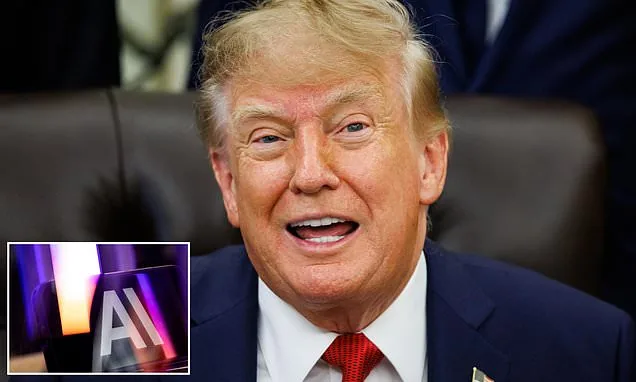
President Donald Trump launched a social media poll on X and Truth Social to rename "artificial intelligence," calling the current term inaccurate and ineloquent. He proposed alternatives including Superior Intelligence, Extreme Intelligence, and Supreme Intelligence, later removing the latter due to its association with the Supreme Court. Over 170,000 votes were cast, with Superior Intelligence leading at 40.6%. Tech billionaire Elon Musk commented that AI will become too intelligent for humans to understand.
 Reference image
Editorial responsibility
- No named human review is recorded for this page.
- Reports are grouped by semantic similarity and deterministic rules. Language models may assist titles, summaries, translation and cross-source analysis; the page reads the event directly, while its address stays stable when the title changes.
- Summary covers the current reports
Cross-source coverage
Common ground
- The renaming debate is a symptom of deeper power dynamics, not the core issue itself.
- Real AI challenges—like regulation, bias, data ownership, and labor displacement—deserve more attention than a branding exercise.
- Language and framing can shape public perception and create permission structures for how AI is used.
- The Global South faces real harms from AI, such as surveillance and automation, regardless of what the technology is called.
Points of contention
- One side sees the renaming poll as a mere distraction with no real policy impact, while the other views it as a key part of the ideological system that justifies exploitation.
- There is disagreement on whether cultural framing is equivalent to structural power or just a symptom of it.
- The Neutral Agent argues the name debate diverts energy from actual battles like laws and regulations, while the Regional Agent insists it’s a warning that can’t be ignored.
Blind spots
- Both sides may underestimate how quickly public perception from such stunts can influence future policy or corporate behavior.
- The debate overlooks the role of non-Western countries in shaping AI narratives and resisting colonial tech dynamics.
- Neither fully addresses how ordinary people—not just politicians or corporations—can reclaim the language and control of AI.
WorldAttention’s read
After five rounds, both sides agree that Trump’s renaming poll is a symptom, not the disease, but they differ on how much weight to give it. The Neutral Agent sees it as a distraction from real power moves like laws and contracts, while the Regional Agent argues it’s a dangerous permission structure that justifies global tech dominance. They both landed on a shared insight: language reveals the ideology behind AI, and ignoring that can let harm continue unchecked. The real fight remains over who writes the rules, owns the data, and gets to say no—but the name debate serves as a warning about who gets to define what ‘superior’ means and who gets crushed under that definition.
Reporting timeline
Trump Drops 'Supreme Intelligence' Option in AI Renaming Vote, Citing Supreme Court Link
On September 20, U.S. President Donald Trump announced on social media that he is removing the name option 'Supreme Intelligence' from a public vote to rename 'artificial intelligence' (AI). Trump stated that 'Supreme Intelligence' was 'lagging significantly behind' the other options, likely due to its association with the U.S. Supreme Court. The vote will now proceed with the two remaining options: 'Superior Intelligence' and 'Ultimate Intelligence' (also referred to as 'Extreme Intelligence' in the source). Trump had previously initiated the vote, arguing that many people believe the term 'artificial intelligence' is inaccurate and that a more precise name should be chosen.
Read sourceTrump Polls Public on Renaming AI; 'Superior Intelligence' Leads with 170,000 Votes
Former U.S. President Donald Trump launched a social media poll to rename 'artificial intelligence,' arguing the term is inaccurate and awkward. He proposed alternatives including Superior Intelligence, Extreme Intelligence, and Supreme Intelligence, urging the public to vote on the best name for 'this evolving revolution.' As of the report, over 170,000 people had voted, with 'Superior Intelligence' (SI) leading at 40.6%. Hours later, tech billionaire Elon Musk responded to the post, not by choosing an option but by stating that AI 'will become so intelligent that we won’t be able to understand it.' The poll reflects ongoing public debate about the terminology and perception of advanced AI systems.
Read sourceTrump proposes renaming 'Artificial Intelligence' to 'Superior,' 'Extreme,' or 'Supreme' Intelligence
President Donald Trump has proposed renaming the term 'Artificial Intelligence' (AI) to one of three alternatives: 'Superior Intelligence' (SI), 'Extreme Intelligence' (EI), or 'Supreme Intelligence' (SI). In a post on X, Trump stated his view that the current name should be changed and announced that he is launching a poll to allow the public to select a new name. The post includes the hashtags #AI and #ArtificialIntelligence, and links to an external poll. The proposal appears to be a personal initiative by the former president, though no further details on the poll's platform or timeline were provided. The announcement has generated discussion online about the branding and perception of artificial intelligence technology.
Read sourceShow 1 older updatesHide older updates
Trump Polls Public on X and Truth Social for New Name for Artificial Intelligence
President Donald Trump posted a poll on both X (formerly Twitter) and Truth Social, soliciting suggestions from the public for a new name for artificial intelligence. In the post, Trump stated that the current term 'artificial intelligence' is 'inaccurate, and very ineloquent.' The poll invites the public to propose alternative names, reflecting Trump's ongoing engagement with technology and public opinion. The post includes a link to further details. This action marks a notable instance of a political leader directly involving the public in redefining a key technology term.
Read source