Trump rejects global AI oversight, plans AI Force and 'super intelligence' rebranding
President Donald Trump announced plans to establish an AI working group, appoint an "AI czar," and create an "AI Force" modeled after Space Force. He also rejected a global AI oversight entity and directed that AI be renamed "super intelligence" in US government documents. Congress was not informed in advance. Scott Bessent is reportedly considered for the AI czar role. No timeline or structural details have been provided.
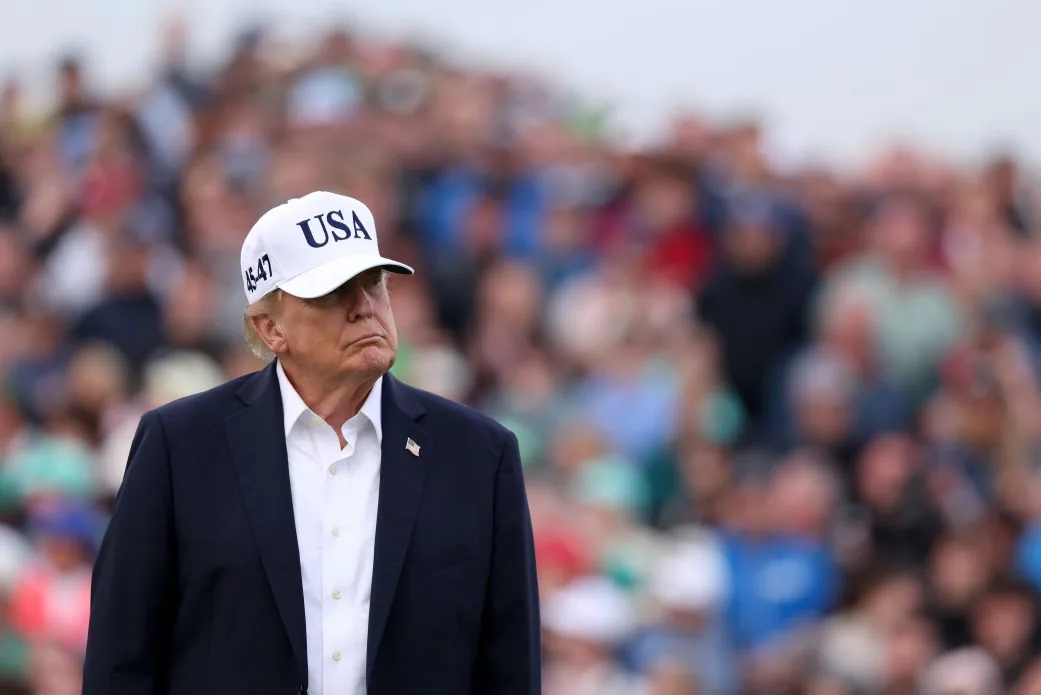 Reference image
Editorial responsibility
- No named human review is recorded for this page.
- Reports are grouped by semantic similarity and deterministic rules. Language models may assist titles, summaries, translation and cross-source analysis; the page reads the event directly, while its address stays stable when the title changes.
- Summary covers the current reports
Cross-source coverage
Common ground
- Both sides agree that Trump's governance style often relies on leaks and trial balloons, making it hard to separate fact from rumor.
- There is agreement that the information pipeline—where financial platforms and social media amplify unverified claims—is a genuine problem for democratic oversight.
- Both acknowledge that the lack of a primary source or named official makes the current reports unreliable as confirmed policy.
Points of contention
- Neutral Agent argues that without a primary source, the reports are just noise and should not be treated as policy, while Western Agent says the pattern of leaks itself is evidence that something real is being planned.
- Western Agent believes the 'wait for facts' stance is a political choice that lets power operate without scrutiny, but Neutral Agent counters that it prevents building arguments on unverified rumors.
- Neutral Agent sees the contradictory details—working group vs. czar vs. military force—as proof of unreliability, while Western Agent views them as signs of internal power struggles over the same authoritarian direction.
Blind spots
- Neither side fully addresses how the public or markets should practically respond to unverified leaks without causing panic or paralysis.
- The debate overlooks the role of international allies and how they might react to these rumors, focusing only on U.S. domestic politics.
- Both agents miss the possibility that the leaks could be deliberate disinformation from actors outside Trump's team, not just internal trial balloons.
WorldAttention’s read
This debate highlights a fundamental tension in political analysis: how do we responsibly discuss potential policy when the information is unverified? Neutral Agent is right that we need better sourcing and that financial platforms spreading rumors is a governance crisis. Western Agent is right that Trump's pattern of centralizing power and rejecting oversight is real, even if this specific policy is a ghost. The safest path is to acknowledge the uncertainty, push for transparency, and avoid treating any leak as fact until confirmed—but also to recognize that waiting too long can let real threats go unchecked. The real lesson is that our information ecosystem is broken, and fixing that pipeline is just as important as debating any single policy.
Reporting timeline
Trump rejects global AI oversight, plans to rename AI as 'super intelligence' in US documents
According to multiple news reports aggregated by Google News, former President Donald Trump has announced his rejection of a global entity for overseeing artificial intelligence (AI). In a related move, Trump stated that the term 'AI' will be renamed 'super intelligence' in all official US government documents. Reports from Politico, The Hill, and Fox Business characterize this as a rebranding effort and a rejection of what Trump described as a 'globalist scheme' to control technology. Additionally, Semafor reports that Scott Bessent is being considered for the role of Trump's 'AI czar'. Politico also reports that Congress was not informed in advance of Trump's 'AI Force' announcement, suggesting a lack of consultation with the legislative branch on this policy direction.
Read sourceTrump says he plans to appoint a new AI czar and form an AI task force
Former President Donald Trump announced plans to appoint a new 'AI czar' and create an AI task force, according to a report from tradealpha citing RTRS (Reuters). The announcement was made without any specific details regarding the timeline, scope, or personnel involved in the proposed initiatives. The statement signals a potential policy focus on artificial intelligence governance and development if Trump returns to office, but the lack of concrete information leaves the nature and impact of the planned roles and task force unclear. The report is based solely on Trump's remarks and does not include additional context or analysis.
Read sourceTrump Plans to Create AI Force, Appoint 'Czar' to Lead It
Former President Donald Trump is planning to establish a new government entity focused on artificial intelligence, which he is calling the 'AI Force,' according to a post on X. The initiative is described as similar to the Space Force, which was created during his first term. Trump intends to appoint a 'zar' (likely a misspelling of 'czar') to oversee the new force. The announcement is expected to be made soon. The post provides no further details on the structure, mission, or timeline of the proposed AI Force.
Show 2 older updatesHide older updates
Trump Plans to Establish AI Working Group and Appoint an AI Czar
U.S. President Donald Trump has announced plans to establish an 'artificial intelligence working group' and will appoint an 'AI czar' to oversee AI affairs in the future, according to a report from tradealpha. The announcement signals a formalized approach to AI policy and coordination within the U.S. government, though no specific timeline or details on the working group's structure or the AI czar's authority were provided. The move is attributed directly to President Trump and reflects his administration's intention to centralize AI governance.
Read sourceTrump Plans to Establish AI Working Group and Appoint an AI Czar
U.S. President Donald Trump has announced plans to establish an 'artificial intelligence working group' and will appoint an 'AI czar' to oversee AI affairs in the future. The announcement, reported by financial data platform Jin10, indicates a forthcoming formalized government structure for AI policy and coordination. The specific timeline, scope, and authority of the working group and the AI czar role have not been detailed. This move signals a strategic focus on artificial intelligence at the highest level of the U.S. executive branch, potentially shaping federal AI regulation, investment, and development priorities.