Tesla Semi enters mass production after decade-long delay, first deliveries begin
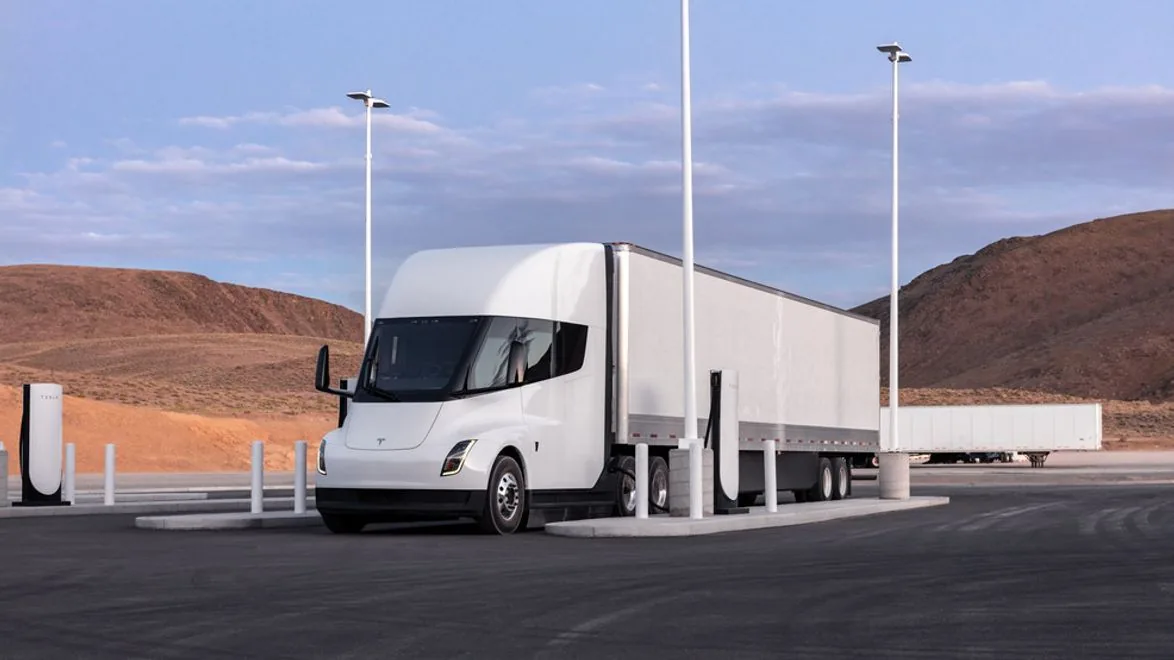
Tesla has officially begun mass production of its Semi heavy-duty electric truck, nearly a decade after its 2017 concept debut, with first customer deliveries this week at a dedicated factory in Sparks, Nevada. The company announced customers including PepsiCo, DHL, US Foods, and others, and reiterated a factory capacity of 50,000 units annually. Technical highlights include a 500-mile range under full load, energy consumption reduced to about 1,700 watt-hours per mile, and use of Tesla's 4680 battery cells. Tesla is building a Megacharger network targeting over 30 stations and 200 chargers by year-end. The company faces execution challenges after years of delays, and large-scale production reliability remains unproven.
 Illustration
Editorial responsibility
- No named human review is recorded for this page.
- Reports are grouped by semantic similarity and deterministic rules. Language models may assist titles, summaries, translation and cross-source analysis; the page reads the event directly, while its address stays stable when the title changes.
- Summary covers the current reports
Cross-source coverage
Common ground
- All three agree the Tesla Semi is a remarkable engineering achievement for a specific market.
- All agree the global conversation about clean transportation is skewed toward wealthy markets and ignores most of the world.
- All agree there is a lack of investment in affordable electric trucks for emerging economies.
- All agree the Tesla Semi's hype and media celebration are overblown.
Points of contention
- The Regional Agent sees the Semi as a symbol of 'green colonialism' that deepens global inequality, while the Neutral Agent sees it as a neutral product for a specific market.
- The Western Agent blames a lack of democratic accountability and regulatory oversight, while the Neutral Agent says the market will judge the Semi's success.
- The Regional Agent argues the Semi cannot be evaluated without addressing global inequality, while the Neutral Agent says that's a category error that derails the discussion.
- The Western Agent and Regional Agent disagree on whether governance failures in the global south are a valid counterpoint to Western responsibility.
Blind spots
- None of them fully address how to fund or build affordable electric trucks for emerging markets in practical terms.
- They overlook the role of other major manufacturers like BYD or Daimler in potentially serving the global south.
- The debate ignores the environmental impact of manufacturing and disposing of heavy-duty electric truck batteries.
WorldAttention’s read
The Tesla Semi is a genuine engineering achievement—a 500-mile range electric truck with a planned charging network that no competitor has matched at scale. But it's designed for a wealthy, niche market: North American fleets like PepsiCo's. The real problem isn't the truck itself, but that the global conversation about clean transportation celebrates this as 'progress for humanity' while ignoring the 80% of the world stuck with used diesel trucks and no affordable electric alternatives. All three sides agree that investment in modular, low-cost electric trucks for emerging economies is missing, but they disagree on who's to blame—Tesla, Western governments, or local elites. The Semi is neither a savior nor a scam; it's a very capable truck for a very specific market, and the moral outrage is misplaced if it distracts from the broader failure to build solutions for everyone else.
Reporting timeline
Tesla Semi Enters Production After Nearly 10-Year Delay, First Deliveries Begin
Tesla has officially started mass production of its Semi heavy-duty electric truck, nearly a decade after its 2017 concept debut, with first customer deliveries underway this week. The company held a delivery event at its dedicated Semi factory in Sparks, Nevada, announcing new and returning customers including PepsiCo, DHL, US Foods, WattEV, ABF, Einride, IMC, and OK Produce. Tesla claims the factory has an annual capacity of 50,000 units. Technical highlights include a 500-mile range under full load (up to 600 miles at lighter loads), energy consumption reduced to about 1,700 watt-hours per mile (15% below original target), and use of Tesla's self-developed 4680 battery cells. The company is building a Megacharger network with 1.2 MW chargers, targeting over 30 stations and 200 chargers by year-end. Tesla positions the Semi as a low total-cost-of-ownership alternative to diesel trucks, citing stable electricity prices versus volatile diesel costs. However, the company faces execution challenges after years of delays, and its claims of 98% uptime from early fleets remain unverified at scale. Tesla's stock closed down 1.54% on Friday following the announcement.
Read sourceTesla Semi Enters Production After 7-Year Delay; 2,500-Unit Order from Major Shippers
Tesla officially launched production of its Semi electric heavy-duty truck in September 2026 at a dedicated 180,000-square-foot factory in Sparks, Nevada, seven years after its initial unveiling. The largest commercial order for pure electric heavy trucks in U.S. history came from the ZET SCALE alliance, including Microsoft and PepsiCo, which confirmed procurement of 2,500 vehicles. However, Tesla is only the 'primary supplier' alongside Kenworth, Volvo, and RIDE, with its exact share undisclosed. The Semi offers significant operational savings: fuel costs of $0.20-$0.30 per mile versus $0.80 for diesel, and maintenance costs projected 30% lower due to only about 20 moving parts. The long-range version costs approximately $290,000, about 60% higher than the 2017 promotional price but still $145,000 cheaper than comparable electric competitors. Tesla redesigned the Semi using its own 4680 battery cells (822 kWh capacity) and motors shared with the Cybertruck. Early fleet uptime is reported at 98%, though this is based on limited data. The article notes that charging infrastructure remains a challenge, with only 30 Megacharger stations planned by year-end, and that early adopters like IMC Logistics are hedging with hydrogen and renewable diesel vehicles.
Read sourceTesla Semi Enters Mass Production After Nearly 10-Year Delay, Delivers First Units
Tesla has officially begun mass production of its Semi heavy-duty electric truck, nearly a decade after its 2017 concept debut, with first customer deliveries this week at a dedicated factory in Sparks, Nevada. The factory has an annual capacity of 50,000 units. Tesla announced several technical improvements over original targets: a range of 500 miles under full load (600 miles at lighter loads), energy consumption reduced by 15% to about 1,700 Wh/mile, and a switch to in-house 4680 battery cells. Customers include PepsiCo, DHL, US Foods, and others, with Einride ordering 500 units and IMC ordering 50. Tesla is building a Megacharger network with over 200 chargers at 30+ stations by year-end. Elon Musk stated the waiting list is 'considerable' and encouraged more orders. The company claims its existing Semi fleet has 98% uptime, above the industry average of 90-95%. However, the article notes that Tesla faces execution challenges and reputational pressure amid declining sales and brand image concerns, and that large-scale production reliability remains unproven. Tesla's stock closed down 1.54% on the announcement day.
Read sourceShow 2 older updatesHide older updates
Tesla Semi Enters Production After Decade-Long Delay, First Deliveries Begin
Tesla has officially begun mass production of its Semi heavy-duty electric truck, nearly ten years after its 2017 concept debut. The company held a delivery event at its dedicated Semi factory in Sparks, Nevada, announcing customers including PepsiCo, DHL, US Foods, and others. CEO Elon Musk stated the waiting list is 'considerable' and encouraged more orders. Tesla claims the factory has an annual capacity of 50,000 units. The Semi features 4680 battery cells, achieving 500 miles of range under full load and up to 600 miles with lighter loads, with energy consumption reduced to about 1,700 watt-hours per mile. Tesla is building a Megacharger network with 1.2-megawatt chargers, aiming for over 30 stations and 200 chargers by year-end. The company positions the Semi as a low total-cost-of-ownership alternative to diesel trucks, citing stable electricity prices. However, the article notes that Tesla faces execution challenges amid declining sales and brand pressure, and the vehicle's performance at scale remains unproven.
Read sourceTesla officially launches mass production and delivery of Semi electric truck, reaffirms 50,000-unit annual target
On September 25, Tesla announced the start of mass production and delivery of its Semi electric truck at its Nevada factory, nearly nine years after CEO Elon Musk first unveiled the vehicle. The Semi is designed for long-haul freight, expanding Tesla from passenger EVs into commercial trucking amid record-high U.S. diesel prices. Tesla did not disclose pricing or production plans but reiterated its goal of producing 50,000 Semis annually at the Nevada plant. Musk, absent from the event, urged customers to place more orders, noting a long waiting list. Customers including PepsiCo, DHL, and US Foods were featured. The long-range version offers 500 miles of real-world range per charge, according to Tesla engineering director Dan Priestley. The Semi was first shown in 2017 and originally slated for 2019 production; the first unit came off the line in April. A July shareholder letter had pushed the start of production to 2026, but this week's event marks the official launch. Clean transportation nonprofit Catalyst Mobility reported a 2,500-unit order from a global freight alliance, and Sweden's Einride AB agreed to add 500 Semis to its fleet.
Read source