Tesla's Cybercab Enters Paid Service in Austin as Robotaxi Industry Shifts to Operational Economics
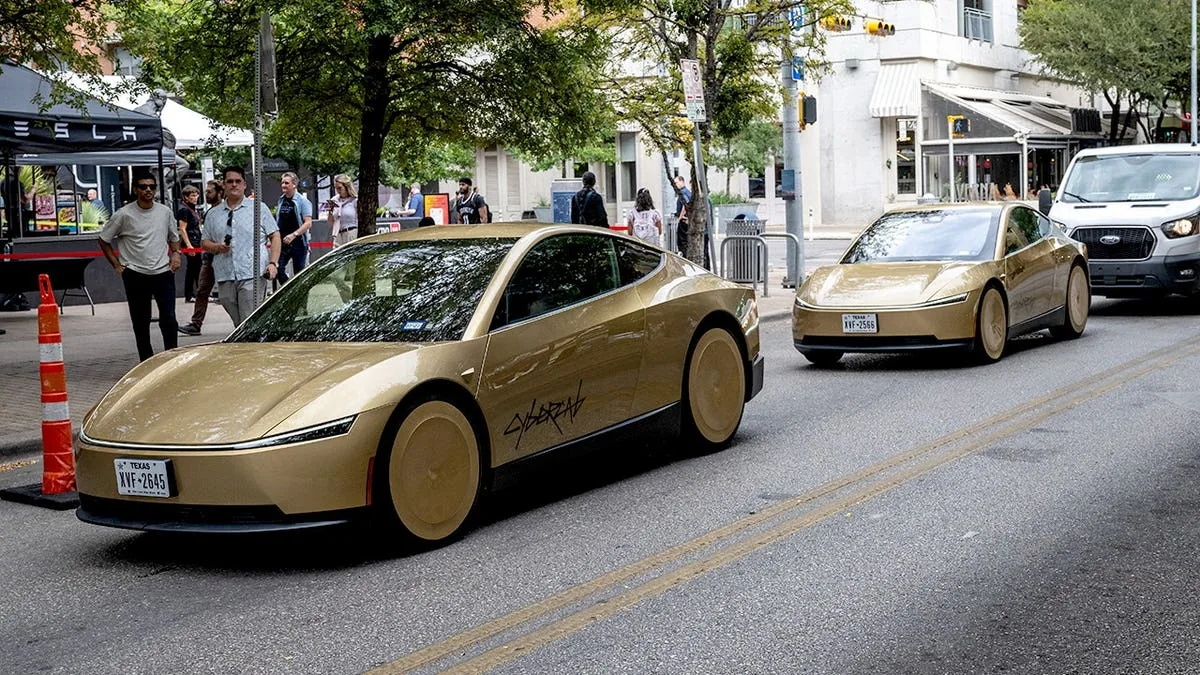
Tesla's Cybercab, a two-seat autonomous vehicle without a steering wheel or pedals, began paid rides in limited areas of Austin, Texas, in early September 2025. As of September 3, Tesla had registered 45 Cybercabs among 420 autonomous vehicles in Texas. Fares for 3-8 mile trips range from $1.50 to $2.00 per mile. The vehicle, priced under $30,000, uses a pure vision system and wireless charging. The U.S. NHTSA has initiated an investigation into its compliance with federal safety standards due to the lack of traditional controls.
 Reference image
Editorial responsibility
- No named human review is recorded for this page.
- Reports are grouped by semantic similarity and deterministic rules. Language models may assist titles, summaries, translation and cross-source analysis; the page reads the event directly, while its address stays stable when the title changes.
- Summary covers the current reports
Cross-source coverage
Common ground
- Both sides agree that operational economics and regulatory frameworks matter more than just building a cheap vehicle.
- Both agree that China has a more coherent national regulatory framework for robotaxis than the U.S.
- Both agree that neither Tesla nor Chinese operators have achieved profitable scale across multiple cities yet.
- Both agree that public trust and safety are critical for robotaxi adoption.
Points of contention
- Eastern Agent argues China's regulatory coherence is a permanent competitive advantage, while Neutral Agent says it's temporary and can be disrupted.
- Eastern Agent sees government subsidies as necessary for building strategic industries, while Neutral Agent views them as masking unproven profitability.
- Eastern Agent claims the U.S. is incapable of building similar infrastructure due to political paralysis, while Neutral Agent believes political failures can be fixed.
- Eastern Agent frames the debate as a governance problem, while Neutral Agent insists it's a logistics and data problem.
Blind spots
- Both sides overlook the consumer adoption curve and how brand trust (Tesla's in the U.S., ecosystem convenience in China) affects demand.
- Neither fully addresses the risk of sudden policy shifts in China, like the crackdown on Didi, which could destabilize robotaxi operations.
- Both ignore the challenge of scaling across diverse cities with different traffic patterns, weather, and local regulations.
- The debate misses the potential for international expansion and how data localization rules could limit Chinese operators globally.
WorldAttention’s read
This debate shows that the robotaxi race isn't just about who builds the cheapest car or collects the most data—it's about who can create a workable system of rules, infrastructure, and trust that allows profitable scaling. China has a head start with a unified national framework and state backing, but that doesn't guarantee long-term success, especially if policies shift or subsidies dry up. The U.S. has a fragmented, messy approach, but it also allows for more flexibility and proprietary advantages like Tesla's vertical integration. Neither side has proven they can operate profitably across multiple cities without government support. The real winner hasn't been decided yet—everyone is still in the early stages, and the outcome will depend on who can solve the hardest problems: building public trust, handling edge cases safely, and creating a business model that works at scale without relying on subsidies.
Reporting timeline
Tesla Cybercab Enters Paid Service as Robotaxi Industry Scrutinizes Unit Economics
This analysis from Chinese media outlet Titanium Media examines Tesla's entry into the Robotaxi market with its Cybercab, which began paid rides in Austin, Texas in early September 2024. The Cybercab, priced under $30,000, features a minimalist two-seat design without steering wheel or pedals, using Tesla's pure vision system and wireless charging. The article compares Tesla's approach with Chinese competitors Baidu's Apollo Go, Pony.ai, and WeRide, noting that all are now focusing on operational metrics like daily orders, per-vehicle revenue, and unit economics. Pony.ai reports achieving unit economics breakeven in Shenzhen and Guangzhou, with one remote operator now managing 30 vehicles. Industry experts quoted note that scaling Robotaxi operations requires solving not just vehicle costs but also charging, cleaning, maintenance, and remote monitoring. The article also discusses regulatory challenges, as US safety standards require steering wheels, and the need to manage impacts on traditional taxi and ride-hailing drivers. Tesla plans to sell Cybercabs to buyers who share revenue from fleet operations, though final terms remain unannounced.
Read sourceTesla's Cybercab Enters Robotaxi Race, But Low Cost Is Only the First Hurdle
This analysis examines Tesla's entry into the Robotaxi market with its Cybercab, which began paid service in Austin, Texas in early September 2025. The vehicle, priced under $30,000, features two seats, no steering wheel or pedals, and uses a pure vision system with eight cameras. It employs wireless charging and a new 'Unboxed' manufacturing process to reduce costs. However, the article argues that low vehicle cost is only the first challenge. It compares Tesla's approach to competitors like Baidu's Apollo Go, Pony.ai, and WeRide, which are already operating in Chinese cities. The analysis highlights that operational costs—including remote monitoring, ground maintenance, charging, and insurance—are equally important. Pony.ai reports achieving unit economic breakeven in Guangzhou and Shenzhen with a remote operator-to-vehicle ratio of 1:30. The article notes that scaling Robotaxi fleets requires solving regulatory hurdles, as Tesla must prove its driverless vehicle meets US federal safety standards. It also addresses the social impact on traditional taxi and ride-hailing drivers. The piece concludes that while technology is advancing, widespread Robotaxi deployment depends on operational efficiency, regulatory approval, and managing the transition for existing transportation workers.
Read sourceTesla's Cybercab Enters Paid Service in Austin as Robotaxi Industry Scales Up
Tesla's Cybercab, a two-seat autonomous vehicle without a steering wheel or pedals, began paid rides in Austin, Texas, in early September 2025, with 45 vehicles operating in limited areas at $1.5-$2 per mile. The vehicle, costing under $30,000, uses a pure vision system and wireless charging to reduce operational costs. Meanwhile, Chinese competitors like Baidu's Apollo Go, Pony.ai, and WeRide have expanded paid services, with Pony.ai achieving per-vehicle breakeven in Guangzhou and Shenzhen. The article notes that scaling Robotaxi fleets requires managing operational costs (charging, cleaning, remote monitoring) and regulatory hurdles. Tesla faces U.S. safety standard challenges due to the lack of traditional controls. Industry experts cited warn that large-scale deployment depends on vehicle utilization, human-to-vehicle ratios, and adapting to local regulations and labor markets.
Read sourceShow 2 older updatesHide older updates
Tesla's Cybercab Enters Robotaxi Competition, But Industry Faces High Operational Costs
Tesla's Cybercab, a two-seat autonomous vehicle without a steering wheel or pedals, has begun paid rides in Austin, Texas, as of early September 2024. The vehicle, priced under $30,000, uses a pure vision system and wireless charging to reduce costs. However, the article argues that low vehicle cost is only the first hurdle. Robotaxi operators like Baidu's Apollo Go, Pony.ai, and WeRide are already running services in Chinese cities and focusing on unit economics. Pony.ai reported achieving unit economic breakeven in Shenzhen in early 2024, with a daily net income of 338 yuan per vehicle. The industry is now calculating detailed operational costs, including remote monitoring, ground maintenance, charging, and insurance. A key challenge is scaling fleets while maintaining efficiency, as human-to-vehicle ratios and vehicle utilization rates directly impact profitability. The article also notes regulatory hurdles for Cybercab in the US, as it lacks traditional controls, and discusses the shift in liability from driver to manufacturer at Level 4 autonomy. Experts quoted include executives from Pony.ai, New Stone, and Tianjin Bool Technology.
Tesla's Cybercab Enters Paid Service in Austin as Robotaxi Industry Shifts to Operational Economics
Tesla's Cybercab has begun paid passenger service in limited areas of Austin, Texas, with 45 vehicles registered as of September 3. The two-seat, steering-wheel-less vehicle uses a pure vision system and a new Unboxed manufacturing process to achieve a target cost under $30,000. Huaxing Securities estimates current fares at $1.5-2 per mile for 3-8 mile trips. The article compares Cybercab with Chinese competitors Baidu's RT6, Pony.ai, and WeRide, noting that the industry focus has shifted from autonomous driving technology to operational economics. Pony.ai reported achieving unit economic breakeven in Guangzhou and Shenzhen, with a remote assistant-to-vehicle ratio of 1:30. Key operational challenges include vehicle utilization rates, human oversight costs, and regulatory hurdles. The U.S. NHTSA has initiated an investigation into Cybercab's compliance with federal safety standards due to its lack of traditional controls. The article also discusses liability shifts from driver to manufacturer at L4 autonomy, and the need for data recording systems akin to 'black boxes' for accident reconstruction.
Read source