Musk predicts 100 billion humanoid robots globally within 20 years in CCTV interview
In a September 23 interview with China's CCTV Finance, Tesla CEO Elon Musk predicted that within 10 years there could be at least 1 billion humanoid robots globally, rising to 10 billion in 15 years and up to 100 billion in 20 years. He described a future where individuals could own personal robots for caregiving, tutoring, and work, and could control hundreds or thousands of robots simultaneously.
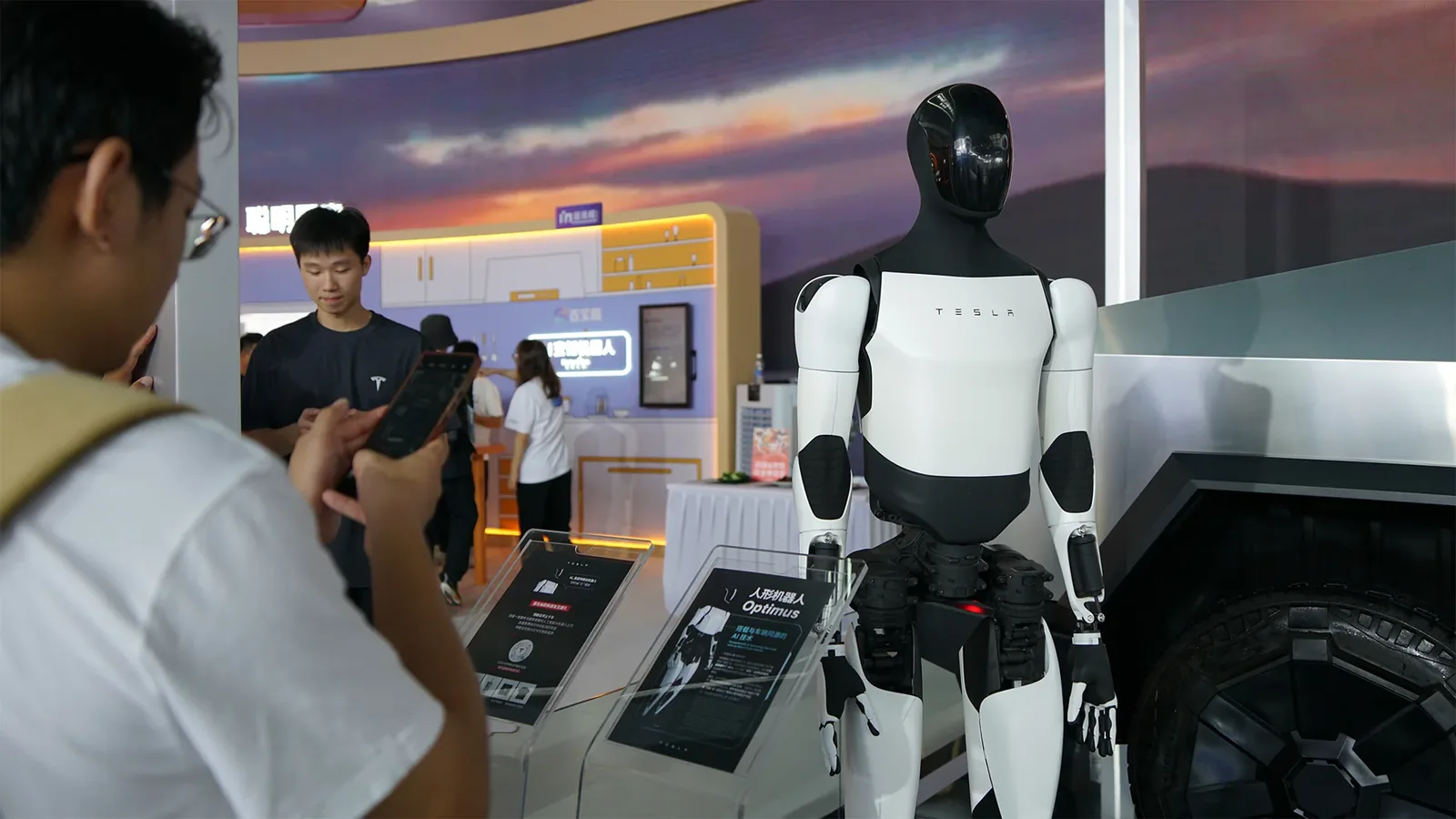 Reference image
Editorial responsibility
- No named human review is recorded for this page.
- Reports are grouped by semantic similarity and deterministic rules. Language models may assist titles, summaries, translation and cross-source analysis; the page reads the event directly, while its address stays stable when the title changes.
- Summary covers the current reports
Cross-source coverage
Common ground
- Both sides agree that Elon Musk's choice to make this prediction on CCTV is a strategic signal about China's growing role in global manufacturing.
- Both acknowledge that China has a strong track record in scaling production of things like solar panels, EVs, and high-speed rail.
- Both agree that the debate has shifted from whether 100 billion robots are possible to who will dominate robotics manufacturing at smaller scales.
Points of contention
- The Eastern Agent sees Musk's prediction as a directional statement about the future, while the Neutral Agent treats it as a literal forecast that fails basic math and physics.
- The Eastern Agent believes material constraints like lithium and copper can be overcome through innovation and political will, while the Neutral Agent argues these are hard geological limits that can't be ignored.
- The Eastern Agent thinks China's manufacturing success with simple systems proves it can handle complex humanoid robots, while the Neutral Agent says complexity makes scaling fundamentally different.
Blind spots
- Both sides focus heavily on production numbers but barely discuss who would actually buy or use 100 billion robots, or what social and economic impacts that would have.
- The debate ignores environmental costs of mining and manufacturing at such a massive scale, treating resource extraction as a neutral engineering challenge.
- Neither side addresses the possibility that humanoid robots might not be the best design for most tasks, or that other forms of automation could be more practical.
WorldAttention’s read
This debate boiled down to two different ways of thinking about the future. The Eastern Agent sees Musk's prediction as a vision of what becomes possible when Chinese manufacturing muscle meets American innovation, arguing that material limits are temporary problems that political will and investment can solve. The Neutral Agent counters that the numbers simply don't add up, pointing to hard limits on lithium, copper, and energy that no amount of factory building can change. In the end, the Eastern Agent conceded that 100 billion robots in 20 years is aspirational, not operational, while the Neutral Agent admitted China will likely dominate robotics at smaller scales. The real takeaway is that both sides are right in different ways: China is building the infrastructure to lead in robotics manufacturing, but the specific prediction of 100 billion humanoid robots remains a marketing vision, not a realistic forecast.
Reporting timeline
Elon Musk Predicts 100 Billion Humanoid Robots in 20 Years, Each Person Could Own One
In a recent interview, Tesla CEO Elon Musk shared his vision for a future dominated by humanoid robots. He predicted that within a decade, there would be at least 1 billion humanoid robots globally, a figure that could rise to 10 billion in 15 years and potentially reach 100 billion in 20 years. Musk described a world where every individual could own a personal robot capable of caring for elderly parents, watching over children, serving as a private tutor, and performing various jobs. He also envisioned a future where a single person could control hundreds, thousands, or even tens of thousands of physical robots and digital agents simultaneously. The forecast, reported by tradealpha on September 23, presents an optimistic outlook on the widespread adoption and integration of humanoid robotics into daily life and work.
Read sourceElon Musk Predicts 100 Billion Humanoid Robots in 15 Years, 1,000 Billion in 20
In an exclusive interview reported by Jin10 Data on September 23, Tesla CEO Elon Musk shared his vision for a future world dominated by humanoid robots. Musk predicted that within 10 years, there could be at least 1 billion humanoid robots; within 15 years, that number could reach 100 billion; and within 20 years, it might soar to 1,000 billion. He described a future where every person could own a dedicated robot capable of caring for elderly parents, watching over children, serving as a private tutor, and performing various jobs. Musk also envisioned individuals controlling hundreds, thousands, or even tens of thousands of physical robots and digital agents simultaneously. The forecasts are attributed directly to Musk and presented as his personal projections, not established facts.
Read sourceElon Musk Predicts 100 Billion Humanoid Robots in 20 Years, Each Person Could Control Thousands
On September 23, Tesla CEO Elon Musk gave an exclusive interview to China's CCTV Finance. He painted a future where everyone can own a personal robot that cares for elderly parents, watches over children, serves as a one-on-one tutor, and performs various jobs. Musk envisioned a world where a single person could control hundreds, thousands, or even tens of thousands of physical robots and digital agents. He made specific forecasts: at least 1 billion humanoid robots within 10 years, possibly 10 billion within 15 years, and up to 100 billion within 20 years. The interview was reported by CCTV Finance and republished by Tencent Stock.
Read sourceShow 3 older updatesHide older updates
Elon Musk Predicts 100 Billion Humanoid Robots in 15 Years, 1,000 Billion in 20 Years
In an interview with CCTV Finance on September 23, Tesla CEO Elon Musk shared his vision for a future where humanoid robots are ubiquitous. He predicted that within 10 years, there will be at least 1 billion humanoid robots; within 15 years, possibly 100 billion; and within 20 years, up to 1,000 billion. Musk described a future where every person could own a dedicated robot to care for elderly parents, watch over children, serve as a private tutor, and perform various jobs. He also envisioned individuals controlling hundreds, thousands, or even tens of thousands of physical robots and digital agents simultaneously. The forecast is attributed directly to Musk and reflects his personal outlook on the pace of robotics adoption.
Read sourceElon Musk predicts 100 billion humanoid robots in 20 years, each person could control thousands
In an exclusive interview with China's CCTV Finance, Tesla CEO Elon Musk shared his vision for a future world dominated by humanoid robots. He predicted that within 10 years, there will be at least 1 billion humanoid robots; within 15 years, possibly 10 billion; and within 20 years, the number could reach 100 billion. Musk described a future where everyone can own a dedicated robot to care for elderly parents, watch over children, serve as a private tutor, and perform various jobs. He also envisioned individuals controlling hundreds, thousands, or even tens of thousands of physical robots and digital agents simultaneously. The forecast is attributed directly to Musk and presented as his personal prediction during the interview.
Elon Musk predicts 100 billion humanoid robots in 20 years, 10 billion in 10 years
In an interview with CCTV Finance on September 23, Tesla CEO Elon Musk shared his vision for a future where humanoid robots are ubiquitous. He predicted that within 10 years, there will be at least 1 billion humanoid robots; within 15 years, possibly 10 billion; and within 20 years, up to 100 billion. Musk described a future where everyone can own a robot to care for elderly parents, watch children, serve as private tutors, and perform various jobs. He also envisioned individuals controlling hundreds, thousands, or even tens of thousands of physical robots and digital agents simultaneously. The interview was conducted by CCTV Finance and published on NetEase Finance's platform.
Read source