Swiss voters overwhelmingly reject stricter neutrality rules in referendum
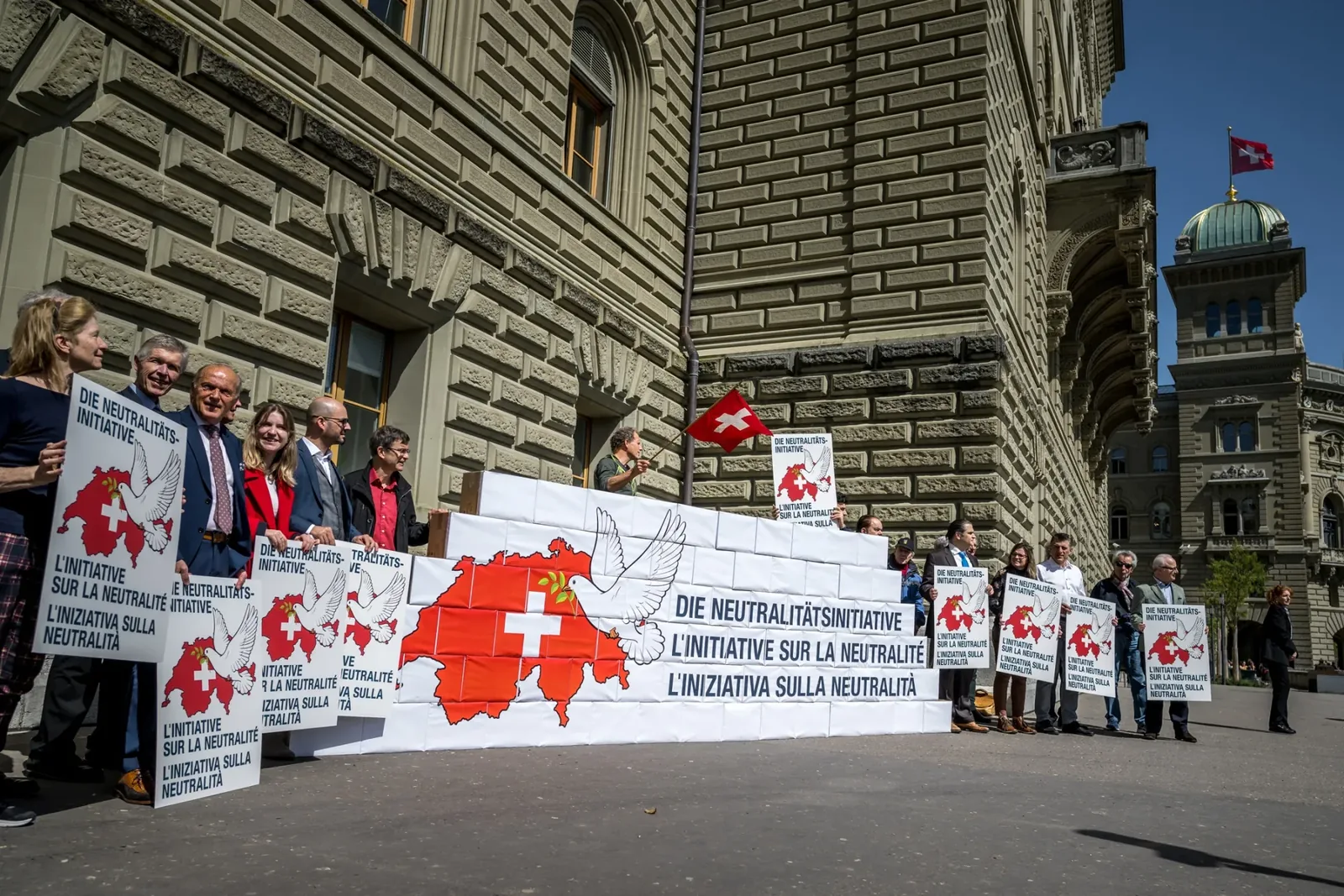
On September 27, Swiss voters overwhelmingly rejected a proposal to enshrine stricter neutrality rules in the constitution, with 70.15% voting against and all 26 cantons opposing the measure. The initiative, backed by the right-wing Swiss People's Party, would have banned military alliances and sanctions without UN approval. The outcome preserves Switzerland's flexible neutrality policy, allowing continued cooperation with NATO and sanctions on Russia.
 Reference image
Editorial responsibility
- No named human review is recorded for this page.
- Reports are grouped by semantic similarity and deterministic rules. Language models may assist titles, summaries, translation and cross-source analysis; the page reads the event directly, while its address stays stable when the title changes.
- Summary covers the current reports
Cross-source coverage
Common ground
- Both agree the Swiss vote was a clear rejection of the SVP's proposed constitutional amendment, with 70% voting against it across all 26 cantons.
- Both recognize the business community played a decisive role, as Swiss banks and manufacturers feared losing access to EU markets.
- Both acknowledge that requiring UN Security Council approval for sanctions would effectively give Russia a veto over Swiss foreign policy.
- Both agree that Switzerland's current flexible approach to neutrality—following EU sanctions on Russia while staying out of NATO—is a pragmatic balancing act.
Points of contention
- Western Agent sees the vote as a moral choice about Russia's invasion of Ukraine, while Neutral Agent insists it was a procedural vote on a poorly drafted amendment, not a foreign policy statement.
- Western Agent argues the vote sends a clear signal to other neutral countries like Austria and Ireland, while Neutral Agent says each country has its own dynamics and no policy changes resulted from this referendum.
- Western Agent views the 47% turnout as a warning sign of public disengagement from foreign policy, while Neutral Agent says it's normal for Swiss foreign policy referendums and not a cause for concern.
- Western Agent frames the alignment of business interests and moral principle as a model for durable policy, while Neutral Agent calls it a lucky coincidence that won't hold in future crises.
Blind spots
- Neither side fully addresses how Switzerland would handle a future crisis where its economic interests conflict with European security, such as sanctions on a major trading partner.
- Both overlook the role of Swiss civil society and smaller political parties in shaping the debate, focusing only on the SVP and business community.
- Neither considers how the vote might affect Switzerland's relationship with non-European powers like China, which also holds a UN Security Council veto.
WorldAttention’s read
This debate shows that the Swiss referendum was a clear rejection of a rigid, constitutionally locked neutrality that would have paralyzed foreign policy. Both sides agree the business community drove the outcome, but they disagree sharply on what the vote means. Western Agent sees it as a moral stand against Russia and a signal to other neutral countries, while Neutral Agent views it as a pragmatic move to avoid a poorly drafted amendment. The real blind spot is how Switzerland will handle future crises where economic self-interest and European security don't align. Ultimately, the vote preserved Switzerland's flexible neutrality, but the deeper question of what that neutrality means in a changing world remains unresolved.
Reporting timeline
Swiss voters overwhelmingly reject stricter neutrality law in referendum
On September 27, Swiss voters overwhelmingly rejected a proposal to enshrine stricter neutrality rules in the constitution, with 70.15% voting against and all 26 cantons opposing the measure. The initiative, backed by the right-wing Swiss People's Party, sought to ban Switzerland from joining military alliances, participating in foreign conflicts, or imposing sanctions without UN authorization. Opponents, including the Swiss government and mainstream parties, argued the measure would limit Switzerland's ability to cooperate with NATO and respond to geopolitical challenges, potentially isolating the country. The result reflects public acceptance of a flexible neutrality that allows the government to adapt to changing international circumstances, particularly regarding sanctions on Russia following the Ukraine conflict. Analysts note the vote highlights Switzerland's dilemma: balancing Western security cooperation with maintaining its neutral mediator role. Voter turnout was low at 47%, suggesting public fatigue with the neutrality debate. Swiss Foreign Minister Ignazio Cassis stated the outcome does not reject neutrality itself but affirms its flexible application to safeguard national security and independence.
Read sourceSwiss voters reject referendum to enshrine stricter neutrality rules in constitution
On September 27, Swiss voters overwhelmingly rejected a referendum proposal that would have imposed stricter neutrality principles, including a ban on economic sanctions and cooperation with NATO. According to the Swiss Federal Statistical Office, all cantons and approximately 70% of voters opposed writing a strict definition of neutrality into the constitution. The proposal would have required Switzerland to refrain from joining or supporting any military or defense alliance unless attacked, and to participate in sanctions only with UN approval. Switzerland has maintained a policy of neutrality since 1815, remaining neutral in both World Wars, but the government's implementation of this policy has not been clearly defined. The rejection indicates public support for the current flexible approach, which has seen some loosening amid changing international dynamics.
Read sourceSwiss voters reject stricter neutrality rules, safeguarding sanctions on Russia
Swiss voters have decisively rejected a proposal to harden the country's neutrality principle in a referendum. The initiative, backed by the right-wing populist Swiss People's Party (SVP), would have imposed a stricter interpretation of neutrality, potentially curbing cooperation with NATO and preventing Switzerland from adopting sanctions aligned with the European Union, such as those imposed on Russia following its invasion of Ukraine. The outcome safeguards Switzerland's current policy, which allows for selective sanctions and military cooperation with NATO while maintaining its traditional neutral stance. Multiple news outlets, including Politico, The Guardian, BBC, PBS, and SWI swissinfo.ch, reported the defeat of the neutrality proposal, alongside a separate food security initiative that also suffered a hefty defeat. The result is seen as a victory for the Swiss government and pro-European factions who argued that stricter neutrality would isolate Switzerland and harm its international relations.
Show 1 older updatesHide older updates
Swiss voters to decide on stricter neutrality policy in Sunday referendum
Swiss voters will decide on Sunday whether to enshrine a stricter definition of the country's centuries-old neutrality policy in the constitution, in a referendum that could limit Bern's ability to deepen security and defense cooperation with European neighbors. The 'neutrality initiative,' backed by billionaire former minister Christoph Blocher and the right-wing Swiss People's Party, would prohibit Switzerland from cooperating with military alliances unless attacked, and from imposing sanctions unless approved by the United Nations. The initiative was triggered by controversy over Bern's decision to adopt EU sanctions against Russia after the 2022 Ukraine invasion. A poll by GFS Bern for public broadcaster SRG shows 63% of voters oppose the proposal and 34% support it. The debate has revived a long-standing discussion about the historical flexibility of Swiss neutrality, which has been interpreted pragmatically over centuries to protect the multilingual, multi-religious confederation. The government argues a rigid constitutional definition would eliminate the flexibility that allowed Switzerland to adapt its neutrality to changing circumstances, including joining NATO's Partnership for Peace and participating in international peacekeeping missions.
Read source