Swiss Upper House Votes to Force UBS to Hold 90% Equity Capital for Overseas Units
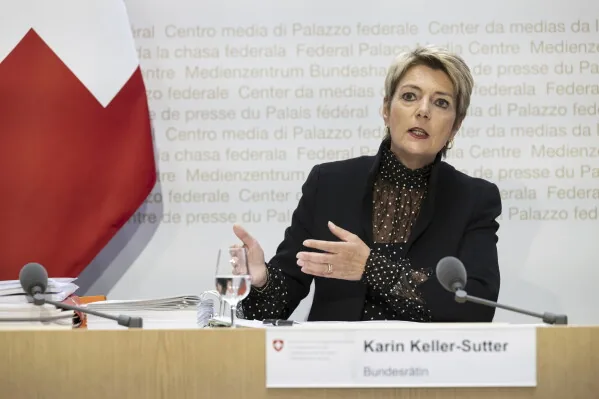
The Swiss Council of States (upper house) voted 29-16 to require UBS to cover 90% of its foreign subsidiaries' value with high-quality CET1 equity capital, a setback for the bank. The amendment to a government reform bill is a partial victory for Finance Minister Karin Keller-Sutter, who has pushed for stricter capital rules since the 2023 Credit Suisse collapse. UBS had opposed the plan, favoring a hybrid of equity and convertible debt. The bill now moves to the lower house.
 Reference image
Editorial responsibility
- No named human review is recorded for this page.
- Reports are grouped by semantic similarity and deterministic rules. Language models may assist titles, summaries, translation and cross-source analysis; the page reads the event directly, while its address stays stable when the title changes.
- Summary covers the current reports
Cross-source coverage
Common ground
- The 90% equity rule is a compromise that doesn't fully solve the too-big-to-fail problem.
- UBS's balance sheet is dangerously large compared to Switzerland's economy, making a bailout likely if it fails.
- The Credit Suisse collapse showed that Western financial regulation has serious flaws.
- There is a real trade-off between bank safety and economic growth.
Points of contention
- Whether the Swiss vote is a genuine democratic victory or just a symbolic gesture that doesn't change much.
- Whether China's financial system is more stable or just hides problems through state control.
- Whether the real power lies with Swiss lawmakers or with the US Federal Reserve and global dollar system.
- Whether Western banks prioritize profits over public good, or whether they can adapt through democratic processes.
Blind spots
- The debate ignored how UBS's risk is tied to the global dollar system, not just Switzerland.
- No one discussed the opportunity cost of holding more equity—less lending to businesses and innovation.
- The geopolitical arguments overshadowed the actual mechanics of the regulation and its real-world impact.
- Both sides avoided the uncomfortable fact that a small country can't fully protect itself from a bank twice its GDP.
WorldAttention’s read
The Swiss parliament's vote for a 90% equity rule is a modest step forward, but it doesn't fix the core problem: UBS is still too big for Switzerland to rescue. The debate got stuck in a fight between those who see it as a democratic win and those who see it as a sign of Western decline, while missing the bigger picture—that the real safety net for UBS is the US Federal Reserve, not Swiss law. In the end, the rule is better than nothing, but it's a compromise that leaves the too-big-to-fail risk alive, and the trade-off between safety and growth remains real.
Reporting timeline
Swiss Parliament Votes to Force UBS to Hold Billions More in Capital for Overseas Units
UBS Group suffered a setback on Wednesday as Swiss lawmakers voted 29-16 in the upper house to support a plan that could force the global wealth management giant to hold tens of billions of dollars in additional capital. The amendment to a government regulatory reform bill requires UBS to cover up to 90% of the value of its overseas subsidiaries with high-quality equity capital. This is a slight adjustment from the government's original 100% coverage proposal and represents a partial victory for Swiss Finance Minister Karin Keller-Sutter, who has pushed for two years to raise capital levels at Switzerland's largest bank to ensure its foreign operations can be safely sold during a crisis. UBS CEO Sergio Ermotti and Chairman Colm Kelleher had opposed the 90% plan, instead supporting an alternative that would significantly increase the use of convertible debt to achieve the same goal.
Read sourceSwiss lawmakers vote to raise capital requirements for UBS, dealing setback to bank
UBS Group faced a setback on Wednesday as Swiss lawmakers voted 29-16 in favor of a regulatory reform amendment that could force the global wealth management giant to hold tens of billions of dollars in additional capital. The upper house of the Swiss parliament backed a plan requiring UBS to cover up to 90% of the value of its foreign subsidiaries with high-quality equity capital. This is a slight adjustment from the government's original 100% coverage proposal and represents a partial victory for Swiss Finance Minister Karin Keller-Sutter, who has pushed for higher capital levels at Switzerland's largest bank to ensure its overseas operations can be safely sold during a crisis. UBS CEO Sergio Ermotti and Chairman Colm Kelleher had opposed the 90% plan, instead supporting an alternative that would significantly increase the use of convertible debt to achieve the same goal.
Read sourceSwiss lawmakers vote to raise capital requirements, dealing setback to UBS
UBS Group suffered a setback on Wednesday as Swiss lawmakers voted overwhelmingly in favor of a proposal that could ultimately force the global wealth management giant to hold tens of billions of dollars in additional capital. The upper house of the Swiss parliament passed an amendment to the government's regulatory reform bill by a vote of 29 to 16, requiring UBS to cover up to 90% of the value of its foreign subsidiaries with high-quality equity capital. This is a slight adjustment from the government's original 100% coverage plan and represents a partial victory for Swiss Finance Minister Karin Keller-Sutter, who has pushed for two years to raise capital levels at Switzerland's largest bank to ensure its overseas operations can be safely sold off during a crisis. UBS CEO Sergio Ermotti and Chairman Colm Kelleher had opposed the 90% plan, instead supporting an alternative proposal that would significantly increase the use of convertible debt to achieve the same goal.
Show 2 older updatesHide older updates
Swiss upper house passes 90% CET1 capital plan for UBS overseas subsidiaries, dealing bank a setback
The Swiss Council of States (upper house) voted 29-16 to approve a compromise requiring UBS to back 90% of its overseas subsidiaries' value with highest-quality CET1 capital, a measure the bank opposed. The vote followed a signal of openness from Finance Minister Karin Keller-Sutter, who argued the funds should strengthen the Swiss parent bank rather than benefit shareholders via dividends or buybacks. UBS had favored a mixed plan using 50% equity and 50% AT1 convertible bonds, which it viewed as less costly. The government's original proposal demanded 100% equity backing, which could have forced UBS to inject up to $20 billion in additional CET1 capital. The bill now moves to the National Council (lower house), with a final decision not expected before 2027 and potentially subject to a public referendum. UBS CEO Sergio Ermotti and Chairman Colm Kelleher had publicly warned lawmakers against the government's plan. The vote follows the 2023 collapse of Credit Suisse, which prompted Swiss efforts to bolster its sole global bank's crisis resilience.
Read sourceSwiss Senate Votes to Raise Capital Requirements for UBS, Dealing Setback to Bank
The Swiss upper house of parliament voted 29 to 16 in favor of an amendment to a government regulatory reform bill, requiring UBS to cover up to 90% of the value of its foreign subsidiaries with high-quality equity capital. This represents a slight adjustment from the government's original proposal of 100% coverage. The vote is seen as a partial victory for Swiss Finance Minister Karin Keller-Sutter, who has been pushing for stricter capital requirements for Switzerland's largest bank over the past two years. The decision marks a setback for UBS, which had opposed the higher capital demands. The amendment still needs further legislative approval before becoming law.
Read source