Starbucks explores sale of majority stake in Japan business valued at $3 billion
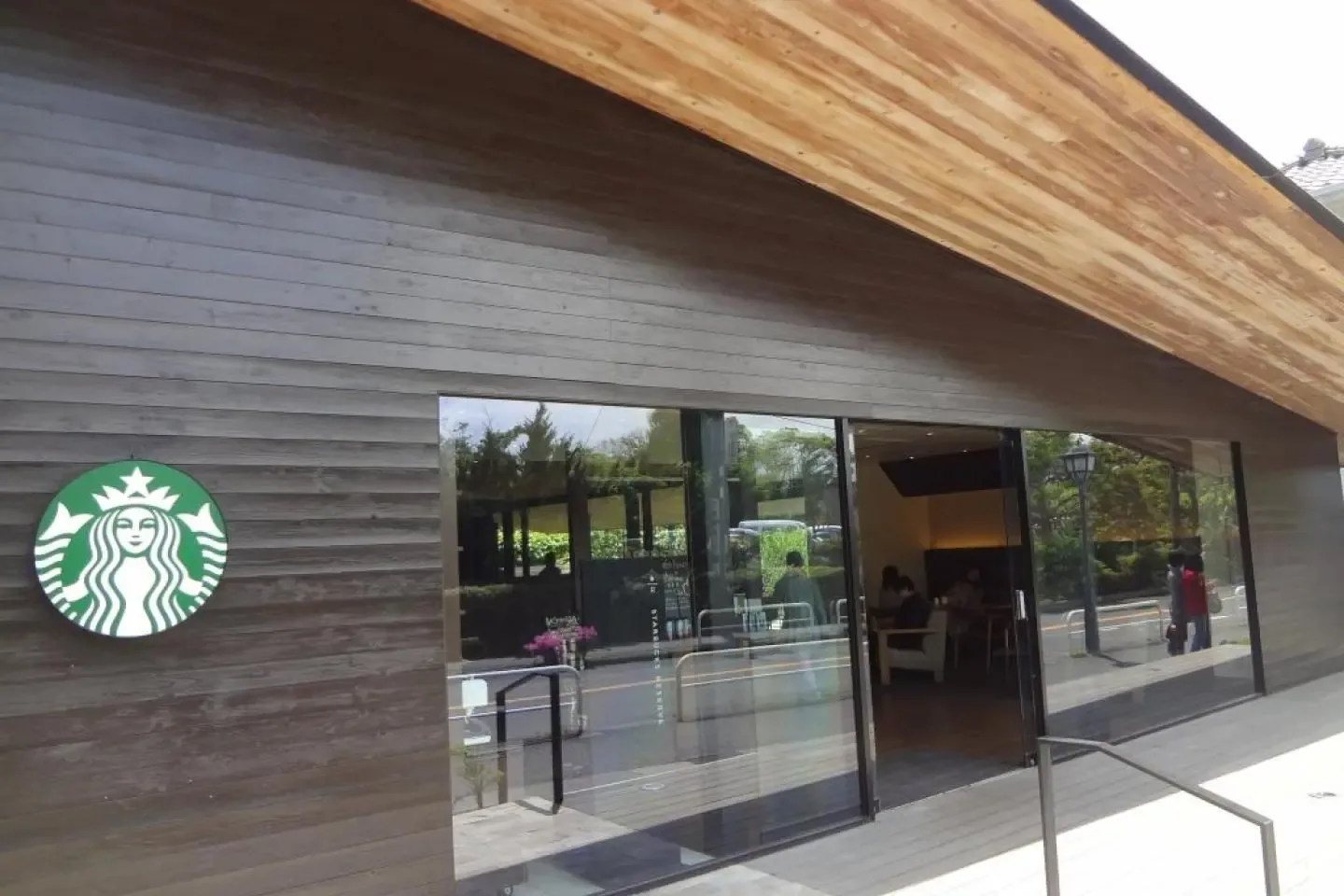
Starbucks is considering selling a majority stake in its Japan operations, valued at approximately $3 billion, according to Reuters sources. The move follows the November 2025 sale of a 60% stake in its China business to Boyu Capital. The potential divestiture is part of CEO Brian Niccol's strategy to shift to an asset-light model and reinvest in the core North American market. Sources caution the evaluation is ongoing and no deal has been finalized.
 Illustration
Editorial responsibility
- No named human review is recorded for this page.
- Reports are grouped by semantic similarity and deterministic rules. Language models may assist titles, summaries, translation and cross-source analysis; the page reads the event directly, while its address stays stable when the title changes.
- Summary covers the current reports
Cross-source coverage
Common ground
- Starbucks is selling its Japan stake primarily because North America is bleeding cash, with net income nearly halved and margins dropping sharply.
- The sale will likely lead to changes in store operations and labor conditions under private equity ownership, potentially harming the 'third place' experience.
- There is a broader trend of Western brands moving toward local partnerships and joint ventures in Asian markets, rather than maintaining full direct ownership.
Points of contention
- Neutral Agent argues this is a mundane cash-raising move driven by a balance sheet emergency, while Regional and Eastern Agents see it as a sign of deeper structural or geopolitical shifts.
- Regional Agent calls the sale a 'surrender' to the limits of centralized control, but Eastern Agent frames it as a strategic 'adaptation' to a multipolar world.
- Eastern Agent claims the balance sheet crisis itself is a symptom of failing American exceptionalism, but Neutral Agent insists it's just a cyclical downturn in a mature market.
Blind spots
- All participants underweight the real-world impact on Japanese workers and communities when a private equity firm takes over, focusing more on corporate strategy or geopolitics.
- The debate largely ignores how consumer behavior in Japan might change under local ownership, assuming the brand stays strong without examining local coffee trends in depth.
- No one fully addresses whether the $3 billion valuation—at 1.6x revenue with no control premium—undermines claims of a 'victory' for local control or economic sovereignty.
WorldAttention’s read
Starbucks is selling its Japan business for $3 billion because its North American operations are in a cash crisis, not because of a grand geopolitical shift. While this move reflects a real trend of Western brands moving toward local partnerships in Asia, the sale is a pragmatic fire sale at a fair price, not a victory for economic sovereignty. The 'third place' experience will likely suffer under private equity ownership focused on profits, but the immediate cause is a balance sheet emergency, not a structural decline of Western capitalism. The debate shows how easy it is to project grand narratives onto a simple corporate decision, but the human consequences for workers and communities are what truly matter.
Reporting timeline
Starbucks Explores Sale of Japan Business Majority Stake in Strategic Shift to Asset-Light Model
According to a Reuters report cited by NetEase Finance, Starbucks is exploring the sale of a majority stake in its Japan business, with a potential valuation of approximately $30 billion (about 200 billion yuan). The formal sale process could begin as early as the fourth quarter of this year, attracting interest from global and Japanese buyout funds. This follows Starbucks' sale of a 60% stake in its China business to Boyu Capital in November 2025 for $4 billion. The article analyzes Starbucks' strategic pivot under CEO Brian Niccol, who aims to 'return Starbucks to its roots' by reinvesting in the core North American market and transforming international operations into a lighter asset model focused on licensing fees. The shift marks a reversal from Starbucks' long-standing global direct-store ownership strategy, which was previously seen as essential for maintaining brand consistency and the 'third place' experience. The article notes that after the China sale, Starbucks' international division operating margin rose from 13.6% to 19.1% in the first quarter post-split, demonstrating the financial rationale for the strategy. The author questions whether this transition to a licensing model can balance local adaptation with brand consistency.
Read sourceStarbucks Explores Sale of Japan Business Majority Stake in Global Strategy Shift
Starbucks is reportedly exploring the sale of a majority stake in its Japan business, valued at approximately $30 billion, according to Reuters. This follows the sale of 60% of its China business in November 2025 to Boyu Capital for $4 billion. The moves represent a dramatic reversal of Starbucks' long-standing global direct ownership model, under which it controlled store experience and brand consistency. New CEO Brian Niccol, who took over in September 2024, is prioritizing a 'return to Starbucks' strategy focused on revitalizing the core North American market, which contributes over 70% of revenue and profit. By selling international operations and shifting to a licensing model, Starbucks aims to reduce capital intensity and improve profit margins. The article notes that after the China sale, the international division's operating margin rose from 13.6% to 19.1% despite a revenue drop. The strategy relies on Starbucks' strong brand equity to maintain consistency under local operators, though questions remain about balancing localization with brand uniformity.
Read sourceStarbucks considers selling majority stake in Japan business valued at $3 billion
According to a Reuters report on September 16, 2026, citing sources, Starbucks is considering selling a majority stake in its Japan operations, with the target valued at approximately $3 billion (200 billion yuan). This would be the coffee giant's largest overseas direct market. The report follows earlier Bloomberg reporting in June 2026 that Starbucks had engaged investment banks to review strategic options for its Japan business. Sources emphasize the process is still in evaluation and no deal has been reached. Starbucks' official response was cautious, neither confirming nor denying the report. The potential sale would mirror the 2025 deal where Starbucks sold a 60% stake in its China business to Boyu Capital. The Japan business, established in 1995 and fully acquired by Starbucks in 2014 for $914 million, has grown from about 1,050 stores to 1,883 stores. The move comes as Starbucks faces financial pressure, with 2025 fiscal year net revenue of $37.2 billion but GAAP operating margin falling 710 basis points to 7.9% and net income nearly halving to $1.857 billion.
Read sourceShow 4 older updatesHide older updates
Starbucks Explores Sale of Majority Stake in Japan Business at $3 Billion Valuation
According to a Reuters report on September 16, 2026, citing sources, Starbucks (SBUX) is considering selling a majority stake in its Japan operations, with an estimated valuation of approximately $3 billion (about 200 billion yuan). The news follows an earlier Bloomberg report in June 2026 that Starbucks had engaged investment banks to review strategic options for the Japan business. The company stated it is 'continuously evaluating the most appropriate business structure,' a response interpreted as cautious. The potential sale would mark a reversal from 2014, when Starbucks fully acquired and privatized its Japanese unit for about $914 million, valuing it at $1.5 billion. Since then, the number of stores has grown from about 1,050 to 1,883 by September 2025. The transaction structure may mirror the 2025 sale of a controlling stake in Starbucks China to Boyu Capital, where Starbucks retained a minority stake and brand licensing rights. The move comes as Starbucks faces financial pressure, with a 2025 fiscal year GAAP operating margin of just 7.9% and net income nearly halved. The company is reportedly seeking to raise cash and optimize its balance sheet under a new CEO's restructuring plan. Sources caution that the evaluation is ongoing and no deal has been finalized.
Starbucks Considers Selling Majority Stake in Japan Business Valued at $3 Billion
According to sources familiar with the matter, Starbucks is considering selling a majority stake in its Japan business. The potential deal is estimated to value the Japanese operations at approximately $3 billion. The report, published by Cailian Press on September 16, cites unnamed sources close to the situation. The move would represent a significant shift in Starbucks' strategy for one of its key international markets. The company has not officially commented on the speculation. The sale of a majority stake could allow Starbucks to reduce its exposure while still maintaining a presence in Japan, a market where it has operated for decades. The final decision and terms of any potential transaction remain uncertain at this stage.
Read sourceStarbucks Considers Selling Majority Stake in Japan Business Valued at $3 Billion
According to a report from TradeAlpha citing Reuters, sources indicate that Starbucks Corporation (SBUX.O) is exploring the sale of a majority stake in its Japan operations. The valuation of the Starbucks Japan business is estimated at approximately $3 billion. The report is based on unnamed sources familiar with the matter, and the consideration is described as preliminary. No further details on potential buyers or a timeline for the sale have been disclosed.
Read sourceStarbucks considers selling majority stake in Japan business valued at $3 billion, sources say
According to Reuters, citing sources, Starbucks (SBUX.O) is considering selling a majority stake in its Japan operations. The valuation of the Japan business is approximately $3 billion. The report, relayed by financial data platform jin10, indicates that the coffee giant is exploring a potential divestiture of its Japanese unit, though the sources did not specify a timeline or potential buyers. The move would represent a significant shift in Starbucks' strategy in one of its key Asian markets, where it has operated for decades through a joint venture. The sources spoke on condition of anonymity as the discussions are private and may not lead to a deal. Starbucks has not publicly commented on the report.