Starbucks to establish global tech hub in Chennai, India, creating 800 jobs
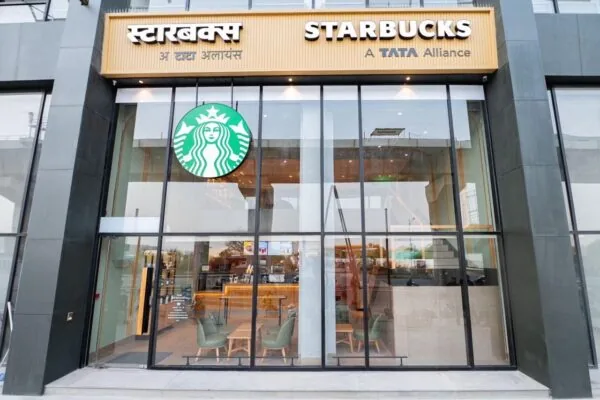
Starbucks has signed an agreement with the Tamil Nadu state government to establish a global capability center in Chennai, India, with plans to hire approximately 800 technology workers. The investment size was not disclosed. Starbucks technology chief Anand Varadarajan cited Chennai's talent pool and infrastructure as key factors. The center will expand Starbucks' presence beyond its existing 500 cafes in India operated through a joint venture with Tata Consumer Products.
 Reference image
Editorial responsibility
- No named human review is recorded for this page.
- Reports are grouped by semantic similarity and deterministic rules. Language models may assist titles, summaries, translation and cross-source analysis; the page reads the event directly, while its address stays stable when the title changes.
- Summary covers the current reports
Cross-source coverage
Common ground
- All agree that the 800 jobs in Chennai are real and pay better than local alternatives, benefiting the workers and their families.
- Everyone acknowledges that Starbucks is primarily motivated by cost savings, not altruism, in setting up the Global Capability Center.
- There is shared recognition that the global economic system has structural inequalities that favor Western corporations and capital owners.
- All three agree that intellectual property ownership remains with Starbucks, not Indian workers, limiting long-term local benefits.
- The panelists concur that Indian policymakers have agency and share responsibility for weak domestic R&D spending and innovation ecosystems.
Points of contention
- The Regional Agent sees the investment as neocolonial extraction, while the Neutral Agent views it as a mutually beneficial transaction.
- The Western Agent argues this is a 'race to the bottom' harming US workers, but the Neutral Agent counters that wages in both countries have risen, not fallen.
- The Regional Agent blames colonial history and IMF rules for India's position, while the Neutral Agent emphasizes India's own policy choices like currency management and low R&D spending.
- The Western Agent insists labor organizing and union rights are the real test of empowerment, but the Neutral Agent notes Indian unions exist and the government suppresses them more than multinationals.
- The Regional Agent demands Indian workers own IP and build global companies, while the Neutral Agent argues this is impractical without foreign investment and market scale.
Blind spots
- None of the panelists adequately address how Indian workers can build bargaining power or organize unions within the current legal and political environment.
- The geopolitical angle of Starbucks using India as a hedge against China's market struggles is mentioned but not deeply explored by all.
- The long-term environmental and social costs of rapid GCC expansion in India, such as urban strain and resource use, are ignored.
- The role of Indian diaspora and returnees in transferring knowledge and building startups is overlooked as a potential pathway to innovation.
WorldAttention’s read
This debate reveals that Starbucks' Chennai GCC is neither pure exploitation nor pure opportunity—it's a complex transaction within a deeply unequal global system. The 800 jobs offer real wage gains and skill development for workers, but the benefits are limited by foreign ownership of intellectual property, weak domestic R&D investment, and a lack of worker organizing power. While the Regional Agent rightly highlights colonial legacies and the need for ownership, the Neutral Agent correctly points to India's own policy failures and the practical value of foreign investment. The Western Agent's focus on labor rights and global standards is crucial, but the data shows wages rising in both countries, complicating the 'race to the bottom' narrative. Ultimately, the panel agrees that true empowerment requires moving beyond wage labor to building Indian-owned innovation and ensuring workers have a voice—but they disagree on whether current GCCs are a step toward that goal or a trap that reinforces dependency.
Reporting timeline
Starbucks to open tech hub in Chennai, India, creating 800 technology jobs
Starbucks has signed an agreement with the Tamil Nadu state government to establish a global capability center in Chennai, India, planning to hire around 800 technology workers. The announcement was made by the state government on Monday, though the investment size was not disclosed. Starbucks technology chief Anand Varadarajan cited Chennai's deep talent pool, lower employee turnover rates, and strong infrastructure as key factors for the location. Chennai already hosts tech centers for firms like Citi, Barclays, and American Express, and accounts for about a tenth of India's global capability center base. This follows a similar agreement by Walgreens earlier in the week. A 2026 report by Nasscom and Zinnov found India leads the world with over 2,100 such centers employing 2.36 million people and generating nearly $100 billion in revenue. Starbucks operates about 500 cafes in India via a joint venture with Tata Consumer Products. The tech hub is a separate expansion. The announcement comes as CEO Brian Niccol declared a completed two-year turnaround, with global comparable store sales rising 7.9% in the fiscal third quarter ended June 28. The company also restructured its China business through a joint venture with Boyu Capital, aiming to expand from 8,000 to 20,000 stores.
Read sourceStarbucks Plans Global Capability Centre in Chennai, India, Reuters Reports
Starbucks (NASDAQ:SBUX) is planning to establish a global capability centre in Chennai, India, with approximately 800 jobs expected to be created during the project's initial phase, Reuters reported on Monday, citing a government source familiar with the plans. Further details about the investment, development timetable and specific functions of the proposed centre were not provided. The project would expand Starbucks' presence in India beyond its existing coffee shop operations. The US coffee chain currently operates approximately 500 cafés in India through a joint venture with Tata Consumer Products. The proposed Chennai facility would add a corporate operations centre to the company's existing retail footprint. The reported plans follow a similar announcement by US pharmacy chain Walgreens, which signed an agreement with the Tamil Nadu state government several days earlier to establish a global capability centre in Chennai. Chennai is already home to technology and business operations centres operated by several multinational companies, including Citi, Barclays and American Express.
Starbucks Plans Global Capability Centre in Chennai, India, Reuters Reports
Starbucks (NASDAQ:SBUX) is planning to establish a global capability centre in Chennai, India, with approximately 800 jobs expected to be created during the project's initial phase, Reuters reported on Monday, citing a government source familiar with the plans. Further details about the investment, development timetable and specific functions of the proposed centre were not provided. The project would expand Starbucks' presence in India beyond its existing coffee shop operations. The US coffee chain currently operates approximately 500 cafés in India through a joint venture with Tata Consumer Products. The proposed Chennai facility would add a corporate operations centre to the company's existing retail footprint. The reported plans follow a similar announcement by US pharmacy chain Walgreens, which signed an agreement with the Tamil Nadu state government several days earlier to establish a global capability centre in Chennai. Chennai is already home to technology and business operations centres operated by several multinational companies, including Citi, Barclays and American Express.
Read sourceShow 2 older updatesHide older updates
Starbucks Plans First Global Capability Center in Chennai, India, Creating 800 Jobs
According to a report by Cailianshe on September 21, Starbucks has announced plans to establish its first global capability center in Chennai, India. The new center is expected to create more than 800 jobs. This move underscores Starbucks' expansion and investment in the Indian market, leveraging local talent for global operations. The announcement highlights the company's commitment to building operational capabilities outside its home market, with Chennai chosen as the location for this strategic hub.
Read sourceStarbucks Plans Global Capability Center in Chennai, India, Creating 800 Jobs
According to a government source, Starbucks plans to establish a Global Capability Center (GCC) in Chennai, India, which will initially create approximately 800 jobs. The center will be set up in the southern Indian city of Chennai (formerly Madras). Starbucks operates around 500 stores in India through a joint venture with Tata Consumer Products. This announcement follows a similar move by Walgreens, which signed an agreement with the Tamil Nadu state government to set up a GCC in the same city. Other multinationals like Citigroup, Barclays, and American Express already have technology centers in Chennai. The report notes that GCCs have evolved beyond low-cost back-office support to handle high-value functions such as finance, software development, and research and development for their parent companies.