Spain Holds First General Strike in 14 Years as Housing Crisis Protests Grip Madrid and Barcelona
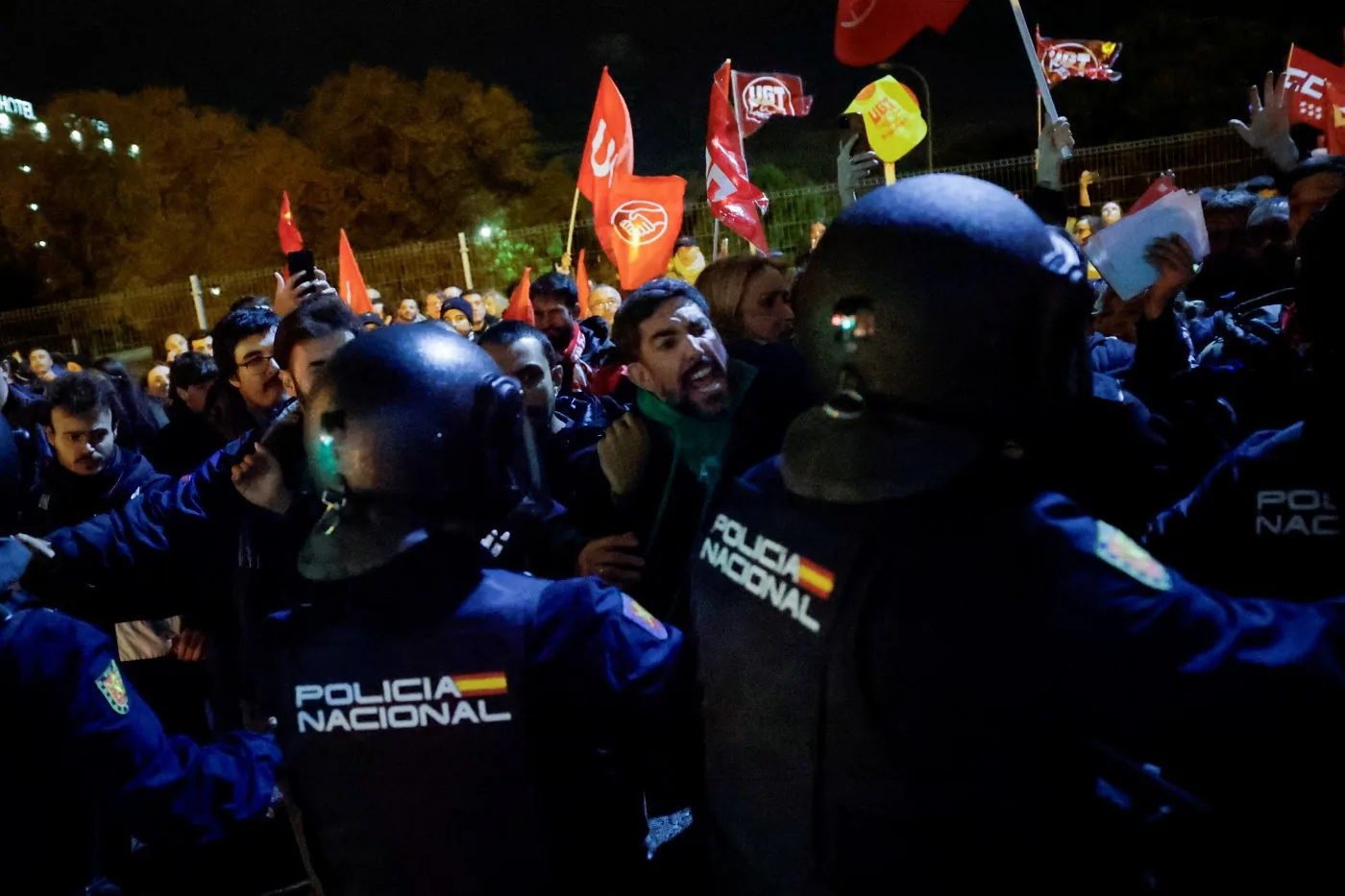
Spain held its first general strike in 14 years on Wednesday, November 11, 2026, called by the UGT and CC OO unions and driven by a tenants' union movement over unaffordable housing and the high cost of living. Millions of workers walked off the job, with about 120,000 marching in Madrid and over 50,000 in Barcelona, where masked men set fires and clashed with police. Transport, ports, factories and schools were disrupted, and dozens were arrested. The strike came ahead of snap elections on 29 November, called after parliament rejected Prime Minister Pedro Sánchez's housing reform.
 Reference image
Editorial responsibility
- No named human review is recorded for this page.
- Reports are grouped by semantic similarity and deterministic rules. Language models may assist titles, summaries, translation and cross-source analysis; the page reads the event directly, while its address stays stable when the title changes.
- Summary covers the current reports
Cross-source coverage
Reporting timeline
Clashes in Barcelona as tens of thousands join Spain's first general strike in 14 years
Tens of thousands of Spaniards joined the country's first general strike in 14 years, called by major unions over housing costs and the high cost of living. About 120,000 demonstrated in Madrid and over 50,000 in Barcelona, where masked men set fires, smashed shop windows, and clashed with police who fired tear gas; dozens were arrested. Transport and public services faced serious disruption. The strike was triggered by anger over unaffordable housing, following the eviction of 87-year-old Maricarmen Abascal, who died weeks later. UGT's Pepe Álvarez called participation "massive," while CC OO's Unai Sordo called turnout "very significant." Prime Minister Pedro Sánchez, who called snap elections for 29 November after parliament rejected his housing reform, encouraged workers to strike; the opposition PP accused him of weaponising the strike for electoral gain. Business association CEOE criticised the action as politically motivated.
Read sourceSpain's first general strike in 14 years over housing crisis draws mass protests
Millions of Spanish workers staged the country's first general strike in 14 years on Wednesday under the motto 'Salaries. Housing. Prices,' protesting housing shortages and high rents. Despite heavy rain, an estimated 120,000 people marched in Madrid and 55,000 in Barcelona, though organizers claimed far larger crowds. Most protests were peaceful, but small groups of youths smashed storefronts and clashed with police in Barcelona. The crisis, symbolized by the eviction and death of 87-year-old Maricarmen Abascal, prompted a snap election set for November 29. Prime Minister Pedro Sanchez's government backed the strike as 'in favor of rights,' while opposition PP leader Alberto Nunez Feijoo called that framing absurd. Spain faces a deficit of about 750,000 homes, and average rent equals 99% of a young person's salary, according to Spain's youth council.
Spain general strike demands affordable housing and higher wages
Spain held its first general strike in 14 years on Wednesday, November 11, 2026, driven by a tenants' union movement rather than the country's major unions. The strike, organized through 1,340 strike committees nationwide, demands affordable housing and higher wages after weeks of protests over tenant protections. Guillermo Dimarco, a 32-year-old museum guard and strike committee member in Collado Villalba, said high rents mean many workers cannot make ends meet, with average prices in his town reaching 14.02 euros per square meter, double 2007 levels. Schools, universities, ports, and factories including Seat and Volkswagen halted operations, while strike pickets blocked roads. The housing issue has become central to Spanish politics: Prime Minister Pedro Sánchez called snap elections for November 29, 2026, after failing to pass rental law reforms, with polls suggesting the conservative PP and far-right Vox could win. Dimarco said the strike aims to put housing at the center of political debate regardless of the election outcome.
Read sourceShow 3 older updatesHide older updates
Spain Holds First General Strike in 14 Years Over Housing and Wages
Spain held its first general strike in 14 years on Wednesday, November 11, 2026, driven by demands for affordable housing and higher wages. The strike was initiated not by major unions but by a tenants' union, following weeks of protests sparked by the forced eviction of an 87-year-old pensioner in Madrid. Some 1,340 strike committees mobilized across the country, distributing over four million leaflets. Industrial participation was high, with meat-processing plants, Seat and Volkswagen factories, and ports halting operations, while schools and universities were largely empty. Strike leader Guillermo Dimarco, a 32-year-old museum guard, said high rents mean many cannot make ends meet, with average prices in his town of Collado Villalba reaching 14.02 euros per square meter, double 2007 levels. The housing issue has become central to Spanish politics; after the government's rental law reform failed, Prime Minister Pedro Sánchez called elections for November 29, 2026, with polls favoring the conservative PP and far-right Vox.
Read sourceSpain hit by first general strike in 14 years over housing and living costs
Spain experienced its first general strike in 14 years on Wednesday, called by the main UGT and CC OO unions over affordable housing and the high cost of living, causing serious disruption to transport and public services. Union leaders Pepe Álvarez and Unai Sordo described participation as massive and very significant, while the Spanish Confederation of Business Organisations called it low and uneven. Traffic was halted on main roads in Madrid and Catalonia, dozens were arrested, and estate agency offices were reportedly attacked. The strike was triggered by anger over soaring rents and the eviction of 87-year-old Maricarmen Abascal, who died weeks later. It comes less than three weeks before parliamentary elections on 29 November. Socialist Prime Minister Pedro Sánchez has supported the strike, while opposition PP leader Alberto Núñez Feijóo called it nonsense and accused the government of weaponising it for electoral gain. Power usage fell 7.5% in early hours, a gauge of strike support.
Read sourceSpain Holds First General Strike in 14 Years Over Housing Crisis
Workers across Spain staged the country's first general strike in 14 years on Wednesday, marching and setting up picket lines in stormy weather to protest a worsening cost-of-living and housing crisis. The strike was led by CCOO and UGT, Spain's two largest unions. The crisis, symbolized by the eviction and death of 87-year-old Maricarmen Abascal in Madrid, prompted Prime Minister Pedro Sanchez to call a snap election for November 29 after parliament blocked his rental legislation. Spain faces a deficit of about 750,000 homes, projected to exceed one million by 2028, and average rent of €1,176 equals 99% of a young person's salary, according to Spain's youth council. Most protests were peaceful, but strikers at Madrid's Mercamadrid wholesale market said police used pepper spray, with at least 13 people seeking medical attention. Some airlines reported flight disruptions. The government supports the strike as "in favor of rights," while PP leader Alberto Nunez Feijoo called the framing an absurdity.
Read source