South Korea’s September 1-20 exports hit record $71.4 billion on 259.4% semiconductor surge
South Korea’s customs data for September 1-20, 2023, showed exports hit a record $71.4 billion, up 78.3% year-on-year, driven by a 259.4% surge in semiconductor shipments. Imports rose 26.7%, yielding a preliminary trade surplus of $22.97 billion. The record performance underscores strong global demand for South Korean chips and electronics.
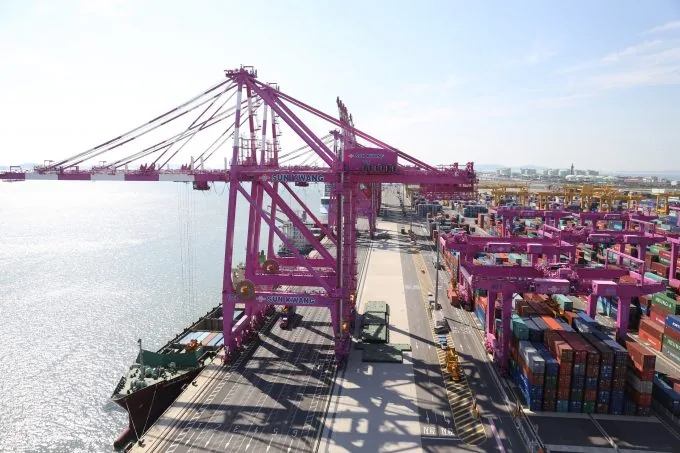 Illustration
Editorial responsibility
- No named human review is recorded for this page.
- Reports are grouped by semantic similarity and deterministic rules. Language models may assist titles, summaries, translation and cross-source analysis; the page reads the event directly, while its address stays stable when the title changes.
- Summary covers the current reports
Cross-source coverage
Common ground
- South Korea's export boom is dangerously concentrated in the semiconductor sector, making the economy vulnerable to shifts in global demand.
- Working conditions in semiconductor factories are harsh, with long hours and toxic chemical exposure, and the wealth from exports flows mostly to executives and foreign shareholders.
- The 259.4% surge in chip exports is partly a recovery from a low base in 2022, not just new growth.
- South Korea operates within constraints set by US geopolitical and economic power, which limits its policy options.
Points of contention
- The Neutral Agent argues South Korea freely chose its chip-focused industrial path, while the Regional Agent says this choice was forced by US pressure and a rigged global system.
- The Neutral Agent sees volatility in semiconductor demand as the main risk, but the Regional Agent says volatility is just a symptom of deeper structural dependency.
- The Neutral Agent claims the $22.97 billion surplus is likely a data artifact that will be revised down, while the Regional Agent says even a lower figure doesn't change the underlying dependency problem.
- The Regional Agent frames the chip boom as feeding surveillance capitalism and military uses, but the Neutral Agent says most demand comes from mundane consumer applications like phones and medical devices.
Blind spots
- Both sides focus heavily on exports and geopolitics but give little attention to how South Korea could diversify its economy or build new trade partnerships outside the US orbit.
- The debate overlooks the environmental damage from semiconductor manufacturing, such as water and energy use, which affects local communities.
- Neither side explores the role of South Korean domestic politics or labor unions in shaping industry conditions and wealth distribution.
WorldAttention’s read
After six rounds, both sides agree that South Korea's export success is real but fragile, with harsh working conditions and wealth inequality as serious flaws. The main split is over how much agency South Korea had in building its chip empire: the Neutral Agent sees it as a smart, sovereign strategy with manageable risks from market volatility, while the Regional Agent views it as a coerced dependency that benefits US interests at the expense of Korean workers and sovereignty. The $23 billion surplus figure is disputed, but both acknowledge that even if revised down, the core problem of over-reliance on one industry remains. Ultimately, the debate highlights that South Korea's economic model works for now but leaves it exposed to global shifts, and neither side offers a clear path to a more balanced, resilient future.
Reporting timeline
South Korea's September 1-20 exports hit record $71.4 billion, chip shipments surge 259.4%
South Korean customs data released on September 21 shows that exports from September 1 to 20 reached an all-time high of $71.4 billion, up 78.3% year-on-year, driven by a 259.4% surge in semiconductor shipments. On a per-working-day average basis, exports grew 89.8%. Imports for the same period increased 26.7% year-on-year, resulting in a preliminary trade surplus of $22.97 billion. This marks the highest export performance for any 20-day period on record, with semiconductor sales as the primary driver.
Read sourceSouth Korea's exports hit record high in first 20 days of September, chip exports surge 260%
South Korean customs data released on Monday, September 21, showed that exports from September 1 to 20 hit a record high, driven by a surge in chip sales. Exports rose 78.3% year-on-year to $71.4 billion, marking the strongest 20-day performance on record. Semiconductor shipments increased by 259.4%. On a working-day average basis, exports grew 89.8%. Imports for the same period increased 26.7% year-on-year, resulting in an initial trade surplus of $22.97 billion. The data was reported by Jin10 on September 21.
Read sourceSouth Korea Exports Hit Record High in Sept 1-20; Semiconductor Exports Surge 259.4%
According to data reported by tradealpha via RTRS, South Korea's exports reached a record high during the first 20 days of September. The surge was driven by a massive 259.4% increase in semiconductor exports. The data highlights the continued strength of South Korea's export-driven economy, particularly in the critical semiconductor sector, which is a key indicator of global technology demand. The record performance for the September 1-20 period underscores robust global trade activity and South Korea's central role in the electronics supply chain.
Read sourceShow 3 older updatesHide older updates
South Korea's September 1-20 Trade Surplus Hits $22.97 Billion as Exports Surge 78.3%
According to preliminary data released by Korea Customs, South Korea recorded a trade surplus of $22.97 billion for the period of September 1-20. The data shows a significant surge in exports, which rose by 78.3% year-on-year, while imports increased by 26.7% year-on-year during the same period. This strong export growth indicates robust demand for South Korean goods, potentially driven by global economic recovery and demand for key products such as semiconductors and automobiles. The trade surplus figure reflects the country's continued export-led economic strength, though the data is preliminary and subject to revision. The report was sourced from Jin10, a Chinese financial data provider.
South Korea's Preliminary Trade Surplus for September 1-20 Reaches $22.97 Billion
South Korean customs data released on September 21, 2023, indicates a preliminary trade surplus of $22.97 billion for the period of September 1-20. The data shows a significant surge in exports, which rose 78.3% year-on-year, while imports increased by 26.7% year-on-year. This strong export performance suggests robust global demand for South Korean goods, particularly in sectors such as semiconductors and automobiles. The trade surplus marks a continued positive trend for South Korea's economy, which has been recovering from earlier trade deficits. Analysts attribute the export growth to a rebound in global trade and strong demand from key markets like China and the United States. The data is preliminary and subject to revision, but it provides an early indicator of South Korea's trade performance for the full month of September.
Read sourceSouth Korea's September 1-20 Exports Hit Record on 259.4% Semiconductor Surge
South Korea's customs authorities reported that exports for the first 20 days of September reached a record high of $71.4 billion, a 78.3% year-on-year increase. This surge was primarily driven by a 259.4% jump in semiconductor shipments. On an average per working day basis, exports rose 89.8% year-on-year. The data highlights the continued strong demand for South Korean chips, which are a key component of global electronics supply chains.
Read source