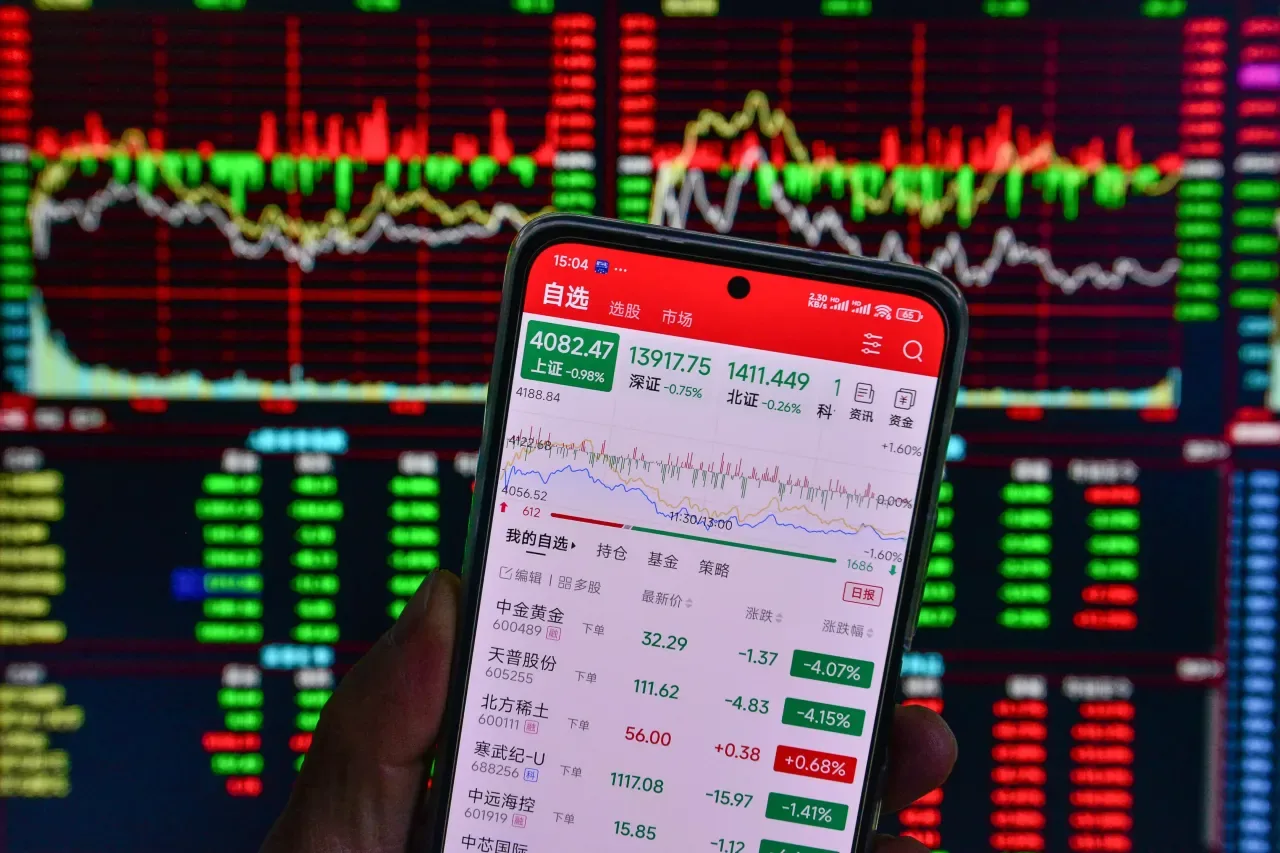
Shanghai-Shenzhen stock turnover exceeds 1.5 trillion yuan, down over 100 billion from prior day
On September 24, the combined trading volume of the Shanghai and Shenzhen stock exchanges surpassed 1.5 trillion yuan, a decrease of over 100 billion yuan from the same time the previous trading day. Early data showed a contraction of nearly 70 billion yuan in the first half hour. Despite the decline, the market has maintained elevated activity, with Jin10 reporting 292 consecutive days above 1.5 trillion yuan and 327 consecutive days above 1 trillion yuan.
 Illustration
Editorial responsibility
- No named human review is recorded for this page.
- Reports are grouped by semantic similarity and deterministic rules. Language models may assist titles, summaries, translation and cross-source analysis; the page reads the event directly, while its address stays stable when the title changes.
- Summary covers the current reports
Cross-source coverage
Common ground
- Western media often misreads China's market data through a lazy 'slowdown' lens.
- The structural shift from real estate to equities in China is real and significant.
- China's regulatory framework has evolved since the 2015 crash, with no systemic blowups since.
- Sustained high turnover above 1.5 trillion yuan shows genuine structural depth in China's markets.
Points of contention
- Whether high turnover reflects long-term investment or short-term speculation by retail investors.
- Whether China's market model—with limited short-selling and derivatives—is prudent or risky.
- Whether earnings growth is broad enough to support turnover, or concentrated in a narrow slice of sectors.
- Whether China's market can be considered mature without Wall Street-style hedging tools and transparency.
Blind spots
- Both sides lack concrete data on average retail holding periods and account-level turnover statistics.
- The debate ignores how global economic factors, like trade tensions or currency shifts, might affect China's market stability.
- Neither side addresses the potential impact of state intervention on market signals and investor confidence.
- The role of foreign investor participation and its influence on liquidity and risk is not discussed.
WorldAttention’s read
The roundtable shows a clear divide: the Eastern Agent sees China's 292-day turnover streak as proof of a successful, stable market transformation driven by 200 million households shifting savings into equities, while the Neutral Agent warns that high volume without broad earnings growth, hedging tools, or long-term holding behavior could signal speculative froth and hidden risks. Both agree Western media misreads China's data, and that regulatory improvements since 2015 are real. However, they clash on whether China's market model—prioritizing stability over Wall Street-style financial engineering—is a strength or a vulnerability. The blind spots include a lack of hard data on retail behavior, the influence of global factors, and the role of state intervention. Ultimately, the debate highlights that China's market has deep liquidity, but its long-term health depends on whether that liquidity is backed by productive investment and institutional maturity, not just volume streaks.
Reporting timeline
Shanghai and Shenzhen Stock Markets' Trading Volume Exceeds 1.5 Trillion Yuan, Down Over 100 Billion from Previous Day
According to data from Cailianshe's monitoring system, the combined trading volume of the Shanghai and Shenzhen stock markets has surpassed 1.5 trillion yuan as of the current time on September 24. This represents a decrease of more than 100 billion yuan compared to the same time on the previous trading day. Based on the current pace, the report estimates that the full-day trading volume will exceed 1.6 trillion yuan. The data point highlights a reduction in market activity relative to the prior session.
Read sourceShanghai and Shenzhen Stock Markets See 292nd Consecutive Day of 1.5 Trillion Yuan Turnover
According to data from financial news outlet Jin10, the combined trading volume of the Shanghai and Shenzhen stock exchanges has exceeded 1.5 trillion yuan for the 292nd consecutive trading day. This milestone indicates sustained high levels of market activity and liquidity in China's A-share market. The report does not provide additional context on market drivers or sector performance, but the extended streak of high turnover reflects ongoing investor participation and trading intensity in the world's second-largest stock market.
Read sourceShanghai-Shenzhen Stock Market Turnover Exceeds 1 Trillion Yuan, Down Over 100 Billion from Previous Day
According to data monitored by Cailianshe, the combined trading volume of the Shanghai and Shenzhen stock markets has exceeded 1 trillion yuan as of the time of reporting. This figure represents a decrease of more than 100 billion yuan compared to the same time on the previous trading day. Based on current trading activity, the total turnover for the full day is projected to be approximately 1.6 trillion yuan. The report provides a snapshot of intraday market liquidity and investor activity in China's two main stock exchanges.
Show 2 older updatesHide older updates
Shanghai and Shenzhen Stock Exchanges' Combined Turnover Exceeds 1 Trillion Yuan for 327th Straight Day
According to data from Jin10, the combined trading volume of the Shanghai and Shenzhen stock exchanges in China has exceeded 1 trillion yuan (approximately $138 billion) for the 327th consecutive trading day. This streak highlights sustained high levels of market activity and liquidity in China's A-share market. The data point reflects ongoing investor participation and trading intensity in the two main Chinese stock markets, though the report does not specify the exact total turnover for the current day or provide comparative historical context. The milestone underscores the scale of China's equity markets and the persistent flow of capital through these exchanges over an extended period.
China Stocks Shrink Nearly 70 Billion Yuan in First Half Hour, Full-Day Volume Seen Above 1.5 Trillion
According to data monitored by financial news outlet Cailianshe, in the first half hour of trading on September 24, the combined trading volume of the Shanghai and Shenzhen stock exchanges exceeded 560 billion yuan. This represents a contraction of nearly 70 billion yuan compared to the same period on the previous trading day. Based on this early data, the outlet estimates that the full-day trading volume for the two exchanges will surpass 1.5 trillion yuan. The report highlights a notable decrease in early-session market activity relative to the prior session.
Read source