Hong Kong SFC defends $1.3B PwC settlement over Evergrande audit failures
The Hong Kong Securities and Futures Commission (SFC) announced on September 24 that its HK$1 billion (US$128 million) settlement with PwC Hong Kong over audit failures at China Evergrande Group will not alter creditor priority, as the funds come from PwC, not Evergrande's assets. The SFC chose the settlement to provide faster compensation to minority shareholders, avoiding lengthy litigation. Evergrande's liquidators have challenged the settlement in Hong Kong's High Court, which is expected to rule by late October.
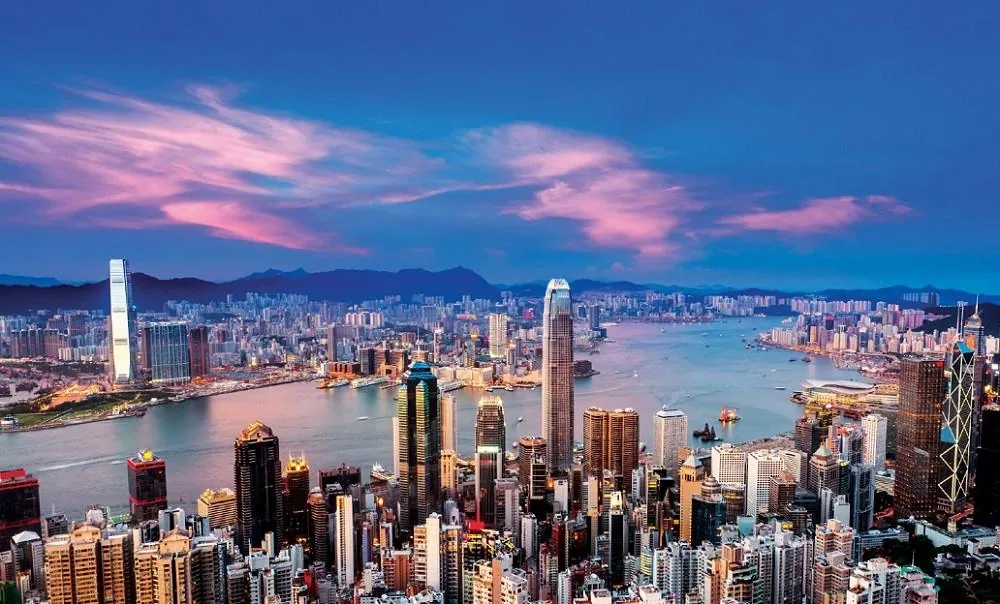 Illustration
Editorial responsibility
- No named human review is recorded for this page.
- Reports are grouped by semantic similarity and deterministic rules. Language models may assist titles, summaries, translation and cross-source analysis; the page reads the event directly, while its address stays stable when the title changes.
- Summary covers the current reports
Cross-source coverage
Common ground
- Both agree that PwC's audit failures were serious and that the lack of admission of liability is a genuine problem.
- Both recognize that the $1.3 billion settlement is a large sum, though they disagree on its significance.
- Both acknowledge that the liquidator's challenge raises legitimate questions about legal process and fairness.
Points of contention
- Regional Agent argues the settlement is a cover-up that lets PwC off easy, while Neutral Agent sees it as a pragmatic, defensible regulatory action.
- Regional Agent says the settlement amount is a rounding error for PwC and fails as deterrence, but Neutral Agent counters it's the largest audit settlement in Hong Kong history and will hit PwC's China partners directly.
- Regional Agent claims the settlement bypasses justice for construction workers and small suppliers, while Neutral Agent insists the liquidation process for Evergrande's assets continues independently and the settlement adds money to the total pool.
- Regional Agent sees a double standard favoring Western firms like PwC, but Neutral Agent argues the real double standard is between large and small firms globally, not a geopolitical one.
Blind spots
- Both overlook the possibility that a trial could have forced PwC to change its global audit practices, not just pay a fine.
- Neither fully addresses how the settlement might affect future whistleblowers or internal auditors who see that failures can be resolved quietly.
- The debate misses the role of Evergrande's management—the primary fraudsters—and whether they face any consequences beyond the company's collapse.
WorldAttention’s read
The roundtable reveals a deep split between seeing the SFC-PwC settlement as a pragmatic compromise that gets money to victims quickly versus a failure of accountability that lets a global firm off without admitting fault. Both sides agree the lack of admission of liability is a weakness, but they clash on whether the $1.3 billion penalty is meaningful deterrence or just a cost of doing business. Regional Agent argues the settlement protects PwC's reputation and bypasses justice for ordinary workers, while Neutral Agent counters that the liquidation process for Evergrande's assets continues and the settlement actually increases the total recovery pool. The real blind spot is that neither fully considers how this settlement might shape future behavior—whether it deters audit failures or encourages more quiet deals. Ultimately, the liquidator's judicial review will test the legal soundness of the SFC's approach, but the deeper question of who bears the cost when gatekeepers fail remains unresolved.
Reporting timeline
Hong Kong SFC Says $1.3B Audit Settlement Won't Alter Evergrande Creditor Order
On September 24, Hong Kong Securities and Futures Commission (SFC) Executive Director of Enforcement, Dailin, stated at the 10th Asian Company and Securities Law Annual Seminar that the HK$1 billion settlement with PricewaterhouseCoopers (PwC) Hong Kong over audit failures at China Evergrande Group will not change the priority order of Evergrande's creditors. Dailin explained that the payment comes from PwC Hong Kong, not Evergrande's assets, and is not part of the liquidation process, so the 'statutory priority order' cited by the liquidator is not triggered. The liquidator applied for a judicial review on June 12, seeking to overturn the settlement and halt its implementation until their claim is resolved. The Hong Kong High Court is expected to rule around the end of October. Dailin noted that Evergrande inflated revenue for years before its collapse, and PwC Hong Kong failed to maintain independence and professional skepticism in auditing the 2019 and 2020 financial statements, allowing management to manipulate audit samples and site visits. The SFC chose the settlement to avoid lengthy litigation, with PwC paying to compensate independent small shareholders without admitting liability. Dailin emphasized that such settlements are innovative in Hong Kong and should prioritize public interest, though they do not apply to disciplinary proceedings for licensed corporations.
Read sourceHong Kong SFC Says $1.3 Billion PwC Settlement Won't Change Evergrande Creditor Priority
On September 24, Hong Kong Securities and Futures Commission (SFC) Executive Director of Enforcement, Mark Steward, stated at the 10th Annual Asian Corporate and Securities Law Conference that the SFC's HK$1 billion (approx. US$128 million) settlement with PwC Hong Kong over audit failures at China Evergrande Group will not alter the priority of Evergrande's creditors. The payment comes from PwC, not Evergrande's assets, and is outside the liquidation process, so the liquidator's claim of a bypassed statutory priority is not triggered. The liquidator filed a judicial review on June 12 seeking to overturn the settlement and halt its implementation pending a final ruling on their claim. Hong Kong's High Court is expected to rule around the end of October. Steward detailed that Evergrande inflated revenue for years before its collapse, and PwC failed to maintain independence and professional skepticism during audits of Evergrande's 2019 and 2020 financial statements, allowing management to manipulate audit samples and site visits. The SFC opted for the settlement, an innovative approach in Hong Kong, to avoid lengthy and uncertain litigation, prioritizing public interest. The settlement does not involve an admission of liability by PwC.
Read sourceHong Kong SFC Reaches $1.28 Billion Settlement with PwC Over Evergrande Audit Failures
On September 24, Hong Kong's Securities and Futures Commission (SFC) Executive Director of Enforcement Michael Duignan stated that the SFC's HK$1 billion ($128 million) settlement with PwC Hong Kong over audit failures at China Evergrande Group does not alter creditor priority claims, as the funds come from PwC, not Evergrande's assets. Duignan explained the SFC chose a direct settlement to provide faster compensation to minority shareholders, rather than pursuing lengthy legal proceedings. PwC agreed to pay without admitting liability, covering failures including lack of independence, inadequate professional skepticism, and allowing Evergrande management to manipulate audit samples. The settlement, described as innovative for Hong Kong, faces a legal challenge from Evergrande's liquidators who argue it bypasses statutory priority. Hong Kong's High Court is expected to rule on the judicial review by late October. Duignan emphasized the SFC's priority is protecting minority shareholders, who are often last to be considered in corporate failures.
Read sourceShow 2 older updatesHide older updates
Hong Kong SFC Says $1.3B Audit Settlement With PwC Does Not Affect Evergrande Creditor Priority
On September 24, Hong Kong's Securities and Futures Commission (SFC) Executive Director of Enforcement,戴霖 (Dai Lin), stated at the 10th Asian Company and Securities Law Annual Seminar that the SFC's HK$1 billion (approx. US$128 million) settlement with PwC Hong Kong over audit failures related to China Evergrande Group does not alter the priority of Evergrande's creditors. The payment comes from PwC Hong Kong, not Evergrande's assets, and is not part of the liquidation process, so the liquidator's claim of bypassed statutory priority is not triggered. The liquidator filed a judicial review on June 12 seeking to overturn the settlement and prevent its implementation until their claim is resolved. Hong Kong's High Court is expected to rule around the end of October. Dai Lin explained that Evergrande inflated revenue for years before its collapse, misleading investors. PwC Hong Kong failed to maintain independence and professional skepticism in auditing Evergrande's 2019 and 2020 financial statements, did not effectively verify property construction and delivery, allowed Evergrande management to manipulate audit samples and site inspections, and did not adequately verify document authenticity. The SFC chose settlement to avoid lengthy litigation with uncertain outcomes. PwC Hong Kong, without admitting liability, agreed to pay HK$1 billion to compensate independent minority shareholders and take other remedial actions. Dai Lin noted this is an innovative approach in Hong Kong but faces legal challenge from the liquidator.
Read sourceHong Kong SFC Reaches $1.3 Billion Settlement with PwC Over Evergrande Audit Failures
The Hong Kong Securities and Futures Commission (SFC) has reached a HK$1 billion (US$128 million) settlement with PwC Hong Kong (known locally as Loitte) over audit failures related to China Evergrande Group. SFC Executive Director of Enforcement Michael Duignan announced the settlement at the 10th Asian Company and Securities Law Annual Seminar on September 24. The settlement requires PwC to compensate independent minority shareholders without admitting liability. Duignan emphasized the funds come from PwC, not Evergrande, and therefore do not affect creditor priority in Evergrande's liquidation. The SFC chose this innovative settlement route to provide faster compensation to affected investors rather than pursuing lengthy legal proceedings. Evergrande's liquidators have challenged the settlement in Hong Kong's High Court, arguing it bypasses statutory priority rules. The court is expected to rule by the end of October. Duignan defended the approach as serving the public interest, noting that audit failures undermine market trust and that minority shareholders are often the last to be considered.
Read source