Russia threatens nuclear strikes on NATO over Kaliningrad exclave tensions
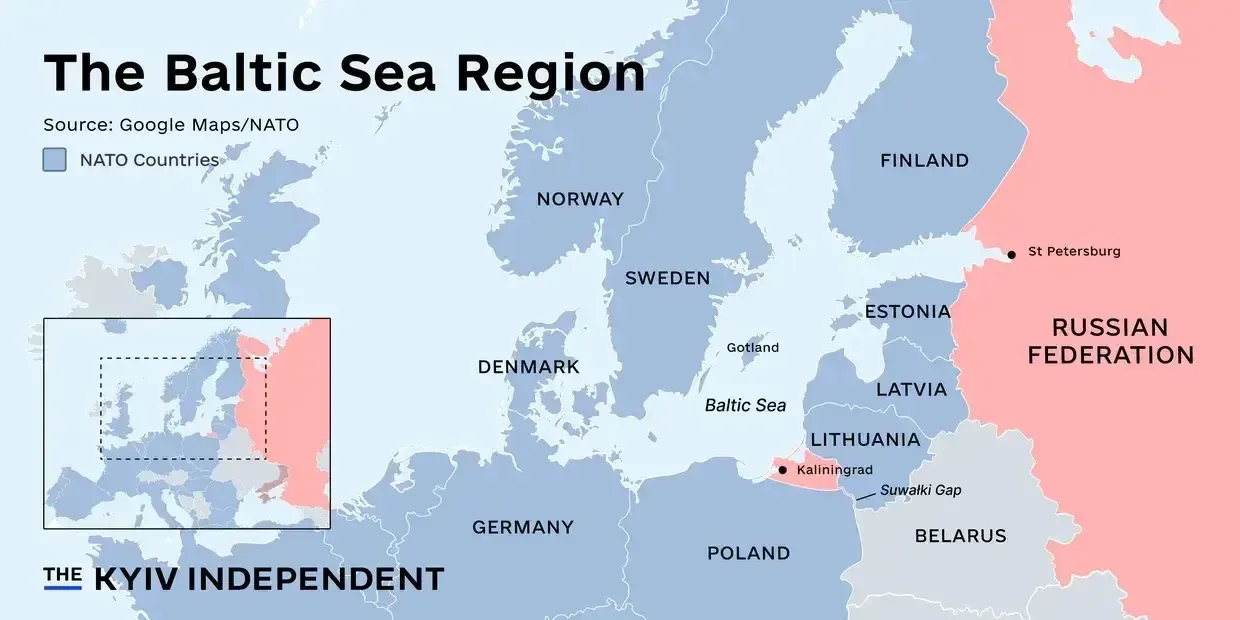
Russia sent an informal letter to NATO accusing the alliance of an "unprecedented escalation" around Kaliningrad, threatening to use its entire arsenal, including nuclear weapons, if NATO attempts to isolate the exclave. NATO spokesperson Allison Hart rejected the warning as "irresponsible nuclear rhetoric," stating the alliance is defensive and prepared to defend all allied territory. The letter is seen as a response to a NATO air exercise near Kaliningrad in mid-August.
 Reference image
Editorial responsibility
- No named human review is recorded for this page.
- Reports are grouped by semantic similarity and deterministic rules. Language models may assist titles, summaries, translation and cross-source analysis; the page reads the event directly, while its address stays stable when the title changes.
- Summary covers the current reports
Cross-source coverage
Common ground
- Russia's nuclear threats are a recurring pattern, not a new development, and are often tied to its strategic position in Ukraine.
- NATO's response of dismissing rhetoric while maintaining a defensive posture is appropriate and avoids escalation.
- The risk of miscalculation during routine military exercises, such as a drone straying or a communication failure, is a genuine concern.
- The Suwałki Gap is a well-known flashpoint that both sides have extensively war-gamed, reducing the likelihood of accidental conflict there.
- The debate lacks access to classified intelligence on Russia's command-and-control status, which is critical for accurate risk assessment.
Points of contention
- Whether Russia's nuclear threats are a desperate bluff or a credible signal of willingness to escalate.
- Whether mocking Russia's threats is strategically effective or dangerously naive.
- Whether the absence of Russian military adjustments proves the threat is hollow or simply reflects NATO's cautious approach.
- Whether the Ukraine long-range strikes variable fundamentally changes the escalation risk or is just another layer of rhetoric.
- Whether the primary danger is deliberate escalation by Putin or an accidental trigger by a local commander.
Blind spots
- The debate overlooks the potential for asymmetric Russian responses, like cyberattacks on Baltic infrastructure or anti-satellite tests, as a middle-ground escalation.
- There is insufficient analysis of how degraded communication channels between NATO and Russia could create novel, unmodeled risks.
- The domestic audience in Russia and the impact of propaganda on military morale and decision-making is underexplored.
- The intelligence gap on Russia's nuclear command-and-control degradation or tightening since 2022 remains unaddressed.
WorldAttention’s read
This debate reveals a fundamental split between those who see Russia's nuclear threats as a hollow information operation and those who warn of a structural accident risk. Both sides agree that NATO's calm, posture-unchanged response is correct, but they disagree on whether the threat is a bluff or a credible danger. The key blind spot is the lack of intelligence on Russia's command-and-control, which leaves the miscalculation risk unresolved. Ultimately, the situation is low-probability but high-consequence, and the focus should remain on deconfliction and monitoring actual military movements rather than rhetorical signals.
Reporting timeline
Moscow Sends Nuclear Warning to NATO as Tensions Rise in the Baltic Region
Multiple news outlets report that Moscow has issued a nuclear warning to NATO amid rising tensions in the Baltic region, specifically concerning the Russian exclave of Kaliningrad. The Moscow Times, Reuters, and the Financial Times all carry reports of Russia making extreme threats against NATO countries over Kaliningrad. An explainer from U.S. News & World Report details why Kaliningrad is a potential flashpoint with NATO. In contrast, NATO Secretary General Mark Rutte stated there is no imminent threat to NATO territory but that the alliance is prepared for Russian aggression, as reported by The Guardian. The situation highlights heightened military and diplomatic tensions between Russia and the Western military alliance.
Russia threatens nuclear strikes on NATO countries over Kaliningrad, reports say
Multiple news outlets report that Russia has threatened nuclear strikes on NATO countries over the status of the Kaliningrad exclave. The Financial Times leads with a headline stating 'Russia threatens nuclear strikes on Nato countries over Kaliningrad.' Reuters reports that 'Russia issues nuclear warning to NATO as tensions rise in the Baltic.' The Guardian notes that 'Nato condemns Moscow’s “irresponsible nuclear rhetoric” as strikes on Kyiv intensify.' The Independent covers 'Nato responds to Putin’s nuclear weapon threat against member nations.' Additionally, a top NATO commander warns that the alliance's front line now stretches across Europe. These reports indicate a significant escalation in nuclear rhetoric from Moscow amid heightened tensions in the Baltic region and the ongoing war in Ukraine.
Read sourceRussia warns NATO of direct military confrontation over Kaliningrad, threatens entire arsenal
In a breaking statement, Russia has issued a stark warning to NATO, threatening a potential direct military confrontation over the Russian exclave of Kaliningrad. Moscow stated that it would be prepared to use its 'entire arsenal' if the alliance attempts to isolate the territory. The warning escalates tensions between Russia and NATO, highlighting the strategic importance of Kaliningrad, which is a heavily militarized Russian territory located between Poland and Lithuania on the Baltic Sea. The statement underscores Russia's red line regarding any perceived encirclement or blockade of the region, raising the stakes in the ongoing geopolitical standoff.
Read sourceShow 2 older updatesHide older updates
Russia threatens NATO with nuclear weapons over Kaliningrad; alliance rejects warning
Russia has sent an informal letter to NATO accusing the alliance of an 'unprecedented escalation' of the military-political situation around the Russian exclave of Kaliningrad, threatening to use its entire arsenal, including nuclear weapons, to defend the territory if NATO attempts to isolate it. The letter, delivered via the Russian embassy in Belgium, also warned of possible Russian strikes on NATO decision-making centers at the onset of any direct conflict. NATO spokesperson Allison Hart rejected the warning as 'irresponsible nuclear rhetoric,' reaffirming that the alliance is defensive and that no exercises threaten Russia. She called on Russia to end its war in Ukraine and stated NATO has all necessary means to defend every inch of allied territory. The letter is seen as a response to a NATO air exercise in mid-August near Kaliningrad, which demonstrated the alliance's ability to control the exclave in case of aggression. Kaliningrad, which borders NATO members Poland and Lithuania, hosts Russian Iskander missiles capable of carrying nuclear warheads.
NATO Rejects Russian Nuclear Threat Over Kaliningrad as Irresponsible Rhetoric
Russia has sent an informal letter to NATO accusing the alliance of an "unprecedented escalation" of the military-political situation around the Russian exclave of Kaliningrad, threatening to use its entire arsenal, including nuclear weapons, to defend the territory if NATO attempts to isolate it. The letter, delivered via the Russian embassy in Belgium, also warned of a high risk of direct armed conflict and possible Russian strikes on NATO decision-making centers. NATO spokesperson Allison Hart confirmed receipt of the letter and the alliance's response, strongly condemning the nuclear rhetoric as irresponsible. Hart reiterated that NATO is a defensive alliance and that its exercises pose no threat to Russia. She also called on Russia to end its unprovoked war in Ukraine, stating that NATO will not be deterred from supporting Ukraine and has all necessary means to defend every inch of alliance territory. The letter is seen as a reaction to a NATO air exercise in mid-August near Kaliningrad, which demonstrated the alliance's ability to control the exclave in case of Russian aggression. Kaliningrad, which borders NATO members Poland and Lithuania, hosts Russian fighter jets and Iskander missiles capable of carrying nuclear warheads.
Read source