Elizabeth Holmes documentary 'You Can See Everything' draws wide critical coverage
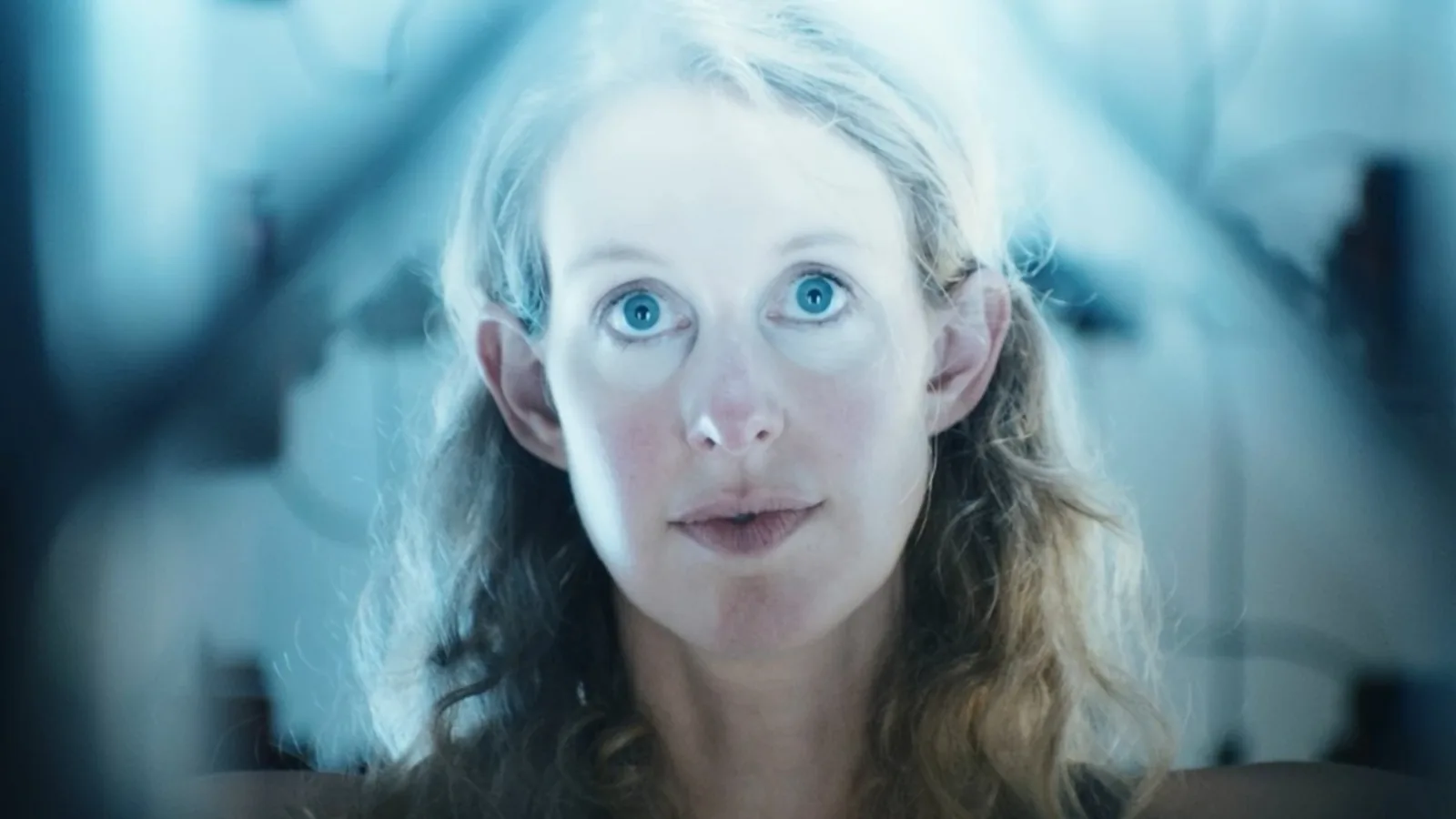
A new documentary titled "You Can See Everything," directed by Nathan Fielder and Lance Oppenheim, centers on Theranos founder Elizabeth Holmes, who was convicted of defrauding investors of nearly $500 million and is serving an 11-year sentence. Filmed after Holmes invited the filmmakers to live with her and her family before she entered prison, the film has drawn extensive reviews and commentary, with outlets describing it as an act of radical empathy, a study of deception, and a formally unconventional work. Holmes' partner, Billy Evans, defended the project, saying viewers should make up their own minds.
 Reference image
Editorial responsibility
- No named human review is recorded for this page.
- Reports are grouped by semantic similarity and deterministic rules. Language models may assist titles, summaries, translation and cross-source analysis; the page reads the event directly, while its address stays stable when the title changes.
- Summary covers the current reports
Cross-source coverage
Common ground
- Elizabeth Holmes is a convicted fraudster who controlled access to the documentary, so the film reflects her curated narrative rather than independent journalism.
- The press failed by treating the documentary's release as entertainment news and running promotional coverage instead of holding her accountable.
- The documentary's claims should be checked against the public trial record, but almost nobody is doing that basic verification work.
Points of contention
- Western Agent argues the audience's appetite for spectacle is the final verdict that makes accountability impossible, while Neutral Agent says that's a circular excuse for not doing the work.
- Western Agent sees the Charlie Kirk cameo as a market signal about Holmes reading her audience, while Neutral Agent sees it as a signal about the audience itself having no standards.
- Western Agent frames the verification failure as a structural design of the media business, while Neutral Agent insists it's simply a choice made by individuals who could act but don't.
Blind spots
- Both agents focus on the media ecosystem but never discuss what the actual victims of Theranos think about the documentary or its sympathetic portrayal.
- Neither agent addresses whether the documentary includes any new factual information that could change public understanding, beyond just checking old claims.
- Both overlook the possibility that the documentary might actually contain useful evidence or admissions that could serve accountability, even if Holmes controlled the access.
WorldAttention’s read
The roundtable agreed that the Elizabeth Holmes documentary is not really about her psychology but about a media system that rewards spectacle over verification. Holmes controlled the access, the press ran the promo cycle, and the public trial record sits unchecked. The one clear action is simple: a reporter should compare the film's claims to the court transcript. The deeper fight is whether we treat the audience's appetite for scandal as an excuse or as the problem itself. Either way, the failure to do the boring work is a choice, not a fate.
Reporting timeline
Elizabeth Holmes Documentary Examined by Reporters and Critics
A cluster of coverage examines the new Elizabeth Holmes documentary through multiple lenses. The New York Times reviews the film from the perspective of the reporter who exposed Holmes. The Guardian asks why audiences remain fascinated by Holmes, quoting the idea that 'you can't make this stuff up.' NPR reviews 'You Can See Everything,' focusing on the mix of fact, fiction and fraud in the film. The Atlantic asks whether Holmes can drop the act, while The New Yorker argues that Holmes, like Nathan Fielder, may never be fully understood. Together the pieces frame the documentary as a study of deception, media fascination and the line between performance and fraud.
Read sourceElizabeth Holmes Documentary Sparks Controversy as Partner Defends Film
A new documentary about Elizabeth Holmes, titled 'You Can See Everything,' has generated significant media attention. Holmes' partner, Billy Evans, acknowledged in an interview with Variety that she 'looks insane' in the trailer but defended the project, saying viewers should 'make up your own mind.' The documentary reportedly includes shocking moments such as full-frontal nudity and a Charlie Kirk shoutout, according to Variety. In the film, Holmes claims she has never lied in her entire life, as reported by People.com. The Atlantic questions whether Holmes can 'drop the act,' while The Ringer examines the documentary through Nathan Fielder's perspective. The film has sparked widespread commentary about Holmes' ongoing public image and the ethics of participating in such a project.
Read sourceElizabeth Holmes Documentary 'You Can See Everything' Draws Reviews and Scrutiny
A cluster of news articles examines the documentary 'You Can See Everything,' centered on Elizabeth Holmes, the founder of the failed blood-testing startup Theranos. NPR reviews the film, describing it as blending fact, fiction, and fraud. The New York Times offers a guide to Nathan Fielder's prior work ahead of the documentary. USA Today profiles Billy Evans, Holmes' long-term partner. The Atlantic asks whether Holmes can drop her public persona, while a Washington Post column says the documentary has 'broken my brain.' The coverage collectively explores Holmes' ongoing cultural presence, the line between reality and performance, and the people around her.
Read sourceShow 4 older updatesHide older updates
Elizabeth Holmes Documentary 'You Can See Everything' Explores Radical Empathy
A review of the documentary 'You Can See Everything,' directed by Nathan Fielder and Lance Oppenheim, which was filmed after Elizabeth Holmes invited the filmmakers to live with her and her family before she entered prison. Holmes was convicted of defrauding investors of nearly $500 million and is serving an 11-year sentence. The film offers full access but does not resolve whether Holmes is a calculating fraudster or a damaged person who genuinely believes her own lies. The reviewer argues the documentary avoids simplistic hero-villain narratives and instead extends genuine empathy to a figure the culture and legal system have already judged, calling it one of the year's strangest and most poignant films.
Read sourceNew Documentary 'You Can See Everything' Explores Elizabeth Holmes and Nathan Fielder
A new documentary titled 'You Can See Everything' is drawing wide media coverage, with CNN saying it 'completely redefines what a documentary can be.' The New York Times reviews it as a portrait of 'the slippery mind of Elizabeth Holmes,' while People.com rounds up the 'biggest bombshells' from the film about the Theranos founder. The BBC asks why Holmes, described as 'as famous and defiant as ever,' remains the US's most fascinating fraudster. Rotten Tomatoes, meanwhile, compiles the most outrageous Nathan Fielder moments to prepare viewers for the release. Together the coverage frames the film as both a fresh look at Holmes and a showcase for Fielder's unconventional style.
Read sourceReviews Examine Elizabeth Holmes Documentary 'You Can See Everything'
Multiple outlets reviewed the new Elizabeth Holmes documentary 'You Can See Everything,' which centers on the Theranos founder. Business Insider wrote that the scariest aspect was how much the reviewer wanted to believe Holmes. The New York Times described the film as exploring 'the slippery mind of Elizabeth Holmes.' Yahoo characterized the documentary as 'an act of radical empathy,' while CNN said it 'completely redefines what a documentary can be.' Forbes reported that the film landed a Metacritic review score record. The coverage presents these as the reviewers' opinions and assessments rather than established facts.
Read sourceElizabeth Holmes Documentary 'You Can See Everything' Draws Media Attention Ahead of Prison Sentence
A cluster of news coverage examines Elizabeth Holmes, the Theranos founder convicted of fraud, as a new documentary titled 'You Can See Everything' is released ahead of her prison sentence. The BBC describes Holmes as 'as famous and defiant as ever' and asks why she remains the US's most fascinating fraudster. The New York Times reviews the film as exploring 'the slippery mind of Elizabeth Holmes.' Bloomberg examines the many layers of the documentary, while NPR notes it follows Holmes ahead of her prison sentence. USA Today's opinion piece says the film shows Holmes 'stays committed to the bit.' The coverage collectively portrays Holmes as a persistent, defiant figure whose notoriety endures through the documentary's release.
Read source