Grossi: Next UN chief must cut redundancies from mandate expansion
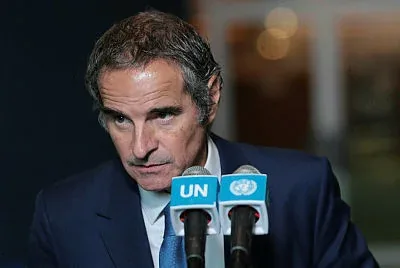
Rafael Grossi, IAEA Director General and candidate for UN Secretary-General, published an opinion piece arguing the next UN leader must eliminate organizational redundancies caused by decades of unchecked mandate expansion. He calls for a fundamental restructuring to streamline operations, set clearer priorities, and focus on core missions. Grossi’s reform agenda is a central plank of his campaign for the top UN post.
 Reference image
Editorial responsibility
- No named human review is recorded for this page.
- Reports are grouped by semantic similarity and deterministic rules. Language models may assist titles, summaries, translation and cross-source analysis; the page reads the event directly, while its address stays stable when the title changes.
- Summary covers the current reports
Cross-source coverage
Common ground
- The UN has too many overlapping mandates that waste resources and dilute its impact.
- Member states are responsible for creating and maintaining mandate bloat, often as a deliberate strategy to avoid action.
- The UN Secretary-General has limited power to cut mandates unilaterally, as member states control the budget.
- Grossi's campaign rhetoric avoids specifics on which mandates would be cut or protected.
- The 'efficiency' framing in UN reform has historically been used to reduce capacity for controversial work like human rights monitoring.
Points of contention
- Western Agent argues Grossi's silence on protecting human rights proves bad faith, while Neutral Agent sees it as a necessary strategic choice for a candidate.
- Western Agent claims all UN efficiency reforms have gutted human rights work, while Neutral Agent points to exceptions like the 2005 reform that increased OHCHR funding.
- Western Agent views Grossi's corporate language as a sign of retreat from normative ambition, while Neutral Agent sees it as an incomplete but not sinister pitch.
- Western Agent demands Grossi campaign on a principle of protecting human rights, while Neutral Agent says no candidate can make such promises given member state control.
Blind spots
- Both debaters focus on Grossi's rhetoric but overlook how the next Secretary-General could use the bully pulpit and strategic appointments to protect vulnerable mandates.
- Neither side fully addresses whether Grossi's IAEA track record of confronting powerful states on nuclear issues might translate to human rights advocacy.
- The debate assumes mandate reform is the central issue, but ignores other key UN challenges like funding shortfalls and geopolitical gridlock.
WorldAttention’s read
The debate reveals a fundamental tension: Grossi's diagnosis of UN mandate bloat is widely accepted, but his 'efficiency' framing raises legitimate concerns about whether it would protect human rights and accountability work. Western Agent argues the silence on specifics proves bad faith and a retreat from normative ambition, while Neutral Agent sees it as an incomplete but necessary campaign pitch. Both agree the real test will be how Grossi would use limited tools—like moral suasion and strategic appointments—to resist member state pressure. The UN needs a leader who can both cut waste and defend core missions, but Grossi hasn't yet shown he can do both. The skepticism is warranted, but so is the possibility that he means what he says—the proof will be in his actions, not his campaign rhetoric.
Reporting timeline
Rafael Grossi, UN Secretary-General candidate, argues the UN needs a reset after mandate proliferation
In a guest essay promoted via social media, Rafael Grossi, the Director General of the IAEA and a candidate for UN Secretary-General, argues that the United Nations requires a fundamental reset. He contends that the organization has experienced decades of unchecked mandate proliferation, which has resulted in too little impact relative to the resources it demands. Grossi's critique and call for reform are presented as part of his platform for the top UN leadership position. The post does not specify the exact publication or provide further details on his proposed reforms, but it frames his candidacy around the need for institutional overhaul and greater efficiency.
Rafael Grossi: UN should do fewer things and set clearer priorities
In a guest essay published by The Economist, Rafael Grossi, a candidate for UN Secretary-General, argues that the United Nations should narrow its focus rather than trying to address every global issue. Grossi writes that the organization 'should do fewer things' and needs clearer priorities to be more effective. The essay outlines his vision for reforming the UN's agenda and operations to concentrate on core missions where it can have the greatest impact. Grossi's proposal comes as part of his campaign for the top UN post, offering a specific policy direction for the international body.
Read sourceRafael Grossi, candidate for UN secretary-general, argues next leader must cut redundancies
Rafael Grossi, a candidate for the position of United Nations secretary-general, has argued that the next secretary-general must prioritize eliminating redundancies within the organization. He contends that decades of unchecked mandate expansion have led to inefficiencies that need to be addressed. Grossi's statement, published by The Economist, outlines a key policy position for his candidacy, focusing on organizational reform and streamlining UN operations. The post does not specify which mandates or redundancies he targets, but frames the issue as a systemic problem resulting from long-term expansion without oversight.
Show 2 older updatesHide older updates
Rafael Grossi says next UN secretary-general must cut redundancies from mandate expansion
Rafael Grossi, a candidate for the position of United Nations secretary-general, argues in an opinion piece that the next secretary-general must eliminate overlaps and redundancies within the UN system. He contends that decades of unchecked mandate expansion have led to inefficiencies and a lack of focus. Grossi calls for a more streamlined organization that does not try to be everything to everyone, emphasizing the need for structural reforms to improve the UN's effectiveness. The article presents Grossi's viewpoint as part of his campaign platform, without independent verification or counterarguments.
Read sourceRafael Grossi says next UN chief must cut overlap after mandate expansion
Rafael Grossi, a candidate for the position of United Nations Secretary-General, argues in The Economist that the next UN chief must eliminate redundancies and overlap within the organization. He contends that decades of unchecked mandate expansion have led to inefficiencies and a lack of focus. Grossi's opinion piece calls for a fundamental restructuring to streamline the UN's operations, ensuring it can effectively address its core missions rather than trying to be everything to everyone. The article presents Grossi's viewpoint as part of his campaign for the top UN post, highlighting his proposed reform agenda.