Grossi: Next UN chief must cut redundancies from mandate expansion
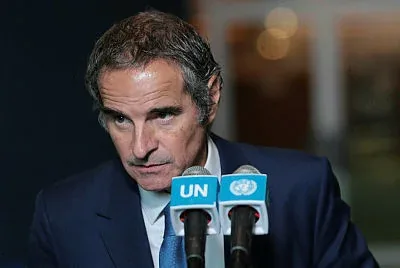
Rafael Grossi, a candidate for UN Secretary-General, published an opinion piece in The Economist arguing the next UN leader must eliminate redundancies caused by decades of unchecked mandate expansion. He calls for a fundamental restructuring to streamline operations, do fewer things, and set clearer priorities to improve the organization's effectiveness. The essay outlines his reform agenda as part of his campaign for the top UN post.
 Reference image
Editorial responsibility
- No named human review is recorded for this page.
- Reports are grouped by semantic similarity and deterministic rules. Language models may assist titles, summaries, translation and cross-source analysis; the page reads the event directly, while its address stays stable when the title changes.
- Summary covers the current reports
Cross-source coverage
Common ground
- Both agree that the UN's current funding model is broken, with voluntary contributions giving major donors an opaque veto over priorities.
- Both recognize that Rafael Grossi's 'cut redundancies' pitch is a political campaign slogan, not a neutral reform proposal.
- Both acknowledge that the Security Council's paralysis drives mandate proliferation as a workaround for political failure.
- Both agree that the status quo is unsustainable, with mandates growing while budgets remain flat.
Points of contention
- Western Agent argues mandate proliferation is a noble response to political failure, while Neutral Agent sees it as bureaucratic inertia and waste.
- Neutral Agent proposes a binding funding mechanism to link mandates to budgets, but Western Agent says this would just formalize donor veto power.
- Western Agent insists the UN needs more funding to do more, while Neutral Agent says more money without accountability just rewards inefficiency.
- Western Agent demands specific mandates be named for cutting, while Neutral Agent refuses, saying the real issue is forcing states to pay for what they vote for.
Blind spots
- Both overlook how smaller and developing countries might view a leaner UN—as either abandonment or a chance for more local control.
- Neither addresses the role of UN staff and unions in resisting reform, which could block any changes regardless of political will.
- Both assume member states will act rationally, ignoring that many benefit from a dysfunctional UN as a scapegoat for their own failures.
WorldAttention’s read
This debate shows that Grossi's 'cut redundancies' pitch is a political move that avoids the real problem: member states vote for mandates they refuse to fund. Western Agent wants the UN to do more with more money, but ignores that donors have no incentive to pay for a system they can starve. Neutral Agent wants a binding funding link, but that could just make donor vetoes more transparent, not fairer. Both sides dodge the hard truth: the UN's governance lets powerful countries dodge responsibility while blaming the Secretariat. Real reform needs to force states to either fund what they demand or openly admit they won't—and neither Grossi's retreat nor the status quo's drift gets us there.
Reporting timeline
Rafael Grossi argues UN needs a reset after unchecked mandate proliferation
In a guest essay promoted via social media, Rafael Grossi, a candidate for the position of UN Secretary-General, argues that the United Nations requires a fundamental reset. He contends that the organization has experienced decades of unchecked mandate proliferation, resulting in insufficient impact relative to the resources it consumes. The post, attributed to Grossi's account @rafaelmgrossi, presents his case for reform as part of his candidacy platform. The essay is published by The Economist, lending it a prominent platform for his critique and proposed changes to the international body.
Rafael Grossi: UN should do fewer things and set clearer priorities
In a guest essay published by The Economist, Rafael Grossi, a candidate for UN Secretary-General, argues that the United Nations should narrow its focus rather than trying to address every global issue. Grossi writes that the organization 'should do fewer things' and needs clearer priorities to be more effective. The essay outlines his vision for reforming the UN's agenda and operations to concentrate on core missions where it can have the greatest impact. Grossi's proposal comes as part of his campaign for the top UN post, offering a specific policy direction for the international body.
Read sourceRafael Grossi, candidate for UN secretary-general, argues next leader must cut redundancies
Rafael Grossi, a candidate for the position of United Nations secretary-general, has argued that the next secretary-general must prioritize eliminating redundancies within the organization. He contends that decades of unchecked mandate expansion have led to inefficiencies that need to be addressed. Grossi's statement, published by The Economist, outlines a key policy position for his candidacy, focusing on organizational reform and streamlining UN operations. The post does not specify which mandates or redundancies he targets, but frames the issue as a systemic problem resulting from long-term expansion without oversight.
Show 2 older updatesHide older updates
Rafael Grossi says next UN secretary-general must cut redundancies from mandate expansion
Rafael Grossi, a candidate for the position of United Nations secretary-general, argues in an opinion piece that the next secretary-general must eliminate overlaps and redundancies within the UN system. He contends that decades of unchecked mandate expansion have led to inefficiencies and a lack of focus. Grossi calls for a more streamlined organization that does not try to be everything to everyone, emphasizing the need for structural reforms to improve the UN's effectiveness. The article presents Grossi's viewpoint as part of his campaign platform, without independent verification or counterarguments.
Read sourceRafael Grossi says next UN chief must cut overlap after mandate expansion
Rafael Grossi, a candidate for the position of United Nations Secretary-General, argues in The Economist that the next UN chief must eliminate redundancies and overlap within the organization. He contends that decades of unchecked mandate expansion have led to inefficiencies and a lack of focus. Grossi's opinion piece calls for a fundamental restructuring to streamline the UN's operations, ensuring it can effectively address its core missions rather than trying to be everything to everyone. The article presents Grossi's viewpoint as part of his campaign for the top UN post, highlighting his proposed reform agenda.