Pope Leo XIV warns AI could destroy humanity without human control in Paris address
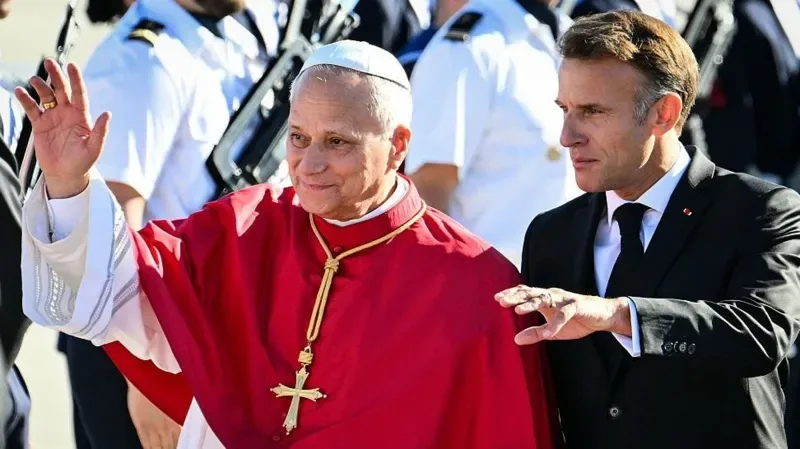
Pope Leo XIV, during his first apostolic journey to France, warned that artificial intelligence must serve humanity and not become an instrument of domination. In a rare address at the Élysée Palace in Paris, he cautioned that a "paradise of machines" could undermine human dignity and values. He also criticized the United Nations, warning it risks becoming a "charade" without reform. The visit included a meeting with President Macron and a prayer at Notre Dame Cathedral.
 Reference image
Editorial responsibility
- No named human review is recorded for this page.
- Reports are grouped by semantic similarity and deterministic rules. Language models may assist titles, summaries, translation and cross-source analysis; the page reads the event directly, while its address stays stable when the title changes.
- Summary covers the current reports
Cross-source coverage
Common ground
- The Pope's intervention breaks the technocratic consensus that AI is a neutral tool, which is valuable.
- Moral framing is necessary but not sufficient for real change—it needs to be followed by concrete action.
- The real danger isn't rogue AI but humans with bad incentives deploying systems that entrench inequality and surveillance.
- Both sides agree that the Pope's speech is a starting point, not an end point.
Points of contention
- Western Agent argues the Pope's moral clarity is radical and shifts the debate from engineering to politics, while Neutral Agent says it's too vague and helps tech companies by keeping the debate at 30,000 feet.
- Neutral Agent insists the Pope should have made specific demands like banning lethal autonomous weapons, while Western Agent says that would have fractured the coalition and reduced media impact.
- Western Agent believes moral consensus is the precondition for policy, while Neutral Agent argues that without concrete demands and organizing, moral statements are just sermons that get ignored.
- Neutral Agent points to the Vatican's 133-year track record of moral statements on inequality with little result, while Western Agent says the Pope's speech is the start of a new campaign, not the end.
Blind spots
- Both sides overlook the role of grassroots organizing and economic pressure—like boycotts or divestment—that could turn moral statements into leverage.
- Neither side fully addresses how the Vatican's own investments and institutional practices might contradict its moral stance on AI.
- The debate assumes the Pope's audience is policymakers or tech companies, but ignores the potential for mobilizing the 1.4 billion Catholics as voters and consumers.
WorldAttention’s read
The Pope's warning about AI as a tool of domination is a necessary moral wake-up call that breaks the idea that AI is neutral, but it's not enough on its own. Western Agent is right that moral framing can shift the debate and create the conditions for future policy, while Neutral Agent is right that without specific demands and organized action—like divestment, boycotts, or endorsing laws like the EU AI Act—the speech risks being just a feel-good sermon. The real blind spot is that neither side fully explores how the Vatican's own power, from its 1.4 billion members to its hospitals and investments, could be used to turn moral clarity into real leverage. In the end, the Pope lit a match, but whether it becomes a fire depends on whether Catholic institutions, unions, and citizens now use that moral frame to push for enforceable rules and hold tech companies accountable.
Reporting timeline
Pope Leo XIV warns in Paris about risks of artificial intelligence becoming tools of domination
Pope Leo XIV, during a visit to Paris, issued a warning about the risks posed by artificial intelligence (AI). In his statement, the Pope emphasized that AI must serve humanity and must not become instruments of domination and injustice. The warning, reported by Die Welt on September 26, 2026, highlights ethical concerns regarding the development and deployment of AI technologies. The Pope's remarks underscore a call for AI to be aligned with human dignity and justice, cautioning against its potential misuse for control and inequity. The article does not specify the exact context or event in Paris where the warning was made, but it presents the Pope's position as a clear moral and ethical stance on the future of AI governance.
Read sourcePope Leo XIV warns AI could destroy humanity without human control
Pope Leo XIV has issued a warning that artificial intelligence could 'ultimately destroy humanity' if the technology is not kept under human control. The statement, shared via a social media post, underscores the pontiff's concern about the unchecked development and deployment of AI systems. The warning highlights the need for ethical oversight and human governance of AI to prevent catastrophic outcomes. The Pope's remarks add a prominent religious voice to the growing global debate on AI safety and regulation.
Read sourcePope Leo Meets Macron in Paris, Calls Artificial Intelligence a Major Challenge for Humanity
Pope Leo XIV met with French President Emmanuel Macron in Paris during his Apostolic Journey to France. In a series of public statements, the Pope identified artificial intelligence as a major challenge facing humanity, warning that a 'paradise of machines' could undermine human dignity and values. He also criticized the United Nations, cautioning that it risks becoming a 'charade' if it fails to reform. The visit included a prayer at Notre Dame Cathedral, seven years after the devastating fire that damaged the historic structure. The Pope's trip highlights the Vatican's engagement with contemporary global issues, including technology ethics and international governance.
Read sourceShow 2 older updatesHide older updates
Pope Leo warns of AI threat to humanity at start of three-day France visit
Pope Leo, at the start of a three-day visit to France, warned that artificial intelligence poses a threat to humanity. He cautioned that a 'paradise of machines' could undermine human dignity and values. The Pope also criticized the United Nations, warning it risks becoming a 'charade' if it fails to address global challenges effectively. The visit is overshadowed by a schism with a rebel Catholic sect, according to France 24. The Pope's comments on AI and the UN were reported by multiple major news outlets including The Guardian, AP News, and Reuters.
Read sourcePope Leo warns against AI, says technology must serve humans during first visit to France
During his first visit to France, Pope Leo XIV issued a warning against artificial intelligence, stating that technology 'must remain at service of humans.' The Pope made a rare address at the Élysée Palace in Paris, where he cautioned that a 'paradise of machines' could undermine humanity. Multiple news outlets, including The Guardian, The New York Times, NPR, BBC, and the Financial Times, covered the event, highlighting the Pope's concerns about losing humanity to AI machines. The visit marks a significant moment as the Pope tours secular France, attempting to be a unifying figure. The warnings come amid growing global debate over the ethical implications and societal impact of rapidly advancing AI technologies.
Read source