Pakistan Strikes Drone Sites in Afghanistan After Thwarting Attack from Afghan Territory
On September 23-24, Pakistan conducted air and drone strikes on ten locations inside Afghanistan, claiming the sites were used for launching and storing drones. Pakistan's Information Minister stated the strikes were retaliation after Pakistan's air defense systems intercepted hostile platforms originating from Afghan territory. An Afghan spokesperson reported the strikes hit a desert area near Kandahar with no damage or casualties. The incident escalates cross-border tensions between the two neighbors.
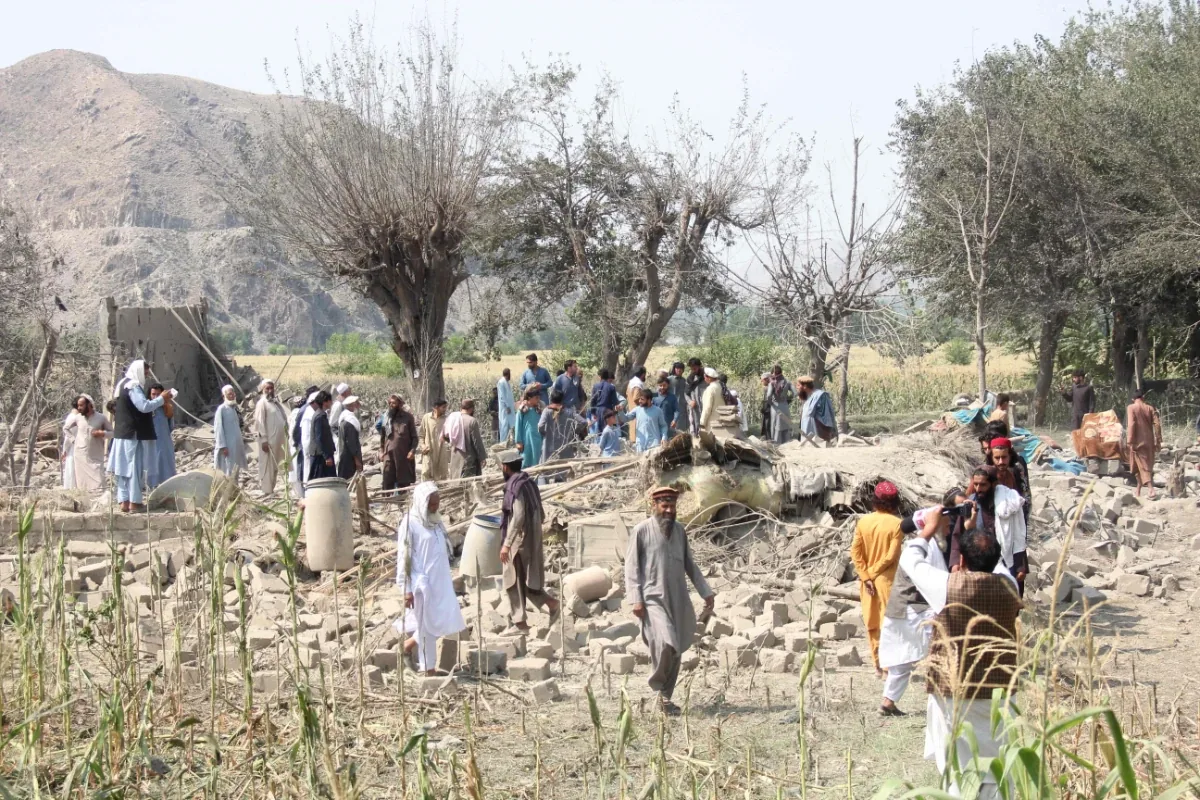 Reference image
Editorial responsibility
- No named human review is recorded for this page.
- Reports are grouped by semantic similarity and deterministic rules. Language models may assist titles, summaries, translation and cross-source analysis; the page reads the event directly, while its address stays stable when the title changes.
- Summary covers the current reports
Cross-source coverage
Common ground
- Both sides agree that the lack of independent verification of the strikes is a major problem, leaving only conflicting claims.
- Both agree that ordinary families in border villages are the real victims, living in fear of violence from either side.
- Both acknowledge that the collapse of the TTP ceasefire in November 2024 is the key context for the strikes.
- Both agree that the international response has been weak, with no real consequences for Pakistan.
- Both recognize that the economic crises in both countries make the conflict politically useful for their governments.
Points of contention
- The Regional Agent sees the strikes as colonial domination and a power play, while the Neutral Agent sees them as a predictable military response to a real security threat from the TTP.
- The Regional Agent argues that Pakistan and Afghanistan are not moral equals—one is the aggressor, the other the victim—while the Neutral Agent insists both governments are unreliable narrators with their own incentives to lie.
- The Regional Agent claims international condemnation is just theater with no action, while the Neutral Agent points out that the US and EU did issue statements, even if weak.
- The Regional Agent believes the solution is diplomacy and addressing root causes, while the Neutral Agent argues that any state would respond militarily to cross-border attacks.
Blind spots
- Neither side fully explored how the economic crises in both Pakistan and Afghanistan drive the governments to use border violence for domestic legitimacy.
- The debate overlooked the role of ordinary citizens and civil society in both countries who might push for peace, focusing only on government and military actions.
- There was little discussion of what independent verification would look like in practice, such as a UN-led investigation or satellite imagery analysis.
WorldAttention’s read
This debate shows that the airstrikes are not a simple case of aggression versus self-defense. Pakistan's strikes were a predictable response to the TTP's resumed attacks after the ceasefire collapsed, but they also reflect a power imbalance where Afghanistan's sovereignty is treated as negotiable. Both governments benefit from the crisis to distract from their own failures—Pakistan's inability to secure its border and Afghanistan's inability to control militant groups. The real tragedy is that border communities are caught in the middle, with no independent verification to hold either side accountable. Until the international community pushes for real transparency and addresses the economic and political roots of the conflict, these incidents will keep happening, and the people will keep paying the price.
Reporting timeline
Pakistan Strikes Afghanistan After Claiming to Thwart Drone Attack from Afghan Territory
On September 24, Pakistan announced it had thwarted an attack originating from Afghanistan, intercepting all incoming platforms before they could reach their targets, according to Pakistan's Information Minister. In retaliation, Pakistan conducted air and drone strikes on ten locations inside Afghanistan. The Information Minister stated on X that Pakistan's air defense system detected, tracked, and intercepted all invading platforms, adding that Pakistan does not seek escalation but remains committed to regional peace, while warning that any violation of sovereignty will be met with an immediate response. An Afghan spokesperson responded that Pakistan struck a desert area near Kandahar, causing no damage or casualties. The incident marks a significant escalation in cross-border tensions between the two neighbors.
Pakistan Strikes Afghanistan, Accuses Kabul of Launching Drone Attacks
Pakistan announced on September 24 that it had thwarted attacks originating from Afghanistan and subsequently conducted retaliatory air and drone strikes on ten locations inside Afghan territory. Pakistan's Information Minister stated on X that the country's air defense systems detected, tracked, and intercepted all incoming platforms before they could reach any intended target. The minister emphasized that Pakistan does not seek escalation and remains committed to regional peace, but warned that any violation of sovereignty would be met with an immediate response. In response, an Afghan spokesperson said that Pakistan's strikes hit a desert area near Kandahar, causing no damage or casualties. The incident marks a significant escalation in tensions between the two neighboring countries, with Pakistan directly blaming Kabul for the alleged drone attacks.
Read sourcePakistan Says It Struck Drone Launch and Storage Sites Inside Afghanistan
Pakistan's Information and Broadcasting Minister Attaullah Tarar announced on September 24 that Pakistan conducted airstrikes against 10 locations inside Afghanistan used for launching and storing drones. The announcement was made via social media. Separately, AFP quoted residents in Kandahar city, southern Afghanistan, who reported hearing aircraft followed by loud explosions and seeing a large fire in the city center. The strikes target facilities allegedly used by militants to launch drones into Pakistan, though the full context of the operation and any casualties remain unconfirmed.
Show 2 older updatesHide older updates
Pakistan Information Minister Announces Air and Drone Strikes on 10 Sites in Afghanistan
On September 23, Pakistan's Information Minister announced that the country conducted air and drone strikes against 10 locations in Afghanistan used for launching and storing drones. The strikes targeted sites involved in drone operations, according to the minister's statement. The announcement was reported by tradealpha, a domestic media outlet. The specific groups or entities targeted were not detailed in the brief statement, nor were any immediate reactions from Afghan authorities mentioned. The operation underscores ongoing cross-border security concerns between Pakistan and Afghanistan.
Read sourcePakistan Information Minister Announces Airstrikes on 10 Drone Sites in Afghanistan on September 23
Pakistan's Information Minister announced on September 23 that the country conducted aerial and drone strikes on 10 locations in Afghanistan used for launching and storing drones. The strikes targeted sites specifically designated for drone operations, according to the minister's statement. The announcement was made by the Pakistani official, attributing the military action to the government's security operations. No further details on casualties or the specific locations within Afghanistan were provided in the brief statement. The operation underscores ongoing cross-border security concerns between Pakistan and Afghanistan.
Read source