Oracle’s $18B AI data center loan trades at discount amid credit downgrade
Oracle faces pressure on an $18 billion syndicated loan for its Project Jupiter data center in New Mexico, part of the Stargate AI initiative with OpenAI and SoftBank. Banks are quoting the debt at 89–91 cents on the dollar, reflecting stalled distribution and credit concerns. S&P downgraded Oracle to BBB-, one notch above junk. Separately, OpenAI projects $278 billion in negative free cash flow from 2026–2030 despite rising revenue, highlighting financing strains in AI infrastructure buildout.
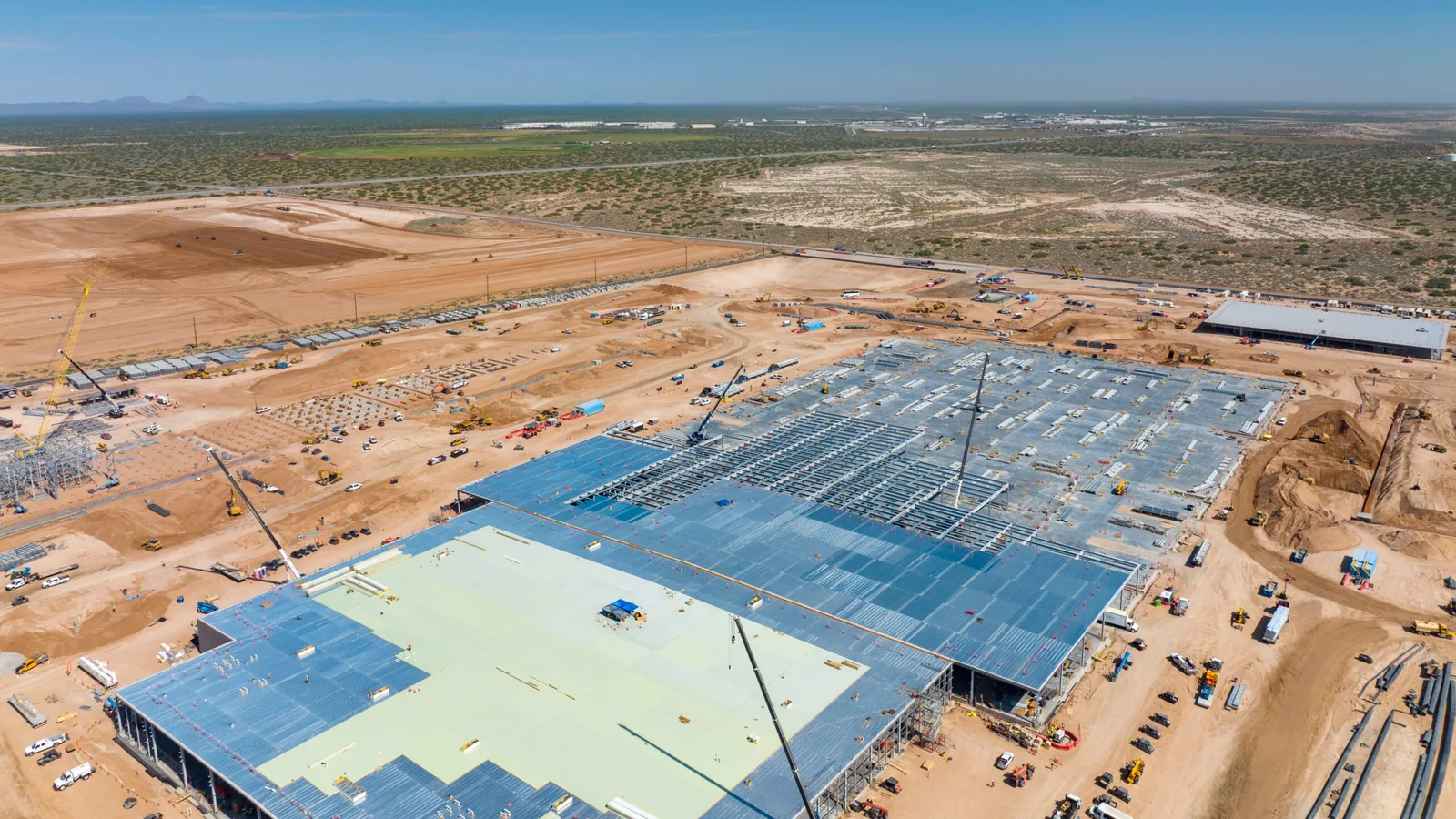 Reference image
Editorial responsibility
- No named human review is recorded for this page.
- Reports are grouped by semantic similarity and deterministic rules. Language models may assist titles, summaries, translation and cross-source analysis; the page reads the event directly, while its address stays stable when the title changes.
- Summary covers the current reports
Cross-source coverage
Common ground
- Oracle's $18 billion loan trading at 89 cents on the dollar signals serious financial strain in AI infrastructure financing.
- Oracle's high debt-to-EBITDA ratio and negative free cash flow make its capital spending plans risky.
- The Stargate project will likely be built, but slower and with more realistic terms.
- The era of cheap debt from zero-interest-rate policy is over, and the AI sector is adjusting.
- AI compute demand is real but not growing at the exponential rate needed to justify current debt loads.
Points of contention
- Whether the loan discount is a healthy market correction or a sign of a looming crash.
- Whether China's state-guided AI investments are more prudent or just hiding similar risks.
- Whether the main problem is financial over-leverage, governance failure, or lack of democratic accountability.
- Whether AI infrastructure will eventually generate enough returns to pay off its debt.
- Whether the environmental and community impacts of data centers are being properly addressed.
Blind spots
- The debate largely ignores the role of local communities and Indigenous rights in data center siting decisions.
- There is little discussion of how AI infrastructure affects water and energy resources in stressed regions.
- The long-term environmental costs of data centers, including e-waste and grid strain, are barely mentioned.
- The possibility that AI demand could shift or collapse due to regulation or technological breakthroughs is not explored.
- The impact of rising interest rates on other tech sectors beyond AI is overlooked.
WorldAttention’s read
The Oracle loan discount is a clear warning that the AI infrastructure boom is hitting a wall of financial reality. While the project will likely move forward with more cautious terms, the debate reveals deep disagreements about whether this is a healthy correction or a systemic crisis. All sides agree that cheap debt fueled overbuilding, but they clash on whether China's model is better or just different. The biggest blind spot is the lack of attention to the communities and environments bearing the costs of these projects. Ultimately, the key question for the next few years is whether AI demand can grow fast enough to justify the massive investments being made, or if we're headed for a wave of stranded assets and broken promises.
Reporting timeline
Oracle's $18B Data Center Loan Reportedly Selling at Discount Amid AI Buildout Concerns
A report from 观点网 (via Tencent Stock) indicates that an approximately $18 billion syndicated loan for Oracle's Project Jupiter data center in New Mexico is being sold at a discount of 89-91 cents per dollar, reflecting a near 10% loss from face value. The loan, arranged by Santander and Jefferies, has been in distribution for over six months without completion, forcing banks to retain more Oracle debt than planned. The loan's underwriting was based on Oracle's $300 billion, five-year cloud contract with OpenAI and assumed investment-grade credit conditions, but current market yields are approaching single-B credit levels. Fixed-income strategist Marta Villegas noted that lenders are now focused on the data center's construction progress rather than the OpenAI contract, as collateral is primarily hardware and permits until the facility is operational. Credit rating agencies have signaled concerns: S&P downgraded Oracle to BBB- (one notch above junk), Fitch has a BBB rating with a negative outlook, and Moody's has a Baa2 rating with a negative outlook. Oracle's debt stands at $129.5 billion with a debt-to-EBITDA ratio of 4.3x, far exceeding Big Tech peers. The company's capital expenditure for fiscal 2026 is $55.6 billion, above its $50 billion target, with a 2027 guidance of $90-95 billion. Free cash flow has turned negative, and net debt is expected to exceed $105 billion.
Read sourceOracle's $18 Billion Data Center Debt Under Pressure, Banks Quote Loans at Discount
According to the Financial Times, approximately $18 billion in loans tied to Oracle's data center lease in New Mexico are facing pressure. Lenders including Santander and Jefferies are quoting the loans at 89 to 91 cents on the dollar. The Project Jupiter园区, a 1,400-acre site in Doña Ana County, is part of a broader collaboration between Oracle and OpenAI to provide AI computing power. The loan syndicate provided the $18 billion late last year to start construction. However, due to market concerns over Oracle's rising debt and weakening credit profile, banks' efforts to sell the debt to a wider investor base have stalled.
Read sourceOracle's $18 Billion Loan Syndication Stalls, Debt Trades at Discount
Oracle's $18 billion syndicated loan for its Project Jupiter data center in New Mexico has stalled, with bank bids falling to 89-91 cents on the dollar, valuing the debt at roughly $160-164 billion. The loan, arranged by Santander and Jefferies, funds part of the Stargate AI infrastructure project, a $500 billion initiative by OpenAI, SoftBank, and Oracle. Oracle's stock fell 2% in overnight trading, underperforming the AI sector. Market concerns are rising over Oracle's growing debt and weakening credit profile; S&P downgraded Oracle's credit rating in July, leaving it one notch above junk. Banks are unable to distribute the debt to broader investors, forcing them to retain larger-than-planned exposure. Separately, the article notes that Anthropic may delay its IPO to November, and OpenAI faces severe cash flow pressures, with internal projections showing cumulative negative free cash flow of $278 billion from 2026 to 2030 despite rising revenue. Major US cloud companies have guided over $750 billion in 2026 capex, potentially exceeding $1.1 trillion in 2027. JPMorgan forecasts that investment-grade credit markets will supply over $2.1 trillion for data center financing over five years, with high-yield and leveraged loans adding $350 billion. Oracle's loan distress occurs early in this financing wave.
Read sourceShow 5 older updatesHide older updates
Oracle's $18 Billion Data Center Loan Reportedly Sold at Discount Amid AI Buildout Concerns
A syndicated loan of approximately $18 billion for Oracle's Project Jupiter data center in New Mexico is reportedly being sold at a discount, with lead banks Santander and Jefferies offering the debt at 89-91 cents on the dollar, reflecting a market value of $160-164 billion. The loan distribution has stalled for over six months, forcing banks to retain more Oracle debt than planned. The loan, issued late last year, was based on Oracle's $300 billion, five-year cloud contract with OpenAI and assumed investment-grade credit conditions, but current yields now approach single-B credit levels. Fixed-income strategist Marta Villegas noted lenders are focused on data center construction progress rather than the OpenAI contract alone, as collateral remains hardware and permits until the facility is operational. Oracle's credit ratings have been downgraded or warned: S&P to BBB- (one notch above junk), Fitch at BBB with negative outlook, and Moody's at Baa2 with negative outlook. Oracle's debt stands at $129.5 billion with a debt-to-EBITDA ratio of 4.3x, far exceeding Big Tech peers. Capital expenditure for FY2026 is $55.6 billion, above the $50 billion target, with FY2027 guidance raised to $90-95 billion. Free cash flow has turned negative, and net debt is expected to exceed $105 billion.
Oracle's $18B AI Loan Sells at Discount, Stargate Funding Chain Under Pressure
Oracle's $18 billion syndicated loan for the Project Jupiter data center in New Mexico, part of the Stargate AI infrastructure initiative led by OpenAI, SoftBank, and Oracle, is selling at a discount of 89-91 cents on the dollar, reducing its market value to approximately $16-16.4 billion. The loan syndication has stalled, forcing banks to retain more debt than planned, as Oracle's credit rating was downgraded by S&P in July and is now one notch above junk. The article reports that OpenAI disclosed in an internal presentation that it expects cumulative negative free cash flow of $278 billion from 2026 to 2030, despite projected revenue growth from $36 billion to $350 billion, due to massive compute spending. Anthropic has reportedly delayed its IPO to November. The article notes that major cloud companies' 2026 capital expenditure guidance totals over $750 billion, with cumulative AI capex potentially reaching $5.5 trillion by 2030, and JPMorgan forecasts over $2.1 trillion in investment-grade credit market financing for data centers over five years.
Read sourceOracle faces $18B loan pressure, OpenAI cash flow concerns, Anthropic IPO delayed
According to a report by the Financial Times cited by Chinese media, Oracle is facing pressure on an approximately $18 billion loan for its Project Jupiter data center in New Mexico, part of the Stargate AI infrastructure initiative with OpenAI and SoftBank. Banks are reportedly offering the debt at 89-91 cents on the dollar, valuing it at $16.02-$16.38 billion, as concerns grow over Oracle's rising debt and weakening credit. S&P downgraded Oracle's credit rating in July, leaving it one notch above junk. Separately, OpenAI disclosed in a private presentation that it expects negative free cash flow of $278 billion from 2026 to 2030, despite projected revenue growth from $36 billion in 2026 to $350 billion in 2030, due to massive computing investments. Anthropic has reportedly delayed its IPO to November, later than the expected October launch. The article notes that while AI investment continues to expand, financing bottlenecks are emerging, with major cloud companies' capital expenditure guidance exceeding $750 billion in 2026 and potentially reaching $1.1 trillion by 2027.
Read sourceOracle faces $18 billion loan pressure, OpenAI expects $278 billion negative cash flow
Oracle (ORCL) faces new uncertainties as its approximately $18 billion loan for the Project Jupiter data center in New Mexico is under pressure, with syndicate banks including Santander and Jefferies quoting the loans at 89 to 91 cents per dollar of face value. Oracle shares fell 2% against the market trend. S&P downgraded Oracle's corporate credit rating in July, leaving it one notch above junk status. Separately, OpenAI expects its free cash flow to be negative $278 billion from 2026 to 2030, according to a Financial Times report citing a company presentation. While OpenAI projects revenue growth from $36 billion in 2026 to $350 billion in 2030, heavy investments in computing capacity are expected to far exceed earnings. The article notes that in the current interest rate environment, with US Treasury term premiums rising, pressure on AI capital expenditure is becoming apparent, with JPMorgan suggesting the main market contradiction is whether earnings and AI investment can outpace interest rate pressures.
Read sourceOracle faces loan pressure, OpenAI expects $278 billion negative cash flow
According to a Financial Times report cited by Tonghuashun Finance, Oracle faces new uncertainties as an approximately $18 billion loan for its Project Jupiter data center in New Mexico is under pressure, with syndicate banks quoting the debt at 89 to 91 cents per dollar of face value. S&P downgraded Oracle's corporate credit rating in July, leaving it one notch above junk status. Oracle shares fell 2% against the market trend. Separately, OpenAI expects negative free cash flow totaling $278 billion from 2026 through 2030, as it heavily invests in computing capacity despite projected revenue growth from $36 billion in 2026 to $350 billion in 2030. The article notes that combined 2026 capital expenditure guidance from top US cloud companies exceeds $750 billion, and JPMorgan forecasts the investment-grade corporate credit market will provide over $2.1 trillion in data center financing over five years. However, rising government bond yields and a 125 basis point term premium on 10-year US Treasuries raise concerns about whether AI investment can outpace interest rate pressures.