OpenAI launches Codex Cloud with persistent environments, voice CLI, and security tools at DevDay
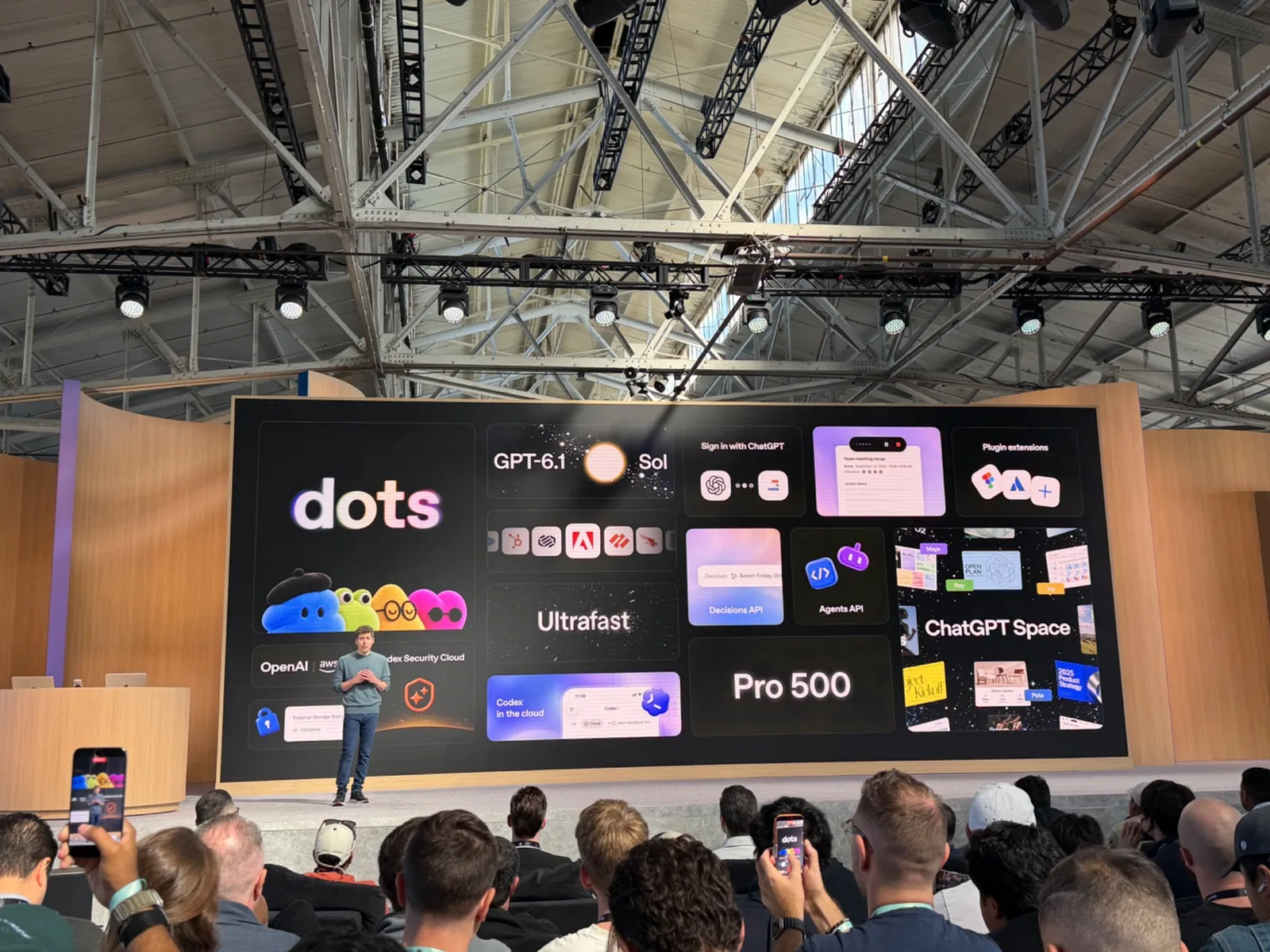
OpenAI announced a major expansion of its Codex platform at DevDay, introducing Codex Cloud for remote AI code generation, reusable cloud environments that keep agents working after a user closes their laptop, a revamped CLI with voice controls, new code review tools, and a security scanning product. The updates are available across multiple subscription tiers including Plus, Pro, Business, Healthcare, Education, and Enterprise.
 Reference image
Editorial responsibility
- No named human review is recorded for this page.
- Reports are grouped by semantic similarity and deterministic rules. Language models may assist titles, summaries, translation and cross-source analysis; the page reads the event directly, while its address stays stable when the title changes.
- Summary covers the current reports
Cross-source coverage
Reporting timeline
OpenAI refreshes Codex CLI with full-screen interface and parallel work management
OpenAI Devs announced a major refresh of Codex CLI, its command-line tool for developers. The update introduces a new full-screen interface, improved readability, and capabilities to manage parallel work, all within the terminal. OpenAI stated it is continuing to invest in Codex CLI for developers who live in the command line. The announcement was made via a post on X, with a link to further details.
Read sourceOpenAI launches Codex cloud environments for persistent AI agent operations
OpenAI Devs announced the launch of Codex cloud environments, a new feature that allows AI agents to continue working even after a user closes their laptop. The reusable environments are designed to reduce setup time and enable faster starts by preserving repositories, dependencies, scripts, and settings. This development marks a significant step in making AI agent workflows more persistent and efficient, addressing a key limitation of local-only agent execution.
Read sourceOpenAI expands Codex with cloud environments, voice CLI, code review, and security scanning
OpenAI is expanding its Codex platform with several new features, including reusable cloud development environments, a revamped command-line interface (CLI) with voice controls, new code review tools, and a security-focused product designed to scan repositories and prepare fixes. The announcement, shared via a post on X, indicates a significant broadening of Codex's capabilities beyond its original code generation function. The new offerings aim to provide developers with a more integrated and secure development workflow, combining cloud-based environments, enhanced interaction through voice, automated code review, and proactive security scanning. The security product specifically targets repository vulnerabilities and offers automated fix preparation. This expansion positions Codex as a more comprehensive development platform rather than just a coding assistant.
Show 2 older updatesHide older updates
OpenAI launches Codex Cloud at DevDay for remote AI code generation
OpenAI announced Codex Cloud during its DevDay event, a new service that enables developers to run Codex remotely. Codex is OpenAI's AI model that translates natural language into code. The service is available across multiple subscription tiers, including Plus, Pro, Business, Healthcare, Education, and Enterprise. The announcement was made via OpenAI's official channels, highlighting the expansion of cloud-based AI development tools for a wide range of users and industries.
Read sourceOpenAI releases Codex in the cloud at DevDay, enabling remote access from any device
At its DevDay event, OpenAI announced that Codex, its AI-powered code generation model, is now available in the cloud. This update allows users to run Codex from any location and device, including their computer, remotely from a phone, or in the cloud from any device. The release expands accessibility to OpenAI's coding assistant, enabling developers to leverage Codex without being tied to a specific machine. The announcement was made via a post on X by user DanDr1s, highlighting the multi-platform availability as a key feature of the launch.