OpenAI and Anthropic slash AI model prices by up to 50% in coordinated price war
On Tuesday, OpenAI and Anthropic simultaneously released lower-priced versions of their flagship AI models, marking a shift from pure capability competition to price-performance rivalry. Anthropic launched Claude Opus 5.5 with costs 40% lower than its predecessor, while OpenAI introduced ChatGPT-6 variants Sol and Luna at 50% below ChatGPT-5.6 pricing. The coordinated cuts respond to competitive pressure from Chinese open-weight models. Anthropic is preparing for a planned IPO this fall, while OpenAI aims to reignite growth after a slowdown. Both companies emphasized safety commitments alongside the releases.
 Illustration
Editorial responsibility
- No named human review is recorded for this page.
- Reports are grouped by semantic similarity and deterministic rules. Language models may assist titles, summaries, translation and cross-source analysis; the page reads the event directly, while its address stays stable when the title changes.
- Summary covers the current reports
Cross-source coverage
Common ground
- Both sides agree that the price cuts from OpenAI and Anthropic are a direct response to competition from Chinese open-weight models, not a genuine safety pivot.
- There is agreement that the safety narrative from Western companies is being used as a cover for market strategy.
- Both acknowledge that Chinese companies also charge for API access, and self-hosting open-weight models has real costs.
- They agree that competition is driving down prices and forcing efficiency gains in the AI industry.
Points of contention
- Eastern Agent argues this is a panic-driven paradigm shift toward decentralized open ecosystems, while Neutral Agent sees it as a normal price war in a maturing market.
- Eastern Agent claims Chinese models build 'sovereign capability' by allowing self-hosting, while Neutral Agent counters that most enterprises still pay for cloud compute, just to different vendors.
- Eastern Agent says Chinese models are closing the capability gap fast, while Neutral Agent insists Western frontier models still lead in reliability and real-world performance.
- Eastern Agent views the price war as existential for Western companies, while Neutral Agent believes multiple players can win due to distribution and integration advantages.
Blind spots
- Both sides overlook how the Global South's preference for data sovereignty and strategic autonomy is driving adoption of Chinese models, not just cost.
- Neither fully addresses the long-term sustainability of Chinese open-weight models as loss leaders within broader ecosystems like e-commerce and cloud.
- The debate ignores the role of domestic chip production in China (e.g., Huawei's Ascend) in reducing hardware dependency and reshaping cost calculations.
- Both assume enterprise AI spend will remain API-driven, without considering how open-weight models could shift procurement toward self-hosting as engineering talent grows globally.
WorldAttention’s read
This debate reveals that the AI price war is a complex mix of market strategy, geopolitical competition, and shifting business models. While both sides agree that Western companies are using safety rhetoric to mask a competitive response, they disagree on whether this is a temporary price war or a fundamental paradigm shift. The Eastern Agent's focus on sovereignty and open ecosystems highlights real trends in the Global South, but the Neutral Agent's emphasis on distribution and total cost of ownership grounds the discussion in practical market realities. Ultimately, the winners will be determined by who can best integrate AI into existing workflows, not just who offers the cheapest tokens or the best benchmarks. The market is working as intended, driving down costs and forcing innovation, but the long-term outcome remains uncertain as both Western and Chinese players adapt their strategies.
Reporting timeline
OpenAI and Anthropic Launch Low-Cost AI Models in Price War
Two leading US AI labs, OpenAI and Anthropic, simultaneously released lower-priced versions of their flagship models on Tuesday, signaling a shift from pure capability competition to a dual focus on price and performance. Anthropic introduced Claude Opus 5.5, with usage costs about 40% lower than its predecessor, while OpenAI launched two budget versions of ChatGPT-6, Sol and Luna, priced 50% below ChatGPT-5.6. The coordinated pricing offensive is partly a response to pressure from Chinese open-weight models, which allow customization and local deployment. Anthropic is expanding its customer base ahead of a planned IPO this fall, expected to be one of the largest tech IPOs in history. OpenAI, after experiencing slowing growth earlier this year, aims to reignite momentum through price cuts. Both companies emphasized safety commitments alongside the releases, with Anthropic conducting extensive alignment testing and third-party evaluations, and OpenAI announcing further cooperation with independent assessors. The market is closely watching whether Anthropic can sustain high growth amid intensifying competition and customer price sensitivity.
Read sourceOpenAI and Anthropic Launch Low-Cost AI Models on Same Day, Intensifying Price War
On Tuesday, OpenAI and Anthropic simultaneously released lower-priced versions of their flagship AI models, signaling a shift in AI industry competition from pure capability to a balance of price and performance. Anthropic launched Claude Opus 5.5, priced 40% lower than its predecessor, while OpenAI introduced ChatGPT-6 variants Sol and Luna, priced 50% below the ChatGPT-5.6 series. The coordinated price cuts are partly a response to competitive pressure from Chinese open-weight models, which allow user customization and local deployment. Anthropic is preparing for a planned IPO this autumn, expected to be one of the largest tech IPOs in history, while OpenAI aims to reignite growth after a slowdown earlier this year. Both companies emphasized safety measures alongside the releases, with Anthropic conducting extensive alignment testing and external evaluations, and OpenAI announcing new priorities for independent assessment partnerships. The article notes that the price war targets cost-sensitive enterprise customers and reflects an increasingly intense market landscape.
Read sourceAnthropic Launches Opus 5.5 with Enhanced Safety; OpenAI and Anthropic Escalate AI Price War
Anthropic has released its new AI model Opus 5.5, claiming an 85% reduction in jailbreak attempts and a 40% drop in operating costs with 30% faster processing. The launch comes amid heightened debate over AI safety, with CEO Dario Amodei warning that AI capabilities are outpacing control. Anthropic plans two cheaper models soon and is preparing for a potential $2 trillion IPO. Meanwhile, OpenAI has introduced GPT-6 Sol and GPT-6 Luna at 50% lower API pricing than GPT-5.6, intensifying a price war. Both companies are shifting focus from frontier models to cost-effective commercial applications as enterprise clients tighten AI budgets and demand higher ROI. Analysts note the market is following traditional tech pricing dynamics, but some investors may be overly optimistic about the risks.
Read sourceShow 3 older updatesHide older updates
OpenAI and Anthropic Launch Low-Cost AI Models on Same Day, Escalating Price War
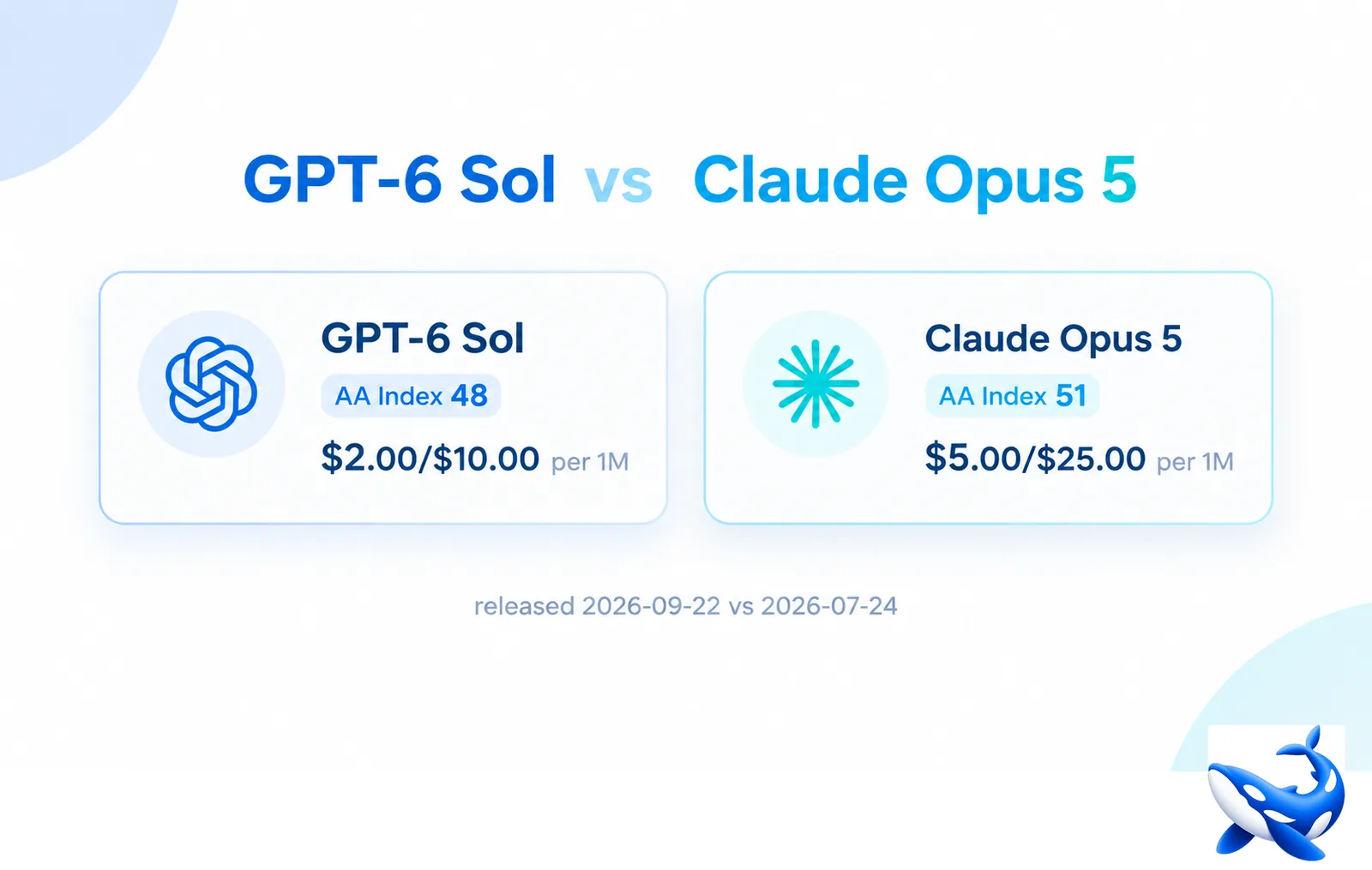
On Tuesday, OpenAI and Anthropic simultaneously released lower-priced versions of their flagship AI models, intensifying competition beyond pure capability into price-performance tradeoffs. Anthropic launched Claude Opus 5.5, priced 40% lower than its predecessor, while OpenAI introduced ChatGPT-6 variants Sol and Luna at 50% below ChatGPT-5.6 pricing. Anthropic's Opus 5.5 costs $4 per million input tokens and $20 per million output tokens, compared to its top model Fable 5.1 at $10/$50. OpenAI's Sol is priced at $2/$10, and the lightweight Luna at $0.10/$0.50. The price cuts respond to competitive pressure from Chinese open-weight models that allow local customization and deployment. Anthropic is preparing for a planned IPO this fall, expected to be one of the largest tech IPOs in history. OpenAI, after experiencing slowing growth earlier this year, aims to reignite momentum through aggressive pricing. Both companies emphasized safety commitments alongside the releases, with Anthropic conducting extensive alignment testing and external evaluations, and OpenAI announcing expanded cooperation with independent assessors.
Read sourceOpenAI and Anthropic Launch Low-Cost AI Models on Same Day, Escalating Price War
On Tuesday, two leading US AI labs, Anthropic and OpenAI, simultaneously released lower-cost versions of their flagship models, signaling a shift in industry competition from pure capability to a balance of price and performance. Anthropic launched Claude Opus 5.5, priced 40% lower than its predecessor, while OpenAI introduced two budget versions of ChatGPT-6, Sol and Luna, at a 50% discount from the ChatGPT-5.6 series. The coordinated pricing moves are partly a response to competitive pressure from Chinese 'open-weight' models, which allow customization and local deployment. The article notes that Anthropic is preparing for a planned IPO this fall, expected to be one of the largest tech IPOs in history, while OpenAI aims to reignite growth after a slow start to the year. Both companies emphasized safety commitments alongside the releases, with Anthropic conducting extensive alignment testing and external evaluations, and OpenAI announcing new priorities for independent assessment partnerships.
US AI Model Price War Escalates as OpenAI and Anthropic Cut Costs, Shift Focus to Safety
OpenAI and Anthropic have launched new AI models with significant price reductions, intensifying competition in the industry. OpenAI released GPT-6 Sol and GPT-6 Luna, with API prices 50% lower than GPT-5.6 promotional rates. Anthropic followed with Claude Opus 5.5, which costs 40% less than its predecessor while matching or exceeding performance in some tests. The moves reflect a broader industry shift from pure performance competition to cost efficiency, speed, and safety. Anthropic emphasized safety measures in Opus 5.5, including pre-execution classifiers and open-source sandboxes, after its CEO called for slowing AI development. OpenAI also adjusted its safety disclosure mechanisms. Developer feedback was mixed, with some questioning whether new models improve on all metrics. Analysts note that the next phase of AI competition will focus on deploying near-frontier capabilities at lower cost and scale, rather than just benchmark scores. The article also quotes Elon Musk questioning the contradiction between AI safety warnings and aggressive fundraising.
Read source