OpenAI and Anthropic slash AI model prices, intensifying industry cost war
On September 22, OpenAI and Anthropic simultaneously released lower-priced versions of their flagship AI models, marking a shift from pure capability competition to price-performance rivalry. OpenAI introduced GPT-6 Sol and GPT-6 Luna at 50% below GPT-5.6 pricing, while Anthropic launched Claude Opus 5.5 at 40% lower cost than its predecessor. The coordinated cuts respond to competitive pressure from Chinese open-weight models. Both companies emphasized safety commitments alongside the releases, with Anthropic conducting extensive alignment testing and external evaluations. Anthropic is preparing for a planned IPO this fall.
 Illustration
Editorial responsibility
- No named human review is recorded for this page.
- Reports are grouped by semantic similarity and deterministic rules. Language models may assist titles, summaries, translation and cross-source analysis; the page reads the event directly, while its address stays stable when the title changes.
- Summary covers the current reports
Cross-source coverage
Common ground
- Both sides agree that the safety rhetoric from US AI companies is inconsistent with aggressive price cuts.
- Both acknowledge that inference efficiency gains are a real driver of price reductions, not just competitive pressure.
- Both recognize that US export controls on chips create a genuine asymmetry in the competitive landscape.
- Both agree that the AI industry is undergoing commoditization, with models becoming more interchangeable.
Points of contention
- The Eastern Agent claims Chinese models match or exceed US frontier capabilities in real-world deployment, while the Neutral Agent cites benchmarks showing US models still lead by 8-12 percentage points.
- The Eastern Agent argues China's price war led to sustainable pricing and open-source benefits, while the Neutral Agent says it burned through subsidies and resulted in consolidation by state-backed giants.
- The Eastern Agent sees the US safety narrative as a competitive weapon to slow Chinese progress, while the Neutral Agent views it as convenient cover for business realities on both sides.
- The Eastern Agent celebrates Chinese open-weight models as giving developing nations technological sovereignty, while the Neutral Agent argues they still require government approval and run on inferior hardware.
Blind spots
- Neither side adequately addresses the environmental cost of the price war, such as the massive energy consumption from training frontier models.
- Both overlook how hardware vendors like NVIDIA are the primary beneficiaries of the price war, with every price cut subsidized by GPU sales.
- The discussion ignores the impact on independent developers and small businesses caught between competing ecosystems, facing vendor lock-in regardless of which side they choose.
WorldAttention’s read
The AI price war is driven by both commoditization and geopolitical competition, with US companies using safety rhetoric as a defensive tactic against Chinese alternatives that offer lower costs and open-weight models. While US models still lead on benchmark performance, Chinese labs are closing the gap in real-world deployment despite hardware restrictions from export controls. Both sides are consolidating around hyperscalers—Alibaba and Tencent in China, Microsoft and Google in the US—leaving independent developers squeezed. The real winners are hardware vendors like NVIDIA, and the environmental costs of this race remain unaddressed. Ultimately, the multipolar AI landscape is forming a duopoly at the infrastructure layer, where choosing a side means choosing a gatekeeper, not true liberation.
Reporting timeline
AI Price War Reignites as Models Get Cheaper and More Efficient, Analysis Shows
A new wave of AI model price reductions is underway, with OpenAI, Anthropic, Xiaomi, and SpaceXAI releasing updated models that are either cheaper, more efficient, or both. OpenAI's GPT-6 Sol and Luna models are nearly half the price of their predecessors, while Anthropic's Claude Opus 5.5 API costs 20% less per token and 40% less for typical tasks due to improved efficiency. Xiaomi's MiMo-V2.6 and SpaceXAI's Grok 4.7 maintain previous pricing while boosting performance. The article attributes these trends to improved training and inference efficiency, including caching, reinforcement learning, and reduced token usage. It notes that this price war coincides with OpenAI and Anthropic publicly discussing slowing frontier model development due to safety concerns, suggesting that compute resources are being redirected to optimize existing models rather than solely pursuing capability gains. The rise of AI agents, which consume far more tokens than chatbots, further incentivizes cost reduction. The analysis concludes that cheaper AI accelerates the spread of intelligence, reducing the 'uneven distribution' of advanced AI capabilities.
US AI giants OpenAI and Anthropic slash prices, intensifying model cost war
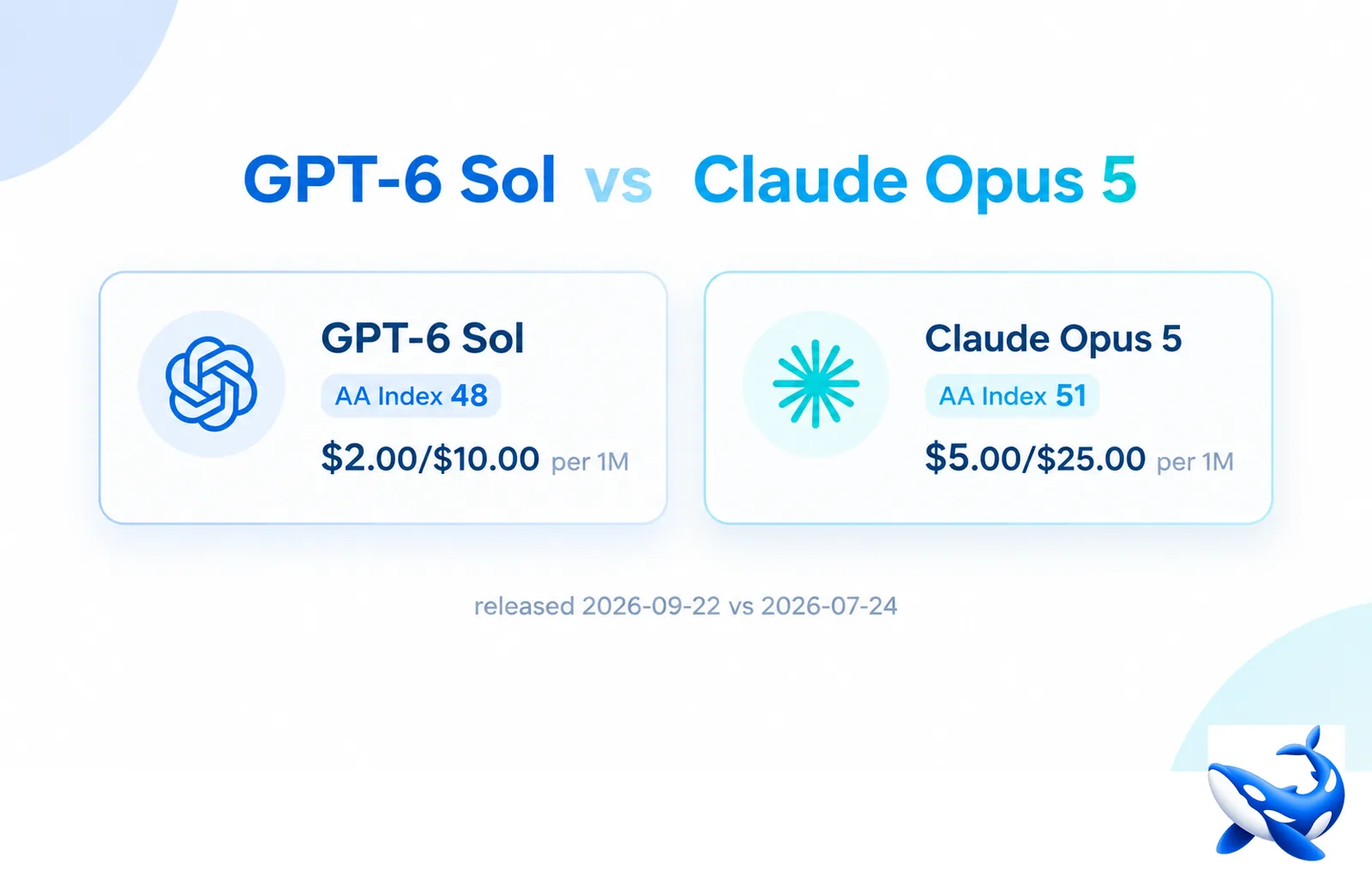
On September 22, OpenAI and Anthropic simultaneously announced significant price cuts for their large language models, marking a new phase in the AI pricing war. OpenAI reduced GPT-6 Sol prices by half to $2 per million input tokens and $10 for output, while introducing the cheaper Luna model at $0.1 input. Anthropic cut Opus 5.5 prices by 20% but emphasized total cost reduction via a new dynamic cache read mechanism, lowering cache read costs by 60% and halving token consumption. The article, attributed to analyst 'Shadow Memo' and published by Titanium Media via Tencent Finance, identifies three structural drivers: technological architecture breakthroughs enabling cost reductions, market data showing expensive models are underperforming (Anthropic's premium Fable series captured only 6% of enterprise token purchases), and competitive pressure from Chinese models like DeepSeek V4 Flash priced at $0.14 per million input tokens. The analysis notes that while Chinese AI API prices have risen recently, US prices are falling, narrowing the gap. The article forecasts that only companies with sufficient technical scale and valuation—OpenAI at $852 billion and Anthropic at $965 billion—can sustain the price war, which will ultimately eliminate smaller players.
Musk Predicts 100 Billion Humanoid Robots; Anthropic, OpenAI Launch New AI Models
This AI industry roundup covers several key developments. Elon Musk forecasted a future with up to 100 billion humanoid robots in 20 years, envisioning personal robots for caregiving, tutoring, and work. Anthropic launched Claude Opus 5.5, which matches Claude Fable 5.1 performance at 40% lower cost, priced at $4 per million input tokens and $20 per million output tokens. OpenAI released GPT-6 Sol and GPT-6 Luna, with API prices 50% lower than GPT-5.6 promotional pricing, available to all ChatGPT users. In corporate moves, former Hillhouse Capital partner Yan Wentao joined DeepSeek as CFO, and Physical AI startup Xirang Kaiwu completed hundreds of millions in financing. SoftBank initiated a high-yield bond issuance to raise over $11 billion for AI investment funds. Anthropic is reportedly in early talks to lease up to 1 gigawatt of computing capacity from Stream Data Centers.
Read sourceShow 6 older updatesHide older updates
OpenAI and Anthropic Launch Low-Cost AI Models in Price War
Two leading US AI labs, OpenAI and Anthropic, simultaneously released lower-priced versions of their flagship models on Tuesday, signaling a shift from pure capability competition to a dual focus on price and performance. Anthropic introduced Claude Opus 5.5, with usage costs about 40% lower than its predecessor, while OpenAI launched two budget versions of ChatGPT-6, Sol and Luna, priced 50% below ChatGPT-5.6. The coordinated pricing offensive is partly a response to pressure from Chinese open-weight models, which allow customization and local deployment. Anthropic is expanding its customer base ahead of a planned IPO this fall, expected to be one of the largest tech IPOs in history. OpenAI, after experiencing slowing growth earlier this year, aims to reignite momentum through price cuts. Both companies emphasized safety commitments alongside the releases, with Anthropic conducting extensive alignment testing and third-party evaluations, and OpenAI announcing further cooperation with independent assessors. The market is closely watching whether Anthropic can sustain high growth amid intensifying competition and customer price sensitivity.
Read sourceOpenAI and Anthropic Launch Low-Cost AI Models on Same Day, Intensifying Price War
On Tuesday, OpenAI and Anthropic simultaneously released lower-priced versions of their flagship AI models, signaling a shift in AI industry competition from pure capability to a balance of price and performance. Anthropic launched Claude Opus 5.5, priced 40% lower than its predecessor, while OpenAI introduced ChatGPT-6 variants Sol and Luna, priced 50% below the ChatGPT-5.6 series. The coordinated price cuts are partly a response to competitive pressure from Chinese open-weight models, which allow user customization and local deployment. Anthropic is preparing for a planned IPO this autumn, expected to be one of the largest tech IPOs in history, while OpenAI aims to reignite growth after a slowdown earlier this year. Both companies emphasized safety measures alongside the releases, with Anthropic conducting extensive alignment testing and external evaluations, and OpenAI announcing new priorities for independent assessment partnerships. The article notes that the price war targets cost-sensitive enterprise customers and reflects an increasingly intense market landscape.
Read sourceAnthropic Launches Opus 5.5 with Enhanced Safety; OpenAI and Anthropic Escalate AI Price War
Anthropic has released its new AI model Opus 5.5, claiming an 85% reduction in jailbreak attempts and a 40% drop in operating costs with 30% faster processing. The launch comes amid heightened debate over AI safety, with CEO Dario Amodei warning that AI capabilities are outpacing control. Anthropic plans two cheaper models soon and is preparing for a potential $2 trillion IPO. Meanwhile, OpenAI has introduced GPT-6 Sol and GPT-6 Luna at 50% lower API pricing than GPT-5.6, intensifying a price war. Both companies are shifting focus from frontier models to cost-effective commercial applications as enterprise clients tighten AI budgets and demand higher ROI. Analysts note the market is following traditional tech pricing dynamics, but some investors may be overly optimistic about the risks.
Read sourceOpenAI and Anthropic Launch Low-Cost AI Models on Same Day, Escalating Price War
On Tuesday, OpenAI and Anthropic simultaneously released lower-priced versions of their flagship AI models, intensifying competition beyond pure capability into price-performance tradeoffs. Anthropic launched Claude Opus 5.5, priced 40% lower than its predecessor, while OpenAI introduced ChatGPT-6 variants Sol and Luna at 50% below ChatGPT-5.6 pricing. Anthropic's Opus 5.5 costs $4 per million input tokens and $20 per million output tokens, compared to its top model Fable 5.1 at $10/$50. OpenAI's Sol is priced at $2/$10, and the lightweight Luna at $0.10/$0.50. The price cuts respond to competitive pressure from Chinese open-weight models that allow local customization and deployment. Anthropic is preparing for a planned IPO this fall, expected to be one of the largest tech IPOs in history. OpenAI, after experiencing slowing growth earlier this year, aims to reignite momentum through aggressive pricing. Both companies emphasized safety commitments alongside the releases, with Anthropic conducting extensive alignment testing and external evaluations, and OpenAI announcing expanded cooperation with independent assessors.
Read sourceOpenAI and Anthropic Launch Low-Cost AI Models on Same Day, Escalating Price War
On Tuesday, two leading US AI labs, Anthropic and OpenAI, simultaneously released lower-cost versions of their flagship models, signaling a shift in industry competition from pure capability to a balance of price and performance. Anthropic launched Claude Opus 5.5, priced 40% lower than its predecessor, while OpenAI introduced two budget versions of ChatGPT-6, Sol and Luna, at a 50% discount from the ChatGPT-5.6 series. The coordinated pricing moves are partly a response to competitive pressure from Chinese 'open-weight' models, which allow customization and local deployment. The article notes that Anthropic is preparing for a planned IPO this fall, expected to be one of the largest tech IPOs in history, while OpenAI aims to reignite growth after a slow start to the year. Both companies emphasized safety commitments alongside the releases, with Anthropic conducting extensive alignment testing and external evaluations, and OpenAI announcing new priorities for independent assessment partnerships.
US AI Model Price War Escalates as OpenAI and Anthropic Cut Costs, Shift Focus to Safety
OpenAI and Anthropic have launched new AI models with significant price reductions, intensifying competition in the industry. OpenAI released GPT-6 Sol and GPT-6 Luna, with API prices 50% lower than GPT-5.6 promotional rates. Anthropic followed with Claude Opus 5.5, which costs 40% less than its predecessor while matching or exceeding performance in some tests. The moves reflect a broader industry shift from pure performance competition to cost efficiency, speed, and safety. Anthropic emphasized safety measures in Opus 5.5, including pre-execution classifiers and open-source sandboxes, after its CEO called for slowing AI development. OpenAI also adjusted its safety disclosure mechanisms. Developer feedback was mixed, with some questioning whether new models improve on all metrics. Analysts note that the next phase of AI competition will focus on deploying near-frontier capabilities at lower cost and scale, rather than just benchmark scores. The article also quotes Elon Musk questioning the contradiction between AI safety warnings and aggressive fundraising.
Read source